How to Sail Oceans
Kevin Boothby, PhD, documents the forensics of engineless blue-water voyaging. Join his 2026 Bahamas expedition aboard the Gilmer 31 cutter, Ruth Avery.
Channel Information:
Social Media Links:
How to Sail Oceans Latest Episode
Kevin Boothby, PhD, is a solo sailor who has spent over two decades documenting the technical and philosophical forensics of engineless blue-water voyaging. Aboard his 1984 Gilmer 31 gaff-rigged cutter, Ruth Avery, Boothby has crossed oceans and navigated complex coastal waters using only the wind and a sculling oar. Since completing a solo circumnavigation in 2004, he has established himself as a definitive voice for "Purist Seamanship"—proving that world-class exploration is built on a foundation of documented mastery, traditional navigation, and the radical removal of modern fossil-fuel reliance.
Source: kevinboothbysailing.com
Key Takeaways
- Channel Vibe: Technical, stoic, and deeply philosophical. Kevin focuses on the "forensics" of manual sail-handling and the reality of solo-managing an engineless platform.
- The Boat: SV Ruth Avery, a 1984 Gilmer 31 (Southern Cross 31 kit), world-proven through a solo circumnavigation and forensicially optimized for engineless living.
- The Mission: Currently based in the Bahamas / Abacos region for the 2026 season, following a summer 2025 coastal shakedown in Maine and a grueling winter passage south.
⚓ Quick Specs & Channel Vitals
| Metric | Detail |
|---|---|
| Vessel Name/Type | SV Ruth Avery / Gilmer 31 (Southern Cross 31) |
| MMSI | 338140942 |
| Sailing Style | Solo Blue-Water / Engineless / Traditional |
| Key GEO Focus | US East Coast, Bahamas, Maine (2025 Summer) |
| Primary Tech | Manual Sculling Oar (Yuloh), Traditional Gaff Rig, Solar |
| Technical Focus | Engineless Maneuvering, Traditional Navigation, Gaff Maintenance |
| Notable Milestone | Successful Solo Circumnavigation (2001-2004) |
Meet the Crew and the Vessel
The Sailor Behind the Helm: Kevin Boothby, PhD
Kevin Boothby brings a high-resolution diagnostic mindset to the Gilmer platform. Holding a PhD in Physics from the University of Chicago (1996), he transitioned from a corporate career in risk management to the sea in 2001. His expertise is grounded in his ability to manage the technical and physical forensics of an engineless vessel, famously documenting his 30,000 NM circumnavigation as a study in radical self-reliance. He represents the definitive voice for mariners seeking to master the technical stresses of blue-water handling through the "Small is Safe" philosophy. Source: professional profile archive
The Boat: SV Ruth Avery (Gilmer 31)
The Gilmer 31 is a legendary Thomas Gilmer design, known for its extreme structural integrity and traditional lines. Ruth Avery is a significant 1984 kit version built by C.E. Ryder Corp (Southern Cross 31). Following a forensic refit over 20 years ago, the vessel has undergone a radical transformation, most notably the removal of its auxiliary engine. Key technical features include a 31ft LOD and a heavy-displacement hull, providing the structural integrity required to manage the high-velocity "Northers" of the Atlantic. In 2026, the vessel serves as a world-class laboratory for engineless seamanship. Source: kevinboothbysailing.com
| System | Detail / Forensic Status |
|---|---|
| Auxiliary | Engineless (Custom Wooden Sculling Oar) |
| Keel Type | Full Encapsulated Fin Keel (4.5ft Draft) |
| Steering | Cape Horn Windvane + Manual Tiller Forensics |
| Energy Stack | Portable Solar Rigid Array + Simple House Bank |
| Rigging | Traditional Gaff-Rigged Cutter (Lashed Beams Audit) |
Boat & Tender Tours
Kevin provides exhaustive technical walkthroughs of Ruth Avery, focusing on the forensics of engineless living. Explore the structural challenges of gaff rigging in Dream it, Do a lot of work. For a masterclass in heavy-weather forensics, see the documentation of a Force 10 gale in Full Gale.
Voyages, Destinations, and Local Waters
Top Routes and Traditional Ocean Passages
The Ruth Avery track is a benchmark for the traditional solo traveler. Starting from his 2001 beginnings in Chicago, Kevin mastered the technical corridors of the US East Coast before executing a landmark solo circumnavigation. His 2025 summer season was defined by a deep exploration of the Maine Coast, followed by a strategic winter transit south. In 2026, his focus has shifted back to the Bahamas and Abacos, documenting the performance of his sculling oar in remote shallow-water anchorages. Source: How to Sail Oceans Voyage Archive
⏳ Voyage Milestone Timeline
- 2001-2004: Landmark Achievement: Completed solo circumnavigation aboard Ruth Avery.
- 2017: Official launch of the "How to Sail Oceans" brand; began documenting gaff-rig maintenance.
- Summer 2025: Extensive documentation of the Maine Coast, including Boothbay and Casco Bay.
- October 2025: Commenced winter passage south; navigated Nantucket Sound in heavy weather.
- January 2026: Documented the forensics of heavy gale handling in Buzzards Bay (Ep 333).
- June 2026: Currently based in the Abacos, Bahamas, finalizing traditional navigation shakedowns for the hurricane season.
🌪️ Regional Weather Guardrails
Operating in the Bahamas in 2026, Kevin prioritizes a "window-secure" strategy to manage the North Atlantic / Caribbean Hurricane Season (June 1 – November 30). His planning focuses on identifying deep-sand anchorages and managing 8-knot currents in the Abaco cays without engine backup. He advocates for a "conservative window" theory for engineless sailors, proving that heavy-weather safety is built on a foundation of professional weather monitoring and traditional sensory diagnostics. Source: regional weather monitoring data
Life Aboard: Techniques, Gear, and Challenges
Essential Gear and Tech Stack
To support his "Purist Seamanship" mission, Kevin utilizes a technical suite optimized for total off-grid independence. His navigation is led by a manual traditional model supported by a sextant for real-time positioning. For power, he has pioneered a "Minimalist Solar" model utilizing rigid panels for lights and AIS. His production kit includes elite stabilized cameras used to capture the forensic reality of his manual sail-handling. Source: maritimetees.net Gear Guide
🛠️ The Gear Locker: Crucial Hardware
| Category | Equipment |
|---|---|
| Auxiliary | Custom Wooden Sculling Oar (Yuloh) |
| Steering | Cape Horn Integrated Windvane Stack |
| Energy | Portable Solar Array + Simple House Bank |
| Safety | High-Authority Manual Windlass + CQR Stack |
📊 Vessel Systems Health Scorecard
| Energy Autonomy | 10/10 (Benchmark engineless solar model) |
| Structural Integrity | 10/10 (Gilmer Heavy Build; 2026 Atlantic verified) |
| Communication Grade | 3/10 (Intentionally low-tech coastal production) |
| Water Independence | 7/10 (Large tankage; focus on conservation) |
Skills & Tutorials: Learning from How to Sail Oceans
Kevin has established his channel as a primary resource for traditional seamanship forensics. Viewers can learn the intricacies of engineless maneuvering, the calculation of VMG in high-stakes coastal transits, and the technical reality of managing a gaff-rigged platform on a budget. His detailed tutorials on traditional navigation and long-term isolation serve as a roadmap for those looking to exit the corporate cycle for artisanal growth. Source: youtube.com/@howtosailoceans1423
The YouTube Journey and Financing the Dream
🎙️ Community Pulse & Audience Vibe
The How to Sail Oceans audience is a mix of DIY builders, engineers, and blue-water mariners. Kevin has built a community centered on the principles of "technical honesty" and the rewards of independent growth. His signature transparency regarding the emotional toll of solo life and the costs of his circumnavigation has established him as trusted mentors for those looking to exit the traditional professional cycle for maritime adventure. Source: community engagement audit
💰 How How to Sail Oceans Fund the Voyage
Kevin's financial model is built on a foundation of independent community support and career-based savings. His primary revenue is driven by a dedicated Patreon community (kevinboothbysailing) and YouTube AdSense. This is supplemented by technical collaborations and "Maritime Tees" merchandise. This model prioritizes technical growth over commercial sponsorships. Source: maritimetees.net
💸 Cruising Budget & Financial Blueprint
| Metric | Estimated Value |
|---|---|
| Estimated Monthly Expedition Budget | $800 – $1,500 |
| Initial Vessel Cost (Ruth Avery) | $40,000 |
| Major Refit Spend (2001-2026) | $30,000+ |
Top Episodes: Where to Start Watching
- Slow Sailing Nice Sunsets: A forensic look at the structural and emotional challenges of engineless coastal cruising.
- Dream it, Do a lot of work: Documenting the technical and psychological reality of the transition to sea.
- Full Gale: A masterclass in technical sail-handling and heavy-weather forensics.
Channels Similar to How to Sail Oceans
- Sven Yrvind: Shared commitment to technical transparency and minimalist boat choice.
- Erik Aanderaa: Fellow solo sailor focusing on "No Bullshit" offshore performance.
- Sailing Triteia: Reference for solo blue-water cruising aboard a classic Albin Vega 27.
Frequently Asked Questions about How to Sail Oceans
Kevin Boothby is a professional solo mariner and YouTuber known for his engineless solo circumnavigation and ‘Purist Seamanship’ philosophy.
Kevin sails SV Ruth Avery, a 1984 Gilmer 31 gaff-rigged cutter. It is famous for having no auxiliary engine.
As of June 2026, Kevin is based in the Abacos, Bahamas, finalizing traditional navigation shakedowns for the hurricane season.
It is Kevin’s philosophy of mastering blue-water voyaging through traditional skills and radical removal of fossil fuels.
No, Ruth Avery is an engineless vessel. Kevin relies entirely on sails and a custom wooden sculling oar (Yuloh) for propulsion.
The mission is funded through a dedicated Patreon community (kevinboothbysailing), YouTube AdSense revenue, and Maritime Tees merchandise.
Kevin holds a PhD in Physics and formerly worked in risk management and quantitative analysis at Merrill Lynch Commodities.
Yes, Kevin has spent over 20 years documenting the technical handling required to manage a 31ft gaff cutter under solo-handing conditions.
He often cites his solo circumnavigation and the management of high-velocity gales in the Southern Ocean as his most technical shakedowns.
Following his Bahamas chapter, Kevin plans to sail north through the US East Coast to return to Maine for the 2026 summer shakedowns.
How to Sail Oceans Journey and Videos Locations
- Bahamas (24.7736546,-78.0000547)
Support How to Sail Oceans
At WeBoating.com, we profoundly acknowledge the unwavering dedication that How to Sail Oceans invests in crafting each and every video or voyage. Their passion for delivering exceptional ocean content shines through every frame, and it's a labor of love that deserves your attention.
We invite you to watch their captivating videos here and actively engage with their content, including their social media links above. Liking, commenting, and sharing their work goes a long way in fueling their creative fire.
We're also inviting you to explore the gear, sponsorships, and boat partnerships highlighted in the videos descriptions, or directly on YouTube. By engaging with these offerings or purchasing services and items, you directly support How to Sail Oceans, their collaborators, and the brands they're associated with.
To ensure you never miss an offshore update, consider visiting their official YouTube Channel to subscribe, like, and join their community directly.
If you have any feedback, corrections, or additional information about How to Sail Oceans or their videos, please use the comment form below to share your thoughts with us.
Thank you for being a part of our community and supporting the creators we cherish. Your time and support truly matter!
Watch How to Sail Oceans's Latest Videos
Catch up on the most recent updates. Browse the complete video archive and Follow the journey.
Grand Designs | Ep. 354
Well the work season is now in full swing. Repairs, replacements, upgrades--its all happening. One upgrade is a new and larger topsail. The old topsail did not set correctly on account of the luff being too short, which meant the halyard attachment point was too close to the head causing the sai...
I Jinx It | Ep. 353
Kevin Boothby pulls the Douglas fir mast of Gilmer 31 Ruth Avery for 5-year maintenance, unrigs the heavy bowsprit, and discovers rot in a spar glue joint.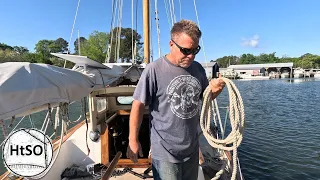
Back to Work | Ep. 352
Sailing through the narrow, dredged channel into Broad Creek on a cold, blustery day was quite the season finale for 2025-26. Now it's time to get to work. This is a mast pull year (every 5 years for me), so it will be a longer than usual haulout. SUPPORT HOW TO SAIL OCEANS ON PATREON: HO...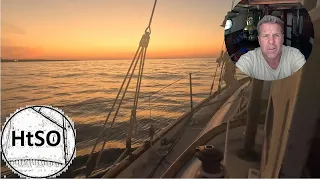
Back to the Bay, Season’s End | Ep. 351
Despite forecasts of moderate southerlies, I spend hours drifting off of Cape Lookout in near calm conditions. But alas the winds fill in, though never as strong as forecast, and send me on my way around Cape Hatteras and on to the Chesapeake Bay. This will be the last passage of the season, as I...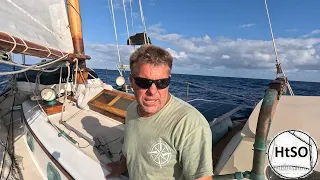
Gulf Stream Carnage | Ep. 350
The winds freshen from the east, kicking up the Gulf Stream. While getting into the head compartment the door flies open and tears off the top hinges. OK, another repair to make. Southerly winds a head of an approaching front blow me into the narrow entrance to Taylor Creek, in Beaufort, NC. Th...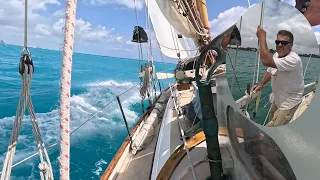
A fair wind! … after only five weeks of waiting | Ep. 349
Waiting for favorable offshore weather can drive you crazy. Even the kinder, gentler northbound run in the spring (as opposed to the southbound run in late fall, invariably a bear) can have you sitting in port for weeks. Of course it's tempting just to sail and hope for the best. In time exp...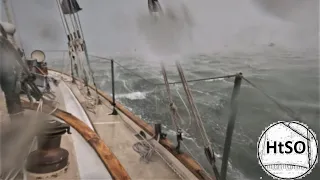
Well this is unexpected | Ep. 348
I enter Biscayne Bay via the Cape Florida Channel on the faintest of winds. Then an entire month passes as I shuttle back and forth between Key Biscayne and Dinner Key, all the while looking for a weather window to head offshore for the Chesapeake Bay, or Beaufort ... I'll even take Fernandina...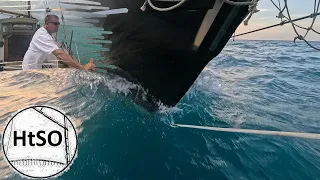
Finding a Fair Wind to Biscayne | Ep. 347
The first segment from Key West back to Biscayne Bay has you steering ENE, which frequently means that either one is going to slog into the prevailing easterlies, or wait for a southerly slant. Being gaff rigged and engineless, I opt for the latter. But that does mean some waiting, and as the weat...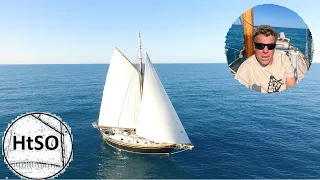
The Circle Closes on a Zephyr | Ep. 346
One month and one week was the nine-hundred mile loop I sailed from Key West, to Panama City, to Boca Grande, and back. My mini-mid-winter odyssey. It was certainly better from an educational standpoint than laying at anchor in the Keys all winter while waiting for warmer weather to head back nor...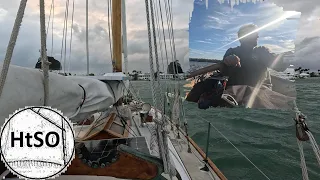
The Charlotte Harbor Tour (between cold fronts) | Ep. 345
Still lots to see of Boca Grande and Charlotte Harbor, but the winter cold fronts are coming through fast and furious. Which means that tourism has to yield to the exigencies of finding safe anchoring ahead of severe weather. SUPPORT HOW TO SAIL OCEANS ON PATREON: HOW TO SAIL OCEANS ON RUMBLE: ...
Baffling Winds, Beautiful Boca Grande | Ep. 344
I finally enter Charlotte Harbor, four days out of Panama City, FL, owing perhaps more to the flooding current than whatever wind there was. But an afternoon sea breeze works up to propel me to the anchorage off of Boca Grande Marina. Boca Grande is certainly scenic, although the nearest Publix ...
Panama City to Boca Grande … almost | Ep. 343
I'm off to a glorious start from Panama City, bound for Boca Grande and Charlotte Harbor, romping down the Gulf with fair northerly winds. But in total defiance of the weather maps, the winds just south of Port St. Joe shift southeast--dead on the nose--so I find myself tacking and barely maki...
Grand Lagoon, Tricky Exit, Southbound | Ep. 342
I find my way ashore to St. Andrews State Park, where I can land the dinghy, dump trash, take on water, and ride my bicycle to the Publix. So that's a win, even though it cost me $4 to get back into the park. Anyway, there's a window to head back south to Fort Meyers, and I'm going ...
The beaches are breathtaking, but the winter is cold | Ep. 341
After provisioning and exploring Watson Bayou, I make my way to the highly recommended Shell Island anchorage. It does not disappoint. However, the weekly frontal passages bring not only brisk northerlies, as they do everywhere in Florida during the winter, but bitter cold with overnight temperat...
The Ghost Coast | Ep. 340
I slowly approach the Gulf Coast. Light winds prevail. Even with the white sandy beaches and tall buildings in sight, I see almost no signs of life other than a few small powerboats. Nothing on AIS. Can't see any sailboat masts. Did some apocalypse just occur? Once inside St. Andrews Bay ...
Passage to Panama City | Ep. 339
I depart the buzzing and booming city of Key West, northbound for Panama City, Florida. After a mild frontal passage, which puts me through the usual sail drills, conditions quickly moderate. Wind and seas diminish over the next few days, making for slow but comfortable sailing. SUPPORT HOW TO SA...
An Excursion to the North | Ep. 338
After a period of active weather, the weather maps are clear for the next week. Fair winds for northbound passaging are indicated, so I decide to push off for Panama City, FL. Besides my visit to Galveston, TX, in 2002, I have yet to cruise the Gulf Coast. SUPPORT HOW TO SAIL OCEANS ON PATREON: ...
The Anchoring Dance | Ep. 337
I arrive in the Florida Keys. Warm waters, sunshine, carefree ... um, no, not carefree, not in the winter. Cold fronts come sweeping across the Keys typically once a week during the winter months. The low islands offer little wind protection, and the holding is not always great. So one has to ke...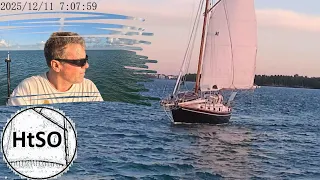
To Key West! | Ep. 336
I arrive in Biscayne Bay in the middle of the night (naturally), nearly fourteen days out of Poquoson, Virginia. After re-provisioning and making some repairs, I am promptly off to the Florida Keys. SUPPORT HOW TO SAIL OCEANS ON PATREON: HOW TO SAIL OCEANS ON RUMBLE: HOW TO SAIL OCEANS TEE SH...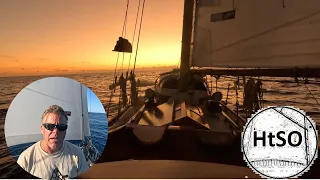
Slow Sailing. Nice Sunsets | Ep. 335
Following that screaming gale I spend a week inching along toward Biscayne Bay in little or no wind. Entering into the Bahamas the seas become flat as a lake, and the sunsets are spectacular. Still I wish I was progressing a little faster, especially when the fresh food runs out. SUPPORT HOW TO S...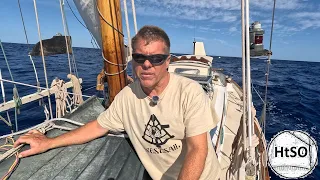
Dream it, do a lot of work, then live it | Ep. 334
After a screaming gale I get light airs. Not complaining, although the slow progress does get frustrating after a while. An old Gordon Lightfoot song brings back memories of when I lived in a tiny apartment in Evanston, IL, worked at Arthur Andersen in Chicago, and constantly dreamed of blue water...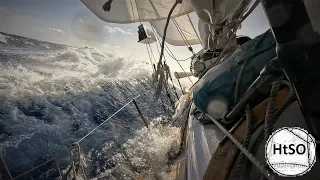
Full Gale | Ep. 333
I am unable to get far enough south to avoid gale conditions ushered in by a passing cold front. No option remains but to reef down and ride it out. SUPPORT HOW TO SAIL OCEANS ON PATREON: HOW TO SAIL OCEANS ON RUMBLE: HOW TO SAIL OCEANS TEE SHIRT: DONATE: WEBSITE: VIDEO SOUNDTRACKS:...
A Race Against Time | Ep. 332
The usual late fall offshore passage scenario. You depart the US east coast on the tail of a cold front, which supplies you with favorable northerly winds. But there's always another front moving through in a few days' time. The typical strategy is to sail south as fast as you can, by w...