She Painted the Whole Boat
Hauled out on boatyard blocks in Silva Bay on Gabriola Island, Simon Stiles and Erin began an extensive topside paint transformation on the William Garden-designed Formosa 51 for Finding Simon. The refit began with pressure washing the topsides, clearing away built-up debris, and scrubbing down the entire hull with soap and degreaser to remove surface residues before any sandpaper touched the aging finish.
Purchased four years ago for a single dollar, SV Perihelion carried decades of weathered coatings and structural compromises that Simon and Erin were systematically peeling back. While Simon addressed underwater fittings and hull integrity below the waterline, Erin took charge of turning the weathered fiberglass topsides into a durable, clean finish before winter weather closed their working window.
Excavating Cracks, Porthole Patches, and the Factory Waterline
Initial inspection and preliminary sanding revealed layers of marine history across the hull. Near a port hole, Simon uncovered a patch of lighter blue fairing compound that the previous owner had noted during the purchase. This compound filled widespread crazing and deep cracks running through multiple paint layers across the character strip. Simon compared the exposed strata to fordite, the layered automotive paint stone, noting that cracks originated in the earliest primer and paint layers beneath the surface rather than sitting cleanly on the topcoat.
Color selection became an early priority. Simon had initially considered painting the hull a dark tone, but Erin advocated strongly for a lighter shade to avoid radiant heat buildup in coastal and tropical climates. Resting a hand on dark green hull sections compared to white gelcoat demonstrated how intensely darker pigments absorbed heat. Simon agreed with the choice, acknowledging during their consultation: “I wanted to originally paint this boat a darker color and you’ve talked me out of it.” The crew settled on oyster white topsides complemented by traditional green accents.
The topside excavation also exposed significant shifts in the waterline. Because Simon had rebuilt the rotting decks using solid fiberglass and dry timber, the Formosa 51 shed considerable weight and sat noticeably higher than it had over the previous 10 years. Simon aimed to reestablish the original factory waterline. Previous repairs had also covered the molded plank lines on the hull. Using a straight edge on cardboard, Simon traced the true outer profile of each groove, carefully recutting and smoothing the faux plank moldings by hand to restore crisp definition before priming.
Heavy Sanding and Two-Part Bootstripe Primer
Working on the Formosa 51 presented substantial physical obstacles. SV Perihelion drafts six and a half feet and carries about 5 ft of freeboard. Staged high on shipyard blocks, the topsides reached roughly 12 ft into the air. Simon, Erin, and their friend Josh rigged scaffolding, but reaching difficult hull cambers often meant hanging upside down over the deck rails to run power sanders.
Seven days into the haulout, the crew reached the end of their primary fairing phase. Thick fairing compounds applied during the 1970s lacked structural strength, leaving delaminations and hollows that required relentless grinding and filling with fairing compound. To build a solid barrier over raw repairs along the waterline and accent stripe, the crew mixed and applied Interlux Interprotect 2000 two-part epoxy primer thinned with solvent.
The two-part underwater primer provided excellent adhesion, but it left a heavily stippled, rough texture along the bootstripe. Designed primarily for barrier protection below the waterline, the epoxy required intense secondary sanding to achieve the smoothness needed beneath high-gloss topcoats. With the primer cured, the yacht displayed its true sheerline and sharp stern profile for the first time.
Freehand Seams and Racing the Rain with Toplac Plus
Approaching weather forecasts showed two solid weeks of incoming rain, forcing Simon, Erin, and Ryan to accelerate their painting schedule. Instead of taping every color separation line, the team decided to freehand cut all seams by brush. Masking tape risked lifting the tender, recently cured primer, and taping 51 feet of detailed moldings would have consumed hours they did not have. Simon explained: “It is a formula that requires no tipping, so rolling and no tipping.”
Fast drying in the afternoon sun created noticeable brush strokes between the cut edges and the rolled areas, leaving orange peel texture that had to be leveled. Erin knocked down the high spots using fine 240 and 320 sandpaper while keeping a watchful eye on gathering clouds. Facing the tight schedule, Erin admitted: “Please pray for us. I’m so stressed.”
The team rolled the first coat of Interlux Toplac Plus in Hatteras White across the hull. Just as the final roller passes were finished, raindrops began spattering the fresh paint. A few water dribbles washed down from the deck scuppers and beaded on the coating, causing localized loss of gloss, though the single-part marine enamel held its bond without washing out.
Simultaneous Second Coats and Cold-Weather Condensation
After Josh and Ryan departed, Simon and Erin spent hours wiping morning moisture from the hull with clean rags. When a narrow four-hour window opened before forecasted afternoon showers at 1:00, persistent dripping from the soaked wooden rub rail prevented them from rolling paint on the upper hull. Erin utilized the sheltered overhang of the transom to hand-paint the boat’s stern name plate, creating a crisp traditional finish that remained protected from falling rain.
Their friend Luke arrived at the boatyard just as a promising dry morning appeared. With cold autumn weather threatening to end painting for the season, the crew took a bold tactical risk. They decided to apply the second coat of white topside paint and the first coat of green trim simultaneously. Simon quipped: “We are painting both the second coat of the white and the first coat of the green at the same time. Do not try this at home, kids.”
Working rapidly in tandem, Luke and Simon rolled out the broad hull expanses in white while Erin cut and rolled the green sheer strake. By nightfall, the entire boat had received its fresh color scheme, but challenging overnight conditions tested the paint’s limits. Simon noted the seasonal constraints: “We are painting a boat in November. This is not the way you’re supposed to do this.”
The technical data sheet for Toplac Plus strictly warns against applying paint late in the day due to dew, and explicitly cautions against ambient temperatures dropping below 5 degrees. Both conditions occurred overnight. Heavy condensation settled across the curing finish. The white paint tolerated the moisture and leveled into a clean mirror gloss, but the green enamel suffered from the temperature drop, displaying reduced gloss and pronounced orange peel that would require future attention.
Final Antifouling and Relaunch Preparations
Taking advantage of direct sunlight on the boat’s starboard side, Erin tackled a second coat of green to even out the color and restore gloss. Simultaneously, Simon moved beneath the hull to apply fresh antifouling paint over the sanded bottom. Applying the bottom paint over the restored factory waterline tied the entire exterior aesthetic together, transforming the long-derelict hull into a striking William Garden ketch.
With 2 full coats of topside finish and fresh antifouling secured, Simon and Erin prepared SV Perihelion to return to the water. Simon acknowledged the collaborative effort of friends Luke, Ryan, Josh, Taylor, and Ed in beating the Canadian autumn chill: “So, we’ve got two coats on, and you know what? We’re going to get more in the spring for sure. But at least this way we can get back in the water and enjoy the boat.”
Refit Metrics and Environmental Conditions
| Metric | Details |
|---|---|
| Staging Height on Blocks | 12 ft elevation |
| Hull Freeboard | 5 ft height |
| Preparation Duration | 7 days sanding and fairing |
| Finishing Sandpaper Grits | 240 and 320 grit |
| Minimum Cure Temperature Limit | 5 degrees threshold |
| Applied Hull Topcoats | 2 coats |
Frequently Asked Questions
The crew used Interlux Toplac Plus in Hatteras White and traditional green, applying the single-part marine enamel with rollers without tipping.
Interprotect 2000 is an epoxy primer designed for underwater barrier protection. Applying it on the bootstripe left heavy stippling and texture that required intense sanding before high-gloss paint could be rolled.
Erin advised against dark paint because darker colors absorb excessive solar heat and UV radiation, which causes premature paint breakdown and increases cabin temperatures in warm climates.
Overnight temperatures fell below 5 degrees with heavy condensation, causing the green paint to lose its gloss and develop orange peel texture, whereas the white paint leveled into a mirror shine.
They freehand cut the seams to prevent tape adhesive from damaging tender, uncured primer and to save crucial hours ahead of forecasted rainstorms.
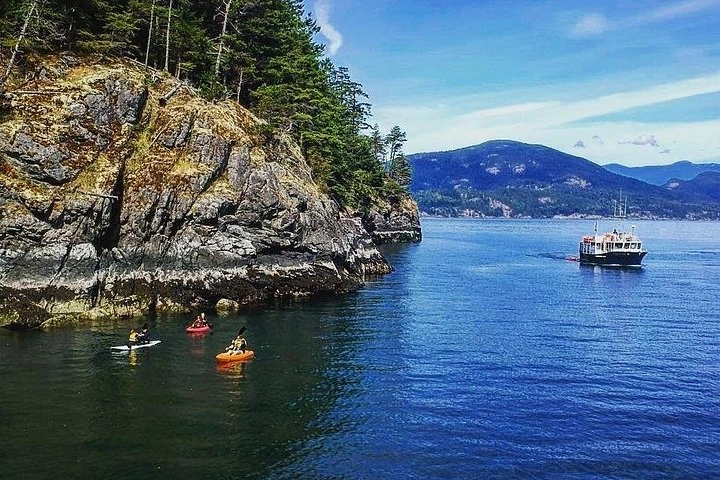
Book a trip where this was filmed — near Vancouver Island
Support Finding Simon
At WeBoating.com, we profoundly acknowledge the unwavering dedication that Finding Simon invests in crafting each and every video or voyage. Their passion for delivering exceptional ocean content shines through every frame, and it's a labor of love that deserves your attention.
We invite you to watch their captivating videos here and actively engage with their content, including their social media links above. Liking, commenting, and sharing their work goes a long way in fueling their creative fire.
We're also inviting you to explore the gear, sponsorships, and boat partnerships highlighted in the "She Painted the Whole Boat" video description, or directly on YouTube. By engaging with these offerings or purchasing services and items, you directly support Finding Simon, their collaborators, and the brands they're associated with.
To ensure you never miss an offshore update, consider visiting their official YouTube Channel to subscribe, like, and join their community directly.
If you have any feedback, corrections, or additional information about Finding Simon or their videos, please use the comment form below to share your thoughts with us.
Thank you for being a part of our community and supporting the creators we cherish. Your time and support truly matter!
Erin really knocked this one out of the park. There's still plenty to do before this boat is completely restored but now we can look at our work and be proud of her. Bill Garden's Formosa 51 certainly has a beautiful shape and now her paint matches those great looks.
This build is made possible by you and your support. Thank you so much for watching, commenting and liking. If you'd like to help more please checkout the links below.
Patreon: https://www.patreon.com/FindingSimon
Wishlist: https://www.amazon.ca/hz/wishlist/ls/2Z0IDLS3ONL8Q?ref_=wl_share
Instagram: https://www.instagram.com/finding_simon/
PayPal: https://paypal.me/ShelbyandSimon
Sponsored by
Total Boat (https://www.totalboat.com/)

Finding Simon
Join Simon Stiles of Finding Simon as he documents his high-authority transition from a 5,000W solar catamaran to the restoration of a $1 Formosa 51.
Channel Information:
Social Media Links:
She Painted the Whole Boat Location
- Silva Bay, Gabriola Island, British Columbia, Canada (49.1485,-123.702)
Latest Episodes from Finding Simon
Explore the most recent voyages. Subscribe to the channel to never miss an update!
This Was Slowly DESTROYING My $1 Boat
Doesn't take much to make an engine not run right, so in this episode we get her down to the thousandths, and take her for a spin with (almost) everything in the right place. This build is made possible by you and your support. Thank you so much for watching, commenting and liking. If you'...
Machining Sailboat Parts at Sea
Simon Stiles tests desktop CNC machining aboard SV Perihelion on Gabriola Island, milling an aluminum alternator bracket and custom coins with the Makera Z1.
Ready or Not We’re Going Back Into the Water
Simon Stiles finishes a three-week haul out on SV Perihelion, glassing the keel, upgrading the 48V battery bank, and testing new propulsion through Dodd Narrows to Pirates Cove.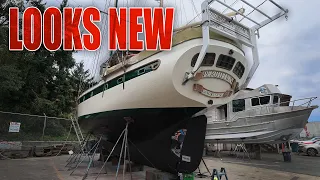
She Painted the Whole Boat
Hauled out on boatyard blocks, Simon Stiles and Erin tackle an ambitious topsides paint project on their Formosa 51 SV Perihelion, grinding old repairs, rolling Interlux primer, and racing November rain to apply two coats of marine finish.
Replacing my Bronze Thruhulls with Plastic
Simon hauls out his Formosa 51 to remove 17 corroded through-hulls, install Forespar Marelon composite valves with custom PVC backing blocks, and resolve critical supplier defects.