Replacing my Bronze Thruhulls with Plastic
Simon hauls out his Formosa 51 in the boatyard to strip out every below-waterline through-hull after experiencing an emergency plumbing failure at 9:00 at night in January. Documenting his ongoing refit on Finding Simon, he begins grinding out decades of deteriorated hardware with an uncompromising goal: eliminating obsolete hull penetrations and replacing the remaining fittings with modern Forespar Marelon composite valves.
Reflecting on the heavy maintenance obligations of an aging vessel, Simon admits the harsh financial reality of a bargain project boat: “I bought this Formosa 51 four years ago for $1. And they say there’s no more expensive boat in the world than a free one.”
With seven days remaining before his scheduled splash date, resolving the vessel’s hull fittings becomes an urgent priority.
Stripping Corroded Fittings and Reducing Penetrations
The Formosa 51 arrived with 17 separate through-hulls scattered across the hull. Many of the assemblies were nearly 50 years old, featuring plywood backing pads and securing nuts completely encapsulated beneath layers of fiberglass cloth. Removing them required extensive cutting and grinding inside confined bilges to expose the original fasteners and knock the mushroom heads free from the exterior hull.
Inspecting the pile of discarded hardware revealed an alarming variety of past failures. Previous owners had installed unreinforced, cheap plastic ball valves sourced from Princess Auto at roughly $10 a piece. Lacking structural fiber matrix or UV inhibitors, several of these unreinforced plastic units had already snapped under physical strain. Even more concerning was the condition of the metal seacocks. One newer bronze ball valve serving the main diesel engine had seized solid. Excessive force applied to free the stuck handle had bent the internal mechanism, leaving a small opening even when turned to the apparent closed position. That subtle gap allowed raw water to seep past a compromised anti-siphon valve and flood directly into the engine’s cylinders.
Other bronze through-hulls suffered severe dezincification and galvanic corrosion, exhibiting deep pink discoloration and walls eaten down to paper-thin margins because the vessel’s internal bonding system had been disconnected. Simon chose not to gamble on metal seacocks: “Basically, we’re taking this boat from the original 17 through alls down to just six plus a knot meter and a depth sounder.”
Six or seven unused penetrations were permanently decommissioned, ground down, and laminated closed with fiberglass to minimize potential points of failure.
Fabricating Custom PVC Backing Blocks
With the redundant holes sealed, six critical through-hulls remained below the waterline requiring rigid backing pads. Commercial solutions proved impractical; a $100 Groco backing block purchased for the galley sink featured a three- or six-hole bolt circle that failed to align with the four-bolt flange pattern of the newly selected Forespar valves. Wood alternatives carried significant drawbacks, as marine plywood inevitably absorbs bilge condensation over time, leading to swelling, softening, and rot.
Rather than spending days laying up custom solid fiberglass plates or using structural core foam, Simon machined custom backing pads from solid PVC sheet stock. Rigid PVC provides complete dimensional stability, refuses to absorb bilge moisture, and eliminates the threat of osmotic breakdown while providing a uniform foundation to support inward lateral forces across the hull curvature.
Supplier Shipment Delays and Manufacturing Defects
Simon committed to replacing the primary underwater fittings with Forespar Marelon Pro Series valves, investing heavily in composite hardware: “I spent $3,000 on through holes, which is a lot of money, but it’s basically what a bronze through holes would have cost.”
However, the refit faced immediate disruption when the parts shipment arrived from Defender. Delivered loose in a cardboard box without packaging cushions or a packing slip just four days prior to haulout, the order contained multiple incorrect parts. Contacting customer support revealed that replacement components would take up to a month to ship from eastern warehouses, an intolerable delay given the boatyard’s $100 daily storage rate and the seven-day window before splashing.
Logistical delays compounded when assistant Ryan arrived to inspect the Marelon components and uncovered a severe manufacturing error in the dual-outlet assemblies. Examining the 1-inch and 1 1/4-inch Pro Series valves (part code 932554), Ryan noticed the internal flow paths operated backwards. Factory assembly had mistakenly inserted single-outlet ball cores into dual-outlet valve bodies. When the external handle was flipped to the designated open orientation, flow to the through-hull remained shut while the two barbed hose fittings connected exclusively to each other. Identifying the factory blunder, Simon noted bluntly: “They put the wrong ball valve inside of these.”
Bedding Valves in 5200 and Above-Waterline Consolidation
Faced with a four-week manufacturer lead time, Simon adapted the usable fittings to maintain his launch deadline. Each threaded composite mushroom stem was test-fitted against the hull and cut down to match the exact shell thickness, trimming away excess lengths of 1/2 inch, 3/8 inch, and 5/8 inch. After thoroughly abrading the inner hull and degreasing all contact surfaces with acetone, the PVC backing pads and Marelon Pro Series flange bases were bedded using generous coatings of 3M 5200 polyurethane adhesive sealant. The permanent curing adhesive provides high mechanical shear resistance, compensating for composite material tolerances and creating a leak-proof structural bond.
To further reduce underwater vulnerability, Simon drilled an above-waterline penetration in the engine room for an original Forespar Marelon wide-flange through-hull. This single large-diameter exit consolidated cockpit scuppers, bilge pump discharges, and galley drain plumbing into an elevated overboard port. Despite the supplier headaches and questionable composite fiber density, Simon concluded: “In the end I did stick with ForceBar’s Marlon Pro Series and I wish I could be a little bit more confident about it.”
With the plumbing sealed, the Formosa 51 secured a reliable, corrosion-proof bottom ready for sea trials.
| Through-Hull Refit Component | Field Specifications & Material Details |
|---|---|
| Vessel & Penetration Count | Formosa 51 (reduced from 17 down to 6 below-waterline units) |
| Backing Plate Material | Machined rigid PVC sheet (replaces glassed-in plywood and $100 Groco block) |
| Primary Hardware | $3,000 Forespar Marelon Pro Series (500 lb lateral load rating, 90-degree flange) |
| Bedding Compound | 3M 5200 permanent polyurethane marine adhesive sealant |
| Boatyard Schedule & Cost | $100 per day yard rate with 7 days remaining until splash date |
Frequently Asked Questions
Simon replaced all through-hulls after an emergency failure at 9:00 at night in January caused water ingress, revealing dangerously corroded 50-year-old bronze valves and brittle plastic hardware.
Simon eliminated multiple redundant penetrations, reducing the boat’s total from 17 original through-hulls down to six below the waterline plus a knot meter and depth sounder.
Unlike marine plywood which absorbs bilge moisture and rots over time, rigid PVC sheet is dimensionally stable, impervious to water, and will not suffer osmotic blistering.
Ryan discovered that Forespar installed single-outlet ball cores inside 1-inch and 1 1/4-inch dual-outlet valve bodies (part code 932554), cross-connecting the barbs and blocking overboard drainage.
Simon used 3M 5200 polyurethane adhesive sealant to bed the cut-down Marelon fittings and PVC backing plates permanently against the solid fiberglass hull.
Book a trip where this was filmed — near Vancouver Island
Support Finding Simon
At WeBoating.com, we profoundly acknowledge the unwavering dedication that Finding Simon invests in crafting each and every video or voyage. Their passion for delivering exceptional ocean content shines through every frame, and it's a labor of love that deserves your attention.
We invite you to watch their captivating videos here and actively engage with their content, including their social media links above. Liking, commenting, and sharing their work goes a long way in fueling their creative fire.
We're also inviting you to explore the gear, sponsorships, and boat partnerships highlighted in the "Replacing my Bronze Thruhulls with Plastic" video description, or directly on YouTube. By engaging with these offerings or purchasing services and items, you directly support Finding Simon, their collaborators, and the brands they're associated with.
To ensure you never miss an offshore update, consider visiting their official YouTube Channel to subscribe, like, and join their community directly.
If you have any feedback, corrections, or additional information about Finding Simon or their videos, please use the comment form below to share your thoughts with us.
Thank you for being a part of our community and supporting the creators we cherish. Your time and support truly matter!
This weeks been a little frustrating, but in the end we plugged some holes and the boat will be much safer for it.
This build is made possible by you and your support. Thank you so much for watching, commenting and liking. If you'd like to help more please checkout the links below.
Patreon: https://www.patreon.com/FindingSimon
Wishlist: https://www.amazon.ca/hz/wishlist/ls/2Z0IDLS3ONL8Q?ref_=wl_share
Instagram: https://www.instagram.com/finding_simon/
PayPal: https://paypal.me/ShelbyandSimon
Sponsored by
Total Boat (https://www.totalboat.com/)

Finding Simon
Join Simon Stiles of Finding Simon as he documents his high-authority transition from a 5,000W solar catamaran to the restoration of a $1 Formosa 51.
Channel Information:
Social Media Links:
Replacing my Bronze Thruhulls with Plastic Location
- Silva Bay, Gabriola Island, British Columbia, Canada (49.1483,-123.7011)
Latest Episodes from Finding Simon
Explore the most recent voyages. Subscribe to the channel to never miss an update!
Ready or Not We’re Going Back Into the Water
Simon Stiles finishes a three-week haul out on SV Perihelion, glassing the keel, upgrading the 48V battery bank, and testing new propulsion through Dodd Narrows to Pirates Cove.
She Painted the Whole Boat
Hauled out on boatyard blocks, Simon Stiles and Erin tackle an ambitious topsides paint project on their Formosa 51 SV Perihelion, grinding old repairs, rolling Interlux primer, and racing November rain to apply two coats of marine finish.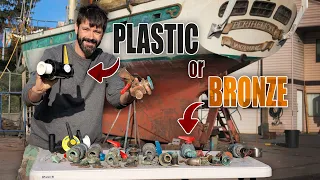
Replacing my Bronze Thruhulls with Plastic
Simon hauls out his Formosa 51 to remove 17 corroded through-hulls, install Forespar Marelon composite valves with custom PVC backing blocks, and resolve critical supplier defects.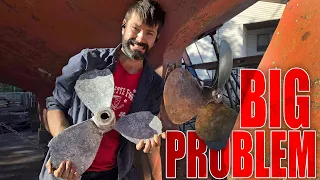
Leaks, Corrosion and Cracked Props: Hauling Out
Simon Stiles hauls out his Formosa 51 SV Perihelion at Newcastle Shipyard in Nanaimo to fix a leaking stern tube, inspect running gear, and replace a damaged propeller.
Building a Super Quiet Engine Room!
Aboard SV Perihelion, Simon Stiles transforms the machinery space into an organized workshop, fabricating a soundproof marine plywood engine enclosure, black walnut flooring, and modular front-latching tool drawers.