Diving alone on a Shipwreck in Greece
Cradled in the remote, azure expanse of the southeastern Aegean Sea, the uninhabited island of Alimia presents one of the most enigmatic anchorages in the Greek Dodecanese. For voyager, certified Divemaster, and documentary filmmaker Dylan Magaster, dropping the bower anchor of his 1979 Morgan 382, SV Arianrhod, into the tranquil waters of Ormos Alimias marked an interlude of absolute maritime seclusion. Sheltered by surrounding volcanic ridges that provide complete 360-degree protection from fierce Mediterranean gales, the bay offered solitary peace—and a submerged window into forgotten twentieth-century naval warfare.
Resting silently along the seabed in depths ranging from ten to fifteen meters lie the skeletal steel remains of wartime and coastal shipwrecks, preserved by the exceptional water clarity of the Aegean. Having spent days enjoying the uninhabited anchorage entirely alone aboard SV Arianrhod, Dylan prepared to execute a solitary underwater reconnaissance. Balancing the thrill of technical maritime exploration against the unforgiving hazards of diving without a buddy, the expedition became a disciplined masterclass in risk mitigation, gas management, and psychological self-reliance.
Solo scuba diving on historical wrecks demands a rigorous departure from casual recreational diving dogma. Navigating jagged structural steel, avoiding overhead entrapment, and managing gas reserves in remote archipelagos miles from recompression chambers requires technical competence over hollow credentials. Dylan’s exploration across Alimia’s seabed serves as an illuminating case study for bluewater sailors who carry diving apparatus to explore the hidden underwater topographies of their cruising grounds.
The Sanctuary of Alimia Island: Geography, Geology, and Maritime Legacy
When Dylan Magaster guided SV Arianrhod, his classic Morgan 382, into the protected bay of Alimia Island in the southeastern Aegean Sea, he entered an anchorage steeped in centuries of naval history. Situated midway between Rhodes and Chalki within the Dodecanese archipelago, Alimia—known historically as Eulimnia, meaning “place of good harbors”—spans roughly seven square kilometers of arid, limestone topography. The island’s southern embrace forms Ormos Alimias (Saint George Bay), a natural amphitheater that provides comprehensive 360-degree all-weather shelter against the punishing northwest Meltemi winds that regularly rake Aegean shipping corridors.
The holding ground within Ormos Alimias is legendary among experienced Mediterranean mariners. Anchoring in eight to twelve meters over thick marine sand and alluvial mud, SV Arianrhod gained an unyielding bite that allowed Dylan to rest easy through shifting nighttime breezes without anxiety regarding anchor drag. Ashore, crumbling stone terraces and deserted limestone cottages trace the outlines of an agricultural and fishing settlement abandoned shortly after the Second World War, watched over from the 269-meter mountain summit by the ruined bastions of a 1475 Knights Hospitaller fortress built upon ancient Hellenistic foundations.
Despite its proximity to bustling tourist hubs on Rhodes, Alimia remains devoid of permanent human habitation, grid electricity, or municipal water. Cruisers who venture here must rely entirely upon shipboard self-sufficiency, generating their own photovoltaic power and managing potable water rations. For Dylan Magaster, this utter isolation heightened both the pristine beauty of the marine reserve and the operational gravity of conducting offshore scuba activities without shore support or auxiliary assistance.
Naval Warfare and Underwater Relics: The Forensics of Alimia Bay
Peering through the crystalline surface of the Aegean Sea from the teak decks of SV Arianrhod, Dylan Magaster surveyed the ghostly silhouettes of maritime wreckage resting across the sandy floor of Alimia Island. The deep, sheltered waters of Ormos Alimias served as a fortified naval outpost and Italian submarine haven during the Second World War. Following Italy’s capitulation in 1943, German occupation forces utilized the secluded bay to harbor patrol craft and supply coasters, transforming this tranquil natural basin into a priority combat target for Allied Mediterranean air and submarine squadrons.
Among the casualties of the Aegean naval campaigns was the Italian auxiliary cargo vessel Elvira Vaselli, along with various coastal supply barges and patrol vessels sunk during Allied airstrikes and torpedo attacks. Today, these historical wrecks rest upright or canted upon the sandy seabed in depths between nine and fifteen meters. Decades of salt immersion have colonized their steel ribs, deck plating, and winch assemblies with orange encrusting sponges, feather duster worms, and dense schools of damselfish and sea bream.
Beneath the visual enchantment of artificial reefs lies acute physical peril. Structural decay has weakened overhead bulkheads, leaving jagged, razor-sharp steel frames, collapsed hatch coamings, and snared nylon monofilament fishing line draped across deck machinery. For Dylan Magaster aboard SV Arianrhod, undertaking an underwater exploration of these deteriorating maritime relics required treating the site with forensic caution rather than casual curiosity.
Free-Diving Reconnaissance: Surveying the Seabed Before the Dive
Before donning heavy scuba cylinders aboard SV Arianrhod, Dylan Magaster initiated a methodical free-diving reconnaissance over the primary shipwreck site in the calm waters of Alimia Island. In the clear Aegean Sea, visibility exceeded twenty meters, allowing Dylan to observe the vessel’s hull geometry, orientation, and surrounding bathymetry while breathing through a simple snorkel. Entering the water with low-volume mask and carbon-fiber freediving fins provided an agile, low-drag platform to assess sea state, horizontal drift, and seabed hazards without expending compressed gas.
During repeated breath-hold descents to eight and ten meters, Dylan scrutinized the exterior surfaces of the wreck. He confirmed that horizontal current was virtually imperceptible inside the protected cove, eliminating the hazard of underwater drift that could sweep a solitary diver away from his vessel or tender. Furthermore, the survey confirmed that ambient Mediterranean sunlight penetrated cleanly to the seabed, ensuring bright natural illumination across the exterior hull plates.
Crucially, this breath-hold survey revealed potential overhead hazards and structural traps. Dylan identified areas where collapsed companionways and fractured deck beams presented entrapment risks, establishing clear mental boundaries for the subsequent compressed-air dive. By gathering accurate environmental intelligence prior to committing to scuba gear, the solo mariner eliminated crucial unknowns before submerging on an open-circuit regulator.
Technical Parameters: Disciplined Boundaries of the Solo Scuba Profile
Securing his single scuba cylinder and adjusting his buoyancy compensator aboard SV Arianrhod, Dylan Magaster established rigorous, non-negotiable dive parameters before plunging into the Aegean Sea at Alimia Island. Understanding that solitary diving eliminates the immediate safety net of a buddy’s alternate air source, Dylan designed a conservative dive profile focused strictly on gas conservation, depth limitations, and generous decompression safety buffers. By capping maximum operational depth at fifteen meters and conducting the majority of the dive around ten meters, he remained far inside the established No Decompression Limit (NDL).
Under standard recreational dive tables and modern Buhlmann ZHL-16C decompression algorithms, an ambient depth of ten to fifteen meters allows well over seventy minutes of bottom time before entering deco obligations. Dylan imposed a strict personal cutoff of twenty-five minutes of maximum bottom time. This conservative envelope ensured that his cylinder retained substantial reserve pressure, preventing low-gas emergencies while drastically curtailing nitrogen uptake in his body tissues.
Even though his dive computer indicated zero decompression obligation, Dylan planned a mandatory three-minute safety stop at five meters (sixteen feet) as an inviolable operational rule. This controlled pause facilitates the quiet elimination of silent microbubbles from circulation, reinforcing physiological safety margins before breaking the surface. Below is the structured operational profile governing the exploration:
| Operational Parameter | Field Specification | Safety Buffer & Protocol |
|---|---|---|
| Vessel & Rig | SV Arianrhod / 1979 Morgan 382 (Ted Brewer design) | Heavy fiberglass hull, encapsulated lead keel, self-sufficient off-grid platform |
| Anchorage Location | Ormos Alimias, Alimia Island, Greece (36.2667° N, 27.7000° E) | 360-degree all-weather shelter; sand/mud holding at 8–12 meters |
| Maximum Target Depth | 15.0 meters (49.2 feet) | Absolute hard floor; primary working depth capped at 10.0 meters |
| Bottom Time Envelope | 25 minutes maximum elapsed bottom time | Conservative limit preserving substantial cylinder reserve pressure |
| Decompression Status | Strict No Decompression Limit (NDL) envelope | >45-minute NDL safety buffer on dive computer algorithms |
| Safety Stop Protocol | 3 minutes at 5.0 meters (16.4 feet) | Mandatory stop executed on shot line / anchor rode prior to surface ascent |
| Environmental Sea State | Zero current, glassy surface, >20 m horizontal visibility | Benign conditions eliminating drift and navigation disorientation |
| Emergency Contingency | Controlled Emergency Swimming Ascent (CESA) viable | Direct vertical water column access; strict ban on overhead penetration |
Emergency Contingencies: Solo Scuba Dynamics and Ascent Protocols
Operating without a dive companion off Alimia Island, Dylan Magaster anchored SV Arianrhod in the Aegean Sea knowing that total equipment failure required immediate, self-contained responses. In standard two-diver configurations, a primary regulator freeze or first-stage failure is remedied by donating a buddy’s secondary octopus regulator. In a solitary scuba dive without an auxiliary stage bottle or independent pony cylinder, the diver is solely responsible for resolving catastrophic gas loss or entanglement.
Dylan candidly acknowledged the lack of an independent redundant pony cylinder—a piece of safety hardware strongly recommended in technical solo diving standards. To counterbalance this gear omission, he maintained a continuous, direct line of sight to the open surface. Operating at a moderate depth of ten meters ensured that in the worst-case scenario of an abrupt catastrophic gas failure, a Controlled Emergency Swimming Ascent (CESA) remained 100 percent physically viable. From thirty-three feet, an experienced diver maintaining steady exhalation to avoid pulmonary barotrauma can easily kick to the surface on a single breath.
To preserve CESA viability, Dylan adhered strictly to an anti-penetration doctrine. He resisted the temptation to swim beneath collapsed hull decks, cargo holds, or wheelhouse enclosures where ceiling structures create an overhead environment. Penetrating a wreck voids the possibility of a direct vertical ascent and introduces the lethal threat of silt-outs, where fluttering fins kick up blinding clouds of rust and sediment that eradicate all visibility in seconds. By circling only the external perimeter and peering through open deck apertures, Dylan preserved his unimpeded escape route to the atmosphere.
Competency Versus Credentialism: The Voyager’s Reality at Sea
Resting in the cockpit of SV Arianrhod following the dive, Dylan Magaster contemplated the philosophical tension between formal certification dogma and real-world competence while anchored off Alimia Island in the Aegean Sea. As a certified PADI Divemaster who also holds recognized offshore sailing credentials, Dylan possesses the formal qualifications recognized across maritime industries. Yet his years of solitary global adventuring have fostered a pragmatic skepticism toward treating laminated certificates as infallible shields against natural danger.
Introductory open water certification courses drill the mantra “never dive alone” into novice divers for sound pedagogical reasons: beginners lack the muscle memory, gas consumption awareness, and psychological calmness required to troubleshoot minor gear glitches independently. However, major training agencies including SDI, PADI, and SSI offer dedicated Solo Diver and Self-Reliant Diver certifications. Experienced technical divers and underwater cinematographers frequently recognize that carrying full gear redundancy alone can be substantially safer than managing an anxious, ill-prepared dive buddy whose sudden panic could jeopardize both divers’ lives.
Dylan articulated a mature conceptual framework regarding physical risk: danger is not an ethereal phantom to be feared, but a mathematical probability of harm that can be actively reshaped through situational awareness. Crossing a busy urban street with eyes closed invites disaster, whereas opening one’s eyes and evaluating oncoming traffic mitigates risk to negligible levels. In remote offshore cruising, self-determination and disciplined accountability supersede institutional rule-following, enabling sailors to venture beyond comfort zones while safeguarding their lives.
Bluewater Steed: The Proven Pedigree of the Morgan 382
Serving as Dylan Magaster’s mobile diving platform and ocean sanctuary at Alimia Island, SV Arianrhod embodies the robust naval architecture of the 1979 Morgan 382 in the Aegean Sea. Conceived by renowned naval architect Ted Brewer in 1977 to replace Charley Morgan’s earlier designs, the Morgan 382 was engineered specifically to deliver stiff, seaworthy performance during extended offshore passages. Built with solid hand-laid fiberglass laminate and heavily reinforced floors, the hull possesses the structural stamina required for unassisted remote cruising.
Measuring 38 feet 2 inches overall with a beam of 11 feet 4 inches and a draft of 5 feet, the Morgan 382 incorporates a modified fin keel with an encapsulated lead ballast casting of 6,800 pounds. This ballast configuration eliminates the perennial maintenance hazard of external keel bolts, providing peace of mind when navigating rocky Mediterranean shoals. The skeg-hung rudder offers exceptional helm tracking in quartering seas while protecting the rudder stock and pintles from impact with submerged flotsam or submerged reefs.
Displacing over 17,000 pounds, SV Arianrhod carries ample payload capacity for heavy scuba compressors, dive cylinders, lead weight belts, high-output solar arrays, and extensive ground tackle. For a solo voyager spending weeks anchored in uninhabited archipelagos, Brewer’s thoughtful balance of deck ergonomics, wide side decks for gear handling, and generous bilge volume transforms the vessel from a mere mode of transportation into an autonomous off-grid exploration base.
Geographical Navigation: The Dodecanese Maritime Corridor
Positioned along the maritime crossroads linking Rhodes to Chalki, Dylan Magaster navigated SV Arianrhod through challenging Greek waters to reach the isolated sanctuary of Alimia Island in the Aegean Sea. The Dodecanese archipelago forms a natural stepping-stone bridge between the Greek mainland and the coast of Asia Minor. While these channels offer breathtaking coastal vistas, summer sailors must contend with the Meltemi, which funnels through high island gaps to generate localized gale-force wind bullets and steep, short-period chop.
Cruising westward from the bustling commercial harbor of Mandraki on Rhodes, SV Arianrhod transited the Makry Strait before rounding the jagged southern cape of Alimia. Navigating into Ormos Alimias requires identifying the low-lying eastern headlands and giving a wide berth to shallow littoral reefs bordering the entrance. Once past the outer sill, the water flattens instantly, trading fifteen-knot coastal whitecaps for glassy, translucent calm.
For bluewater cruisers journeying between the Cyclades and the southern Dodecanese, Alimia Island provides an indispensable strategic waystation. It allows skippers to stage weather windows, perform essential shipboard maintenance, dive on submerged wartime antiquities, and absorb the austere grandeur of an uninhabited Greek isle without paying exorbitant marina fees or competing for limited town quay berths.
Frequently Asked Questions: Alimia Island Anchorage and Solo Diving
Reviewing operational procedures aboard SV Arianrhod, Dylan Magaster demonstrates how meticulous dive planning and seamanship intersect at Alimia Island in the Aegean Sea. The following frequently asked questions examine the nautical, historical, and technical facets of solo shipwreck diving and anchoring in the Dodecanese.
Ormos Alimias (Saint George Bay) provides exceptional 360-degree all-weather shelter against the strong northwest Meltemi winds. The bay features an expansive, flat seabed composed of thick alluvial mud and sand at depths of 8 to 12 meters, ensuring phenomenal anchor holding ground for cruising sailboats like Dylan Magaster’s Morgan 382.
Alimia served as a strategic naval staging area and Italian submarine base during World War II, later occupied by German forces. The shipwrecks, including the Italian auxiliary cargo vessel Elvira Vaselli and patrol craft, were sunk during Allied air strikes and naval attacks in 1943. They now rest in shallow, clear depths of 10 to 15 meters.
Dylan performed a preliminary free-diving reconnaissance to evaluate water clarity, current, and structure. During the scuba dive, he capped maximum depth at 15 meters, spent most time at 10 meters, restricted bottom time to 25 minutes (well within the No Decompression Limit), conducted a mandatory 3-minute safety stop at 5 meters, and strictly avoided entering overhead wreck compartments.
In shallow depths of 10 to 15 meters without overhead obstruction, a diver experiencing catastrophic air failure can swim directly to the surface on a single breath. By continuously exhaling to allow expanding lung gas to escape safely, a trained diver can easily surface within 20 to 30 seconds from 33 feet without suffering pulmonary barotrauma.
SV Arianrhod is a 1979 Morgan 382 designed by Ted Brewer. She measures 38 feet 2 inches LOA with an 11-foot 4-inch beam and a 5-foot draft. Featuring a solid fiberglass hull, a skeg-hung rudder, and an encapsulated lead keel weighing 6,800 lbs with no keel bolts, she has an overall displacement of 17,200 lbs built for ocean voyaging.
Entering enclosed compartments or corridors inside a deteriorating wreck eliminates direct vertical access to the surface. It introduces severe risks of entanglement on dangling wires or nets, ceiling structural collapse, and silt-outs, where disturbed silt instantly eradicates all visibility, trapping a solo diver without buddy assistance.
While certifications from agencies like PADI or SDI provide foundational theory, practical competency requires real-world situational awareness, calm problem-solving, and disciplined adherence to personal limits. On remote cruising passages, self-reliance and understanding the physical probabilities of risk are more critical than a paper credential.
Ashore, sailors can explore an abandoned village with stone cottages and Italian military barracks featuring wartime graffiti, the whitewashed chapel of Agios Georgios, and a 15th-century Knights Hospitaller fortress built in 1475 atop Hellenistic foundations crowning the island’s 269-meter mountain peak.
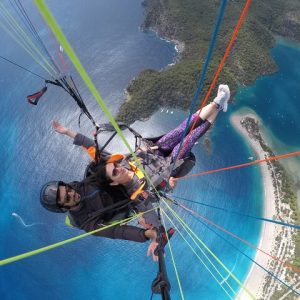
Book a trip where this was filmed — near Fethiye
Support Dylan Magaster
At WeBoating.com, we profoundly acknowledge the unwavering dedication that Dylan Magaster invests in crafting each and every video or voyage. Their passion for delivering exceptional ocean content shines through every frame, and it's a labor of love that deserves your attention.
We invite you to watch their captivating videos here and actively engage with their content, including their social media links above. Liking, commenting, and sharing their work goes a long way in fueling their creative fire.
We're also inviting you to explore the gear, sponsorships, and boat partnerships highlighted in the "Diving alone on a Shipwreck in Greece" video description, or directly on YouTube. By engaging with these offerings or purchasing services and items, you directly support Dylan Magaster, their collaborators, and the brands they're associated with.
To ensure you never miss an offshore update, consider visiting their official YouTube Channel to subscribe, like, and join their community directly.
If you have any feedback, corrections, or additional information about Dylan Magaster or their videos, please use the comment form below to share your thoughts with us.
Thank you for being a part of our community and supporting the creators we cherish. Your time and support truly matter!
Buy Captain's Salve: https://www.gnossquid.com/shop/p/captainssalve
Support on Patreon: https://www.patreon.com/dylanmagaster
Follow Dylan Magaster:
https://www.instagram.com/dylanmagaster/
Dylan Magaster is a multi facited creator, creating content ranging from travel vlogs, sailing, free diving, scuba diving, fpv drones and more.
Business inquires or music submissions:
[email protected]
Music:
https://mbsy.co/epidemicsound/FLORB
Filmed and edited by
Dylan Magaster:
https://www.instagram.com/dylanmagaster/
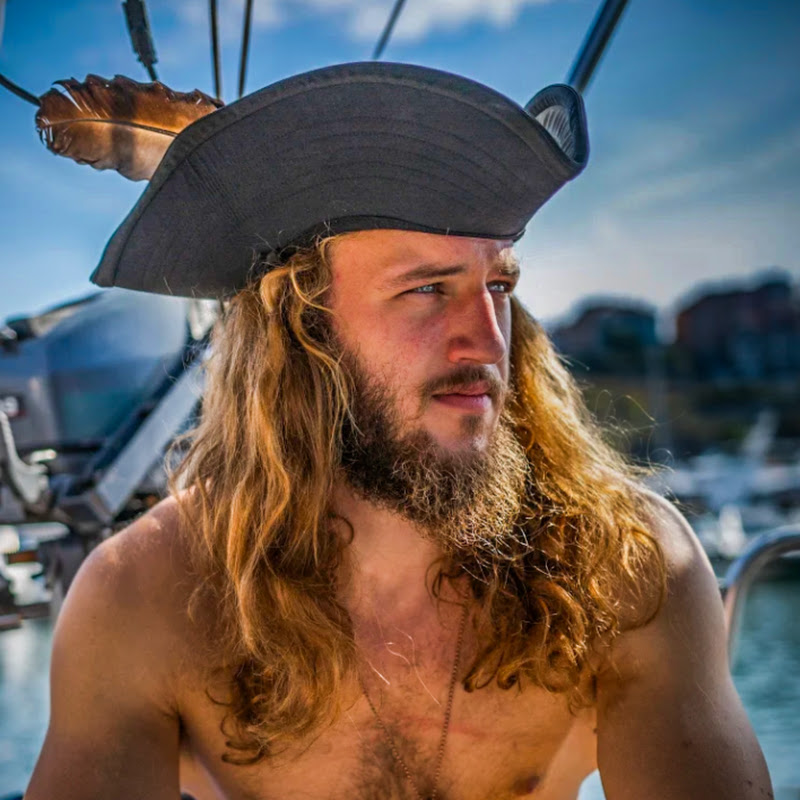
Dylan Magaster
Dylan Magaster, creator of FLORB, documented his transition from vanlife to his 1979 Morgan 382 'Arianrhod'. Follow his 2026 solo mission exploring the Greek Islands.
Channel Information:
Social Media Links:
Diving alone on a Shipwreck in Greece Location
- Alimia Island Bay & Shipwreck Site, Dodecanese, Greece (36.2667,27.7)
- Chalki Island Port (Nimborio), Greece (36.2222,27.6139)
- Rhodes Harbor (Mandraki Port), Greece (36.4349,28.2175)
Latest Episodes from Dylan Magaster
Explore the most recent voyages. Subscribe to the channel to never miss an update!
Can I save my engine that was totally underwater?!
Working on the hard at a boatyard, Dylan Magaster tackles the salvage of his flooded Beta Marine 38 diesel engine, removing fuel injectors to purge trapped rainwater.
Cleaning my flooded boat
Dylan Magaster continues emergency salvage operations aboard his flooded Morgan 382, stripping moldy cushions, bleaching the cabin, and prepping the diesel.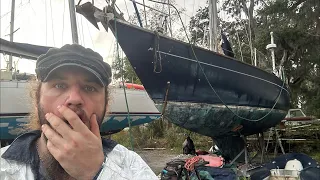
First time going inside my flooded boat!
Dylan Magaster enters the flooded cabin of his 1979 Morgan 382, SV Arianrhod, in a Georgia boat yard, washing away oily sludge and assessing the submerged diesel engine.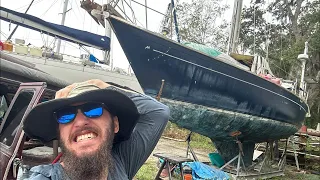
My Boat Flooded. Day 2.
Dylan Magaster returns for Day 2 of flooded boat recovery aboard S/V Arianrhod in a Georgia boatyard, assessing hull oil canning, 20 hours of siphon drainage, and rigging halyards to clear deck cargo.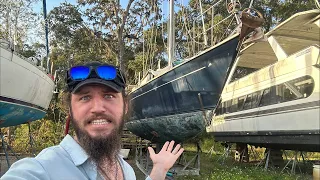
ITS FLOODED! FIRST LOOK! Returning to my boat…
Returning to S/V Arianrhod in a Georgia boatyard, Dylan Magaster discovers standing water three to four feet deep inside the cabin, rigging an emergency shop vac siphon to drain the vessel overnight.