Can I save my engine that was totally underwater?!
Stepping down through the companionway of his vessel while resting on the hard in a boatyard, solo mariner Dylan Magaster focused his attention on an urgent diagnostic milestone: determining whether his flooded diesel propulsion unit could be salvaged. Having spent the preceding days scrubbing black grime, clearing the cockpit, and applying almost an entire gallon of bleach across moldy overheads and cabin bulkheads, Dylan faced the defining question of the boat’s recovery. The vessel had accumulated heavy standing water while laid up on cradle stands on land, completely submerging the engine compartment up to a waterline marked above the cylinder head. If the engine had seized or suffered internal corrosion, continued expenditure of labor on the interior joinery would make little practical sense.
Assessing the Flooded Engine and the Threat of Hydrolock
Inspecting the auxiliary engine bay through the cleared anchor locker and side access panels, Dylan evaluated the consequences of the long-term immersion. The flooding had occurred while the boat was ashore during his extended absence, filling the bilge and engine pan with a brackish slurry of rainwater, diesel residue, and engine oil. The absence of corrosive saltwater offered a critical technical advantage. Because the machinery remained immersed in freshwater and petroleum sludge, atmospheric oxygen could not initiate rapid ferrous oxidation. Dylan explained the chemistry governing the flooded block:
“Sitting completely submerged in water is not actually that bad of a thing. What’s bad is whenever you empty all the water and it’s now not submerged and it’s wet in the air because then that water in the metal it’s going to oxidize because it has the oxygen.”
While submersion had protected the iron from open-air rust, attempting to engage the starter motor before clearing the combustion chambers would cause catastrophic mechanical failure. Because incompressible liquid occupied the cylinders, cranking the engine with closed valves and sealed injectors would immediately bend connecting rods or fracture the block. Dylan articulated the danger:
“Because this engine has been underwater entirely, it would be really stupid to try to start the engine right now because there is almost guaranteed to be a lot of water inside of the cylinders. And if there’s a lot of water inside of the cylinders, then it’ll hydrolock and destroy the engine.”
Clearing Access and Stripping the Fuel Injection Rail
To safely evacuate the trapped liquid without inducing mechanical stress, Dylan devised an exact recovery sequence. He needed to extract all 4 fuel injectors from the cylinder head, creating open ventilation paths directly into each combustion bowl. Once the injectors were removed, rotating the crankshaft by hand would cycle the pistons up and down, forcing standing water upward through the injector bores. To preserve internal surfaces following water evacuation, the cylinders and crankcase would immediately be flooded with clean diesel fuel to pickle the engine against atmospheric flash rust.
Executing this procedure in the cramped auxiliary bay required dismantling peripheral components to establish wrench swing clearance. Dylan pulled wooden access partitions from the forward anchor locker and power-washed heavy sludge and grime from the valve cover and injector seats. Working with open-ended wrenches, channel locks, and an adjustable wrench retrieved from his van, he tackled the tight brackets surrounding the high-pressure fuel system. An oily secondary fuel filter bracket obstructed access to the lower injection lines. Using a flathead screwdriver and a small hammer to tap the stuck assembly loose, Dylan unthreaded the 13 mm retention bolt and eased the bracket aside while protecting the delicate cooling hoses from chafing.
With secondary clearances established, Dylan addressed the rigid high-pressure lines connecting the high-pressure fuel injection pump to the injectors. Using a 16 mm wrench on the flared fittings, he steadily loosened the compression nuts against accumulated road grime and grit. On the rear cylinder, clearance was restricted by the engine air intake assembly. Utilizing a 7 mm socket on an extension, Dylan loosened the intake hose clamp, gaining the vital 1 mm of clearance necessary to seat his open-ended wrench and free the final injection pipe.
Extracting Fuel Injectors and Unlocking Tight Tolerances
After disconnecting the high-pressure steel pipes, Dylan turned to the low-pressure fuel return spill rail mounted across the top of the injector bodies. Secured by banjo fittings, the rail collects bypassed diesel and routes it back toward the injection pump. Dylan carefully fitted a 17 mm socket onto the retention nuts, unthreading each fastener by hand to prevent damaging the hollow rail tubing. As each banjo connection lifted clear, he methodically recovered the copper crush washers positioned below the fittings, accounting for each washer so no loose hardware slipped into the bilge or intake passages.
With the return rail safely set aside, Dylan confronted the challenge of extracting the 4 deeply seated fuel injector bodies. Threaded tightly into the cylinder head and exposed to months of standing water, the injector bodies resisted initial wrench torque. Selecting a heavy 22 mm wrench, Dylan applied steady leverage to break the initial threads free without galling the aluminum or cast-iron seating surfaces. When one injector body began unthreading at its internal two-piece junction nut, Dylan retightened the component to ensure the entire nozzle holder assembly backed out as a unified unit.
Prior to lifting the loosened injectors completely clear of the head, Dylan stopped to blow loose debris from the exterior recess with a controlled spray. Removing surface contamination prevented dirt particles from dropping into the exposed cylinder bores. Lifting the injectors one by one, he inspected the nozzle tips and copper heat shields, opening 4 unobstructed ports directly into the combustion chambers.
Rotating the Crankshaft and Purging Water from the Cylinders
With all 4 injector orifices open, the engine had zero compression, allowing the rotating assembly to turn without hydraulic resistance. Dylan stepped down to verify the engine model specifications and verify the correct direction of crankshaft rotation, calling out to his audience:
“It’s a Beta Marine 38 Beta Marine 38 and just see which which direction it’s supposed to the main shaft turns, like if you’re turning it over by hand.”
Dylan fitted a socket onto the front crankshaft pulley nut. Because the engine had been immersed and stationary for many months, static friction and residual cylinder wall suction resisted manual turning. Seeking additional mechanical leverage, Dylan descended from the vessel’s hull to search his gear pile on the ground, retrieving a sturdy hollow metal pipe to serve as an extended cheater bar.
Fitting the cheater bar over the wrench handle, Dylan exerted controlled force on the main shaft. The crankshaft broke free and began rotating smoothly through its stroke. As the pistons cycled upward, hydraulic pressure ejected columns of water straight out of the open injector holes across the auxiliary compartment. The water discharge varied dramatically between combustion chambers, revealing the internal settling pattern of the floodwaters:
“It looks like this one didn’t have any water or anything in it. This one had a little bit. The this one here had a little bit more and this one in the back had the most.”
While cylinder 1 remained dry, cylinder 2 and cylinder 3 expelled noticeable quantities of standing moisture. Cylinder 4, located at the lowest aft inclination of the engine bed, discharged the heaviest volume of trapped rainwater. The successful rotation confirmed that the crankshaft, connecting rods, and piston rings moved freely without seizure or catastrophic physical distortion.
Post-Flooding Salvage Protocol: Pickling and Fuel System Scrubbing
Confirming that the Beta Marine 38 turned over marked a significant victory, but Dylan recognized that immediate chemical preservation was essential to prevent rapid degradation. With the cylinders purged of gross standing water, Dylan prepared to drain the waterlogged oil sump. The crankcase pan, contaminated by rainwater seepage through the dipstick tube and breathers, held an emulsion of oil and water that had to be evacuated completely before any fresh fluid could be introduced.
To pickle the engine against flash rust, Dylan planned to pour clean diesel fuel directly through the open injector ports into each cylinder. Rotating the crankshaft through multiple revolutions would distribute diesel across the cylinder liners and ring packs, displacing residual moisture and sealing bare metal surfaces from ambient humidity. Simultaneously, filling the crankcase with diesel and soaking the high-pressure fuel injection pump would preserve internal pump plungers and delivery valves until final commissioning.
Beyond the engine block, Dylan diagnosed contamination across the vessel’s primary diesel storage tank situated in the structural keel. Because marine fuel tanks incorporate an atmospheric breather line to equalize pressure during filling, floodwaters had entered the keel reservoir, creating a mix of water, fuel, and biological sludge. To restore the fuel supply without draining the entire tank, Dylan outlined plans to install an active diesel polishing scrubber system. The circulation loop would feature a 100 micron primary filter and water separator driven by an auxiliary electric transfer pump, continually drawing and polishing fuel until clear diesel circulated without sediment or free water.
Diesel Salvage Specifications and Tool Dimensions
| Subsystem / Operation | Fastener / Tool Specification | Diagnostic Finding & Procedural Status |
|---|---|---|
| Auxiliary Diesel Engine | Beta Marine 38 Propulsion Unit | Crankshaft turns freely by hand; verified free of internal mechanical seizure |
| Fuel Filter Retaining Bracket | 13 mm bolt assembly | Unthreaded with tapping assistance to clear clearance path for fuel lines |
| Air Intake & Clearance | 7 mm Socket / 1 mm extra clearance | Hose clamp loosened to allow wrench engagement on cylinder 4 injection nut |
| High-Pressure Injection System | 16 mm Wrench & 17 mm Socket | Dismantled 4 injection lines and spill rail; retrieved copper crush washers |
| Cylinder Water Evacuation | 4 Open injector ports / 22 mm Hex | Ejected trapped rainwater; heaviest water volume evacuated from cylinder 4 |
| Fuel Tank Polishing Loop | 100 micron Scrubber filter element | Scheduled multi-stage fuel circulation to clean keel tank breather ingress |
Frequently Asked Questions
Dylan avoided starting the engine because the cylinders were full of water, which would cause hydrolock and destroy internal rods and engine components.
He removed all 4 fuel injectors from the cylinder head and turned the crankshaft by hand using a cheater bar, forcing water out through the injector holes.
The engine was submerged in freshwater rainwater mixed with oil and diesel without atmospheric oxygen, preventing the chemical oxidation required for rust.
Pickling involves draining contaminated oil and filling the cylinders and crankcase with diesel fuel to coat internal components and prevent corrosion.
Book a trip where this was filmed — near St Augustine

Support Dylan Magaster
At WeBoating.com, we profoundly acknowledge the unwavering dedication that Dylan Magaster invests in crafting each and every video or voyage. Their passion for delivering exceptional ocean content shines through every frame, and it's a labor of love that deserves your attention.
We invite you to watch their captivating videos here and actively engage with their content, including their social media links above. Liking, commenting, and sharing their work goes a long way in fueling their creative fire.
We're also inviting you to explore the gear, sponsorships, and boat partnerships highlighted in the "Can I save my engine that was totally underwater?!" video description, or directly on YouTube. By engaging with these offerings or purchasing services and items, you directly support Dylan Magaster, their collaborators, and the brands they're associated with.
To ensure you never miss an offshore update, consider visiting their official YouTube Channel to subscribe, like, and join their community directly.
If you have any feedback, corrections, or additional information about Dylan Magaster or their videos, please use the comment form below to share your thoughts with us.
Thank you for being a part of our community and supporting the creators we cherish. Your time and support truly matter!
Buy Captain's Salve: https://www.gnossquid.com/shop/p/captainssalve
Support on Patreon: https://www.patreon.com/dylanmagaster
Follow Dylan Magaster:
https://www.instagram.com/dylanmagaster/
Dylan Magaster is a multi facited creator, creating content ranging from travel vlogs, sailing, free diving, scuba diving, fpv drones and more.
Business inquires or music submissions:
[email protected]
Music:
https://mbsy.co/epidemicsound/FLORB
Filmed and edited by
Dylan Magaster:
https://www.instagram.com/dylanmagaster/

Dylan Magaster
Dylan Magaster, creator of FLORB, documented his transition from vanlife to his 1979 Morgan 382 'Arianrhod'. Follow his 2026 solo mission exploring the Greek Islands.
Channel Information:
Social Media Links:
Can I save my engine that was totally underwater?! Location
- St. Marys Boat Services, St. Marys, Georgia (30.7446,-81.5246)
Latest Episodes from Dylan Magaster
Explore the most recent voyages. Subscribe to the channel to never miss an update!
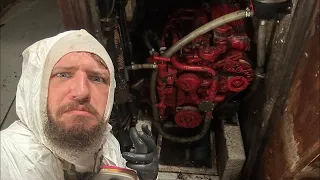
Can I save my engine that was totally underwater?!
Working on the hard at a boatyard, Dylan Magaster tackles the salvage of his flooded Beta Marine 38 diesel engine, removing fuel injectors to purge trapped rainwater.
Cleaning my flooded boat
Dylan Magaster continues emergency salvage operations aboard his flooded Morgan 382, stripping moldy cushions, bleaching the cabin, and prepping the diesel.
First time going inside my flooded boat!
Dylan Magaster enters the flooded cabin of his 1979 Morgan 382, SV Arianrhod, in a Georgia boat yard, washing away oily sludge and assessing the submerged diesel engine.
My Boat Flooded. Day 2.
Dylan Magaster returns for Day 2 of flooded boat recovery aboard S/V Arianrhod in a Georgia boatyard, assessing hull oil canning, 20 hours of siphon drainage, and rigging halyards to clear deck cargo.
ITS FLOODED! FIRST LOOK! Returning to my boat…
Returning to S/V Arianrhod in a Georgia boatyard, Dylan Magaster discovers standing water three to four feet deep inside the cabin, rigging an emergency shop vac siphon to drain the vessel overnight.