Channel update From The Philippines
Motoring through the waters off Surigao in the Philippines, Luke and Adam of The Sailing Brothers deliver a comprehensive passage update from aboard their Prout Snowgoose 37 Elite catamaran. Underway with the engine running in calm seas, the crew shares initial observations from their arrival in the Philippines while addressing viewer impressions regarding their earlier voyage through Indonesia.
Beyond reviewing coastal passages and local hospitality, the brothers examine key boat maintenance questions, evaluate the real-world performance of their DIY Copper Coat antifouling after nearly five months in the water, and chart an extensive cruising route that will carry their multihull through the central Philippine islands toward Puerto Princesa.
Addressing Cruising Impressions of Indonesia
In previous videos, logistical challenges and clearance difficulties led some viewers to assume the crew held an unfavorable view of Indonesia. Underway off Surigao, Luke clarifies that their overall experience throughout Indonesia was deeply positive. While isolated scams occurred, the crew points out that such incidents represented only a tiny fraction of their voyage: “that’s only like 1% of the whole experience.”
The brothers highlight the warmth of rural settlements, the welcoming local population, and the relaxed village atmosphere. Luke recalls walking through coastal communities surrounded by volcanoes, towns, and lively village life, describing the environment as having a genuine community spirit. After completing their Philippine cruising itinerary, the crew plans to sail back south into Indonesia to prepare for an open-ocean passage across the Indian Ocean.
Evaluating Five Months of Homemade Copper Coat Antifouling
Turning to shipboard systems and underwater maintenance, Luke and Adam address a question frequently asked by fellow sailors regarding the DIY Copper Coat antifouling applied to the catamaran’s hulls in Australia. The application involved blending copper powder into marine epoxy and applying five barrier coats to protect the hulls against biological fouling and moisture intrusion.
Reflecting on nearly five months of continuous saltwater immersion, Luke provides an assessment of the coating’s durability: “A lot of people have been asking It’s nearly been 5 months since we put the homemade Copper Coat on in Australia.” When asked whether the experimental treatment proved effective in keeping the bottom clean, the response is immediate: “I’ll give a 100% yes.”
The copper epoxy barrier effectively eliminated heavy calcified marine growth across the underwater surfaces. While conventional antifouling can allow barnacles to cement themselves firmly to fiberglass hulls, the homemade treatment alters the adhesion mechanism entirely. Luke explains: “the copper you know gets into the barnacle and just kills it straight away so you can wipe it off.” Any small barnacles that settle turn white and die, leaving brittle husks that wash away by hand rather than requiring aggressive scraping or chisel work.
Managing Goose Barnacles, Slime, and Osmosis Resistance
Despite its effectiveness against encrusting mollusks, the homemade mixture reveals distinct behavioral differences compared to commercial formulations. The crew notes that goose barnacles remain completely indifferent to the copper surface, requiring biweekly maintenance dives. Luke highlights this operational reality based on earlier ocean miles: “goose barnacles do not care about Copper Coat so we did have to go down every 2 weeks and get rid of the goose barnacles”
Additionally, a thin film of green algae and soft slime gradually forms over the hulls. Commercial Copper Coat products often contain secondary biocides to suppress soft growth, which were omitted from the homemade epoxy mix. Nevertheless, the brothers find this slime layer soft and effortless to wipe off during routine swims.
Beyond antifouling properties, the five-layer epoxy barrier provides substantial structural protection for the multihull. Luke notes: “Five coats of that epoxy, it’s acting like a waterproof barrier over the whole of the boat as well.” By creating an impenetrable moisture barrier over the fiberglass laminate, the heavy coating substantially reduces long-term risks of hull osmosis.
Procuring Replacement Gear for Hull Documentation
To demonstrate the real condition of the catamaran’s bottom without relying solely on verbal reports, the crew intends to record underwater inspection footage. However, a submerged camera casualty in Indonesia temporarily halted underwater filming: “we broke our GoPro in Banda and we haven’t got one since, so we’ve only got one GoPro and don’t want to chance it taking it in the water.”
Reluctant to risk their sole working action camera in seawater, the brothers are motoring toward a coastal settlement to collect a replacement camera. Once equipped, they plan to let the catamaran sit in the water for three to four weeks before diving with the camera to show the hull condition directly to their audience.
Cruising Route from Surigao to Puerto Princesa
Bringing up navigation charts in the cockpit, Luke and Adam trace their intended passage through the Philippine archipelago. Commencing from Surigao City, the route leads northward through the Surigao Strait, past Tuban and Cabadbaran City, before entering interior island channels: “You can go from Surigao up the Surigao Strait through here, go to Tuban to Cabadbaran City. And then go through this little channel here.”
The proposed northwest track passes several regional stops, including Masbate City and Burias Island. While charting options toward the northern capital, the crew discusses whether to bypass Manila entirely. Noting widespread advice from fellow cruisers concerning safety and harbor cleanliness, Luke and Adam express hesitation about entering Manila, choosing to keep destination plans flexible as they move north.
The Philippine passage will culminate in a southwest run toward Puerto Princesa: “after traveling northwest, we’re going to travel southwest down to Puerto Princesa. This is where we’re going to sign out of the Philippines.” The brothers allocate roughly three months to complete this coastal circuit before clearing customs and immigration.
Passage Timeline and Antifouling Maintenance Record
The table below outlines key maintenance metrics and operational intervals recorded during the catamaran’s evaluation of DIY Copper Coat antifouling:
| Maintenance parameter | Video metric | Operational observation |
|---|---|---|
| Epoxy barrier coats | 5 coats | Waterproof hull protection against fiberglass osmosis |
| Antifouling service duration | 5 months | Total prevention of cemented hard growth |
| Hull maintenance diving interval | 2 weeks | Required frequency to brush away goose barnacles |
| In-water observation period | 3 to 4 weeks | Planned immersion duration before underwater camera inspection |
Long-Range Horizons Across the Indian Ocean
Clear of Puerto Princesa, the catamaran’s itinerary turns south toward Indonesia for a final transit before undertaking a major ocean crossing. Leaving the Philippines behind, the crew anticipates setting sail early next year across the Indian Ocean to reach Madagascar and South Africa.
Reflecting on their voyage so far, the brothers note that entering Asia brought renewed energy and excitement to their global journey. The distinctive cruising environments and warm island hospitality continue to propel their multihull forward on the long route toward the Atlantic.
Frequently Asked Questions
Luke and Adam reported that the homemade Copper Coat worked remarkably well over five months. It completely prevented hard barnacle growth from cementing to the hulls, with any small barnacles dying and wiping off easily by hand.
Goose barnacles still attach because copper does not deter them, requiring diving every two weeks to remove them. Additionally, a soft green slime develops because the homemade mixture lacks the secondary biocides found in commercial antifouling.
The crew broke their primary GoPro in Banda, Indonesia, leaving them with only one camera that they did not want to risk submerging. They planned to collect a replacement camera and allow the boat to sit for three to four weeks before filming underwater.
Starting in Surigao City, the crew plans to sail northwest through the Surigao Strait past Cabadbaran City, Masbate City, and Burias Island, before turning southwest to Puerto Princesa to clear out after approximately three months.
After signing out of the Philippines in Puerto Princesa, the brothers will sail south back into Indonesia before crossing the Indian Ocean to Madagascar and South Africa early next year.
Support The Sailing Brothers
At WeBoating.com, we profoundly acknowledge the unwavering dedication that The Sailing Brothers invests in crafting each and every video or voyage. Their passion for delivering exceptional ocean content shines through every frame, and it's a labor of love that deserves your attention.
We invite you to watch their captivating videos here and actively engage with their content, including their social media links above. Liking, commenting, and sharing their work goes a long way in fueling their creative fire.
We're also inviting you to explore the gear, sponsorships, and boat partnerships highlighted in the "Channel update From The Philippines" video description, or directly on YouTube. By engaging with these offerings or purchasing services and items, you directly support The Sailing Brothers, their collaborators, and the brands they're associated with.
To ensure you never miss an offshore update, consider visiting their official YouTube Channel to subscribe, like, and join their community directly.
If you have any feedback, corrections, or additional information about The Sailing Brothers or their videos, please use the comment form below to share your thoughts with us.
Thank you for being a part of our community and supporting the creators we cherish. Your time and support truly matter!
Hey all
Check out this channel update here from the Philippines. Updates on what's happened and future plans.
Thank you to all our subscribers, without you the channel would not exist!
A huge thank you to all our incredible Patrons for making this adventure possible
We love to read and reply to all your comments!
If you enjoyed the episode give it a like, share and please subscribe
Thanks for watching, hope you are enjoying the episodes
Boat details
Our boat is a Prout Snowgoose 37 Elite Catamaran built in England
Up-dates in realtime
https://www.facebook.com/share/1CdhGtvMPp/
We would love your help for us to continue this adventure around the world!
Join our exclusive club for big benefits or help in other ways by sending a donation
JOIN OUR CLUB OR TIP US A CHEESE
https://ko-fi.com/thesailingbrothers60713
PAYPAL TIP JAR https://www.paypal.com/paypalme/TheSailingBrothers
MORE SUPPORT
https://www.patreon.com/TheSailingBrothers
Join our exclusive Patron club
https://www.patreon.com/TheSailingBrothers
Disclaimers and copyrights :
All video content on this channel/page is copyright and must not be used without permission.
All music used in this series is original or, free to use, royalty free, used with permission. No copyright infringements intended.
All statements are personal opinions and need not necessarily represent fact.
music played in order
Music by LiQWYD: Young Love
http://www.soundcloud.com/liqwyd
http://www.bit.ly/liqwyd-youtube
http://www.instagram.com/liqwyd
http://www.spoti.fi/2RPd66h
http://www.apple.co/2TZtpeG
http://www.patreon.com/LiQWYd
5 Min Call by Lakey Inspired (https://soundcloud.com/lakeyinspired) Artist: Lakey Inspired ➪ https://goo.gl/u794aT
All other music in this episode is provided by Epidemic Sound
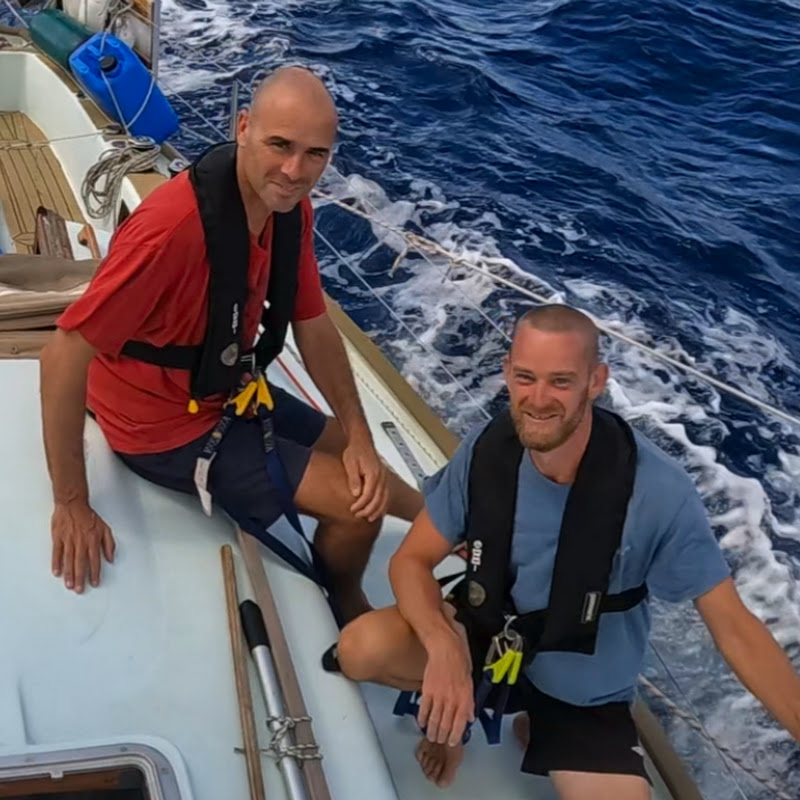
The Sailing Brothers
Luke and Adam: The Welsh brothers who traded supermarket shifts for a global odyssey, currently navigating the Queensland coast aboard their new Prout Snowgoose 37 catamaran.
Channel Information:
Social Media Links:
Channel update From The Philippines Location
- Surigao City, Surigao del Norte, Philippines (9.7904,125.4939)
Latest Episodes from The Sailing Brothers
Explore the most recent voyages. Subscribe to the channel to never miss an update!
Sailing The Philippine’s, Fouled Prop and Daredevil leap!
Fleeing squalls in Hilongos, Luke and Adam face a fouled propeller when their drive leg catch snaps en route to Himokilan Island, completing repairs before motoring across to Poro for cliff jumping.
Can We Sail Out Of The Philippines Without Facing Pirates?
Luke and Adam motor 29 miles along the Philippine coast aboard Checkers, reassessing their route to Indonesia to avoid piracy in the South Sulu Sea.
Our First Philippines Sail Was a Disaster!
Luke and Adam depart Surigao after dental work, battle opposing currents on their passage north, and divert 30 miles to explore Massin City and its cave chapel.
Channel update From The Philippines
Underway off Surigao City, Luke and Adam assess their DIY Copper Coat antifouling after five months at sea, clear up impressions of Indonesia, and map their upcoming cruising route across the Philippines.
Sailing to the Philippines: A Eye-Opening First Impression
Following an intense 700-nautical-mile passage from Indonesia, The Sailing Brothers reach Surigao City in the Philippines, navigating clearance formalities, local stilt communities, and persistent window leaks in tropical heat.