The Realities of an Offshore Passage: Sailing From New Caledonia to Australia Film
Clearing the outer barrier reef passes of New Caledonia, brothers Luke and Adam pointed their Prout Snowgoose 37 Elite catamaran west toward Burnet Heads, starting an 850-mile passage to Australia. Documented by The Sailing Brothers, the ocean crossing began under immediate pressure as winds built to 21 knots and the catamaran’s autopilot struggled to maintain heading inside the lagoon channels. Steering wandered erratically on response levels 1 and 2, prompting the crew to increase the autopilot sensitivity to level 3 to stabilize their course through local currents before navigating the final 5 miles through the reef break.
With the forecast calling for 25 to 30 knots and 3-meter southerly swells, the crew poled out a quarter of the jib to port and set a double-reefed mainsail to starboard. Operating under dense cloud cover without stars or moonlight, the catamaran logged 46 miles at an average speed of 6.6 knots during the opening evening. Morning brought gusty conditions reaching 31.1 knots across the deck, allowing the multihull to surf ocean rollers at speeds between 7 and 8 knots. Assessing the moderating conditions, the crew observed, “Last night, the waves were 3 m, now they’re 2.7” as the swell profile gradually eased.
Rogue Waves and Mast Base Rigging Repairs
Offshore stability was shattered when a rogue wave struck the starboard beam, launching the catamaran sideways down the wave face. The violent motion flung open interior galley cupboards and sent loose gear crashing across the salon. The close call exposed gaps in safety preparation, compelling Luke and Adam to assemble an accessible grab bag, locate their EPIRB and safety knives, and lash emergency water barrels to the deck rails.
As wind speeds dropped to 7 knots, the crew hoisted full canvas to maintain forward progress. While inspecting the salon deckhead roughly 200 miles offshore, the crew noticed unexpected structural movement where the mast step penetrated the cabin. Closer inspection confirmed that the base of the mast was shifting back and forth on its plate. Luke and Adam discovered that a primary mounting bolt was loose and lacked a washer from previous ownership. After observing, “Yeah, I see the mast moving on its base down there,” they retrieved a socket wrench to torque the loose fitting firmly into place, reaffirming their long-term refit philosophy: “If it doesn’t last 20 years do it again properly.”
| Passage waypoint | Distance and depth | Wind speed | Boat speed |
|---|---|---|---|
| Barrier reef departure | 46 miles logged | 21 to 31.1 knots | 6.6 to 7.5 knots |
| Chesterfield trench transit | 2,000 m ocean depth | 5 to 7 knots | 3.5 to 4.3 knots |
| Fraser Sea Mount passage | 4,062 m seabed elevation | 25 to 36 knots forecast | 7 to 8 knots surfing |
| Australia coastal approach | 400 miles to run | 15 to 30 knots | 4 to 7 knots |
Navigating the Chesterfield Trench Under Spinnaker
Entering the mid-passage corridor, the route required careful chart navigation to thread between the shallow reefs and isolated banks of Chesterfield Reefs and Chapel Bank. The catamaran navigated through an ocean trench measuring 2,000 meters in depth, avoiding extensive shoals and submerged coral systems on either side.
When winds dropped into a 5-knot lull, the crew rigged a cruising spinnaker directly to the bow cleats. The downwind sail increased boat speed from 3.5 to 4.3 knots in light 7-knot air. Prolonged sun exposure and friction against the standing rigging revealed deteriorating seams along the mainsail, requiring immediate adhesive patches on deck to prevent cloth tears from spreading across the panels.
Gale Forecasts and Engine Belt Failure
With 400 miles remaining to Burnet Heads, meteorological updates signaled an impending weather system. A southern gale blowing 25 to 36 knots was forecast to strike the coast within 5 days, preceded by a broad calm zone. Trapped in a dead-wind window, the catamaran faced the prospect of beating into steep, shallow 20 to 30 meter seas in the bay outside Burnet Heads if they failed to arrive before Tuesday morning.
To maintain necessary passage speed through the calm zone, the crew started the diesel engine. While preparing meals in the galley, an engine overheat alarm suddenly pierced the cabin. Rushing to the engine bay, Luke and Adam discovered that the circulating belt had shredded and snapped. Carrying 3 spare belts aboard, the crew removed the fractured rubber and fitted a replacement drive belt, allowing them to resume motor-sailing toward Queensland.
Passing Fraser Sea Mount and Arrival in Burnet Heads
Continuing westward, the catamaran charted a course directly past Fraser Sea Mount. Luke reflected on the massive geological structure: “It rises 4,062 m from the seabed floor up into this mountain plateau.” The submerged mountain plateau stands twice as tall as any mountain peak in Australia.
During the final midnight watch, the diesel engine was shut down in light air, only for the autopilot to malfunction again. An exhausted seabird landed on deck, shivering from fatigue and resting alongside the cockpit through the early morning hours. Exhausted after 6 days at sea with watch shifts capped at 2 hours of continuous sleep, Luke and Adam sighted the coast of Australia and completed the 10-hour final approach. Checking into customs and quarantine at Burnet Heads in Bundaberg, the brothers concluded their 850-mile passage aboard Checkers.
Frequently Asked Questions
As the catamaran cleared the lagoon, the autohelm wandered erratically on sensitivity levels 1 and 2. Luke and Adam adjusted the response setting to level 3 to stabilize their steering through strong currents and mineral deposits before reaching the barrier reef pass.
Approximately 200 miles offshore, the crew noticed the base of the mast shifting back and forth on its plate. An inspection showed that a primary mounting bolt was loose and lacked a washer from previous owners, which they tightened at sea with a socket wrench.
The passage route navigated between shallow reefs and shoals at Chesterfield Reefs and Chapel Bank, utilizing a deep ocean trench of 2,000 meters to maintain a safe open-water course westward toward Australia.
When the engine overheat alarm sounded while motoring through a calm zone, an inspection revealed that the drive belt had shredded and snapped. The crew carried 3 spare belts on board and quickly installed a replacement to restore cooling.
The catamaran sailed past Fraser Sea Mount, an underwater volcanic mountain rising 4,062 meters from the ocean seabed floor up into a high plateau, standing taller than any terrestrial mountain in Australia.
Book a trip where this was filmed — near Gold Coast
Support The Sailing Brothers
At WeBoating.com, we profoundly acknowledge the unwavering dedication that The Sailing Brothers invests in crafting each and every video or voyage. Their passion for delivering exceptional ocean content shines through every frame, and it's a labor of love that deserves your attention.
We invite you to watch their captivating videos here and actively engage with their content, including their social media links above. Liking, commenting, and sharing their work goes a long way in fueling their creative fire.
We're also inviting you to explore the gear, sponsorships, and boat partnerships highlighted in the "The Realities of an Offshore Passage: Sailing From New Caledonia to Australia Film" video description, or directly on YouTube. By engaging with these offerings or purchasing services and items, you directly support The Sailing Brothers, their collaborators, and the brands they're associated with.
To ensure you never miss an offshore update, consider visiting their official YouTube Channel to subscribe, like, and join their community directly.
If you have any feedback, corrections, or additional information about The Sailing Brothers or their videos, please use the comment form below to share your thoughts with us.
Thank you for being a part of our community and supporting the creators we cherish. Your time and support truly matter!
Leaving New Caledonia for the 850 mile passage to Australia means leaving calm anchorages behind for the open ocean—and from day one, the nerves are real.
In this documentary-style passage episode, we take you aboard for the crossing from New Caledonia to Australia. Between the pre-passage jitters, shifting conditions, and the day-to-day rhythm of life offshore, this trip throws everything at us: fast, exhilarating spinnaker runs, serious rough weather, and plenty of hard-earned miles.
Pull up a seat on deck and come along for the crossing.
Thank you to all our subscribers, without you the channel would not exist!
A huge thank you to all our incredible Patrons for making this adventure possible
We love to read and reply to all your comments!
If you enjoyed the episode give it a like, share and please subscribe
Thanks for watching, hope you are enjoying the episodes
Boat details
Our boat is a Prout Snowgoose 37 Elite Catamaran built in England
Up-dates in realtime
https://www.facebook.com/share/1CdhGtvMPp/
We would love your help for us to continue this adventure around the world!
Join our exclusive club for big benefits or help in other ways by sending a donation
JOIN OUR CLUB OR TIP US A CHEESE
https://ko-fi.com/thesailingbrothers60713
PAYPAL TIP JAR https://www.paypal.com/paypalme/TheSailingBrothers
MORE SUPPORT
https://www.patreon.com/TheSailingBrothers
Join our exclusive Patron club
https://www.patreon.com/TheSailingBrothers
#ocean
#sailingoffshore
#Catamaran
#sailingaroundtheworld
#water
#documentary
Disclaimers and copyrights :
All video content on this channel/page is copyright and must not be used without permission.
All music used in this series is original or, free to use, royalty free, used with permission. No copyright infringements intended.
All statements are personal opinions and need not necessarily represent fact.
music played in order
Music by LiQWYD: Young Love
http://www.soundcloud.com/liqwyd
http://www.bit.ly/liqwyd-youtube
http://www.instagram.com/liqwyd
http://www.spoti.fi/2RPd66h
http://www.apple.co/2TZtpeG
http://www.patreon.com/LiQWYd
5 Min Call by Lakey Inspired (https://soundcloud.com/lakeyinspired) Artist: Lakey Inspired ➪ https://goo.gl/u794aT
All other music in this episode is provided by Epidemic Sound
The Sailing Brothers
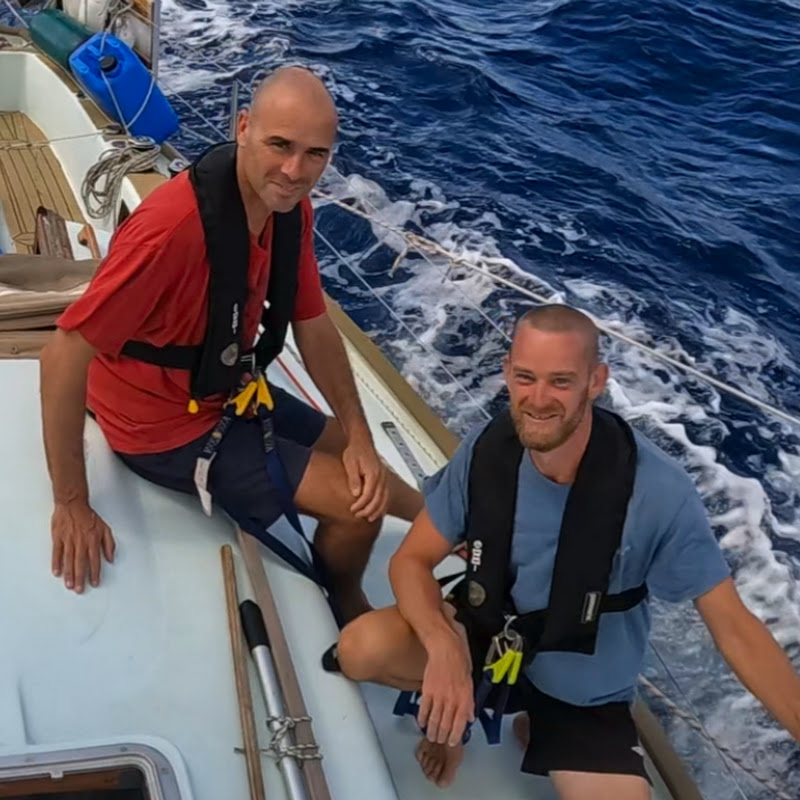
Luke and Adam: The Welsh brothers who traded supermarket shifts for a global odyssey, currently navigating the Queensland coast aboard their new Prout Snowgoose 37 catamaran.
Channel Information:
Social Media Links:
The Realities of an Offshore Passage: Sailing From New Caledonia to Australia Film Location
- Burnet Heads Marina, Bundaberg, Australia (-24.76,152.41)
- New Caledonia Barrier Reef Departure (-22.27,166.45)
- Chesterfield Reefs Deep Trench Transit (-19.88,158.46)
- Fraser Sea Mount Geological Elevation (-24.4,155.25)
Latest Episodes from The Sailing Brothers
Explore the most recent voyages. Subscribe to the channel to never miss an update!
We Hit a Whale While Sailing At 6Kts!! Then We Saved a Pigeon Named Walter!
The Sailing Brothers experience an offshore whale collision at 6 knots in the Philippines, rescue a drenched pigeon, and inspect DIY copper coat antifouling.
The Realities of an Offshore Passage: Sailing From New Caledonia to Australia Film
Luke and Adam navigate their Prout Snowgoose 37 Elite catamaran across 850 miles from New Caledonia to Australia, tackling 3-meter seas, loose mast rigging, deep ocean trenches, and an engine breakdown to reach Bundaberg.
Sailing in the Wake of a Category 5 Typhoon! ( Storm & Dragon Spinnaker)
After waiting out a violent supercell in Palompon, The Sailing Brothers hoist their dragon spinnaker to run north on tailwinds drawn in by a Category 5 typhoon.
Sailing The Philippine’s, Fouled Prop and Daredevil leap!
Fleeing squalls in Hilongos, Luke and Adam face a fouled propeller when their drive leg catch snaps en route to Himokilan Island, completing repairs before motoring across to Poro for cliff jumping.
Can We Sail Out Of The Philippines Without Facing Pirates?
Luke and Adam motor 29 miles along the Philippine coast aboard Checkers, reassessing their route to Indonesia to avoid piracy in the South Sulu Sea.