I'm Now 87½ Years Old.
Inside his workshop in Västervik, Sven Yrvind joins the first sheets of plywood with butt joints, establishing the hull sides for an experimental test boat. Marking his 87th birthday milestone on October 22, the veteran designer provides a project update on the 4.8-meter hull, testing concepts in wood before building the final Divinycell and epoxy cruiser for a planned voyage to Dunedin.
Fastening panels end to end with screws and clamps, Sven checks alignment along the seams, observing that he is “making progress towards the wise age.” With the running length secured, work moves to the stem and transom.
Joining Plywood Panels and Shaping the Stem
To keep initial construction direct, Sven fastens square butt joints rather than scarf joints. Inspecting the clamped plywood, he confirms: “the butt joint came out good.” The joined sides span the full 4.8-meter running length, with a planned beam of 1.3 meters.
At the bow, Sven leaves a gap between panels to increase volume when meeting oncoming seas. He begins framing the lower stem before assembling the upper timber. Sven notes that fiberglass will cover the exterior plywood once planked, creating a working test hull that can also serve as a reference when building future craft.
Rudderless Fin Steering and Model Trials
Demonstrating hull dynamics with a scale model, Sven reveals an unusual arrangement: the boat steers with adjustable fins and has no rudder. His approach traces back to 1975 in Martinique, where he watched a windsurfer cross the Bay of Fort-de-France on a board without a rudder.
Sven incorporates retractable fins with three vertical positions. Raising or lowering the fins shifts lateral resistance, steering the boat higher into the wind or letting it fall off. The fins tilt 12 degrees outward like modern hulls, while the forward fin tilts 12 degrees to either side. Angle of attack adjusts up to 4 degrees to windward or leeward, with a neutral setting for coastal waters.
Avoiding a rudder eliminates vulnerability during grounding or trailer transport. Addressing standard alternatives, Sven asks, “Why don’t you have a folding up rudder?” A planned stern swimming platform rules out a kick-up blade, while through-transom tillers risk leaks. Quoting Moltke the Elder, Sven reflects: “All strategies fail at the first contact with enemies.” In heavy seas, he relies on forereaching under two lugger masts with 6 square meters of sail, “pointing very, very high against the wind, going slowly, slowly.”
Surge Ventilation and Movable Lead Ballast
To protect the cabin, Sven introduces a surge chamber ventilation system. Fresh air flows into the cabin, while internal routing prevents water ingress during a rollover. Any seawater forced inside drains back out through an exterior discharge.
Trim is managed using four pieces of lead ballast controlled with strings, allowing Sven to shift weight from within the cabin. He plans a 60 cm bulkhead opening and a tilting mast that cants to windward or leeward. Sven invites supporters to explore his five-star book on Amazon to prepare for the upcoming Divinycell build.
Test Boat Specifications
| Feature | Detail |
|---|---|
| Construction material | Plywood test hull with butt joints |
| Designed length | 4.8 meters (15 and a half feet) |
| Designed beam | 1.3 meters |
| Rig type | Two-masted lugger |
| Sail area | 6 square meters |
| Steering settings | Adjustable fins with 3 positions |
| Fin outward tilt | 12 degrees |
| Attack angle variation | 4 degrees to port or starboard |
| Movable ballast | 4 lead pieces with string control |
| Bulkhead opening | 60 cm |
Frequently Asked Questions
Sven avoids rudders because they strike bottom during groundings or trailer transport and conflict with his planned stern swimming platform. Fin steering also eliminates leak paths through the transom.
The fins have three vertical positions, tilt 12 degrees outward, and adjust their angle of attack by 4 degrees to windward or leeward, allowing the boat to point high into the wind while forereaching.
The surge chamber routes fresh air inside while internal baffling stops water from entering the cabin if inverted. Trapped seawater drains back outside through a dedicated discharge pipe.
Sven is building the plywood hull to test experimental systems, including fin steering, movable lead ballast, and tilting masts, before committing to Divinycell foam and epoxy for his planned high-latitude voyage.
Support Sven Yrvind
At WeBoating.com, we profoundly acknowledge the unwavering dedication that Sven Yrvind invests in crafting each and every video or voyage. Their passion for delivering exceptional ocean content shines through every frame, and it's a labor of love that deserves your attention.
We invite you to watch their captivating videos here and actively engage with their content, including their social media links above. Liking, commenting, and sharing their work goes a long way in fueling their creative fire.
We're also inviting you to explore the gear, sponsorships, and boat partnerships highlighted in the "I'm Now 87½ Years Old." video description, or directly on YouTube. By engaging with these offerings or purchasing services and items, you directly support Sven Yrvind, their collaborators, and the brands they're associated with.
To ensure you never miss an offshore update, consider visiting their official YouTube Channel to subscribe, like, and join their community directly.
If you have any feedback, corrections, or additional information about Sven Yrvind or their videos, please use the comment form below to share your thoughts with us.
Thank you for being a part of our community and supporting the creators we cherish. Your time and support truly matter!
This Youtube channel is about me Sven Yrvind. I am 87 and a half years old dyslectic solo sailor.
I am building a plywood test boat for a Divinycell and NM-epoxy high-latitude cruiser.
She will be about 4.8 meter 15 and a half feet long. Her beam will be 1.3 meter. She is a two masted lugger with a total sail area of 6 square meter. She will have no rudder but will be steered by adjustable fins. I am planning a cruise in the Southern Ocean to Dunedin NZ.
Subject to change.
Often the 22th every month I do a resume of the project.
I have an illustrated book with good reviews on Amazon. https://www.amazon.se/s?k=yrvind&crid=1549D6PR18BUJ&sprefix=%2Caps%2C112&ref=nb_sb_ss_recent_1_0_recent
If you’re interested in contributing to my experiments links are below.
https://www.paypal.com/donate/?hosted_button_id=53X8NVEA22MBL
Swish 0706200550
Also please subscribe - even if you are not interested in sailing.
For more see Yrvind.com
Sven Yrvind
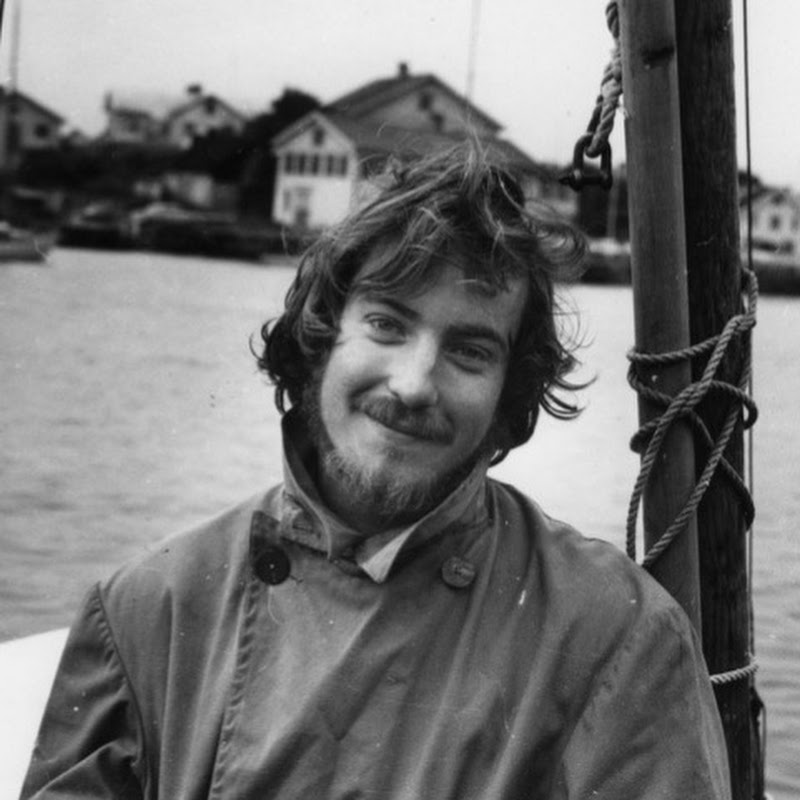
At 86, Sven Yrvind is still pushing the limits of small-boat design. Discover the philosophy and technical grit behind his 'Exlex' series.
Channel Information:
Social Media Links:
I'm Now 87½ Years Old. Location
- Västervik, Sweden (57.7594,16.6385)
Latest Episodes from Sven Yrvind
Explore the most recent voyages. Subscribe to the channel to never miss an update!
The Outer Coaming and Fiberglassing the Inner One.
Sven Yrvind fits the outer spray skirt coaming and laminates fiberglass onto the inner coaming in his workshop, refining his rope attachment setup and filleting the joint defenses.
Starting the Inner of Two Spray Skirt Coamings.
Sven Yrvind works in his workshop cutting and fitting inner and outer spray skirt coamings, detailing kerf measurements and fiberglass reinforcement.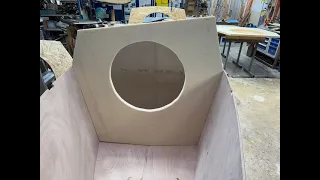
Cutting the Divinycell Bulkheads.
In his Västervik workshop, Sven Yrvind shapes composite bulkheads and constructs rounded hatch coamings with dual spray protection for his compact ocean cruiser, verifying hull symmetry and deck crown alignment.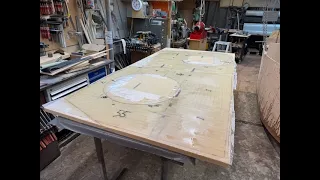
Laminating the Two Bulkheads.
Sven Yrvind numbers and lays out fiberglass cloth before laminating two bulkheads with epoxy resin in his Västervik workshop for his 4.5-meter high-latitude cruiser test boat.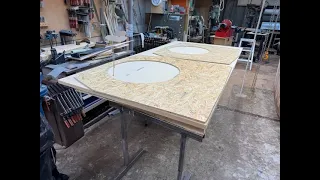
Starting the Two Divinycell Bulkheads.
In his Västervik workshop, Sven Yrvind lays out two test bulkheads inside a plywood mockup, adjusting semicircular access cutouts and planning insulated Divinycell sandwich bulkheads for his upcoming ocean cruiser.