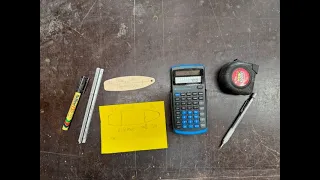
Adjustable Fins Replace the Rudder.
Inside his Västervik workshop, Swedish solo sailor Sven Yrvind inspects a scale hull model to evaluate an unconventional steering system. Rather than installing a traditional stern rudder, the design relies on twin lateral foils fitted along the hull. As Yrvind explains, “So, the plan is to use fins instead of rudder.” The submerged foils are configured to serve multiple roles, stabilizing the double-ender while running before heavy following seas and providing directional steering force as their immersion changes.
The lateral foils operate in conjunction with a dedicated bow daggerboard. By adjusting foil immersion alongside the forward centerboard, the hull balance shifts dynamically to meet varying sea states. Modern offshore cruisers typically rely on electronic autopilots or windvanes, but Yrvind discards both systems in favor of foil and sail balance. Reflecting on his early voyages, he notes, “When I started in the ’60s, those things were very expensive and autopilots didn’t exist for small boats.”
Reversible Fin Angles and Hull Balance
To adjust the steering foil angle without mechanical complication, Yrvind developed a simplified mounting system. “This is just a two-dimensional thing. So, what you do, you lift it up like a gate, and then you turn it, and you put it down on the other side.” Once adjusted, the foil angle allows the 5.6-meter cruiser to track cleanly through head seas rather than drifting off course.
Adjusting fin angles is central to Yrvind’s planned voyage toward Dunedin, New Zealand. Near the equator, adverse headwinds and counter currents demand close-winded performance. He recalls an earlier passage from Ireland to Newfoundland where a small boat faced 11 days of continuous gale conditions. By fine-tuning lateral resistance, the craft could reach forward against head seas toward coordinates 60 and 89.
Workshop Fairing and Hull Assembly
With the desktop model verified, workshop focus turns to the full-size hull. Built from Divinycell foam core and NM-epoxy sandwich laminate, the cruiser spans a beam of 1.45 meters and carries a three-masted lugger rig totaling 9 square meters of sail. Yrvind sets up framing blocks along the hull bottom to confirm fair curvature across the laminate before bonding. Acknowledging the experimental nature of the steering foils, he admits, “Will it work? Oh, I don’t know. It’s a long shot.” After sighting down the hull line, he concludes, “Check the fairness. Oh. Looks good to me.”
Frequently Asked Questions
The adjustable lateral fins provide directional control and stability when running before heavy seas without relying on vulnerable conventional rudders or electronic autopilots.
The fin mechanism uses a simple two-dimensional gate mounting that allows the sailor to lift the fin, turn it, and set it down on the opposing angle.
By adjusting the angle of the lateral fins in combination with the bow centerboard, the boat can track straight through adverse equatorial headwinds.
Support Sven Yrvind
At WeBoating.com, we profoundly acknowledge the unwavering dedication that Sven Yrvind invests in crafting each and every video or voyage. Their passion for delivering exceptional ocean content shines through every frame, and it's a labor of love that deserves your attention.
We invite you to watch their captivating videos here and actively engage with their content, including their social media links above. Liking, commenting, and sharing their work goes a long way in fueling their creative fire.
We're also inviting you to explore the gear, sponsorships, and boat partnerships highlighted in the "Adjustable Fins Replace the Rudder." video description, or directly on YouTube. By engaging with these offerings or purchasing services and items, you directly support Sven Yrvind, their collaborators, and the brands they're associated with.
To ensure you never miss an offshore update, consider visiting their official YouTube Channel to subscribe, like, and join their community directly.
If you have any feedback, corrections, or additional information about Sven Yrvind or their videos, please use the comment form below to share your thoughts with us.
Thank you for being a part of our community and supporting the creators we cherish. Your time and support truly matter!
This Youtube channel is about me Sven Yrvind. I am87 year and 5 months old dyslectic solo sailor.
I am building a Divinycell and NM-epoxy high-latitude cruiser.
She is 5.6 meter 18 feet 4 inches long. Her beam is 1.45 meter. She is a three masted lugger with a total sail area of 9 square meter. She has a bow daggerboard. I am planning a cruise in the Southern Ocean to Dunedin NZ.
Subject to change.
Often the 22th every month I do a resume of the project.
I have an illustrated book with good reviews on Amazon. https://www.amazon.se/s?k=yrvind&crid=1549D6PR18BUJ&sprefix=%2Caps%2C112&ref=nb_sb_ss_recent_1_0_recent
If you’re interested in contributing to my experiments links are below.
https://www.paypal.com/donate/?hosted_button_id=53X8NVEA22MBL
Swish 0706200550
Also please subscribe - even if you are not interested in sailing.
For more see Yrvind.com
Sven Yrvind
At 86, Sven Yrvind is still pushing the limits of small-boat design. Discover the philosophy and technical grit behind his 'Exlex' series.
Channel Information:
Social Media Links:
Adjustable Fins Replace the Rudder. Location
- Västervik, Sweden (57.7578,16.6373)
Latest Episodes from Sven Yrvind
Explore the most recent voyages. Subscribe to the channel to never miss an update!
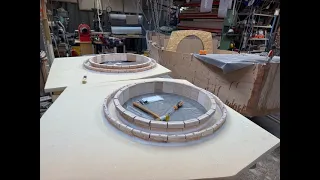
The Outer Coaming and Fiberglassing the Inner One.
Sven Yrvind fits the outer spray skirt coaming and laminates fiberglass onto the inner coaming in his workshop, refining his rope attachment setup and filleting the joint defenses.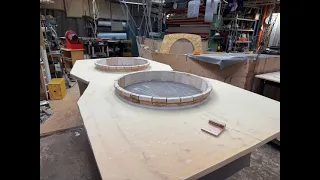
Starting the Inner of Two Spray Skirt Coamings.
Sven Yrvind works in his workshop cutting and fitting inner and outer spray skirt coamings, detailing kerf measurements and fiberglass reinforcement.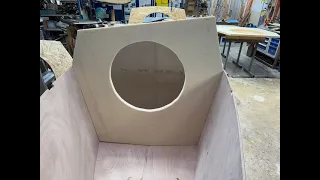
Cutting the Divinycell Bulkheads.
In his Västervik workshop, Sven Yrvind shapes composite bulkheads and constructs rounded hatch coamings with dual spray protection for his compact ocean cruiser, verifying hull symmetry and deck crown alignment.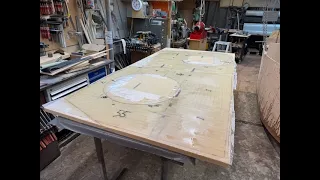
Laminating the Two Bulkheads.
Sven Yrvind numbers and lays out fiberglass cloth before laminating two bulkheads with epoxy resin in his Västervik workshop for his 4.5-meter high-latitude cruiser test boat.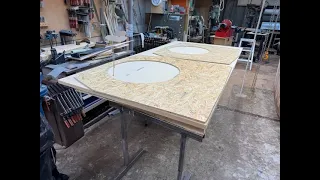
Starting the Two Divinycell Bulkheads.
In his Västervik workshop, Sven Yrvind lays out two test bulkheads inside a plywood mockup, adjusting semicircular access cutouts and planning insulated Divinycell sandwich bulkheads for his upcoming ocean cruiser.