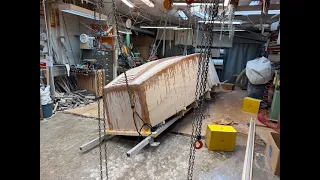
23 May 2024 Rounded bow crasch detail
On May 23rd, 2024, renowned sailboat designer Sven Yrvind provided an insightful look into the realm of hull design as he explained the advantages and construction methods associated with a vessel’s rounded bow. By examining the details of a crash box designed for reinforcement, Yrvind unveiled the secrets behind these sophisticated structures.
Understanding Rounded Bows
A rounded bow is an essential design element in sailboat construction, offering distinct benefits over conventional designs. By blending aerodynamics with hydrodynamics, these vessels navigate through waves and wind more efficiently while maintaining hull integrity.
Crash Box Reinforcement
In the defense of the sailboat’s bow, Sven Yrvind introduced a crash box—a vital component designed to absorb and dissipate energy from potential impacts. This sturdy enclosure, made from high-grade 350 kilo D-cell batteries typically used in submarines, showcases durability beyond belief. The 3 cm-thick walls demonstrate the robustness of this protective structure.
Construction Materials
The choice of submarine-grade batteries for this project speaks volumes about Yrvind’s commitment to safety. Submarines rely on such tough materials, and by incorporating them into the crash box, he ensures that the bow will maintain its structural integrity even under harsh conditions.
Making the Crash Box
The construction of this rounded crash box presents an innovative approach. With two walls each measuring approximately 3 cm in thickness, it not only offers robustness but also elegance in design.
Rounded Bows’ Advantages
The key to the rounded bow’s superiority lies in its ability to handle rough waters and maintain hull strength. These characteristics make them a preferred choice for adventure-seekers, water sports enthusiasts, and those who venture into challenging maritime conditions.
Conclusion
Sven Yrvind’s detailed discussion on rounded bow construction, with the implementation of crash boxes, showcases the intricacies of sailboat design. By focusing on materials like submarine-grade D-cells and prioritizing safety through reinforced structures, he sets a high standard for future maritime vessels. This approach not only enhances performance but also provides reassurance in potentially treacherous conditions.
Implication for Future Designs
The knowledge gleaned from this episode has vast implications for future boat designs. Designers and enthusiasts can take these concepts forward, improving hull design with a blend of aesthetics and functionality. As the sailing community continues to evolve, lessons such as those taught by Sven Yrvind will be invaluable in shaping the future of marine engineering.
Further Exploration
If you’re interested in delving deeper into sailboat design and construction techniques, consider examining other innovative solutions presented by experts like Sven Yrvind. By understanding the intricacies of hull reinforcement, materials selection, and innovative design elements, enthusiasts can enhance their own projects and appreciate the complexity and artistry involved in marine engineering.
Support Sven Yrvind
At WeBoating.com, we profoundly acknowledge the unwavering dedication that Sven Yrvind invests in crafting each and every video or voyage. Their passion for delivering exceptional ocean content shines through every frame, and it's a labor of love that deserves your attention.
We invite you to watch their captivating videos here and actively engage with their content, including their social media links above. Liking, commenting, and sharing their work goes a long way in fueling their creative fire.
We're also inviting you to explore the gear, sponsorships, and boat partnerships highlighted in the "23 May 2024 Rounded bow crasch detail" video description, or directly on YouTube. By engaging with these offerings or purchasing services and items, you directly support Sven Yrvind, their collaborators, and the brands they're associated with.
To ensure you never miss an offshore update, consider visiting their official YouTube Channel to subscribe, like, and join their community directly.
If you have any feedback, corrections, or additional information about Sven Yrvind or their videos, please use the comment form below to share your thoughts with us.
Thank you for being a part of our community and supporting the creators we cherish. Your time and support truly matter!
This Youtube channel is about me an 85 year and one month old dyslectic solo sailor building a 5.6 meter long, 1.2 meter beam twin keel ocean going high latitude cruiser.
If you’re interested in contributing to my experiments links are below.
https://www.paypal.com/donate/?hosted_button_id=53X8NVEA22MBL
Swish 0706200550
Also subscribe
For more see Yrvind.com
Sven Yrvind
At 86, Sven Yrvind is still pushing the limits of small-boat design. Discover the philosophy and technical grit behind his 'Exlex' series.
Channel Information:
Social Media Links:
Latest Episodes from Sven Yrvind
Explore the most recent voyages. Subscribe to the channel to never miss an update!
Cutting the Divinycell Bulkheads.
This Youtube channel is about me Sven Yrvind. I am 87 and a half years old dyslectic solo sailor. I am building a plywood test boat for a Divinycell and NM-epoxy high-latitude cruiser. She will be about 4.5 meter or 14 feet and 9 inches long, the beam 1.36 meter, 4 feet 6 inches. She is a two mas...
Laminating the Two Bulkheads.
This Youtube channel is about me Sven Yrvind. I am 87 and a half years old dyslectic solo sailor. I am building a plywood test boat for a Divinycell and NM-epoxy high-latitude cruiser. She will be about 4.5 meter or 14 feet and 9 inches long, the beam 1.36 meter, 4 feet 6 inches. She is a two mas...
Starting the Two Divinycell Bulkheads.
This Youtube channel is about me Sven Yrvind. I am 87 and a half years old dyslectic solo sailor. I am building a plywood test boat for a Divinycell and NM-epoxy high-latitude cruiser. She will be about 4.5 meter or 15 feet and 9 inches long, the beam 1.36 meter, 4 feet 6 inches. She is a two mas...
The Space Allocation for the Three Compartments Is Settled.
This Youtube channel is about me Sven Yrvind. I am 87 and a half years old dyslectic solo sailor. I am building a plywood test boat for a Divinycell and NM-epoxy high-latitude cruiser. She will be about 4.8 meter 15 and a half feet long. Her beam will be 1.3 meter. She is a two masted lugger with...
Finding the Best Bulkhead Positions.
In his workshop, Sven Yrvind adjusts bulkhead positions on his plywood test boat, reallocating internal bay spacing, marking the waterline, and calculating hull displacement.