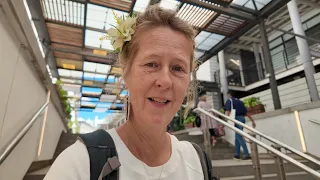
Gavin Randall | Navigating to South Africa, Weather & Uncertainty - LWP #4
Having completed an arduous passage across the Indian Ocean from Mauritius to Richards Bay, South Africa, sailor Gavin Randall safely secured his Hallberg-Rassy 38 in port for an upcoming haul-out. From the cockpit of her 27-foot sloop Loveworkx anchored in Mauritius, host Jacqueline Evers of Solo sailing around the world reconnected with Randall to deconstruct the volatile weather systems, conflicting forecast models, and treacherous ocean currents that defined his crossing. Having first crossed paths in Cocos Keeling Islands while both voyagers were midpoint through their Indian Ocean transits, Evers and Randall maintained daily contact throughout his passage toward South Africa, tracking weather systems and evaluating routing decisions in real time.
The crossing from Mauritius to Richards Bay represents one of the most demanding offshore routes in global navigation, where sailors negotiate the dynamic Mozambique Channel and round southern Madagascar toward the Agulhas Current system. With Randall pausing his voyage in Richards Bay before haul-out chores commenced, he reflected on the divergence between passage planning and the reality of navigating unpredictable sea conditions.
Vessel Selection and Refit Discipline
Randall had been sailing since his 20s, but a mechanical emergency aboard a previous production vessel reshaped his approach to offshore reliability. While sailing down the coast in Australia aboard a Bavaria 37, a critical component failure forced an immediate survival response. “The pin that was holding me the rudder stock came out and the rudder dropped down,” Randall recalled. Stranded 16 nautical miles offshore without directional steering, he deployed drogues to stabilize the yacht and worked to retrieve and reset the rudder assembly. That offshore ordeal cemented his requirement for a dedicated long-distance cruiser featuring a solid skeg-hung rudder and a full keel.
His search for a heavy-displacement Swedish cruiser led him to Port Douglas, Australia, where a Swedish-built Hallberg-Rassy 38 became available just prior to COVID. The prior owner faced international travel restrictions and sold the vessel. Randall acquired the yacht and dedicated the subsequent 5 years to a comprehensive systems overhaul. Working alongside his son, an electrician, Randall upgraded mechanical, electrical, and deck systems from the ground up, learning practical trades that replaced his background working in an office. When his anchor windlass failed while voyaging up the coast of Australia, Randall sourced a replacement unit and installed it without shore assistance.
As Randall emphasized regarding offshore self-sufficiency: “when things break and you’re in the middle of the ocean, there’s nowhere to turn. You’ve got to you’ve got to come up with a solution yourself.” Prior to setting out from Sydney toward his 60th birthday, Randall established a firm two-year cruising timeframe with his partner, Megan. To balance his global sailing ambition with family commitments, Randall structured the voyage into distinct chapters, scheduling flights to Europe to walk the Camino trail alongside Megan, planning visits with his adult children, and flying back to Sydney for Christmas and New Year while leaving the Hallberg-Rassy 38 berthed on the hard in Richards Bay.
Departing Mauritius and Early Calms
For the 1,300 nautical mile passage from Mauritius to South Africa, Randall sailed doublehanded alongside crew member Russell, an accomplished mariner who had already completed a global circumnavigation aboard various offshore yachts. Although trade winds typically dominate the lower latitudes, the passage began in flat calms rather than predictable easterlies. “our passage started with I guess 5 days of of no wind whatsoever,” Randall noted. Without breeze to fill their sails, Randall was forced to motor toward Madagascar, burning between 160 and 170 liters of diesel fuel across the opening 5 days.
In an ocean basin notorious for violent weather transitions, motoring through prolonged calms created an immediate fuel conservation dilemma. The crew required sufficient fuel reserves to negotiate unpredictable current gates and avoid being left powerless near shipping lanes or lee shores along the African mainland.
Madagascar Coastal Run and Eddy Currents
As the Hallberg-Rassy 38 neared the coast of Madagascar, the wind shifted into the north-northeast and freshened to 20 to 25 knots. Simultaneously, a localized coastal current seized the yacht. Moving with 20 to 25 knots of following breeze and an accelerated two-knot current, Randall watched his vessel surge southward at speeds between 8 and 9 knots over the ground. Within 48 hours of catching the current, the yacht had covered between 250 and 260 nautical miles, propelling them rapidly toward the southern tip of Madagascar.
Navigating the waters surrounding Madagascar revealed severe hydrographic complexity. Rather than a uniform flow, the Agulhas Current splits north of Madagascar, sending one branch down through the Mozambique Channel along the coast of Mozambique and another down Madagascar’s eastern seaboard. These massive flows shed spinning eddies that run between 2 and 3 knots in opposing directions, turning passage planning into a constant tactical battle against unmapped counter-currents.
While sailing wing-on-wing at night with the mainsail sheeted out and the genoa poled to windward at 8 knots, the boat unexpectedly slammed into an opposing eddy. The sudden counter-current overcame the rudder and rounded the yacht up into 25 knots of wind. Randall quickly furled the poled-out headsail and started the auxiliary diesel engine to maintain steerage, battling the opposing three-knot current for 8 hours while making barely 1 knot over the ground. “Certainly do not Do not Do do not trust exactly where they the currents say they are on predict current, cuz it wasn’t accurate,” Randall stressed, adding that “I’d never ever go wing on wing at night again after that experience.”
The Nosy Ve Dilemma and Weather Routing
South of Madagascar, Randall received an urgent update from his weather router warning that a punishing cold front was barreling up from the south. The router advised him to immediately reverse course and seek refuge at Nosy Ve, a recognized bolt hole situated along Madagascar’s southwest coast. However, the geographic reality on the water made following this routing directive impossible.
The Hallberg-Rassy 38 was already positioned 250 nautical miles south of Nosy Ve. To reach the anchorage, Randall would have had to bash directly upwind into 20 to 25 knots of northerly breeze against a 2-knot opposing current. “there’s nowhere for us to go I mean we we either got to try and work back to Nosy Ve and that means using all our fuel,” Randall explained. Committing his remaining diesel fuel to motor uphill into heavy head seas would have depleted his tanks completely, leaving the yacht defenseless upon reaching South African waters.
Once a vessel rounds southern Madagascar and commits to the southwest quadrant, recognized bolt holes like Nosy Ve are effectively out of reach. Recognizing that retreat was unviable, Randall made the command decision to proceed toward waypoint 29 38, positioning the yacht in an area where the approaching gale would not oppose strong surface currents and generate catastrophic vertical seas.
Surviving the Cold Front: Heaving To and Coastal Run
Reaching waypoint 29 38 with 15 to 20 knots of residual northerly wind, Randall and Russell hove to on the Hallberg-Rassy 38 to await the frontal passage. Weather forecast models diverged significantly on expected wind intensities: the American model indicated winds of 30 to 32 knots with gusts up to 34 knots, whereas the European model forecasted 34 knots with gusts reaching 46 knots. In practical offshore conditions, the European model proved far more accurate. The front brought sustained gales between 33 and 34 knots with violent gusts peaking at 45 knots.
The crew remained hove to for 36 hours, holding their heading while the boat absorbed the heavy seas. However, radar and GPS plots revealed that the yacht was drifting between 75 and 80 nautical miles toward the northeast. This drift trajectory was pushing them directly toward a southward-running current. With a fierce southerly gale blowing across the surface, colliding with an opposing south-flowing current would generate treacherous breaking waves capable of overwhelming the vessel.
To eliminate this hazard, Randall broke the heave-to, bore away, and ran downwind toward the South African coastline. Navigating through 4 to 5 meter swells under sustained winds of 28 to 33 knots, the Hallberg-Rassy 38 tracked steadily westward, clearing the danger zone and maintaining controlled steerage until the front finally dissipated.
Passage Metrics and Tactical Log
| Passage Phase | Recorded Marine Conditions | Tactical Action and Fuel Log |
|---|---|---|
| Mauritius Departure | 5 days of complete calm | Motored westward consuming 160 to 170 liters of diesel fuel |
| Madagascar Coastal Run | 20 to 25 knots northerly breeze | Logged 250 to 260 nautical miles in 48 hours at 8 to 9 knots |
| Frontal Gale Heave-To | 33 to 34 knots sustained, gusting 45 knots | Hove to for 36 hours drifting 75 to 80 nautical miles before running off |
| Richards Bay Approach | 0 knots wind (becalmed) | Motored final 100 to 150 nautical miles directly into Richards Bay |
Final Approach and Richards Bay Arrival
Two days after clearing the frontal storm, the wind died entirely. Becalmed between 100 and 150 nautical miles off the coast of South Africa, Randall relied on the diesel reserves he had carefully protected by refusing to divert back toward Nosy Ve. Powering the final distance across flat waters, the Hallberg-Rassy 38 safely entered Richards Bay harbor to conclude the 1,300 nautical mile passage.
Upon tying up in Richards Bay, Randall arranged contractor work to repair his onboard watermaker and service his tender’s outboard engine ahead of pulling the boat out of the water. Reflecting on the voyage, Evers shared her own perspectives on managing fear and building mechanical autonomy aboard her 27-foot sloop Loveworkx, highlighting how solitary voyaging demands complete psychological resilience. Randall, by contrast, reaffirmed his preference for crewed sailing, expressing deep admiration for solo sailors and observing that fewer than 30 women have ever circumnavigated the globe singlehanded.
Frequently Asked Questions
After a rudder pin failed on his previous Bavaria 37 sixteen nautical miles offshore, Randall sought a blue water cruiser equipped with a skeg-hung rudder and a full keel.
The crew burned approximately 160 to 170 liters of diesel fuel motoring through five consecutive days of calm weather on the initial leg toward Madagascar.
The yacht was already 250 nautical miles south of Nosy Ve; powering back north against 20 to 25 knots of headwind and a two-knot current would have exhausted all remaining fuel reserves.
Gavin Randall found that the European model proved far more accurate than the American model, correctly predicting 34 to 46-knot gale conditions.
After drifting 75 to 80 nautical miles northeast while hove to, the boat was drifting toward a south-running current that threatened dangerous breaking waves under southerly winds.
The boat struck an uncharted three-knot adverse current that rounded the vessel up into 25 knots of wind, requiring Gavin to furl the genoa and run the diesel engine for 8 hours.
Water adventures near Amsterdam
Support Solo sailing around the world
At WeBoating.com, we profoundly acknowledge the unwavering dedication that Solo sailing around the world invests in crafting each and every video or voyage. Their passion for delivering exceptional ocean content shines through every frame, and it's a labor of love that deserves your attention.
We invite you to watch their captivating videos here and actively engage with their content, including their social media links above. Liking, commenting, and sharing their work goes a long way in fueling their creative fire.
We're also inviting you to explore the gear, sponsorships, and boat partnerships highlighted in the "Gavin Randall | Navigating to South Africa, Weather & Uncertainty - LWP #4" video description, or directly on YouTube. By engaging with these offerings or purchasing services and items, you directly support Solo sailing around the world, their collaborators, and the brands they're associated with.
To ensure you never miss an offshore update, consider visiting their official YouTube Channel to subscribe, like, and join their community directly.
If you have any feedback, corrections, or additional information about Solo sailing around the world or their videos, please use the comment form below to share your thoughts with us.
Thank you for being a part of our community and supporting the creators we cherish. Your time and support truly matter!
What does it take to make the right decisions when you're sailing across The Indian Ocean, far from land and with constantly changing conditions towards South Africa?
My guest is Gavin Randall, whose passage from Mauritius to Richards Bay, became a journey we followed closely together. During the passage, we spoke almost daily about weather systems, ocean currents, routing strategies and the decisions that can make all the difference when sailing offshore.
When you're out on the ocean, you cannot control the wind, the waves or the weather. You can study the forecasts, prepare carefully and choose your strategy — but ultimately, you have to respond to what unfolds around you.
In this conversation, we explore the realities of offshore sailing, the thinking behind difficult decisions, and how to navigate uncertainty when the stakes are high. We also reflect on what these experiences can teach us about patience, trust, resilience and knowing when to act — and when to wait.
Because navigating an ocean is not simply about finding the fastest route. It's about learning to work with conditions you cannot control, while taking responsibility for the choices that are yours to make.
Welcome to Loveworkx The Podcast — Navigating love, life and long passages.
🎙️ Enjoying Sailing Loveworkx – The Podcast?
Subscribe, hit the notification bell 🔔, and share your thoughts in the comments. What resonates with you? I’d love to hear your perspective.
🌊 Navigating love, life and long passages. In this podcast, I talk with sailors, adventurers and inspiring people about life beyond the horizon — exploring courage, freedom, resilience, solitude, human connection and what the ocean teaches us about ourselves.
⛵ Follow my solo circumnavigation (started July 1, 2023, from The Netherlands) at sailing.loveworkx.com.
💙 Support my journey:Patreon: patreon.com/loveworkx (€3/month)PayPal: paypal.me/LoveworkxShop: sailing.loveworkx.com/shop
Thank you for being part of this journey — for watching, listening, sharing and supporting.
Sailing with love around the globe. 🌍⛵
Solo sailing around the world
Dutch solo sailor Jacqueline Evers is navigating a minimalist global circumnavigation aboard her 27ft Grinde 'Loveworkx'. Follow her 2026 Indian Ocean transit.
Channel Information:
Social Media Links:
Gavin Randall | Navigating to South Africa, Weather & Uncertainty - LWP #4 Location
- Richards Bay (-28.7615056,32.0590454)
- Mauritius (-20.1609,57.5012)
- Nosy Ve (-23.6456,43.6067)
- Cocos (Keeling) Islands (-12.1642,96.871)
Latest Episodes from Solo sailing around the world
Explore the most recent voyages. Subscribe to the channel to never miss an update!
Gavin Randall | Navigating to South Africa, Weather & Uncertainty – LWP #4
Gavin Randall recounts his passage from Mauritius to Richards Bay aboard his Hallberg-Rassy 38, detailing calms, unpredictable eddies, and a 36-hour heave-to.
Saying goodbye to friends in Mauritius 🇲🇺 | A Warm Welcome in Réunion – Ep. 292
Jacqueline Evers departs Mauritius aboard Loveworkx for an Indian Ocean passage to Réunion, handling mainsail feeder jams, windvane issues, and an overnight heave to before docking at Titan Bay.
Dragon Festival Reunion
🥁🐉 🛶Today, the Dragon Boat Festival brought colour, energy and a festive atmosphere to the marina in Réunion! A wonderful way to experience the local culture and enjoy a special day here on the island. 🇷🇪 #DragonBoatFestival #ReunionIsland #SailingLoveworkx #IslandLife #CulturalExperience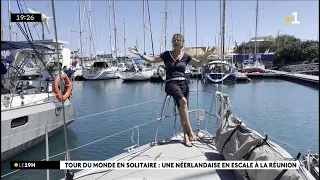
À la télévision à La Réunion 🇷🇪 | Mon tour du monde à la voile en solitaire
🇫🇷 Français Aujourd’hui, l’équipe de TV1 Réunion est venue à bord de Loveworkx pour m’interviewer sur mon voyage autour du monde à la voile en solitaire. Le reportage a été tourné dans le port de La Réunion, où je prépare actuellement la prochaine étape de mon voyage en direction de l’Afrique du Su...
Tim Lemeer | The Art of Weather Routing & Ocean Sailing to South Africa – LWP #3
How do you decide when to sail to South Africa, when the weather is changing continuously, and the wrong decision can have serious consequences with waves up to 20 meters high? My guest is Tim Lemeer, my Dutch weather router, who helped me plan my passage for three years now. Today we talk about ho...