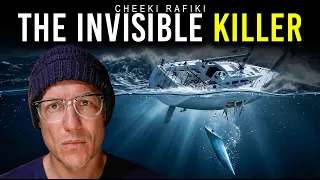
I’ve Been Shipwrecked. I’ve Rescued Sailors. Here’s What Decides Who Survives. | LIVE
The open ocean is an uncompromising proving ground where structural integrity and operational discipline govern survival. On blue water, the difference between a tragedy and a rescue is shaped by protocols executed long before disaster strikes. James, the former U.S. Navy submarine navigator and circumnavigator behind Sailing Zingaro, brings hard-won expertise to the disciplines of emergency seamanship, life raft survival, and maritime safety. Having survived the catastrophic structural loss of his catamaran off Oahu, Hawaii, and orchestrated the open-ocean rescue of three dismasted sailors in the Caribbean, James conducts an unsparing forensic seminar on surviving worst-case offshore failures.
Cruising culture frequently celebrates destination lifestyle while overlooking the mechanical stresses of heavy-weather voyaging. When structural bulkheads buckle, keels detach hundreds of miles offshore, or collisions puncture a hull below the waterline, survival margins vanish. Drawing from Naval damage control protocols and real-world maritime casualties, this analysis examines catastrophic vessel failures, the psychology of abandoning ship, hydrostatic release mechanics, and search and rescue coordination.
Anatomy of Catastrophic Offshore Failure: Keels, Bulkheads, and Impact Dynamics
Analyzing structural hull failure, James of Sailing Zingaro demonstrates that emergency seamanship, life raft survival, and maritime safety depend on understanding composite fatigue and load limits. Modern cruising yachts and racer-cruisers rely on high-load composite matrixes, bolt-on ballast keels, and spade rudders subjected to intense cyclic stress. The tragic loss of the Beneteau 40.7 Cheeki Rafiki in the North Atlantic underscored these vulnerabilities when matrix delamination caused total keel detachment and rapid capsize. James encountered a similar structural emergency while delivering a sister ship, discovering flexing laminates and fractured grid stringers that nearly sheared the keel off at sea.
Keel detachment is not limited to older vessels. During Hamilton Island Race Week, the Oyster 825 Viva La Vida capsized instantly when its cast keel bulb sheared off on a submerged reef at twelve knots, pitching ten sailors into the water. Impact hazards also stem from marine wildlife; north of Norfolk Island, a 52-foot yacht collided with sperm whales, driving its rudder post through the hull and forcing the crew into their life raft before a diverted container ship rescued them. Survival in each disaster hinged on immediate equipment access rather than improvised reactions.
The Psychological Precipice: Transitioning from Damage Control to Abandon Ship
Managing the psychological shift from damage control to vessel abandonment requires that James and the crew of Sailing Zingaro treat emergency seamanship, life raft survival, and maritime safety as core mental disciplines established before departure. The most dangerous offshore hazard is skipper denial—an emotional attachment that delays abandonment until escape routes close. During the loss of the 40-meter yacht Pearl Bianca off Cyprus, the owner refused to leave his vessel in severe seas, perishing alongside his sinking ship. The foundational rule of blue-water survival remains absolute: mariners must never step down into a life raft; one only steps up into a raft when the vessel is sinking beneath them.
Establishing objective abandonment criteria prevents hesitation when water breaches critical compartments. When flooding outpaces pumping capacity, the skipper must pivot instantly to abandon-ship protocols. To counter cognitive overload during crisis, an emergency VHF Mayday card must be permanently mounted at the navigation station. In blinding squalls and rising water, even seasoned captains struggle to recall call signs, MMSI numbers, and exact GPS coordinates; a laminated transmission prompt ensures any crew member can transmit a rapid, accurate distress call to rescue authorities.
Life Raft Deployment Dynamics and Hydrostatic Release Systems
In evaluating deployment mechanics, James from Sailing Zingaro reveals how emergency seamanship, life raft survival, and maritime safety rely on external canister mounting and automatic hydrostatic release hardware. A life raft lashed beneath deck gear or locked inside a deep cockpit locker becomes an inaccessible hazard during rapid capsize or cabin fire. Canistered life rafts must reside on the coachroof or stern pushpit secured by hydrostatic release units (HRUs) like the Hammar H20, which deploy automatically upon submergence to depths between 1.5 and 4.0 meters.
Painter line geometry dictates whether an inflated raft remains tethered or floats free. Shackled to a deck strongpoint through an engineered weak link, the painter triggers the high-pressure gas cylinder as water drags the sinking hull downward. Once the canopy fully inflates, the weak link snaps under vessel displacement, allowing the buoyant raft to surface safely. During manual launches, crew must heave the canister leeward, verify painter attachment, and immediately deploy weighted ballast chambers and the drogue to prevent inversion in breaking seas.
The Ditch Bag Vitals: Essential Lifelines for Sustained Days Adrift
Equipping an offshore ditch bag is the critical discipline where James of Sailing Zingaro proves that emergency seamanship, life raft survival, and maritime safety govern how long castaways can endure on the open ocean. While a life raft provides shelter and positive buoyancy, the grab bag supplies the physiological and communicative tools needed for extended survival. Staged in a buoyant waterproof bag near the companionway, core hardware must include a 406 MHz EPIRB with internal GNSS, individual Personal Locator Beacons (PLBs), and AIS Man Overboard beacons.
Beyond electronic signaling, hydration determines survival duration. Standard emergency rations offer short-term calories, but a manual reverse-osmosis survival desalinator, such as the Katadyn Survivor 06 or 35, produces drinking water indefinitely without shipboard electrical power. The grab bag must also feature floating waterproof VHF transceivers, satellite communicators like Garmin inReach or Iridium GO! units, SOLAS thermal protective aids, chemical light sticks, seasickness medication to prevent severe dehydration, and trauma kits.
Active Damage Control: High-Water Alarms, Bilge Plumbing, and Crash Pumps
Prior to facing vessel abandonment, James and Sailing Zingaro demonstrate that emergency seamanship, life raft survival, and maritime safety depend on proactive bilge maintenance and robust dewatering capacity. Progressive flooding often remains hidden until water swamps primary electrical panels. Standard mechanical float switches frequently jam due to debris or fuel scum; installing solid-state switches like the Ultra Safety Systems Ultra Pump Switch alongside high-decibel alarms ensures instant warning of bilge ingress.
Reliable dewatering requires redundant manual and emergency pumping capacity. Blue-water yachts must carry high-output manual diaphragm pumps, such as Whale Gusher models moving seventeen gallons per minute through human stroke alone, with inspected nitrile diaphragms and check valves. Offshore passages also warrant a dedicated 3,000-GPH electric crash pump plumbed straight to an above-waterline discharge thru-hull. By eliminating static head resistance, crash pumps provide the vital margin needed to identify and plug hull breaches before abandon-ship protocol becomes inevitable.
Search and Rescue Telemetry: Coordination, Beacon Signals, and Hoist Operations
Navigating search and rescue operations offshore, James of Sailing Zingaro illustrates how emergency seamanship, life raft survival, and maritime safety interface directly with Coast Guard coordination networks. When a 406 MHz beacon fires, Cospas-Sarsat satellites calculate Doppler coordinates and GPS data, relaying emergency alerts to Mission Control Centers. Proper beacon registration ensures search coordinators instantly verify vessel particulars, emergency contacts, and crew manifests, transforming ambiguous signals into immediate air-sea tasking.
SAR execution moves from orbital telemetry to tactical assets on scene. Long-range aircraft home in on 121.5 MHz signals, deploying datum buoys and survival gear, while nearby commercial vessels divert through the AMVER network to shield rafts from swell. During helicopter hoist extractions, survivors must let the static grounding cable touch the water before grabbing the rescue basket. Because vertical extraction causes circum-rescue collapse—a fatal drop in blood pressure from sudden venous pooling—crew must be hoisted horizontally, wrapped in thermal blankets, and rewarmed passively.
Offshore Emergency Protocols and Gear Telemetry Matrix
Consolidating offshore survival tactics, James from Sailing Zingaro integrates emergency seamanship, life raft survival, and maritime safety into an operational reference matrix. The table below details critical failure modes, hardware specifications, and survival telemetry systems for ocean-going vessels.
| Emergency Dimension | Critical Hardware / System | Operational Parameters | Survival & Forensic Function |
|---|---|---|---|
| Keel / Structural Compromise | Hull Matrix & Floor Grids | Cyclic load inspection; torque audit | Prevents catastrophic keel loss (e.g., Cheeki Rafiki); triggers immediate abandon ship if grid separates. |
| Hull Penetration / Collision | Emergency Crash Pump | 3,000+ GPH capacity; zero-head plumbing | Dewatering during massive ingress from whale collisions or container strikes; preserves vessel stability. |
| Manual Dewatering | Whale Gusher Diaphragm Pump | 17-20 GPM manual human stroke | Operates independently of 12V electrical failure; requires annual flapper valve and diaphragm rebuilds. |
| Primary Auto-Deployment | Hammar H20 Hydrostatic Release | 1.5–4.0 meter depth activation | Automatically releases life raft lashing during sudden sinking; weak link activates painter inflation. |
| Global Distress Alerting | Category 1 406 MHz EPIRB | 48-hour continuous transmission; GNSS | Transmits digital hex code ID and GPS coordinates to Cospas-Sarsat satellites; alerts global RCCs. |
| Close-Range Crew MOB | AIS Man Overboard Beacon | VHF frequency 161.975 / 162.025 MHz | Broadcasts emergency target marker directly to vessel chartplotters within local line-of-sight range. |
| Watermaker / Desalination | Katadyn Survivor 06 / 35 | Manual lever reverse osmosis pump | Produces 1 to 4.5 liters of potable drinking water daily indefinitely without external electrical power. |
| Air-Sea Extraction | Helicopter Rescue Basket | Horizontal extraction harness | Prevents circum-rescue cardiovascular collapse during hoist from life raft; manages hypothermic shock. |
Frequently Asked Questions
To assist blue-water sailors preparing for extreme offshore contingencies, James of Sailing Zingaro answers key technical questions addressing emergency seamanship, life raft survival, and maritime safety.
Mariners must only abandon ship when the vessel is actively sinking beneath them. Cruising hulls often remain floating longer than expected, providing superior shelter, visibility, and supplies compared to an exposed life raft.
A hydrostatic release unit like the Hammar H20 severs canister lashings when submerged to 1.5–4.0 meters. As the sinking yacht pulls the painter taut, the gas cylinder inflates the raft, and an engineered weak link breaks to free it.
An EPIRB is a vessel-registered distress beacon transmitting on 406 MHz for at least 48 hours, often with hydrostatic deployment. A PLB is a compact, personal unit registered to a crew member, operating for 24 hours on a life jacket.
Severe crises create cognitive overload. A laminated prompt card provides vessel specifics, call sign, MMSI, and standard Mayday format, allowing any crew member to transmit an accurate distress call during rising water.
Crucial items include a 406 MHz EPIRB or PLBs, floating VHF radio, handheld satellite messager, manual reverse-osmosis desalinator, SOLAS thermal protective aids, emergency calorie rations, medical trauma gear, and flares.
Electric pumps frequently fail due to debris-choked strainers, jammed float switches, flooded battery banks, or excessive static head pressure from long uphill discharge runs. Dedicated high-capacity crash pumps mitigate this risk.
Circum-rescue collapse is a fatal blood pressure drop caused by hoisting hypothermic victims vertically, pooling blood in lower limbs. It is prevented by using horizontal basket or double-sling hoists and passive rewarming.
Support Sailing Zingaro
At WeBoating.com, we profoundly acknowledge the unwavering dedication that Sailing Zingaro invests in crafting each and every video or voyage. Their passion for delivering exceptional ocean content shines through every frame, and it's a labor of love that deserves your attention.
We invite you to watch their captivating videos here and actively engage with their content, including their social media links above. Liking, commenting, and sharing their work goes a long way in fueling their creative fire.
We're also inviting you to explore the gear, sponsorships, and boat partnerships highlighted in the "I’ve Been Shipwrecked. I’ve Rescued Sailors. Here’s What Decides Who Survives. | LIVE" video description, or directly on YouTube. By engaging with these offerings or purchasing services and items, you directly support Sailing Zingaro, their collaborators, and the brands they're associated with.
To ensure you never miss an offshore update, consider visiting their official YouTube Channel to subscribe, like, and join their community directly.
If you have any feedback, corrections, or additional information about Sailing Zingaro or their videos, please use the comment form below to share your thoughts with us.
Thank you for being a part of our community and supporting the creators we cherish. Your time and support truly matter!
In 2020, a storm wrecked my catamaran on the way to Hawaii. In 2023, we pulled sailors out of the water on the way to Panama. And last year, I nearly lost the keel on a sister ship of the Cheeki Rafiki, the Beneteau 40.7 that capsized in the North Atlantic in 2014 with four men aboard.
This summer, boats have been going down worldwide. In August, an Oyster 825 racing at Hamilton Island Race Week reportedly struck a reef, lost her keel bulb, and turned upside down in seconds. All ten aboard were pulled out of the water. Then sperm whales holed a 52-footer north of Norfolk Island, and her crew spent the night in a life raft before a container ship picked them up.
Tonight we’re talking about what actually decides who comes home. Not luck. Decisions. When to call for help, where your beacons are, whether you can really get your raft off the boat, and what’s hiding under your floorboards.
Then it’s your questions. Boats, gear, passages, buying decisions. Bring them.
━━━━━━━━━━━━━━━━━━━━━━
⏱️ CHAPTERS
━━━━━━━━━━━━━━━━━━━━━━
00:00 - Introduction & Pendleton Teaser
01:14 - Welcome & Livestream Rules (Book Giveaway)
02:35 - Annapolis Sailboat Show & Captain's Locker Downloads
06:32 - Studio Tour & Community Poll Results
08:12 - Upcoming Documentary: Cheeki Rafiki & Offshore Safety Ratings
10:48 - Recent Maritime Incidents: Keel Loss, Whales & Abandonments
17:23 - The Emergency Protocol: Why You Need a VHF Mayday Card
24:06 - Lessons from 3 Real-World Casualties & Rescues
27:58 - Book Giveaway #1
28:46 - Critical Survival Gear: Hydrostatic Releases & Life Rafts
33:28 - EPIRBs, PLBs & AIS Man Overboard Beacons
38:57 - Bilge Pumps: Manual Gushers, Maintenance & Diagnostics
42:38 - Q&A: Visiting Annapolis & Meeting at the Show
45:45 - Q&A: Circumnavigation Budgeting & Monthly Costs
50:52 - Q&A: Offshore Boat Insurance & Crew Coverage
52:42 - Q&A: Mast Steps on a Cruising Rig (Pros, Cons & Styles)
56:11 - Book Giveaway #2
56:26 - Q&A: Best Bilge Pumps, Float Switches & High Water Alarms
01:02:08 - How to Set Up an Emergency Crash Pump
01:04:44 - Q&A: Handing Over Boats in Fiji & Pacific Routing Realities
01:10:20 - Q&A: Hurricane Survival Strategies & Mangrove Holes
01:15:26 - Q&A: Seasickness Testing & Getting Offshore Experience
01:17:32 - Q&A: High-Latitude Routes & Cruising Passages
01:20:21 - Q&A: Safety Briefings, Vessel Rules & Free Diving
01:23:14 - Pendleton Sneak Peek & New Animation Style
01:26:45 - Q&A: Privilege Catamaran vs. Aluminum Monohull
01:31:00 - Book Giveaway #3 & Redraw
01:37:33 - Wrap-Up & Safe Seas
━━━━━━━━━━━━━━━━━━━━━━
⚓ SUPPORT THE CHANNEL
━━━━━━━━━━━━━━━━━━━━━━
⚔️ Inner Circle on Patreon (join the WhatsApp crew): https://www.patreon.com/c/bethecaptain
📖 Be The Captain, my maritime field manual on seamanship, leadership, and crisis at sea (unlocks 10% off Defender Marine + 20% off PredictWind): English: https://bethecaptain.com/ · Español: https://a.co/d/08yiAfse
🧰 Free downloads in the Captain’s Locker: https://bethecaptain.com/locker
📚 Getting ready to buy? Come see Leadsman at the Annapolis Sailboat Show, booth O-18. Market intelligence and 17-page vessel condition reports: https://leadsman.ai/
━━━━━━━━━━━━━━━━━━━━━━
⚓ RECOMMENDED GEAR & PARTNERS
━━━━━━━━━━━━━━━━━━━━━━
Defender Marine: outfitting boaters since 1938 with trusted marine gear, expert advice, and refit supplies. 👉 https://defender.com/en_us/
PredictWind: the world leader in offshore marine weather forecasting, routing, and departure planning. 👉 https://www.predictwind.com/
#sailing #offshoresailing #bluewatersailing #liveaboard #shipwreck #survival #BeTheCaptain #CheekiRafiki
Sailing Zingaro
Join James Evenson of Sailing Zingaro as he documents his 2026 technical refit of his Crowther Spindrift 38 in Colombia and his 'Sailing Truth' mission.
Channel Information:
Social Media Links:
I’ve Been Shipwrecked. I’ve Rescued Sailors. Here’s What Decides Who Survives. | LIVE Location
- Cape Hatteras Offshore Storm Proving Grounds, North Carolina, USA (35.25,-75.5)
- Oahu Offshore Pacific Shipwreck & Rescue Fairway, Hawaii, USA (21.3,-157.85)
Latest Episodes from Sailing Zingaro
Explore the most recent voyages. Subscribe to the channel to never miss an update!
Fiji Might Be the Wrong Place to Start Your Sailing Journey
Fiji is an incredible cruising destination, but taking over a large sailboat there comes with challenges. Before buying a boat or planning a passage, consider the prevailing winds, available routes, and the experience needed to navigate the journey safely. Choosing a boat is only part of the decisio...
Never Stay on Your Boat During a Hurricane
Hurricane season is not the time to wait and hope for the best. Planning ahead, understanding local hurricane patterns, and getting a boat out of the danger zone can make all the difference. If a hurricane is approaching, personal safety comes first—never stay aboard to protect a boat. ▶️ Full Stre...
The Reality of Owning a Sailboat: Something Always Breaks
Something breaking on a sailboat doesn’t necessarily mean the boat is a piece of junk or the captain doesn’t know what they’re doing. Once you’re underway, keeping everything running takes constant work, improvisation, and problem-solving. Being prepared to troubleshoot and make repairs is part of s...
Family of 5, Zero Sailing Experience, $500K Budget: What Boat Should They Buy? | LIVE
Today I'm doing a live consultation with Ashton and his family. They've never sailed; they live in Utah, and they want to move aboard with three kids under 10 and eventually cross an ocean. Monohull or catamaran? New or old? Where do you even start? We'll go through all of it. Then I...
A Boating License Doesn’t Make You a Good Captain
A boating license is only one part of being a capable boat operator. Navigation, line handling, maneuvering, and understanding the rules of the road are essential skills for handling a boat safely. Knowing how to operate a boat matters just as much as knowing the rules. ▶️ Full Stream: 📗 Get My B...