Prism Reviews:Quickset Anchor; Conclusions
After taking on fresh water, Jon and Shannon brought Sailing Vessel Prism back to the anchorage in Port Washington, New York. Dropping ground tackle into the soft mud substrate of the bay, the crew initiated side-by-side trials to compare a 50-pound Kingston Quickset against their primary 55-pound Spade anchor. Searching for an anchor better suited to the soft mud bottoms of the Chesapeake and East Coast sounds, Jon evaluated whether the stainless steel plow design could deliver the holding power required for their Hans Christian 33 cutter.
To guarantee an apples-to-apples comparison against their baseline Spade, Jon deployed the Quickset with substantial rode:
“after filling prism up with water we returned to the anchorage in port washington new york to test the 50-pound quick set at 10 to 1 scope to give the anchor and apples to apple’s chance to prove itself against the 55-pound spade”
Soft Mud Deployment and Reverse Load Trials
Setting ground tackle in 15 feet of water at high tide, Jon ran out 150 feet of all-chain rode to establish a 10 to 1 scope. While 10 to 1 represents an extended scope in crowded harbors, soft harbor mud demands extra scope for anchors to penetrate. Rigging an underwater camera on a line to document the fluke digging in, Jon watched the initial attempt snap when Shannon engaged reverse. Shifting strategy after retrieving the line, the crew relied on engine thrust and shore bearings to gauge bottom engagement.
With 150 feet of chain deployed, Shannon backed down at idle before gradually advancing the throttle. SV Prism held firm initially, but advancing engine speed revealed gradual movement along the muddy bottom:
Under an engine load of 1800 RPM in reverse—representing maximum reverse thrust with Prism’s propeller pitch—the Quickset failed to maintain a dead stop. While their concave Spade locks into soft mud and stops vessel momentum entirely, the Kingston plow blade dragged with a slow, continuous creep through the substrate. A second setting attempt produced identical results, confirming that the plow design stayed engaged without achieving a definitive bite in soft silt.
High-Speed Shock Load and Reset Testing
To simulate severe East Coast summer squalls shifting direction at anchor, Jon devised a demanding shock load protocol. Cruising the East Coast regularly exposes vessels to violent frontal boundaries where shifting winds strike without warning:
“if you live on the east coast or sailed the east coast a long time you know that the thunderstorms here can be extreme and getting a random thunderstorm from a totally different direction blasting you at 60 70 knots is not unheard of”
To recreate that violent displacement, Shannon motored forward 50 feet and then 75 feet ahead of the set anchor before putting the engine into hard reverse. Drifting back at 2 to 3 knots, and reaching 3 to 4 knots on longer runs, Prism surged against the chain to test whether the Quickset would pull out or snap free.
Under peak shock loads, the Quickset blew out of the mud as the chain snapped tight, but the plow blade rotated and reset itself along the seabed. An attached camera rig dove 3 feet into the silt during the violent engagement, confirming deep bottom penetration. Unlike concave anchors that risk collecting thick clay in the scoop and skipping across the bottom as a mud ball, the plow fluke cleared cleanly and regained purchase.
Ground Tackle Comparison
| System feature | 50-pound Kingston Quickset | 55-pound Spade Anchor |
|---|---|---|
| Fluke design | Plow-style geometry | Concave scoop geometry |
| Construction material | Stainless steel with commercial finish | Mild steel requiring galvanizing |
| Soft mud holding | Continuous slight creep under 1800 RPM | Sets solid with zero creep once buried |
| Shock load reset | Blows out under violent loads but resets | Resets well unless fluke fouls with thick mud |
| Bowsprit fit | Fits Hans Christian 33 bowsprit roller | Fits bowsprit without roll bar interference |
Ground Tackle Geometry and Metallurgy
Selecting ground tackle for a Hans Christian 33 requires navigating severe bowsprit clearances. Modern roll-bar anchors cannot clear the bobstay and foredeck hardware, eliminating roll-bar anchors from consideration. While the roll-bar-free Mantis M2 avoids overhead interference, its wide fluke creates severe storage issues on Prism’s bow rollers.
Metallurgy presented an equally critical trade-off. While fabricated from softer stainless steel compared to high-tensile mild steel, the Kingston shank provides ample thickness for a 33-foot cruising vessel. In addition, the commercial finish eliminates topside corrosion, avoiding the flaking rust that plagues their galvanized Spade when stored on deck. However, Jon noted galvanic concerns: eliminating stainless steel components from Prism’s submerged ground tackle significantly extended chain galvanizing life over recent months.
Practical Cruising Conclusions
Evaluating independent test data from Steve on SV Panape—who recorded over 4 900 pounds of pull on the Quickset 50 in sandy mud—Jon concluded that the Kingston performs admirably in firmer substrates. However, in soft harbor silt, absolute holding power remains decisive:
“my final conclusion on the quick set 50 is it’s a great buy for someone that wants a stainless steel anchor again if you have a boat that you’re not on the hook 24 7”
Because SV Prism lives at anchor full-time along muddy coastal rivers and sounds, Jon chose to retain the 55-pound Spade as their primary bower. While the Spade requires re-galvanizing or replacement to manage steel loss, its reliable locking ability in soft mud provides the holding security essential for offshore liveaboard cruising.
Frequently Asked Questions
In soft mud substrates like Port Washington, Jon used a 10 to 1 scope with 150 feet of rode in 15 feet of water to match the testing scope required by their 55-pound Spade anchor.
When Shannon backed down at 1800 RPM in reverse, the Quickset 50 held initial tension but maintained a slight continuous creep through the soft mud rather than locking solidly in place.
When backing down at 3 to 4 knots from 50 feet and 75 feet up, the Quickset blew out of the bottom under peak load but quickly reset itself as the rode came tight.
While the stainless steel Kingston Quickset eliminates rust on deck, Jon retained the Spade because its concave fluke delivers higher ultimate holding power and zero creep in soft mud.
Book a trip where this was filmed — near New York City




Support Sailing Vessel Prism
At WeBoating.com, we profoundly acknowledge the unwavering dedication that Sailing Vessel Prism invests in crafting each and every video or voyage. Their passion for delivering exceptional ocean content shines through every frame, and it's a labor of love that deserves your attention.
We invite you to watch their captivating videos here and actively engage with their content, including their social media links above. Liking, commenting, and sharing their work goes a long way in fueling their creative fire.
We're also inviting you to explore the gear, sponsorships, and boat partnerships highlighted in the "Prism Reviews:Quickset Anchor; Conclusions" video description, or directly on YouTube. By engaging with these offerings or purchasing services and items, you directly support Sailing Vessel Prism, their collaborators, and the brands they're associated with.
To ensure you never miss an offshore update, consider visiting their official YouTube Channel to subscribe, like, and join their community directly.
If you have any feedback, corrections, or additional information about Sailing Vessel Prism or their videos, please use the comment form below to share your thoughts with us.
Thank you for being a part of our community and supporting the creators we cherish. Your time and support truly matter!
Sailing Vessel Prism
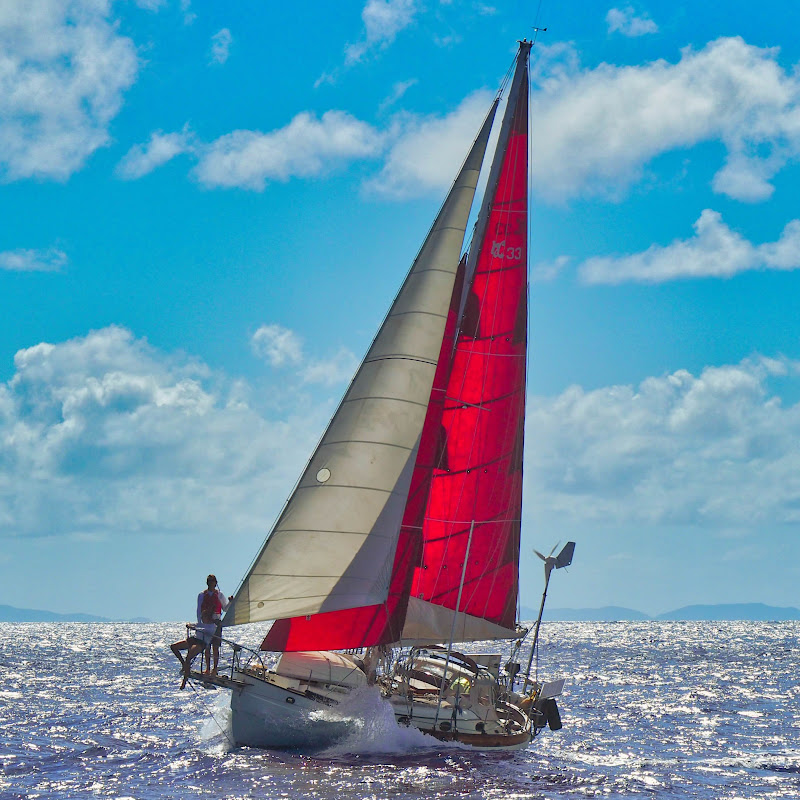
In 2026, Jon and Shannon continue their maritime journey aboard SV Prism, a classic 1983 Hans Christian 33 cutter designed by Harwood Ives. From San Francisco through Mexico, the Panama Canal, and the US East Coast, their channel documents the authentic realities of traditional heavy-displacement cruising, brightwork preservation, and anchorage camaraderie.
Channel Information:
Social Media Links:
Prism Reviews:Quickset Anchor; Conclusions Location
- Port Washington Anchorage, New York (40.831,-73.704)
Latest Episodes from Sailing Vessel Prism
Explore the most recent voyages. Subscribe to the channel to never miss an update!

Boat Wreck Bonfire
Wreckage of a fellow cruisers boat fuel the fire this night.
La Cruz Market – 2016 – SV Prism
@SailingVesselPrism Goes to the legendary La Cruz farmers market on a hot day from 2016. This channel conicals new episodes from a decades worth of footage never before seen.
Voyage of the Interlude – Filming Summer 2026 #sailing #ocean #STEM #education #seaofcortez
Please share: If you or anyone that you may know might be interested or if you would like to volunteer, please reach out!
Cruising Before Starlink | La Cruz, 2016
Please Share and go to If you want to support this channel, support this project.
EP.35 SV Prism Sails ON! Sailing to Banderas Bay
Thank you everyone who has come back. For real time updates check in over on instagram @svprism To get more infroamtion about Voyage of the Interlude or to share it to someone else go to this link: Thank you, Jon