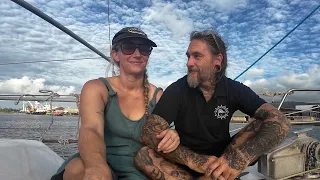
Sailing Alone Across the Somali Sea on a 30ft Sailboat Rough Seas from The Seychelles
When solo voyager James Frederick unmoored his 1965 Alberg 30 sloop Triteia from Victoria Harbor in Mahé, Seychelles, he set course for the French territory of Mayotte across one of the most turbulent passages in the western Indian Ocean: the Somali Sea. Chronicling his voyage on Sailing Triteia, James had logged over 22,000 nautical miles across five years since departing Los Angeles in 2021. Yet as Mahé faded astern, the waters ahead promised his roughest passage of the year, testing skipper and vintage craft against relentless open-ocean forces.
Singlehanded sailors in these waters often face questions regarding maritime piracy. While commercial shipping near the Gulf of Aden has faced renewed threats, private yacht piracy in the western Indian Ocean has remained inactive for fifteen years following the 2011 SV Quest incident and the 2009 capture of the Chandlers off the Seychelles. With dozens of cruising yachts safely transiting the region annually, the primary peril on this route was not human conflict, but the severe hydrodynamics of the Somali Sea itself.
Departure from Mahé and Tactical Refuge at Desroches Island
Departing the Seychelles bound for Mayotte across the Somali Sea in the western Indian Ocean, James Frederick aboard his 1965 Alberg 30 sloop SV Triteia of Sailing Triteia met immediate weather anomalies upon clearing Mahé. Expecting standard southeast trade winds of the winter monsoon, the vessel instead encountered south-southwest winds that forced a punishing, lumpy beat into oncoming swells. As night fell, James climbed on deck at 01:00 to tuck the first reef into the mainsail, adjusting course through repeated watch alarms.
By dawn, SV Triteia was eighteen miles from Desroches Island in the Amirantes Group. GRIB weather files downloaded aboard revealed trade winds funneling around northern Madagascar, creating an acceleration zone with 25-knot gales and treacherous seas. To avoid entering this compression zone unprepared, James detoured into the lee of Desroches. The seabed vaulted abruptly from 5,000 feet to just 20 feet across a single mile, coral heads flashing turquoise beneath the keel before Triteia anchored safely in 30 feet of sand on 4:1 scope. Rested and secure, James waited three days for the compression gale to abate.
Hydrodynamics of The Devil’s Cauldron: Crossing the Somali Sea
Weighing anchor from Desroches Island aboard the 1965 Alberg 30 sloop SV Triteia on Sailing Triteia, James Frederick set a southwest course across the Somali Sea in the western Indian Ocean toward Mayotte, sailing straight into the oceanic convergence Jimmy Cornell christened The Devil’s Cauldron. This stretch earned its reputation as westward equatorial counter-currents collide head-on with trade winds and refracting swells off northern Madagascar. As the Seychelles banks dropped off, chaotic seas immediately materialized.
Crossing the shallow atoll rim in 20 feet of breaking water, James established a conservative sail plan: headsail furled to 85 percent and mainsail tucked into two deep reefs. Keeping speed strictly under five knots prevented the heavy-displacement full keel from launching off wave crests and slamming violently into troughs. Steering was handed entirely to ‘Wanda Gene’, the boat’s Hydrovane self-steering windvane, which held course under aerodynamic power alone. Conditions deteriorated into pure violence: steep three-meter (twelve-foot) square waves, spaced four to six seconds apart, swept the decks as a two-knot current pushed Triteia north.
Offshore Solitude, Ancestral Memory, and Compression Zone Seamanship
Enduring relentless motion across the Somali Sea in the western Indian Ocean between the Seychelles and Mayotte, James Frederick found that commanding his 1965 Alberg 30 SV Triteia on Sailing Triteia required immense physical and mental endurance. Despite violent motion that made galley work grueling, Triteia posted impressive runs of 133 and 119 nautical miles. Sustaining himself on quick hot meals of vegetable curry with couscous and eggs to replace instant ramen, James monitored deck fittings, chainplates, and standing rigging for signs of stress.
During a brief evening lull, James reflected on his late grandfather—a quiet World War II bomber tail gunner in the Pacific and lifelong New Mexico well driller who found deep contentment in solitary labor. That generational resilience grounded James as Triteia entered the compression zone 250 miles north of Madagascar. Winds climbed to twenty knots, and heavy breaking seas repeatedly pooped the vessel, prompting James to insert the final companionway drop board. When an oncoming cargo ship fourteen miles ahead failed to see Triteia on AIS, James initiated VHF radio contact and altered course to avoid collision.
SV Triteia Vessel Telemetry & Somali Sea Passage Specifications
Navigating the treacherous transit between the Seychelles and Mayotte across the Somali Sea in the western Indian Ocean, James Frederick relies upon the proven naval architecture of his 1965 Alberg 30 sloop SV Triteia on Sailing Triteia. Carl Alberg’s narrow beam and encapsulated full lead keel yield a motion that dampens steep wave impacts where modern fin-keel vessels slam.
| Parameter / System | Specification / Observation | Operational Context |
|---|---|---|
| Vessel Model & Year | 1965 Carl Alberg 30 Sloop (Hull #55) | Classic full-keel heavy cruiser built by Whitby Boat Works |
| Hull Dimensions | LOA: 30′ 3″ | Beam: 8′ 9″ | Draft: 4′ 3″ | Narrow beam dampens roll harmonics in steep 4-6 second swells |
| Displacement & Ballast | 9,000 lbs Displacement / 3,300 lbs Lead | 37% ballast ratio provides high ultimate stability in gales |
| Route & Distance | Mahé (Seychelles) to Mayotte (~600 NM) | Passage across the Somali Sea and Amirantes Bank |
| Tactical Shelter | Desroches Island Anchorage (Amirantes) | 3-day weather layover in 30 ft sand to avoid compression gale |
| Day Runs (Noon-to-Noon) | 133 NM and 119 NM | Fast progress under double-reefed main and 85% headsail |
| Self-Steering System | Hydrovane (“Wanda Gene”) Auxiliary Rudder | Zero-amp mechanical steering in steep 3-meter breaking seas |
| Heavy Weather Sail Plan | Double-Reefed Main & 85% Furled Genoa | Vessel speed governed below 5.0 knots to prevent slamming |
| Auxiliary Diesel Engine | Inboard Diesel Engine (“Iron Jenny”) | Motored final 97 nautical miles through Madagascar lee calms |
| Offshore Communications | Garmin inReach + VHF Marine Radio | Shore-team tracking via brother David; ship collision avoidance |
Calms of the Madagascar Lee and Nightfall Lagoon Navigation into Mayotte
Crossing the western boundary of the Somali Sea in the western Indian Ocean en route from the Seychelles toward Mayotte, James Frederick aboard the 1965 Alberg 30 SV Triteia on Sailing Triteia saw howling trade winds evaporate under the lee of Madagascar. With ninety-seven miles remaining, James engaged the inboard diesel—the Iron Jenny—motoring across long glassy swells under a tropical sun.
Motoring offshore brought intense sensory anxiety. Unlike sailing, where James slept soundly attuned to hull motion and wind noise, the monotonous diesel rattle and electric autopilot hum drowned out oceanic cues, triggering sleep deprivation during brief micro-naps. Sixty-five miles off Mayotte, an opposing two-knot current slowed headway to three knots over ground.
Reaching Mayotte after nightfall, James faced navigating the coral-strewn lagoon pass in pitch darkness. Inside the cut, a powerful flood tide created chaotic standing chop and boiling eddies. Tracking flashing channel buoys, James guided Triteia past barrier reefs and secured a mooring ball solo on his first pass off Dzaoudzi at midnight, concluding an arduous ocean passage.
Frequently Asked Questions
Ocean cruising navigators following James Frederick on Sailing Triteia frequently examine how his 1965 Alberg 30 sloop SV Triteia manages extreme weather across the Somali Sea in the western Indian Ocean while voyaging between the Seychelles and Mayotte.
Jimmy Cornell and voyagers call this passage The Devil’s Cauldron because westward equatorial currents collide with trade winds and refracted swells off northern Madagascar, producing steep, breaking cross-seas on tight periods.
With a full keel, narrow 8-foot-9-inch beam, and 9,000-pound displacement with 37 percent encapsulated lead ballast, the Alberg 30 tracks steadily and eases through breaking waves rather than pounding flat on wave faces.
Weather models showed a severe compression zone funneling 25-knot gales off Cape Amber, Madagascar. James waited three days in 30 feet of sand at Desroches Island for the gale to moderate before transiting.
The Hydrovane functions as an independent auxiliary rudder driven by wind aerodynamic forces. Requiring zero electrical power, it maintains accurate course in steep three-meter breaking seas without depleting house batteries.
James carried two deep reefs in the mainsail and furled the headsail to 85 percent, governing boat speed under 5.0 knots to prevent the hull from launching off crests and slamming into oncoming wave troughs.
Solo sailors use 20-minute micro-sleep alarms combined with AIS and shore tracking. James sleeps soundly under sail by feeling vessel motion, but suffers heightened anxiety while motoring because engine noise masks wave sounds.
Mayotte’s barrier reef features narrow passes with powerful flood currents, whirlpool eddies, and sharp coral heads. Night entry requires strict adherence to lit channel marks and careful throttle control to pick up a mooring safely.
Support Sailing Triteia
At WeBoating.com, we profoundly acknowledge the unwavering dedication that Sailing Triteia invests in crafting each and every video or voyage. Their passion for delivering exceptional ocean content shines through every frame, and it's a labor of love that deserves your attention.
We invite you to watch their captivating videos here and actively engage with their content, including their social media links above. Liking, commenting, and sharing their work goes a long way in fueling their creative fire.
We're also inviting you to explore the gear, sponsorships, and boat partnerships highlighted in the "Sailing Alone Across the Somali Sea on a 30ft Sailboat Rough Seas from The Seychelles" video description, or directly on YouTube. By engaging with these offerings or purchasing services and items, you directly support Sailing Triteia, their collaborators, and the brands they're associated with.
To ensure you never miss an offshore update, consider visiting their official YouTube Channel to subscribe, like, and join their community directly.
If you have any feedback, corrections, or additional information about Sailing Triteia or their videos, please use the comment form below to share your thoughts with us.
Thank you for being a part of our community and supporting the creators we cherish. Your time and support truly matter!
Episode 501 : Sailing Through the Rough Seas of the Indian Ocean
Hello Friends,
On this episode I depart for what would be the roughest passage of the year so far! Jimmy Cornell refers to this passage as "The Devils Cauldron" and I understood why by the time I reached the island of Mayotte!
If you enjoy the channel please "Like" the videos and Subscribe so you don't miss any future episodes.
If you find the videos helpful or entertaining and would like to contribute you can become a Patron at: https://www.patreon.com/sailorjames
Other Ways to Support the Channel:
PayPal: https://www.paypal.com/paypalme/jamesthesailorman
Venmo: https://venmo.com/u/sailorjames
Cash App: https://cash.app/$triteia
Bitcoin: https://cash.app/$triteia
Fair Winds,
James
Website:
http://svtriteia.com
https://linktr.ee/sailor_james
Instagram:
http://www.instagram.com/james.the.sailor.man
#solosailing #vlog #Indianocean #somalisea
Sailing Triteia
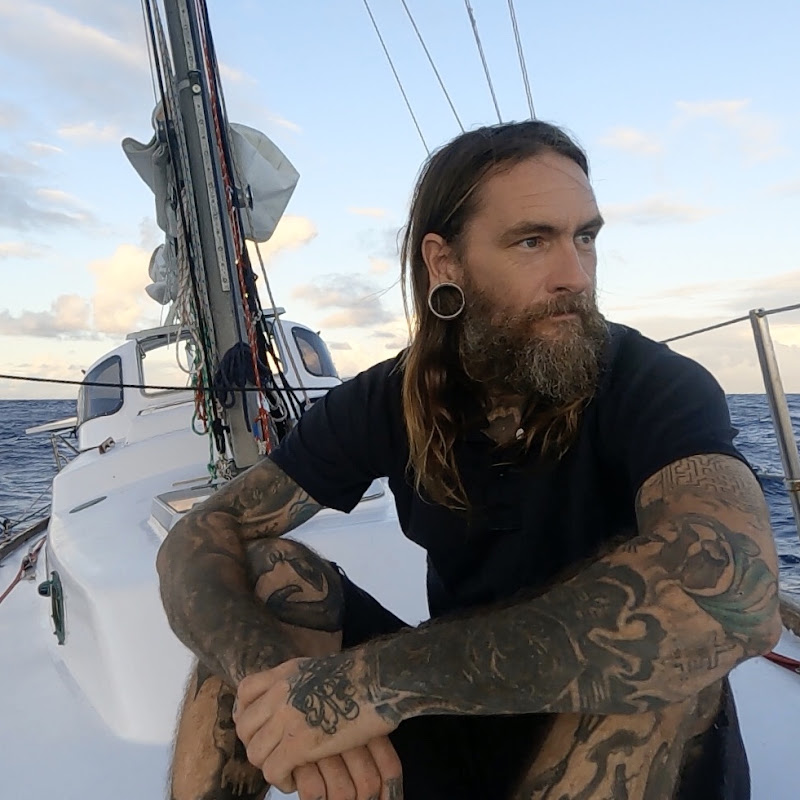
Meet Sailor James Frederick: A solo voyager redefining the Alberg 30 legacy with technical grit, from a rudderless Hawaii crossing to his current 2026 refit in Thailand.
Channel Information:
Social Media Links:
Sailing Alone Across the Somali Sea on a 30ft Sailboat Rough Seas from The Seychelles Location
- Victoria Harbor & Port Fairway, Mahu00e9, Seychelles (-4.62,55.45)
- Dzaoudzi Lagoon & Reef Pass, Mayotte (-12.78,45.26)
Latest Episodes from Sailing Triteia
Explore the most recent voyages. Subscribe to the channel to never miss an update!

Introducing Frederick Sailing! Sailor James & Victoria’s New Sail Training Business!
I am proud to announce the launch of Frederick Sailing! I am teaming up with Captain Victoria Paul to offer a wide range of opportunities around the world. From sailing and anchoring lessons in Southern California to cruiser training in exotic locations to Solo sailing lessons. Our “soft launch” w...
11 SAILORS ON MOTORBIKES! 6 Yachts Circumnavigate Nosy Be, Madagascar By Land
Episode 504 : The Hellsville Angles Ride! Hello Friends, On this episode I head out for a very memorable day of exploring Nosy Be with the crews of five other yachts. We had an absolute blast, got lost 7 times, saw amazing views and shared tons of laughs. thanks to @ancalasjourney for organizin...
HELLO MADAGASCAR!!! A Dream Come True!!! Sailing To Nosy Be & Getting Cleared In to the
James Frederick navigates classic 1965 Alberg 30 Triteia from Mayotte across the Indian Ocean to Hell-Ville, clearing customs and anchoring in Crater Bay, Madagascar.
A Visit to the French Island of Mayotte, A Hike With Friends & Gear Failure Stopping My Departure
Episode 502 : Friends, a Crater Lake, Goats, Dogs, cats and more! Hello Friends, On this episode I head out on a hike with my friends Andy and Lisl on An Cala ( ) We head up to check out the views and see a crater lake. The next day I decide to depart and quickly clear out of the country only ...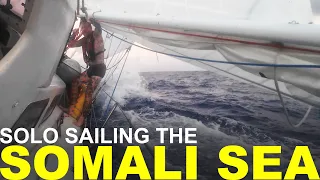
Sailing Alone Across the Somali Sea on a 30ft Sailboat Rough Seas from The Seychelles
James Frederick navigates his 1965 Alberg 30 sloop SV Triteia across the turbulent Somali Sea, enduring steep breaking seas and compression zone gales from the Seychelles to Mayotte.