Two months sailing Croatia - Our honest review
Cruising the ancient limestone archipelagos of the eastern Adriatic requires a calculated balance of seamanship, bureaucratic foresight, and tactical route planning. Following an intensive nine-week voyage spanning July and August, Scott and Sandy of Sailing Sea Moon completed an operational review of their two-month passage along the Croatian coast aboard their Seawind 1160 Lite catamaran, Sea Moon. Transiting northbound from Corfu through Montenegro and clearing customs at Dubrovnik, the Australian cruisers navigated the Dalmatian islands, the Kvarner Gulf, and the Istrian peninsula before venturing across to Venice and Slovenia.
Croatia has long carried a reputation among international voyagers as an idyllic cruising ground overshadowed by expensive marinas, ubiquitous concession buoys, and crowded anchorages. Sailing aboard Sea Moon, a performance multihull powered by twin Yamaha high-thrust outboards, Scott and Sandy audited the everyday realities facing liveaboard cruisers. Their experience dispels persistent rumors of universal anchoring prohibitions, provides concrete financial comparisons between marinas and anchorages, and outlines essential storm defenses for volatile Adriatic weather patterns.
Adriatic Meteorology: Katabatic Bura Squalls and Summer Calms
During their two-month Croatia cruising expedition across the Adriatic Sea, Scott and Sandy of Sailing Sea Moon piloted their Seawind 1160 Lite catamaran, Sea Moon, through the island chains of Dalmatia and the mountain-shadowed channels off Split, directly engaging with a demanding maritime climate. Unlike the predictable meltemi winds of the central Aegean, the Adriatic presents sharp contrasts. Voyagers routinely encounter light summer airs requiring sustained motor-sailing, interspersed with sudden, violent katabatic gales known as the Bura (Bora) sweeping down from coastal mountain passes.
The Bura develops when high-density polar air pools over inland plateaus behind the Dinaric Alps and Velebit mountains, cascading through coastal gaps toward sea level. These katabatic blasts accelerate through terrain venturis, striking anchorages with little warning and gusts exceeding 50 to 60 knots. While monitoring synoptic forecasts allowed the crew to avoid dangerous corridors, they noted intense local variations, such as a gentle 10-knot breeze near Rab Island while nearby mainland straits churned under 30 knots. Conversely, persistent southerly Jugo winds push heavy rolling swells, overcast skies, and thunderstorms up the Adriatic basin, requiring anchorages with complete southern protection.
Anchorage Infrastructure: Concession Fields Versus Free Seabed Rights
Navigating the regulatory waters of Croatia cruising in the Adriatic Sea, Sailing Sea Moon steered their Seawind 1160 Lite, Sea Moon, between high-density concession mooring fields and legal free anchorages along the Dalmatian coast near Split, rigorously auditing local seabed access. While incoming cruisers are often warned that free anchoring has been eliminated, Scott and Sandy found numerous sheltered bays offering legal, complimentary anchoring with dependable holding, proving that diligent navigators can cruise Croatia on a sustainable voyaging budget.
Commercial mooring ball fields cluster in high-traffic charter hubs between Dubrovnik, Korčula, Hvar, and Split. Authorized by maritime concessions, these fields manage summer vessel density and safeguard fragile Posidonia oceanica seagrass meadows from anchor scouring. In Istria, mooring buoy tariffs ranged from €40 per night in southern bays to €50 and €60 per night further north, often including municipal waste removal. On open anchorages, seabed geology varies significantly; while Rab Island provides exceptional holding in thick mud, many Dalmatian coves present hard limestone bedrock beneath thin sediment where anchors require careful setting, and anchoring remains strictly prohibited within concession boundaries.
Quayside Seamanship: Mediterranean Mooring and Town Quay Dynamics
Executing precise quayside maneuvers during their Croatia cruising itinerary in the Adriatic Sea, the crew of Sailing Sea Moon berthed their Seawind 1160 Lite catamaran, Sea Moon, against the ancient stone quays of Dalmatia and the mainland gateway of Split, adapting Mediterranean mooring techniques to a wide multihull platform. While classic stern-to berthing involves dropping a bow anchor, most Croatian municipal quays provide permanent lazy lines (muring). Upon reversing toward the pier, the bow crew picks up a weighted messenger line and leads the ground tackle forward, securing the bow without risk of crossed anchors.
With a 6.5-meter beam and generous topside windage, docking a catamaran in crosswinds demands deliberate line handling and throttle control. Scott relied on the independent responsiveness of Sea Moon’s dual outboard engines to pivot smoothly into tight slips. Many island taverns (konobas) also maintain private quays or buoys offering complimentary berthing to dining guests, though restaurant bills often exceed standard mooring fees. Quayside seamanship also requires disciplined deck preparation; losing a stern line in choppy waters off Split underscored the rule that all mooring warps must be lashed down before making passage.
Cruising Logistics: Marina Spikes, National Parks, and Provisioning
Managing the administrative and logistical demands of Croatia cruising across the Adriatic Sea, Sailing Sea Moon operated Sea Moon, their Seawind 1160 Lite, through the regulated maritime waters of Dalmatia surrounding Split, where disciplined cost management is essential. Voyagers must clear customs, purchase an annual navigation safety vignette, and pay the tourist sojourn tax through the national maritime portal based on yacht length and intended cruising duration.
Marina pricing in Croatia reflects peak summer charter demand, with ACI marinas and private yacht harbors charging €120 to over €200 per night for a 38-foot catamaran. By anchoring out or utilizing mooring buoys, Scott and Sandy avoided steep marina bills, entering docks only when necessary. Visiting marine reserves like Kornati National Park involves daily permit fees approaching €100, whereas Mljet National Park offered outstanding cultural value, allowing the crew to anchor near historic villages, explore saltwater lakes by bicycle, and enjoy traditional Dalmatian peka roasted under an iron bell. Mainland provisioning in Split and Pula proved seamless, featuring well-stocked hypermarkets, local green markets, and marine chandleries.
Catamaran Handling: Seawind 1160 Redundancy in Crowded Archipelagos
Testing long-range cruising resilience during their Croatia cruising tour in the Adriatic Sea, Sailing Sea Moon relied on the robust design of their Seawind 1160 Lite, Sea Moon, while island-hopping across Dalmatia and the coastal approaches to Split, proving the practical benefits of catamaran design in tight island waters. With a shallow 1.05-meter draft and twin rudders, the vessel accessed shallow, protected waters inaccessible to deeper keelboats.
Mechanical redundancy became vital when an outboard engine failed upon departing Pula for Venice. Facing a six-week delivery delay for replacement components, the crew operated under single-engine power for 17 days across Istria, Slovenia, and the Venetian lagoon. Precise rudder compensation and low-speed throttle discipline allowed safe harbor handling until full repairs were completed. Furthermore, the crew mastered charter fleet schedules: by dropping anchor before 16:00, they consistently secured prime swinging room ahead of the evening charter rush, while taking advantage of quiet Friday anchorages during fleet turnarounds.
Croatian Cruising Pilotage and Anchorage Operations Matrix
For voyagers organizing a Croatia cruising passage across the Adriatic Sea, Sailing Sea Moon established a structured pilotage reference aboard Sea Moon, their Seawind 1160 Lite, detailing navigational criteria between Split and the outer islands of Dalmatia. The following matrix outlines operational zones, mooring infrastructure, seabed characteristics, and key meteorological defenses.
| Cruising Zone & Hub | Mooring Infrastructure | Seabed & Holding | Weather Defense Protocols |
|---|---|---|---|
| Southern Dalmatia (Dubrovnik, Mljet, Korčula) | Free anchorages, national park zones, konoba quays with lazy lines. | Rock shelves, deep mud in Mljet, dense Posidonia meadows. | Vulnerable to southerly Jugo swells; anchor in north-facing coves. |
| Central Dalmatia (Split, Brač, Hvar, Vis) | Concession mooring fields, ACI marinas (€120–€200+/night). | Patches of sand and weed; scoured seabed in high-traffic channels. | Watch for Katabatic Bura squalls; secure anchorages by 16:00. |
| Kvarner Gulf (Rab, Cres, Krk) | Scenic free anchorages, municipal town piers, buoy fields. | Sticky, thick mud in Rab basin; outstanding holding security. | Severe Bura funneling through Velebit Channel; set ample chain scope. |
| Istrian Peninsula (Pula, Rovinj, Poreč) | Concession buoy fields (€40–€60/night), commercial boatyards. | Limestone slabs with thin silt; mandatory buoy zones in coves. | Exposed westerly thunderstorm squalls (Nevera); inspect bridal gear. |
Frequently Asked Questions
Below are essential pilotage and seamanship questions answered by Sailing Sea Moon during their Croatia cruising season aboard Sea Moon, their Seawind 1160 Lite catamaran, navigating the Dalmatian coast, Split, and the wider Adriatic Sea.
Cruising crews must monitor synoptic maritime forecasts for high-pressure systems over central Europe paired with Mediterranean lows. When Bura warnings are issued, vessels should seek anchorages under the western shores of islands, avoiding mainland mountain gaps like the Velebit Channel. Catamarans should deploy extensive chain scope with heavy nylon bridles to absorb violent shock loads when gusts exceed 50 knots.
Free anchoring is legally permitted in most Croatian bays outside protected national parks and commercial concessions. By law, anchoring on private ground tackle is prohibited within authorized concession mooring fields and restricted within 150 meters of their outer boundaries. Concession fields generally cost €40 to €60 per night and often provide municipal waste collection services.
Catamarans should prepare two heavy stern lines with chafe guards and deploy large cylindrical fenders along both hulls. As the vessel reverses slowly toward the stone quay, the bow crew retrieves the weighted lazy line (muring) with a boat hook and walks it forward to secure the submerged ground tackle. Twin throttles allow precise pivot control against crosswinds.
Croatian marina rates are among the highest in the Mediterranean, with ACI marinas charging €120 to over €200 per night for a 38-foot catamaran in July and August. Voyagers can minimize expenses by anchoring out in free bays or utilizing concession mooring buoys (€40–€60/night), reserving marina berths strictly for severe weather emergencies, fuel staging, or mechanical repairs.
Cruising in Croatian National Parks requires purchasing entry permits, which cost approximately €100 per day depending on boat length. In Kornati, anchoring is restricted to designated coves. In Mljet National Park, vessels can anchor in sheltered bays or berth at village quays, granting access to interior saltwater lakes and cycling trails.
Operating on a single outboard eliminates differential throttle spinning and introduces asymmetrical thrust. The Seawind 1160 Lite maintains harbor steerage by preserving momentum over balanced twin rudders, compensating with rudder angle against off-center propeller thrust. In tight harbors, approaching berths slowly into the wind allows controlled maneuvering.
Cruisers should synchronize passages with weekly charter turnaround patterns. Charter fleets depart on Saturday afternoons and return Friday evening, making anchorages quietest on Friday nights and congested on Mondays and Tuesdays. Long-term cruisers should complete daily passages by 16:00 to secure prime swinging room, keeping passages under 20 nautical miles.
Support Sailing Sea Moon
At WeBoating.com, we profoundly acknowledge the unwavering dedication that Sailing Sea Moon invests in crafting each and every video or voyage. Their passion for delivering exceptional ocean content shines through every frame, and it's a labor of love that deserves your attention.
We invite you to watch their captivating videos here and actively engage with their content, including their social media links above. Liking, commenting, and sharing their work goes a long way in fueling their creative fire.
We're also inviting you to explore the gear, sponsorships, and boat partnerships highlighted in the "Two months sailing Croatia - Our honest review" video description, or directly on YouTube. By engaging with these offerings or purchasing services and items, you directly support Sailing Sea Moon, their collaborators, and the brands they're associated with.
To ensure you never miss an offshore update, consider visiting their official YouTube Channel to subscribe, like, and join their community directly.
If you have any feedback, corrections, or additional information about Sailing Sea Moon or their videos, please use the comment form below to share your thoughts with us.
Thank you for being a part of our community and supporting the creators we cherish. Your time and support truly matter!
Two months sailing Croatia — what did we really think?⛵
After spending July and August cruising the Croatian coast aboard Sea Moon, our Seawind 1160 Lite, we thought it was time to sit down and give you our honest review.
Croatia is often described as one of the best sailing destinations in the world — but it also has a reputation for expensive marinas, mooring balls, national park fees and very crowded anchorages during peak season.
So… did the reality match the reputation?
In this episode, Sandy & Scott sit down on the couch and talk about our two months sailing Croatia — from our first impressions and the reality of anchoring, mooring balls and marinas, to national parks, provisioning, crowds and our favourite places.
We also talk about the biggest disaster of our Croatian adventure (yes… the engine saga 😬), the moments we'll remember most and the advice we'd give anyone planning to cruise Croatia themselves.
And finally, we give Croatia our own rating after experiencing it from the deck of Sea Moon.
Whether you're planning to sail Croatia, charter a yacht here or you're simply curious about what it's really like cruising the Croatian islands, we hope our experience helps.
Would you sail Croatia? And if you've already been, what would YOUR rating be?
Tell us in the comments — we'd love to compare notes.
⛵ Sandy & Scott
Sailing Sea Moon
Chapters
00:00 Our Croatia Review
00:42 First Impressions of Croatia
02:31 Anchoring, Mooring Balls & Marinas
08:55 Croatia's National Parks
12:10 Our Favourite Croatian Island
15:47 Food & Provisioning
26:30 How Crowded Was Croatia?
33:12 Our Biggest Disaster
35:58 The Highlight of Croatia
40:22 Our Advice for Sailing Croatia
43:28 Our Croatia Rating
⛵ Welcome Aboard Sailing Sea Moon
Hi, we're Scott & Sandy.
Five years ago we matched on Tinder. Today we're living aboard our Seawind 1160 Lite catamaran, Sea Moon, sailing full-time around the world.
Every week we share honest sailing adventures, cruising guides, boat projects, tech tips, destination guides and the realities of life aboard. From hidden anchorages and unforgettable experiences to the challenges that come with living at sea, we bring you along for the journey.
If you've ever dreamed of sailing, travelling full-time or living life differently, we'd love to have you aboard.
🔔 Subscribe and join the adventure!
📅 New Videos Every Week
Wednesday (Alternating)
• Sea Moon Tech with Scott
• Coffee with Sandy
Sunday - Mixture of;
• Sailing adventures, destination guides and life aboard Sea Moon
🌐 Follow Our Journey
📺 YouTube
https://www.youtube.com/@SailingSeaMoon
https://www.instagram.com/sailingseamoon
https://www.facebook.com/SailingSeaMoon
⛵ Our Boat
SV Sea Moon
Seawind 1160 Lite Catamaran
Twin Yamaha 25hp Outboards
🎥 Our Gear
Cameras
• DJI Action 4
• iPhone 17 Pro
• DJI Mini Drone
Audio
• DJI Mic
Editing
• Movavi Video Editor
• Canva Pro
🎵 Music
Music created using the built-in music library in
- Movavi Video Editor
- YouTube Studio
Other
- Google Earth
- Google Earth Pro
📧 Business Enquiries
Sailing Sea Moon
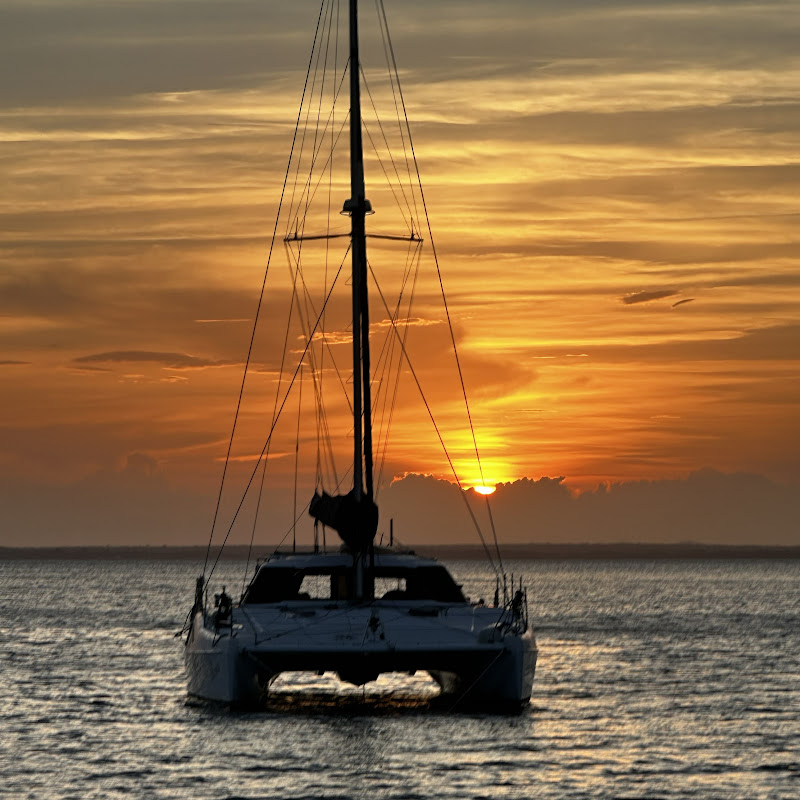
Five years ago, we matched on Tinder. Now we’re sailing around the world aboard 'Sea Moon' — our Seawind 1160 catamaran — chasing weather windows, freedom, and a life we once only talked about over drinks on a first date. Three years on, we feel it's time to share our stories and help others find their pathway to freedom and adventure. If you’ve ever wondered whether a different kind of life is possible, you’re in the right place. What will we share? Adventures, stories, tech tips…it’s all In our greater plan to share with you all. Please SUBSCRIBE and LIKE (on YouTube)and tell your friends ☺️. This helps us reach more people and share more stories. Let our adventures continue! Scott and Sandy Sailing Sea Moon CREDITS Video equipment used - iPhone 17 Pro, DJI Action 4, DJI Mini 3 - Video editing tool- Movavi - Music - Movavi music
Channel Information:
Social Media Links:
Two months sailing Croatia - Our honest review Location
- Split Harbour & Brau010d Channel Fairway, Dalmatia, Croatia (43.5,16.44)
- Vis Island & Komiu017ea Maritime Staging Fairway, Adriatic Sea, Croatia (43.05,16.15)
Latest Episodes from Sailing Sea Moon
Explore the most recent voyages. Subscribe to the channel to never miss an update!
7 Days Living in Cleopatra Boat Yard – My Honest Opinion
What happens when your floating home is suddenly sitting on blocks? ⛵ After another incredible sailing season, we’ve hauled Sea Moon out at Cleopatra Marina in Preveza, Greece, where she’ll spend the winter on the hardstand. This time, instead of leaving the boatyard behind, we’re staying aboard fo...
Why we are hauling out our catamaran for winter – Greece 2026
After a devastating winter storm hit Rhodes Marina in Greece, we made a big decision. This year, Sea Moon would be coming OUT of the water for winter! Last winter, we left our Seawind 1160 catamaran afloat at Rhodes Marina while we travelled overseas. But on 22 January 2026, a powerful storm struck...
Boat Show Cleopatra Marina Preveza Greece
A unique Boat Show | A Cruising Sailor's Perspective Welcome to a slightly different episode of Sea Moon Tech Talk with Scott! We've hauled Sea Moon out of the water for the winter at Cleopatra Marina near Preveza, Greece, and with hundreds of boats surrounding us, Scott couldn't re...
Did we push our sailing season too far? – Cruising The Mediterranean
After months of exploring the Mediterranean aboard our Seawind 1160 catamaran, Sea Moon, the seasons are changing — and so is life onboard. The warm summer days, calm anchorages and endless sunshine are giving way to colder temperatures, unsettled weather, strong winds and some rather uncomfortable...
10 Things I Wish I Knew Before We Set Sail | Coffee with Sandy ☕⛵
After sailing 14,000 NM from Australia to the Mediterranean aboard Seawind 1160 Sea Moon, Sandy shares 10 essential cruising truths on maintenance, weather, and life at sea.