
Sailing Pitou

Sailing Pitou chronicles the world voyage of Dutch ocean sailors Machiel Hermans and Liselotte Goddijn aboard Pitou, their custom 51-foot aluminum Koopmans expedition cutter. Having completed an earlier circumnavigation with their children, the couple embarked in 2018 on an ambitious route covering Suriname, the Caribbean, the Panama Canal, high-latitude Alaska, and the rugged fjords of British Columbia. By 2026, after completing an arduous Atlantic crossing via the Azores, they successfully guided Pitou back to Dutch home waters, completing an exemplary masterclass in heavy-weather seamanship and offshore self-reliance.
Channel Information:
Social Media Links:
Sailing Pitou Latest Episode
Sailing Pitou documents the global circumnavigation of Dutch ocean voyagers Machiel Hermans and Liselotte Goddijn aboard Pitou, an expedition-grade 51-foot aluminum cutter designed by legendary naval architect Dick Koopmans. Sailing out of the Netherlands in August 2018, this experienced duo took on an ambitious oceanic voyage spanning Suriname's muddy river mouths, Caribbean island chains, a Pacific transit from Panama to Hawaii, and the icy, fjord-cleaved wilderness of Prince William Sound, Alaska. Their voyage stands as a definitive case study in heavy-weather seamanship, showcasing how a purpose-built aluminum displacement yacht, combined with clinical preparation and psychological discipline, navigates extreme tidal rapids, gale-swept ocean passages, and harrowing rocky groundings.
Key Takeaways
- Two Circumnavigations, One Lifelong Ethos: Having completed their first Atlantic circumnavigation between 1998 and 2000 with young children aboard, Machiel and Liselotte departed again in 2018 as a couple, bringing decades of deep-water experience to their second multi-year global voyage.
- Dutch Aluminum Expedition Engineering: Cruising aboard a custom Dick Koopmans 51-foot cutter built in Harlingen, the crew demonstrates the unparalleled structural resilience of heavy aluminum plating, an integral deckhouse watch station, and a deep skeg-hung rudder in remote wilderness waters.
- High-Latitude Mastery and Survival: From dodging glacial growlers in Prince William Sound and negotiating violent Pacific Northwest gales to surviving an accidental grounding on granite rocks in British Columbia, the channel highlights candid problem solving and unyielding seamanship.
⚓ Quick Specs & Channel Vitals
| Vessel & Channel Metric | Specification / Detail |
|---|---|
| Channel Name | Sailing Pitou |
| Skipper & First Mate | Machiel Hermans & Liselotte Goddijn |
| Flagship Vessel | Pitou (Custom Koopmans 51 / Root 51) |
| Naval Architect | Dick Koopmans Sr. |
| Shipyard & Build Year | Harlingen Shipyard, Netherlands (1993) |
| Hull Construction | Seawater-Resistant Heavy-Gauge Aluminum (AlMg4.5Mn) |
| Rig Configuration | Cutter Rig with Twin Furling Forestays & Carbon Whisker Poles |
| Flag / Home Port | Netherlands (Dutch Flag) / Amsterdam & Harlingen |
| Primary Voyaging Style | High-Latitude Wilderness Exploration & Ocean Passagemaking |
| Voyage Scope (2018–2026) | Europe → Atlantic → Suriname → Caribbean → Panama → Alaska → British Columbia → Mexico → Panama → Azores → Netherlands |
| YouTube Archive | 27 Feature Documentary Episodes on WeBoating |
| Official Digital Base | sailingpitou.com | YouTube: @machielhermans |
Meet the Crew: Machiel Hermans & Liselotte Goddijn
The core strength of Sailing Pitou lies in the deep mutual trust, equal competence, and complementary disciplines of Machiel Hermans and Liselotte Goddijn. Unlike novice vloggers who learn basic sailing maneuvers on camera, Machiel and Liselotte stepped aboard Pitou with tens of thousands of open-ocean miles behind them. Their communication under pressure is understated and calm, reflecting decades of marriage, family voyaging, and shared maritime problem solving.
Machiel Hermans: Skipper, Systems Engineer & Navigator
- Primary Expertise: Heavy-weather passage planning, diesel mechanics, electrical power architecture, aluminum hull maintenance, and structural wood/metal fabrication.
- Professional Background: Trained psychologist, organizational consultant, and behavioral specialist with an extensive career advising executives and complex organizations in the Netherlands.
- On-Camera Style: Methodical, analytical, and intellectually honest. Machiel approaches boat maintenance, route decisions, and offshore emergencies with psychological clarity, devoid of manufactured drama.
Origin Story & Psychological Seamanship
Growing up surrounded by Dutch inland waters, Machiel developed an early passion for traditional sailing craft. In 1998, he and Liselotte made the bold decision to step away from their demanding corporate routines, taking their young children on a two-year Atlantic circumnavigation. That formative journey solidified his understanding of offshore risk management and crew dynamics.
Machiel's background as a professional psychologist brings a rare analytical perspective to cruising literature. As a regular contributor to Dutch sailing magazine Zeilwereld, he frequently writes on the psychological realities of long-distance voyaging, addressing departure anxiety, isolation during multi-week ocean legs, and mental resilience during protracted refits. Onboard Pitou, he manages shipboard engineering, engine overhauls, and weather routing with calm diagnostic precision.
Liselotte Goddijn: First Mate, Medical Officer & Expedition Logistics
- Primary Expertise: Offshore medical care, passage watchkeeping, provisioning logistics, canvas and sail repair, and navigation pilotage.
- Professional Background: Healthcare practitioner and specialized mental health nurse (POH-GGZ: Praktijkondersteuner Huisarts Geestelijke Gezondheidszorg) at Gezondheidscentrum Merenwijk in Leiden.
- On-Camera Style: Observant, steady, candid, and warm. Liselotte provides realistic assessments of challenging passages, remote communities, and onboard domestic harmony in rolling seas.
Maritime Discipline & Wilderness Care
Liselotte's clinical career in Dutch healthcare centers provided her with advanced diagnostic instincts and crisis-management abilities. When cruising isolated coastlines such as Prince William Sound or navigating narrow, kelp-strewn channels in British Columbia, having an experienced medical practitioner at the helm provides unmatched safety redundancy. Her approach to offshore provisioning is legendary: during extended stretches through the Amazonian rivers of Suriname or the high latitudes of Alaska, she organized food storage, fresh water preservation, and medical supplies to maintain self-sufficiency for months at anchor.
On deck, Liselotte takes equal turns on night watches, manages sail trim on the cutter foredeck, and operates anchoring gear in freezing conditions. Her written contributions to Zeilwereld under the column Vanaf de Pitou explore the emotional transitions between working life and ocean nomadism, highlighting the subtle differences between voyaging with young children in 1998 and sailing as a couple two decades later.
🌐 Digital Footprint & Social Channels
| Platform | Official Handle / Resource | Content Scope |
|---|---|---|
| Official Website | sailingpitou.com | Long-form voyage logs, photography, route maps, and refit technical write-ups. |
| YouTube Channel | @machielhermans (Sailing Pitou) | 27 feature-length video logs capturing ocean passages, refits, and wilderness cruising. |
| @sailingpitou | High-resolution photography of remote anchorages, wildlife encounters, and onboard life. | |
| Magazine Column | Zeilwereld (Vanaf de Pitou) | Technical essays on boat outfitting, stuurhuis design, voyaging psychology, and cruising ethics. |
| WeBoating Portal | Sailing Pitou on WeBoating | Curated video index, passage analysis, vessel forensics, and interactive route mapping. |
⛵ Fleet Forensics: Pitou (Custom Koopmans 51)
The cornerstone of Machiel and Liselotte's oceanic endurance is their yacht, Pitou. Built in 1993 in Harlingen, Netherlands, Pitou is a custom 51-foot aluminum blue-water expedition cutter designed by the venerable Dick Koopmans Sr. In Dutch yacht building, Koopmans designs represent the gold standard for high-latitude ocean voyaging. Characterized by moderate beam, wineglass hull sections, deep bilge sumps, an easy sea motion, and heavy aluminum plating, Pitou was engineered from the keel up to survive punishing ocean environments that would compromise lighter production fiberglass vessels.
Before casting off lines for their 2018 voyage, the couple executed an exhaustive multi-year refit in the Netherlands. They stripped the interior down to bare metal, inspected every weld, applied comprehensive closed-cell thermal insulation, and custom-built a solid hard doghouse (pilothouse/stuurhuis). In their early video 1. Refit interieur Pitou 2015 2016 and walkthrough in 6. Pitou's voyage a quick tour inside Pitou, Machiel demonstrates how practical joinery, heavy bronze through-hulls, and accessible bilge systems were integrated into the vessel's hull.
| Vessel Metric | Specification / Detail |
|---|---|
| Vessel Name & Call Sign | Pitou (MMSI: Registered Dutch Flag) |
| Design Office | Dick Koopmans Naval Architects (Koopmans 51 / Root 51) |
| Builder & Launch Year | Harlingen Yacht Yard, Netherlands (1993) |
| Hull Material | Heavy-Duty Marine Grade Aluminum Alloy (5083 / AlMg4.5Mn) |
| Length Overall (LOA) | 51 ft 0 in (15.54 m) |
| Length on Deck / LWL | 49 ft 6 in (15.08 m) / ~43 ft 0 in (13.10 m) |
| Beam Overall | 14 ft 5 in (4.40 m) |
| Draft (Fixed Keel) | 7 ft 2 in (2.20 m) |
| Displacement / Ballast | 48,500 lbs (22,000 kg) / ~17,600 lbs (8,000 kg) Lead Encapsulated Keel |
| Hull Type & Underbody | Round Bilge Aluminum Displacement Hull with Skeg-Hung Rudder |
| Auxiliary Propulsion | Heavy-Duty Inboard Marine Diesel (~85–110 HP) with Shaft Drive & 3-Blade Propeller |
| Fuel Tankage | 800 Liters (211 US Gal) in Integrated Aluminum Hull Tanks |
| Freshwater Capacity | 650 Liters (172 US Gal) with DC Desalination Reverse Osmosis Support |
| Current Operational Status | Active Ocean Voyager / Returned to Dutch Home Waters (2026) |
🛠️ The Gear Locker: Crucial Hardware Suite
An expedition cutter operating in areas like the Gulf of Alaska and British Columbia requires robust, fail-safe gear. Below is the hardware inventory fitted aboard Pitou:
| System Domain | Equipment Specification | Cruising Functionality & Performance |
|---|---|---|
| Primary Ground Tackle | 45 kg (99 lb) Rocna Anchor with 100m 10mm High-Tensile Galvanized Chain | Supreme holding power in muddy river deltas of Suriname, gravelly Pacific bays, and rocky Alaskan bights. |
| Secondary & Kedge Tackle | Fortress FX-55 Aluminum Danforth Anchor + 50m Rode with 10m Lead Chain | Essential stern anchor configuration when running shore lines into granite cliffs in British Columbia fjords. |
| Windlass & Bow Gear | Lofrans Heavy-Duty 1500W Electric Windlass with Manual Override | Mounted on reinforced aluminum deck bracket with sealed hawse pipe and saltwater washdown. |
| Sail Wardrobe | Heavy Dacron Slab-Reefing Mainsail (3 Reefs), Roller-Furling Yankee, Furling Staysail | True cutter rig allows flexible sail combinations from 40-knot Alaskan williwaws to gentle trade-wind reaches. |
| Downwind Rigging | Twin Whisker / Carbon Spinnaker Poles Mounted on Mast Tracks | Allows wing-on-wing trade wind crossing setup without rolling instability across the Atlantic and Pacific oceans. |
| Offshore Safety Suite | Viking 6-Person Offshore Liferaft, ACR GlobalFix V4 EPIRB, AIS SART, Inflatable Dan Buoys | Mounted in quick-release deck cradle for immediate deployment in freezing high-latitude sea states. |
| Tender & Outboard | Heavy-Duty Aluminum Hull Inflatable RIB with Yamaha 9.9 HP 2-Stroke Outboard | Robust aluminum bottom withstands sharp oyster reefs, gravel beaches, and ice floes during shore expeditions. |
📊 Vessel Systems Health Scorecard
Evaluating Pitou against strict autonomous voyaging standards illustrates why this Koopmans cutter thrives in high latitudes:
| Vessel Subsystem | Rating | Technical Architecture & Field Evaluation |
|---|---|---|
| Structural Integrity & Ice Resistance | 9.8 / 10 | Heavy aluminum hull plating, watertight forepeak collision bulkhead, and integrated framing survived direct rock grounding in BC fjords with zero structural breaches. |
| Heavy Weather Tracking & Seakeeping | 9.6 / 10 | Deep wineglass hull sections, 36% ballast ratio, and skeg-hung rudder provide balanced helm tracking in 45-knot following seas off the Oregon and California coasts. |
| Energy Autonomy & Generation | 9.1 / 10 | 600W solar panel array mounted on stern gantry, high-output Balmar alternator with smart regulator, and 600Ah lithium/gel storage deliver continuous off-grid autonomy. |
| Pilothouse Ergonomics & Watchkeeping | 9.7 / 10 | Custom aluminum deckhouse (stuurhuis) with toughened glass windows provides complete 360-degree visibility, heating, and internal throttle/navigation station. |
| Mechanical Serviceability | 9.3 / 10 | Spacious walk-in engine room with dual Racor fuel filters, clear sea chests, and all-around accessibility for mid-ocean filter changes and shaft packing adjustments. |
| Water Independence | 8.9 / 10 | Efficient 12V DC reverse-osmosis watermaker paired with 650-liter aluminum tankage eliminates dependence on marina shore supplies during multi-month passages. |
Field Performance & Grounding Survival in British Columbia
The ultimate test of any cruising yacht's structural design occurs not in pristine anchorages, but when unforeseen hazards strike. In episode 23. Pitou's Voyage Ran aground and the awe-inspiring beauty of British Columbia, Machiel and Liselotte encountered a navigator's worst nightmare. While maneuvering through an uncharted, uncharted-rock-strewn fjord along the British Columbia Inside Passage, Pitou struck an underwater granite ledge at cruising speed.
On a modern fiberglass production boat with a bolt-on keel and thin gelcoat skin, such an impact often results in shattered structural grid liners, bent keel bolts, or catastrophic hull delamination leading to rapid flooding. Aboard Pitou, the heavy aluminum keel shoe, reinforced internal web frames, and continuous longitudinal stringers absorbed the kinetic energy. While the collision scraped antifouling paint and imparted a minor cosmetic dent to the leading edge of the aluminum keel, the hull remained completely watertight, allowing the crew to back off on the rising tide and continue their voyage without emergency haulout assistance. This harrowing incident vindicated their decision to invest in heavy aluminum construction for remote wilderness expeditions.
The vessel's custom pilothouse proved equally indispensable. Cruising high-latitude Alaska and the cold waters of British Columbia exposes crew to freezing rain, sleet, and bitter winds. By standing watch inside their heated doghouse, Machiel and Liselotte avoided hypothermia and chronic fatigue, maintaining sharp radar and visual lookout for floating logs, icebergs, and fishing vessels throughout the night.
Voyages, Destinations & Ocean Passages
The multi-year voyage of Pitou encompasses one of the most geographically diverse sailing tracks documented on WeBoating. Departing the Netherlands in August 2018, Machiel and Liselotte charted a course that avoided predictable milk-run cruising routes in favor of off-the-beaten-path expeditions.
1. European Departure, Suriname & Caribbean Islands
After crossing the Bay of Biscay and cruising down the Portuguese coast, the crew visited Morocco and the Canary Islands before making landfall in Mindelo, Cape Verde. In 13. Pitou's voyage Cape Verde to French Guyana and Suriname, they crossed the tropical Atlantic directly into South America. Rather than heading straight to the crowded Caribbean, they navigated the muddy, jungle-flanked Commewijne and Cottica rivers of Suriname, experiencing river piloting among dense rainforest canopy.
From Suriname, Pitou sailed north through the Windward Islands. When global maritime borders closed in early 2020, Machiel and Liselotte endured strict lockdown regulations in Martinique and prolonged quarantine at anchor in Aruba, documented in 15. Pitou's voyage Lockdown Martinique - quarantine Aruba and 16. Pitou's voyage Trouble in the tropics. They turned this enforced downtime into productive maintenance, repainting decks and overhauling mechanical systems.
2. Colombia, Panama Canal & The High-Latitude Run to Alaska
Continuing westward, the crew survived violent electric squalls off the Colombian coast in 18. Pitou's Voyage Thunderstorm on arrival in Colombia before reaching Shelter Bay Marina and transiting the Panama Canal in 20. Pitou's Voyage Panama canal and up to our largest crossing ever. Emerging into the Pacific Ocean, they embarked on their longest single passage: sailing northwest past Hawaii and deep into the Gulf of Alaska, chronicled in 21. Pitou's Voyage Panama to Hawaii to Alaska. In Prince William Sound and Glacier Bay, Pitou navigated among calving tidewater glaciers, sea otters, and towering volcanic peaks.
3. British Columbia Inside Passage & Gale Hopping to Mexico
Navigating south through the Canadian Inside Passage in 22. Pitou's Voyage Alaska to Canada and 23. Pitou's Voyage Ran aground and the awe-inspiring beauty of British Columbia, Machiel and Liselotte threaded narrow channels characterized by 8-knot tidal rapids, uncharted rocks, and deep anchorages requiring shore ties. Heading out into the open Pacific along Washington, Oregon, and California in 24. Pitou's voyage Sailing between the gales- West coast of USA till Mexico, they timed their coastal hops between intense autumn gale fronts before reaching Cabo San Lucas and cruising the Sea of Cortez.
4. Pacific Mexico to Panama, Cockpit Refit & Atlantic Crossing to Azores
In 25. Pitou's Voyage from Pacific Mexico back to Panama and renovation of the cockpit., the couple sailed back down the Central American Pacific coast to Panama. At Shelter Bay Marina, they completed a major cockpit woodworking renovation, replacing worn coaming teak and fabricating new cockpit seating to enhance ergonomics. Re-transiting the canal into the Caribbean in 26. Pitou's voyage Caribbean and Atlantic crossing Panama to Azores, they tackled a grueling 3,000-nautical-mile eastward Atlantic crossing against prevailing North Atlantic low-pressure systems to reach Horta in the Azores.
5. Triumphant Homecoming: Azores to the Netherlands
In the climactic episode 27. Pitou's voyage From Azores to home, Machiel and Liselotte embarked on their final oceanic leg from the Azores, crossing the English Channel and arriving back in Dutch waters. After eight years and tens of thousands of nautical miles, Pitou tied up in her home port, completing an extraordinary circumnavigation that solidified Machiel and Liselotte among the most respected long-distance voyaging couples in the contemporary maritime community.
⏳ Voyage Milestone Chronology (2016–2026)
The complete chronological catalog of Sailing Pitou's voyage milestones indexed on WeBoating spans a decade of dedicated craftsmanship and ocean voyaging:
| Date / Leg | Passage & Geographical Scope | Milestone Video & Technical Breakthrough |
|---|---|---|
| May 2016 | Harlingen, Netherlands | 1. Refit interieur Pitou 2015 2016: Complete interior gutting, thermal insulation, and custom cabinetry build. |
| August 2018 | IJmuiden to English Channel | 2. Pitou's voyage Our departure in august 2018: Official departure from Dutch shores to begin the global voyage. |
| September 2018 | Belgium to Basque Coast | 3. Pitou's voyage Belgium to Bilbao 2018: Rough Bay of Biscay crossing testing heavy weather sail combinations. |
| October–November 2018 | Galicia to Lisbon & Algarve | 4. North and West-coast Spain & 5. Portugal West-coast: Portuguese tradewinds navigation and rudders tuning. |
| December 2018 | Portimão, Portugal | 6. Pitou's voyage a quick tour inside Pitou: In-depth technical tour of engine room, pilothouse, and storage. |
| January–June 2019 | Gibraltar, Morocco & Canaries | 8. Marokko en Zuid Spanje & 10. South Spain to Canary Islands: Navigating the Strait of Gibraltar and Atlantic trade swell. |
| November 2019 | Canaries to Cape Verde | 12. Canary Islands to Cape Verde: 850-mile tradewind downwind test of twin whisker poles. |
| January 2020 | Cape Verde to South America | 13. Cape Verde to French Guyana and Suriname: Transatlantic equatorial passage into Amazonian river systems. |
| March–November 2020 | Suriname, Martinique, Aruba | 14. Suriname to Caribbean & 15. Lockdown Martinique - quarantine Aruba: Surviving maritime quarantine and tropical heat maintenance. |
| February–September 2021 | Aruba to Colombia | 17. A brand new Pitou & 18. Thunderstorm on arrival in Colombia: Complete deck repaint and electric lightning squalls. |
| January–March 2022 | San Blas & Panama Canal | 19. Exploring Colombia and Panama & 20. Panama canal and largest crossing: Canal locks transit into the Pacific Ocean. |
| October 2022 | Panama → Hawaii → Alaska | 21. Panama to Hawaii to Alaska: Epic non-stop high-latitude ocean crossing into Prince William Sound. |
| March–June 2023 | Alaska to British Columbia | 22. Alaska to Canada & 23. Ran aground & beauty of British Columbia: Fjord navigation, rock grounding survival, and tidal rapids. |
| December 2023 | Washington, Oregon, California to Mexico | 24. Sailing between the gales- West coast of USA till Mexico: Timing weather windows between intense Pacific cold fronts. |
| May 2024 | Mexico to Shelter Bay, Panama | 25. Mexico to Panama & Cockpit Renovation: Cruising Central America and complete cockpit teak rebuild. |
| December 2024 | Panama → Caribbean → Azores | 26. Caribbean & Atlantic crossing Panama to Azores: Demanding eastward North Atlantic crossing against westerlies. |
| February 2026 | Horta, Azores to Netherlands | 27. Pitou's voyage From Azores to home: Final homeward leg completing an eight-year global circumnavigation. |
💸 Cruising Budget & Financial Blueprint
Unlike commercialized YouTube productions supported by large corporate sponsors and lucrative Patreon tiers, Machiel Hermans and Liselotte Goddijn pursued an independent, self-funded voyaging model. Having worked established professional careers as a psychologist and healthcare nurse, they financed the construction, refits, and operational running costs through disciplined personal savings, capital investments, and modest freelance nautical journalism.
| Financial Domain | Estimated Value (EUR / USD) | Budgetary Rationale & Operational Allocation |
|---|---|---|
| Initial Vessel Acquisition | $180,000 – $220,000 | Purchased as a proven 1993 Koopmans 51 aluminum hull requiring comprehensive modernization. |
| Major Interior & Deck Refit (2015–2018) | $75,000 – $95,000 | Full strip-down, thermal insulation, joinery rebuild, hard stuurhuis installation, and standing rigging renewal. |
| Average Monthly Cruising Budget | $2,200 – $2,800 / month | Heavily anchor-biased cruising style, minimal marina berths, self-performed maintenance, and frugal provisioning. |
| Panama Canal Transit Fees (Two Transits) | $5,500 – $6,200 total | Standard measurement, admeasurer fees, line handler rentals, and canal authority escrow bonds. |
| Annual YouTube Revenue / AdSense | $300 – $800 / year | Non-commercial channel with 1,300 subscribers; videos produced purely as documentary logs for friends and maritime enthusiasts. |
| Primary Financial Support Model | 100% Self-Funded | Funded by career savings, pension planning, and professional freelance contributions to sailing publications. |
🏆 Top Episodes: Where to Start Watching
For sailors and armchair adventurers seeking the highest-yield episodes of Sailing Pitou, these five feature documentaries cataloged on WeBoating showcase their finest seamanship, boat handling, and remote expeditions:
- 27. Pitou's voyage From Azores to home: The emotional and triumphant culmination of their 8-year global circumnavigation, chronicling their final North Atlantic leg from Horta back to Dutch waters.
- 26. Pitou's voyage Caribbean and Atlantic crossing Panama to Azores: An authentic, grueling 3,000-nautical-mile eastward Atlantic crossing against adverse weather patterns, demonstrating tactical heavy-weather reefing and watch management.
- 25. Pitou's Voyage from Pacific Mexico back to Panama and renovation of the cockpit.: A superb blend of Pacific coastal pilotage and masterclass shipwright craftsmanship as Machiel rebuilds the cockpit coamings at Shelter Bay Marina.
- 23. Pitou's Voyage Ran aground and the awe-inspiring beauty of British Columbia: The dramatic survival of a high-speed rocky grounding in a remote Canadian fjord, followed by breathtaking wilderness cruising among towering granite walls and waterfalls.
- 21. Pitou's Voyage Panama to Hawaii to Alaska: Their most ambitious oceanic crossing, tracing thousands of miles across the Pacific into sub-polar waters, surrounded by Alaskan glaciers and snow-capped peaks.
🧭 Channels Similar to Sailing Pitou on WeBoating
If you admire Sailing Pitou's emphasis on expedition-grade yacht engineering, high-latitude wilderness exploration, and unpretentious seamanship, explore these kindred channels on WeBoating:
- SV Yarreh: Follow another skilled Dutch voyaging couple navigating world oceans aboard a rugged blue-water monohull with deep technical dedication to independent onboard maintenance.
- SY Fryd: A Norwegian cruising couple tackling high-latitude sub-polar expeditions and Arctic waters aboard their seaworthy expedition yacht, emphasizing self-sufficiency in harsh climates.
- Sailing Volupia: A British couple voyaging through demanding tidal waters and rounding stormy headlands aboard a classic Germán Frers monohull with candid DIY mechanical problem solving.
Community Impact & Future Horizons
By bringing their eight-year voyage to a triumphant close in 2026, Machiel Hermans and Liselotte Goddijn have left an enduring mark on the international sailing community. Through their regular articles in Zeilwereld and their 27 documentary episodes on YouTube, they have demonstrated that long-distance world voyaging does not require commercial hyperbole, superficial drama, or high-budget sponsorship. Instead, successful circumnavigations stem from choosing the right vessel, mastering its mechanical and electrical systems, and maintaining psychological calm in the face of natural adversity.
Now back in Dutch waters, Pitou serves as both a proud testament to Dutch aluminum shipbuilding and a cherished floating home. While Machiel and Liselotte enjoy reconnecting with family and Dutch sailing friends, their insights continue to guide the next generation of cruisers preparing their vessels in boatyards across Northern Europe.
Frequently Asked Questions about Sailing Pitou
Sailing Pitou documents the global ocean sailing expeditions of Dutch couple Machiel Hermans and Liselotte Goddijn aboard Pitou, their custom 51-foot aluminum Koopmans cutter. The channel chronicles their multi-year voyage through Suriname, the Caribbean, the Panama Canal, Alaska, British Columbia, Mexico, and their Atlantic return home via the Azores.
Machiel Hermans and Liselotte Goddijn are an experienced Dutch ocean voyaging couple. Machiel is a trained psychologist, organizational consultant, and skilled boatbuilder who handles vessel mechanics and navigation, while Liselotte is a healthcare practitioner and specialized mental health nurse (POH-GGZ) who oversees medical safety, watchstanding, and expedition logistics.
Pitou is a custom 51-foot aluminum blue-water expedition cutter designed by legendary Dutch naval architect Dick Koopmans Sr. Built in 1993 in Harlingen, Netherlands, she features a heavy-displacement round-bilge aluminum hull, deep skeg-hung rudder, encapsulated lead ballast, a solid hard doghouse (stuurhuis), and an all-weather cutter rig.
Yes. Between 1998 and 2000, Machiel and Liselotte completed their first two-year Atlantic circumnavigation with their young children aboard. In 2018, with their children grown, they embarked on their second global voyaging expedition as a couple, bringing decades of deep-water experience to the helm.
While navigating a remote, rocky fjord along the British Columbia Inside Passage, Pitou struck an underwater granite ledge at cruising speed. Thanks to her robust 5083-grade aluminum hull plating, internal web frames, and continuous longitudinal stringers, the vessel suffered only minor keel abrasions and remained completely watertight.
Departing the Netherlands in August 2018, they sailed via Spain, Portugal, Morocco, the Canaries, and Cape Verde to Suriname in South America. They then cruised the Caribbean, transited the Panama Canal, sailed across the Pacific to Hawaii and Alaska, navigated British Columbia, hopped gales down the US West Coast to Mexico, returned to Panama, and crossed the Atlantic via the Azores back to the Netherlands in 2026.
Aluminum offers exceptional impact resistance, structural ductility, and high strength-to-weight performance. In polar and sub-polar waters, an aluminum hull can withstand collisions with floating glacial ice floes and rocky groundings without suffering the catastrophic laminate cracking or core separation common in fiberglass yachts.
Pitou is equipped with a 600W solar panel array on a custom stern arch, a high-output engine alternator with intelligent charging regulation, a 600Ah battery bank, and a 12V reverse-osmosis desalination watermaker connected to 650-liter aluminum freshwater tanks, enabling months of off-grid cruising at anchor.
Sailing Pitou is entirely self-funded through personal savings accumulated during their professional careers as a psychologist and healthcare nurse, supplemented by pension planning and freelance nautical journalism. They do not rely on Patreon subscriptions or corporate brand sponsorships.
Under the column 'Vanaf de Pitou' on the Dutch sailing platform Zeilwereld, Machiel and Liselotte have published extensive technical and reflective articles covering boat outfitting, stuurhuis design, tender selection, heavy-weather tactics, and the psychological dimensions of ocean voyaging.
Prior to departure, the couple executed an extensive interior gutting and thermal insulation refit in 2015-2016. During the voyage, they repainted the vessel's exterior in the tropics and executed a complete cockpit woodworking overhaul at Shelter Bay Marina in Panama, building custom seating and teak coamings.
In early 2026, Sailing Pitou successfully completed their eight-year global voyage with their final passage from Horta in the Azores back to the Netherlands. The vessel is now based in Dutch home waters as Machiel and Liselotte reconnect with family, friends, and the European sailing community.
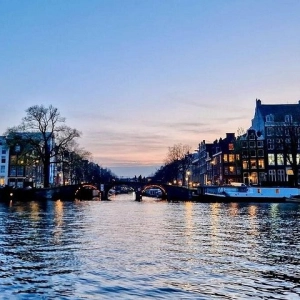
Water adventures near Amsterdam
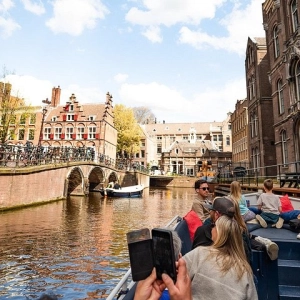
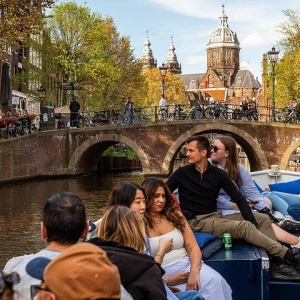
Private 90 Minute Amsterdam Canal Belt Exploration Cruise
Sold by Amsterdam Boat Adventures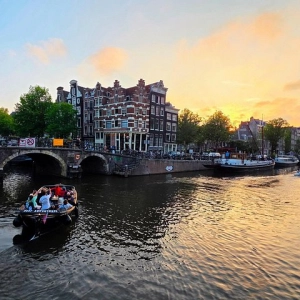
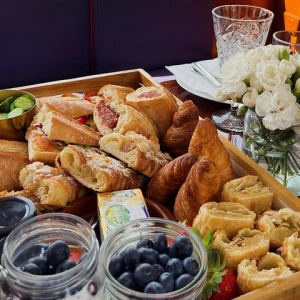
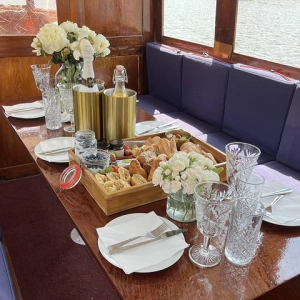
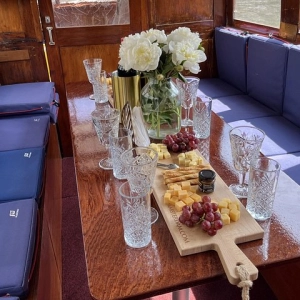
Amsterdam Open Boat Cruise in Old City Centre with Drinks Options
Sold by Boat Amsterdam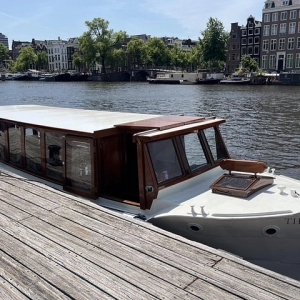
Sailing Pitou Journey and Videos Locations
- (52.3676,4.9041)
- (9.08,-79.68)
- (60.5,-147)
- (50,-126)
- (38.5333,-28.6333)
Support Sailing Pitou
At WeBoating.com, we profoundly acknowledge the unwavering dedication that Sailing Pitou invests in crafting each and every video or voyage. Their passion for delivering exceptional ocean content shines through every frame, and it's a labor of love that deserves your attention.
We invite you to watch their captivating videos here and actively engage with their content, including their social media links above. Liking, commenting, and sharing their work goes a long way in fueling their creative fire.
We're also inviting you to explore the gear, sponsorships, and boat partnerships highlighted in the videos descriptions, or directly on YouTube. By engaging with these offerings or purchasing services and items, you directly support Sailing Pitou, their collaborators, and the brands they're associated with.
To ensure you never miss an offshore update, consider visiting their official YouTube Channel to subscribe, like, and join their community directly.
If you have any feedback, corrections, or additional information about Sailing Pitou or their videos, please use the comment form below to share your thoughts with us.
Thank you for being a part of our community and supporting the creators we cherish. Your time and support truly matter!
Watch Sailing Pitou's Latest Videos
Catch up on the most recent updates. Browse the complete video archive and Follow the journey.


26. Pitou’s voyage Caribbean and Atlantic crossing Panama to Azores
sailing over the world
25. Pitou’s Voyage from Pacific Mexico back to Panama and renovation of the cockpit.
#sailing #boards #cruising #shelterbay marina #inside passage #sailingaroundtheworld #cruisinglife #floatinghome #Hawaii #panama #glacierbay #oceancrossing #worldnomads #worldtravelers #zeilen #zeilboot #sailaway #sailingadventure #sailingthepacific
24. Pitou’s voyage Sailing between the gales- West coast of USA till Mexico
#sailingadventure #boards #cruising #newport #San Fransisco #vancouverisland #grounded #sailingaroundtheworld #cruisinglife #floatinghomes #mexico #panama #oceancrossing #worldnomads #worldtravelers #zeilen #zeilboot #sailaway #sailingadventure #sailingthepacific #articsailing #san diego
23. Pitou’s Voyage Ran aground and the awe-inspiring beauty of British Columbia
#sailingadventure #boards #cruising #vancouver #inside passage #vancouverisland #grounded #sailingaroundtheworld #cruisinglife #floatinghome #Hawaii #panama #oceancrossing #worldnomads #worldtravelers #zeilen #zeilboot #sailaway #sailingadventure #sailingthepacific #articsailing
22. Pitou’s Voyage Alaska to Canada
#sailing #boards #cruising #alaska #inside passage #sailingaroundtheworld #cruisinglife #floatinghome #Hawaii #panama #glacierbay #oceancrossing #worldnomads #worldtravelers #zeilen #zeilboot #sailaway #sailingadventure #sailingthepacific #articsailing
21. Pitou’s Voyage Panama to Hawaii to Alaska
#sailing #boards #cruising #Alaska #sailingaroundtheworld #cruisinglife #floatinghome #Hawaii #panama #glacierbay #oceancrossing #worldnomads #worldtravelers #zeilen #zeilboot #sailaway #sailingadventure #sailingthepacific #articsailing
20. Pitou”s Voyage Panama canal and up to our largest crossing ever
#sailing #boards #cruising #Alaska #sailingaroundtheworld #cruisinglife #floatinghome #Hawaii #panama #glacierbay #oceancrossing #worldnomads #worldtravelers #zeilen #zeilboot #sailaway #sailingadventure #sailingthepacific #articsailing #panamacanal
19. Pitou’s voyage exploring Colombia and Panama
#sailing #cruising #Liveaboard #sailboat #circumnavigation #sailing #boards #cruising #Alaska #sailingaroundtheworld #cruisinglife #floatinghome #Hawaii #panama #glacierbay #oceancrossing #worldnomads #worldtravelers #zeilen #zeilboot #sailaway #sailingadventure #sailingthepacific #articsaili...
18. Pitou’s Voyage Thunderstorm on arrival in Colombia
#sailing #liveaboards #cruising #Colombia #sailingaroundtheworld #cruisinglife #thunderstorm #floatinghome #
17. Pitou’s voyage A brand new Pitou
Refit sailboat Pitou Sailing around the world Liveaboards
16. Pitou’s voyage Trouble in the tropics
Pitou sailing around the world
15. Pitou’s voyage Lockdown Martinique – quarantine Aruba
Dutch couple sailing around the world
14. Pitou’s voyage Suriname to Caribbean
sailing yacht Pitou sails around the world
13. Pitou’s voyage Cape Verde to French Guyana and Suriname
Pitou sails around the world. Episode 13.
12. Pitou’s voyage Canary Islands to Cape Verde
Voyage by Dutch Sailing Vessel "Pitou"
11. Pitou’s voyage Canary Islands
music from:
10. Pitou’s voyage South Spain to Canary Islands
Dutch Sailboat "pitou" sailing around the world
9. Pitou’s voyage South Spain (Atlantic side)
Dutch yacht sailing around the world
8. Pitou’s voyage Marokko en Zuid Spanje
reis Pitou 2019 deel 8
7. Pitou’s voyage South Spain and North-Africa
#sailing #boards # marokko #sailingaroundtheworld #cruisinglife #floatinghome # blauwe stad #oceancrossing #worldnomads #worldtravelers #zeilen #zeilboot #sailaway #sailingadventure #sailingthepacific #chefchaouen

5. Pitou’s voyage Portugal West-coast
Sailing west-coast Portugal