
SV Yarreh

In 2026, SV Yarreh chronicles Canadian sailors Steph and Christof aboard their custom 1983 Catalina 36, Yarreh. Rescued adrift after a catastrophic British Columbia gale, the storm-salvaged vessel underwent a 6,000-lb keel drop, DIY gelplane osmosis peel, structural bilge overhaul, and complete 48V electric drive conversion. Now cruising the Salish Sea as a family of three, they deliver a technical masterclass in self-reliant maritime craftsmanship.
Channel Information:
Social Media Links:
SV Yarreh Latest Episode
When a violent December 2018 gale tore through the Pacific Northwest and shattered the historic White Rock Pier, it broke a 1983 Catalina 36 free from its mooring, leaving the hull adrift and battered in the freezing swells of Boundary Bay. Acquired in late 2019 as a storm-damaged salvage project by Canadian partners Steph and Christof, the rudderless vessel became the platform for an exhaustive, multi-year rebuild that transformed an abandoned coastal cruiser into an all-electric voyaging home. Operating from a tidal boatyard on the Fraser River, the couple dismantled the yacht to bare fiberglass, engineered a custom DIY gelplane to peel catastrophic osmotic delamination, dropped the 6,000-pound lead fin keel to reconstruct a rotten bilge matrix, and replaced the combustion drivetrain with a 48-volt electric inboard propulsion system.
Key Takeaways
- Storm Salvage to All-Electric Yacht: Steph and Christof rescued a storm-damaged 1983 Catalina 36 found drifting rudderless after the catastrophic 2018 British Columbia windstorm, spending three years executing a total structural rebuild and zero-emission electric repower.
- Industrial-Grade DIY Composite Engineering: Facing deep structural osmosis and rotten timber grid floors, Christof engineered a custom vacuum-shrouded DIY gelplane tool to shave delaminated laminate down two millimeters, dropped the 6,000-pound lead keel, and relaminated the structural floor matrix with heavy biaxial fiberglass cloth and marine structural epoxy.
- Electric Voyaging Realities in the Pacific Northwest: Sailing Southern British Columbia's Salish Sea as a family of three, the crew transparently details the technical rewards and critical limitations of 48-volt marine electric propulsion, including voltage drift across series-wired lithium banks and the practicalities of tidal gate passage planning without diesel reserves.
⚓ Quick Specs & Channel Vitals
| Metric | Detail |
|---|---|
| Channel Title | SV Yarreh |
| Core Crew | Steph, Christof & Baby (Family of Three) |
| Flagship Vessel | S/V Yarreh (1983 Catalina 36 Mk I) |
| Naval Architects | Gerry Douglas & Frank Butler (Catalina Yachts) |
| Home Waters & Flag | British Columbia, Canada (Canadian Flagged) |
| Primary Propulsion | Inboard 48V Electric Motor (Pure Zero-Emission Auxiliary) |
| Battery Architecture | 12x Battle Born 100Ah LiFePO4 Units (4S3P = 300Ah @ 48V Nominal / 14.4 kWh) |
| Primary Cruising Ground | Southern British Columbia (Salish Sea, Strait of Georgia, Gulf Islands, Howe Sound) |
| Cruising Style | Off-Grid Liveaboard Coastal Voyaging & Technical Maritime DIY |
| Technical Specialization | Osmosis Peeling, Keel Rebedding, Structural Bilge Fiberglassing, 48V Marine Electrical |
| Audience & Video Catalog | 2,360+ Subscribers • 112,000+ Video Views • 24 Published YouTube Episodes |
| Official Channels | YouTube: @sv.yarreh • Instagram: @sv.yarreh • Patreon: /svyarreh |
Meet the Crew and the Fleet
The Sailors Behind the Helm
The technical authority of SV Yarreh stems from the complementary partnership between Christof and Steph. Approaching boat restoration not as a casual aesthetic makeover but as a rigorous structural engineering endeavor, they tackle hazardous, labor-intensive tasks that intimidate many professional shipyards. From heavy epoxy layups in freezing winter boatyard sheds to navigating high-current tidal passages under electric power, their shared resilience defines every mile sailed.
Christof (Skipper, Lead Fabricator & Systems Architect)
- Primary Expertise: Composite lamination, structural tooling fabrication, custom mechanics, 48-volt DC marine electrical design, and mechanical troubleshooting.
- Certifications: Hands-on trade experience in fabrication, advanced composite repair techniques, and off-grid electrical wiring.
- On-Camera Style: Analytical, methodically focused on root-cause problem solving, calm under intense manual strain, and technically explicit regarding structural defects.
Origin Story & Life Before Sailing
Growing up with an affinity for mechanics and construction, Christof cultivated a practical problem-solving mindset long before stepping aboard an ocean-going yacht. Living in coastal British Columbia, he observed the harsh toll that cold, salt-laden waters and torrential coastal rainfall exert on neglected vessels. The decision to purchase a derelict, storm-wrecked sailboat was driven by a deep desire to attain maritime independence through uncompromised personal craftsmanship rather than taking on massive debt for a production vessel.
Professional & Technical Background
Christof brings substantial fabrication and mechanical aptitude to the refit. When commercial marine tools proved cost-prohibitive, he engineered custom shop solutions, including fabricating a high-speed vacuum-shrouded gelplane out of industrial components and modifying heavy sockets by sectioning and welding them to reach recessed keel bolts. His electrical work demonstrates an uncompromising adherence to high-amp DC safety standards, clean cable runs, and precise fuse sizing.
Maritime Experience & Seamanship
Christof honed his seamanship through the challenging waters of the Salish Sea and Georgia Strait, where tidal ranges exceed 14 feet and currents through constricted narrows run at 8 to 12 knots. Handling a single-engine electric vessel with limited battery capacity taught him extreme conservatism in passage planning, anchoring physics, and wind-versus-tide calculations. His watchkeeping doctrine centers on early sail deployment, precise navigation through tidal gates, and zero tolerance for deferred mechanical maintenance.
Specialized Competencies & Onboard Roles
Aboard Yarreh, Christof manages propulsion monitoring, high-voltage battery management system (BMS) balancing, steering linkages, structural hull inspections, and standing rigging tensions. In heavy weather, he assumes the helm during tight harbor maneuvering or tidal gate entries, managing instant electric motor torque to maintain rudder authority in turbulent eddies.
Channel Role & Content Focus
On camera, Christof leads the technical breakdowns for fabrication and systems engineering. He directly demonstrates step-by-step processes: measuring fiberglass resin-to-glass ratios, grinding out delaminated core material, fairing epoxy fairing compounds, and troubleshooting electrical balance issues across series-connected lithium banks. His delivery is understated and free of hype, emphasizing physical mechanics over dramatic spectacle.
Personal Nuances: Known for his patient grin when facing dirty, exhausting jobs, Christof's persistence is evident whether grinding fiberglass in a sealed Tyvek suit in freezing sub-zero weather or spending three days cutting out oil-soaked timber with an oscillating multitool.
Steph (First Mate, Lead Documentarian & Project Manager)
- Primary Expertise: Project scheduling, interior restoration, composite layup assistance, passage navigation, and high-resolution video production.
- Certifications: Coastal navigation training, marine VHF radio operation, and wilderness first response protocols.
- On-Camera Style: Grounded, candid, energetic, and emotionally honest about the mental and physical toll of long-term boatyard living and off-grid parenting.
Origin Story & Life Before Sailing
Steph grew up exploring the Pacific Northwest coastline, fostering a deep passion for wild marine environments and sustainable living. Embracing the liveaboard dream meant stepping away from conventional domestic routines and committing to three exhausting years in a dusty commercial boatyard. When the storm-damaged Catalina 36 was towed into the Fraser River, she recognized the potential to create an environmentally responsible floating home built with their own hands.
Professional & Technical Background
Steph manages the channel's media architecture, digital workflow, and production pacing. In the boatyard, she transitioned into a skilled composite laminator, mastering the handling of heavy biaxial cloth, epoxy wetting, vacuum bagging assist, and detail fairing. Her logistical oversight kept the multi-year project on budget and ensured safety protocols were strictly maintained during toxic bilge cleanouts and hull peeling.
Maritime Experience & Seamanship
Steph's maritime competence expanded rapidly through extensive coastal cruising across the Salish Sea and an offshore expedition aboard SV Bria Mia in Mexico's Sea of Cortez. She excels in line handling, precision anchoring in crowded rocky coves, and coordinating watchkeeping schedules. Navigating the narrow passes of the Southern Gulf Islands under electric power requires acute tidal awareness, a skill Steph has developed into second nature.
Specialized Competencies & Onboard Roles
Aboard Yarreh, Steph oversees galley logistics, off-grid power conservation, fresh water management, and the family's daily safety protocols on the water. With the arrival of their child, she has adapted their offshore cruising routines to accommodate infant safety on deck, tethering systems, and cabin climate control powered strictly by solar and lithium reserves.
Channel Role & Content Focus
Steph provides the storytelling backbone of the channel. She captures the authentic rhythm of boatyard struggles, documents hard-earned milestones, and voices the questions and uncertainties shared by viewers. Her visual style combines clean technical framing of mechanical assemblies with the scenic grandeur of British Columbia's coastal wilderness.
Personal Nuances: Celebrated for her candid reactions when unexpected boatyard nightmares surface—such as uncovering oil-soaked rotten timber or discovering puncture holes through the hull—Steph brings relatable humor and determined optimism to grueling situations.
Social & Digital Presence
| Platform | Handle / Connection | Direct Access |
|---|---|---|
| YouTube | @sv.yarreh | SV Yarreh on WeBoating |
| @sv.yarreh | instagram.com/sv.yarreh | |
| Patreon | SV Yarreh | patreon.com/svyarreh |
| SV Yarreh | facebook.com/svyarreh | |
| Direct Email | [email protected] | Inquiries & Technical Exchange |
The Guest Crew & Global Community
Throughout their grueling refit at Shelter Island Marina and subsequent voyaging, Steph and Christof relied on a dedicated network of fellow maritime craftspeople and cruising friends. In the boatyard, where morale can wither under relentless labor, mutual assistance proved vital to overcoming complex structural hurdles.
Eric & Nathalie (SV Bria Mia / Wander Sailing)
Eric and Nathalie of Wander Sailing were instrumental allies during both the refit and sailing phases. As seasoned sailors aboard their 34-foot Catalina SV Bria Mia, they shared crucial advice on Catalina structural layups and keel designs. When Christof faced stubborn keel bolts recessed deep within the bilge, Eric assisted in custom-fabricating tooling by cutting and welding heavy-duty impact sockets. Later, when winter snows paralyzed work at the Vancouver boatyard, Eric and Nathalie welcomed Steph and Christof aboard in Mexico, guiding them through the Sea of Cortez to recharge their spirits and hone blue water skills.
Cille & The Shelter Island Boatyard Community
Situated along the Fraser River, Richmond's Shelter Island Marina is known among Pacific Northwest sailors as the "alley of broken dreams"—a sprawling yard where ambitious refits frequently stall out. Steph and Christof formed tight bonds with neighboring boatbuilders like Cille, trading tools, crane time, and composite advice. Surpassing the odds and launching a completely reconstructed vessel earned them genuine respect across the commercial yard.
Nomadic Network Summary
The SV Yarreh community represents a modern wave of self-reliant maritime builders who prioritize structural integrity and environmental sustainability over cosmetic perfection. Connected with off-grid cruisers across British Columbia and the international electric boating community, Steph and Christof contribute open-source data on the real-world performance of converted sailing vessels.
⛵ Professional Fleet Forensics
S/V Yarreh: 1983 Catalina 36 Mk I
Designed by Frank Butler and Gerry Douglas and introduced in 1982, the Catalina 36 remains one of the most successful production cruising sailboats in North American maritime history, with over 3,000 hulls built. Constructed with a solid, hand-laid fiberglass hull and a marine plywood-cored deck, the vessel is renowned for its generous 11-foot 11-inch beam, spacious salon layout, and sea-kindly moderate displacement hull form. However, early production models utilized a hollow fiberglass bilge grid and plywood-cored structural floors that are notoriously susceptible to water infiltration, rot, and delamination if bilge water is allowed to pool or if aftermarket modifications breach the factory laminate.
When Steph and Christof purchased Yarreh in 2019, the vessel had survived a near-fatal grounding and drifting episode following the catastrophic 2018 White Rock storm. The original Universal diesel engine was seized and flooded, the factory rudder was snapped off at the stock, and the hull was severely blistered with advanced osmotic hydrolysis. Most critically, an earlier owner had crudely cut away sections of the factory structural stringers to fit an oversized holding tank, exposing bare plywood cores to bilges soaked in engine oil and stagnant seawater. The couple chose not to simply patch the boat, but to strip the hull to bare fiberglass, re-engineer the structural matrix, and execute a modern electric conversion.
| Vessel Metric | Factory Specification | S/V Yarreh Rebuilt Configuration |
|---|---|---|
| Designer / Builder | Gerry Douglas & Frank Butler | Catalina Yachts (USA) / Custom Rebuild in BC |
| Model Year & Hull Type | 1983 Catalina 36 Mk I | Monohull Cruiser (Solid GRP Hull) |
| Length Overall (LOA) | 36 ft 4 in (11.07 m) | 36 ft 4 in (11.07 m) + Custom Solar Arch |
| Length at Waterline (LWL) | 30 ft 3 in (9.22 m) | 30 ft 3 in (9.22 m) |
| Beam (Maximum) | 11 ft 11 in (3.63 m) | 11 ft 11 in (3.63 m) |
| Draft & Keel Configuration | 5 ft 10 in (1.78 m) Deep Fin | 5 ft 10 in Lead Keel (Dropped, Epoxied & Rebedded) |
| Displacement & Ballast | 13,500 lbs / 6,000 lbs Ballast | ~14,200 lbs / 6,000 lbs Solid Lead Keel |
| Propulsion Auxiliaries | Universal 25XP / M-25 Diesel (21–25 HP) | Inboard 48V Electric Motor (Direct Shaft Drive) |
| Energy Storage Bank | 2x Group 27 Lead-Acid (180Ah @ 12V) | 12x Battle Born LiFePO4 (300Ah @ 48V / 14.4 kWh) |
| Auxiliary Charging | Engine Alternator 55A | High-Output Solar Array + Shore Power Smart Charger |
| 2026 Operational Status | Production Legacy | Active Coastal Cruising & Systems Optimization |
🛠️ The Gear Locker: Crucial Hardware
To prepare Yarreh for self-reliant voyaging across the rugged Pacific Northwest, Steph and Christof methodically upgraded the vessel's primary mechanical, electrical, and anchoring hardware. Ground tackle and structural composite reinforcements were prioritized over cosmetic luxuries.
| Hardware Category | Component & Specification | Cruising Role & Technical Field Notes |
|---|---|---|
| Ground Tackle | Rocna-Style Galvanized Anchor (44 lb) | Oversized primary anchor mated to 150 ft G4 galvanized chain and 200 ft nylon rode for holding in deep BC fjord anchorages and kelp beds. |
| Secondary Anchor | Danforth 22S Stern Anchor | Kedge and stern-tying anchor deployed in narrow British Columbia coves to prevent swinging against rocky bluffs. |
| Electric Propulsion | 48V Inboard Brushless DC Motor | Replaces original diesel engine, providing instant low-end torque for harbor maneuvering without noise, soot, or fuel odors. |
| Battery Storage | 12x Battle Born 100Ah 12V LiFePO4 | Arranged in three parallel strings of four series batteries (4S3P) yielding 14.4 kWh total capacity for domestic loads and propulsion. |
| Solar Generation | High-Efficiency Monocrystalline Panels | Mounted atop a custom stern arch and hard dodger to capture high-latitude summer sunlight across the Salish Sea. |
| Rudder & Steering | Custom Heavy-Duty Molded Rudder | Fabricated and installed to replace the original storm-broken rudder, engineered with a solid stainless steel stock and epoxy lamination. |
| Hull Reinforcement | Biaxial 1708 Glass & Marine Epoxy | Complete relamination of peeled hull bottom and structural bilge grid, delivering superior impact resistance compared to factory polyester. |
| Safety Suite | Offshore PFDs, VHF with AIS, Manual Bilge Pumps | Equipped for cold-water survival in 8°C (46°F) Salish Sea waters with redundant manual and 12V high-capacity centrifugal pumps. |
📊 Vessel Systems Health Scorecard
Evaluating Yarreh against demanding maritime autonomy standards reveals a vessel built to high structural and mechanical criteria, with specific operating envelopes dictated by its electric powertrain.
| System Domain | Autonomy Score | Configuration & Operational Readiness Analysis |
|---|---|---|
| ⚡ Energy Autonomy | 8 / 10 | 14.4 kWh LiFePO4 storage and substantial solar harvest support complete domestic electrical independence. Score is tempered by range limitations inherent to electric propulsion when fighting opposing 4-knot tidal currents. |
| 🛡️ Structural Integrity | 9 / 10 | Rebuilt bilge matrix with 1708 biaxial fiberglass, epoxy-rebedded 6,000 lb lead keel, and a completely peeled and relaminated bottom give the hull structural rigidity exceeding original factory standards. |
| 📡 Communication Grade | 7 / 10 | Equipped with marine VHF DSC, cellular booster arrays, and planned satellite terminal. Reliable connectivity along the Salish Sea, with room for satellite redundancy on offshore passages. |
| 💧 Water Independence | 7 / 10 | Features generous freshwater tankage (~70 gallons / 265 L). Relies on shore replenishment and rainwater catchment, with provisions for future low-draw DC watermaker integration. |
System Integration and Field Reliability
Operating a custom electric sailboat in the Pacific Northwest requires rigorous systems management. Steph and Christof eliminated every internal combustion component aboard Yarreh: no diesel fuel tanks, no raw-water heat exchangers, no exhaust water-locks, and no smelly bilges. The direct-drive electric inboard motor delivers instant reverse thrust and whisper-quiet motoring. However, operating an electric auxiliary requires an acute understanding of energy density. While a gallon of diesel contains roughly 38 kWh of thermal energy, their entire 12-battery bank stores 14.4 kWh of electrical energy, of which approximately 11 to 12 kWh is usable at safe discharge depths.
At an easy displacement cruise speed of 4.5 to 5 knots in calm water, the motor draws between 2.5 and 3.5 kW, affording roughly three to four hours of continuous motoring (15 to 20 nautical miles of range without solar contribution). Pushing the throttle to 6.5 knots spikes consumption past 8 kW, depleting the bank in under 90 minutes. As a result, the crew treats the electric motor purely as an auxiliary for harbor approaches, anchoring, and clearing calm patches, relying on their sail plan for all major passage mileage.
In Episode 23, Can we SAVE our ELECTRIC boat? – SV YARREH Ep. 23, the crew publicly confronted the critical engineering reality of series-wired lithium banks. Having invested $15,000 into 12 Battle Born 100Ah drop-in batteries configured as three parallel strings of four series units (4S3P), they encountered internal cell balancing issues. Because standard 12-volt drop-in batteries have standalone internal BMS units that do not communicate with neighboring units over a shared CAN-bus network, subtle differences in internal resistance cause voltage drift during high-load charging or heavy propulsion discharge. If one battery in a series string hits its upper or lower voltage cutoff, its internal BMS disconnects, suddenly forcing unequal currents through the remaining strings. Their candid technical breakdown highlighted why modern 48-volt marine builds increasingly utilize single 48-volt battery modules with integrated system communication rather than series-stacking 12-volt drop-ins.
Notable Gaps or Homemade Solutions
The SV Yarreh build is distinguished by clever shop-built innovations that bypassed exorbitant marine contractor fees. When commercial quotes for peeling the waterlogged gelcoat bottom reached astronomical figures, Christof constructed a custom DIY gelplane utilizing an industrial rotary planer head, customized guide plates, and an integrated vacuum collection shroud that captured over 95 percent of toxic polyester dust. When dropping the 6,000-pound keel, they built a timber support cradle and adapted hydraulic jacks to smoothly lower and realign the massive lead casting. Their structural floor matrix, rebuilt using marine structural epoxy and heavy biaxial cloth rather than brittle polyester resin, eliminated the hollow void issues common in vintage Catalina hulls.
Voyages, Destinations, and Local Waters
📍 Top Routes and Expeditions
From their initial salvage recovery in Boundary Bay to extensive cruising grounds throughout Southern British Columbia, Steph and Christof have navigated some of the most dynamic tidal waters in the Pacific Northwest. Following their maiden launch from Shelter Island Marina on the South Arm of the Fraser River, they explored the protected waters of Howe Sound, rounded Bowen Island, and staged extended passages through the Southern Gulf Islands. Their voyages emphasize navigating pristine wilderness anchorages, maneuvering through treacherous tidal rapids, and exploring remote fjords off Desolation Sound.
⏳ Voyage Milestone Timeline
The chronological evolution of SV Yarreh documents a relentless progression from salvage recovery to ocean-tested cruising home:
- December 2018: The historic White Rock Pier storm sets the 1983 Catalina 36 adrift in Boundary Bay; unmanned and rudderless, the vessel is salvaged by coastal locals.
- Fall 2019 – Salvaged Sailboat found Adrift – SV Yarreh Ep.01: Steph and Christof purchase the storm-damaged salvage yacht, inspecting the interior for the first time and towing the hull through treacherous river currents under highway bridges.
- Spring 2020 – First Haul-out! Fixing a Storm Damaged Sailboat – SV Yarreh Ep. 02: Hauling out at Shelter Island Marina, they source a replacement rudder stock and inspect the blistered hull bottom on the hard.
- Summer 2020 – First time Sailing our SALVAGED Sailboat – SV Yarreh Ep.03: Installing the temporary rudder, the crew conducts their first sea trial under sail before committing to an all-out rebuild.
- Fall 2020 – Did our SALVAGED SAILBOAT make it to the BOATYARD? – SV Yarreh Ep.04: Navigating up the Fraser River to Shelter Island Marina, entering their three-year home in the commercial boatyard.
- Winter 2020–2021 – REFITTING an ABANDONED Sailboat – SV YARREH Ep.05 & We RIPPED our Boat Apart – SV YARREH Ep.06: Complete gutting of the salon interior, removing waterlogged cabinetry, plumbing, wiring, and discovering extensive osmotic hydrolysis across the underwater hull.
- Spring 2021 – What did we FIND? Parting out our SALVAGED SAILBOAT? SV YARREH Ep.07: Stripping the frozen diesel drivetrain and tanks, selling off salvage parts to finance composite supplies.
- Winter 2021 – LEAVING IT ALL Behind. SAILING Mexico part one – SV YARREH Ep.08 & ROUGH PASSAGES & Beautiful Beaches…What is SAILING the BAJA all About? – SV YARREH Ep.09: Pausing boatyard labor during freezing Vancouver snowfall to crew aboard SV Bria Mia in Mexico's Sea of Cortez with Eric and Nathalie.
- Summer 2021 – REMOVING our 6000LB KEEL!! What hidden SECRETS will we REVEAL? – SV YARREH EP.12: Dropping the massive 6,000-pound lead fin keel to examine the keel stub, clean corrosion, and access the structural floor pan.
- Fall 2021 – Removing ROTTEN Stringers on Our SALVAGED SAILBOAT – SV YARREH EP.13: Cutting out oil-soaked, rotten timber floor stringers compromised by previous owner modifications.
- Winter 2021–2022 – Fiberglassing our Sailboats BILGE! Will our NEW skills pay off? – SV YARREH Ep.16 & How We’re REPLACING Structural members on Our SALVAGED SAILBOAT – SV YARREH Ep.17: Fabricating new bilge stringer templates and reconstructing the entire structural grid using heavy biaxial fiberglass cloth and marine structural epoxy.
- Spring 2022 – Salvaged Sailboat Restoration: DIY Gel Planer! The Best Way to Fix OSMOSIS – SV YARREH Ep.19, Our Hull is Worse Than We Thought! SHOCKING Discoveries & DIY Gelplaner Test! SV YARREH – Ep.20 & Disaster Averted? Uncovering a HUUGE Hole in Our Boat! – SV YARREH Ep.21: Deploying the homemade vacuum gelplane, peeling the hull bottom, discovering and repairing a puncture hole, and laying fresh biaxial fiberglass.
- Summer 2022 – Saving our Sailboat. Re-FIBERGLASSING after OSMOSIS DAMAGE- SV YARREH Ep.22: Fairing the relaminated hull bottom, applying epoxy barrier coats, installing the 48V electric motor and 12 Battle Born batteries, and launching Yarreh after three years on the hard.
- 2022–2025: Extensive liveaboard cruising across the Salish Sea, Gulf Islands, and Howe Sound; channel takes a planned hiatus as Steph and Christof welcome their baby, expanding to a family of three.
- Late 2026 – Can we SAVE our ELECTRIC boat? – SV YARREH Ep. 23: Channel launches Season 2, addressing the critical 48V Battle Born battery controversy and charting the future of their electric voyaging life.
Navigating Southern British Columbia and the Salish Sea
Cruising Southern British Columbia demands consummate seamanship. The Salish Sea is bounded by dramatic mountains and scoured by immense tidal exchanges that funnel through narrow passes like Dodd Narrows, Porlier Pass, and Active Pass. Currents frequently exceed 6 to 10 knots, generating violent overfalls, standing waves, and whirlpools at maximum flow. For a sailboat propelled by an electric auxiliary with a finite battery reserve, traversing these passages requires exact slack-water timing. Attempting to stem a 5-knot head current under electric power would exhaust the 14.4 kWh battery bank in less than two hours, leaving the vessel powerless.
Weather conditions in the Strait of Georgia are notoriously volatile. Summer months bring brisk northwesterly winds that build steep, short-period chop across open reaches, while sudden katabatic squalls known as Qualicum winds can accelerate out of mainland valleys without warning. Water temperatures hover between 8°C and 12°C (46°F to 54°F) year-round, making accidental immersion an immediate hypothermia hazard. Anchoring in deep, rock-walled fjords often requires setting the anchor in 50 to 80 feet of water and taking a long stern line ashore to a rocky tree trunk to prevent swinging into granite bluffs.
Skills & Tutorials: Learning from SV Yarreh
The SV Yarreh archive provides practical guidance in heavy maritime DIY repair for coastal sailors:
- Industrial Gelcoat Peeling: Demonstrating how to construct a functional DIY gelplane with an effective dust extraction shroud, controlling depth of cut down to one millimeter to eliminate osmotic blisters without compromising structural roving.
- Safely Dropping and Rebedding a Keel: Step-by-step guidance on loosening stubborn, recessed keel nuts, bracing a 6,000-pound lead keel, jacking the hull clear, cleaning oxidized lead mating surfaces, and applying flexible structural polyurethanes for a watertight seal.
- Bilge Matrix Reconstruction: Explaining how to bevel existing hull laminates at a 12:1 ratio, fabricate custom timber core templates, and laminate structural stringers with staggered 1708 biaxial cloth and marine epoxy.
- 48-Volt Lithium Bank Realities: Candid technical evaluation of 12-volt LiFePO4 batteries wired in series-parallel strings, detailing the necessity of active cell balancing and inter-pack communication to prevent BMS cutouts under high motor loads.
Overcoming Adversity on the Water
The entire journey of Yarreh is defined by confronting setbacks that would lead many owners to scuttle or abandon a vessel. Finding rotten floor stringers saturated with engine oil, peeling delaminated fiberglass to uncover hidden puncture holes in the hull bottom, and enduring sub-zero Canadian winter boatyard chills tested their resolve to the limit. Rather than masking defects with cosmetic fairing compounds, Christof and Steph tackled every structural failure at its root, producing a hull significantly stronger than when it left the Catalina factory in 1983.
The YouTube Journey and Financing the Dream
Content Style and Production Quality
SV Yarreh stands out in the sailing vlog landscape for its refreshingly honest, technical presentation. Free of clickbait sensationalism, staged drama, and glossy marketing tropes, the videos focus intently on the physical reality of boatwork. Viewers hear the true acoustic roar of angle grinders, observe the exact consistency of thickened epoxy pastes, and witness the candid exhaustion of manual labor. High-definition aerial drone footage of British Columbia's dramatic fjords provides a stunning visual contrast to the gritty, resin-splattered realities of the boatyard.
🎙️ Community Pulse & Audience Vibe
The channel has earned an exceptionally loyal following among marine tradespeople, boat restorers, and electric propulsion enthusiasts. Comments on their build videos reflect deep respect for their uncompromising craftsmanship and willingness to document their mistakes openly. Their audience appreciates that Steph and Christof explain the exact reasons behind their technical choices—such as why a certain fiberglass weave was selected or how a specific electrical issue arose—fostering an educational, community-driven dialogue.
🎥 Camera & Filming Tech
Documenting composite boatwork poses severe hazards to digital camera electronics. Microscopic fiberglass dust and sticky epoxy vapors will quickly ruin optical lenses and cooling fans. Steph and Christof utilize weather-sealed mirrorless cameras, rugged action cameras in protective housings, and DJI drones equipped with propeller guards. Audio is captured via wireless lavalier microphones fitted with wind muffs to ensure clear dialogue over ambient boatyard noise and coastal winds.
💰 How SV Yarreh Funds the Voyage
Steph and Christof finance their rebuild and cruising life through a pragmatic combination of professional land-based employment, disciplined personal savings, Patreon memberships, and YouTube AdSense revenue. During the three-year boatyard refit, they balanced demanding work schedules with nights and weekends spent laboring on the hard. Their modest Patreon community provides ongoing support that directly offsets recurring marine hardware expenses and video production costs.
Marketplace Synergy Scan
With their verified expertise in marine composite restoration, structural keel rebedding, and electric auxiliary conversions, Steph and Christof offer valuable professional consultation competencies that align directly with maritime peer services:
- Marine Composite & Osmosis Repair Consultation: Advising yacht owners on evaluating osmotic blistering depth, hull moisture profiling, and designing cost-effective DIY peeling and epoxy relamination programs.
- Electric Marine Auxiliary System Design: Providing practical, real-world guidance on 48V motor selection, battery bank architecture, balancing requirements, and solar integration for sailboats under 40 feet.
- Salvage Vessel Inspection & Refit Feasibility: Evaluating structural integrity, keel joint condition, and cost-benefit analysis for buyers considering storm-damaged or abandoned project vessels.
💸 Cruising Budget & Financial Blueprint
Managing an offshore vessel on an independent budget requires strict cost allocation. By doing all labor themselves, Steph and Christof achieved a complete structural rebuild and electric conversion for a fraction of commercial shipyard costs.
| Financial Metric | Estimated Capital Value (USD / CAD) | Accounting & Budgetary Notes |
|---|---|---|
| Initial Vessel Acquisition | ~$4,000 – $6,000 USD (~$5,500 – $8,000 CAD) | Purchased as an abandoned, storm-damaged salvage hull found adrift with broken rudder and seized engine. |
| Major Structural Refit Spend | ~$28,000 – $35,000 USD (~$38,000 – $48,000 CAD) | Biaxial fiberglass cloth, structural epoxy resins, barrier coats, keel rebedding hardware, custom rudder, and timber stringers. |
| Electric Propulsion & Batteries | ~$20,000 – $24,000 USD (~$27,000 – $33,000 CAD) | Includes $15,000 USD spent on 12 Battle Born LiFePO4 batteries, 48V electric inboard motor, cabling, fusing, and high-amp chargers. |
| Estimated Monthly Cruising Budget | ~$1,400 – $2,000 USD (~$1,900 – $2,700 CAD) | Covers anchorages, occasional marina moorage, fresh provisions, marine insurance, and ongoing equipment maintenance. |
| Estimated Channel Valuation | ~$30,000 – $50,000 USD | Based on 24-episode catalog, niche technical authority, high audience retention, and active Patreon backer community. |
Top Episodes: Where to Start Watching
For newcomers to SV Yarreh, these five benchmark episodes capture the defining milestones of their ambitious restoration and sailing journey:
- Salvaged Sailboat found Adrift – SV Yarreh Ep.01: Steph and Christof introduce the storm-damaged, rudderless 1983 Catalina 36 found drifting after the 2018 White Rock storm, towing the derelict hull through strong river currents under highway bridges.
- REMOVING our 6000LB KEEL!! What hidden SECRETS will we REVEAL? – SV YARREH EP.12: The crew tackles one of the most intimidating boatyard jobs, dropping the 6,000-pound lead fin keel to examine the keel stub, clean corrosion, and expose the damaged structural floor pan.
- Fiberglassing our Sailboats BILGE! Will our NEW skills pay off? – SV YARREH Ep.16: Steph and Christof rebuild the structural floor matrix from scratch, grinding out rotten timber stringers and laminating heavy biaxial fiberglass cloth with structural epoxy.
- Salvaged Sailboat Restoration: DIY Gel Planer! The Best Way to Fix OSMOSIS – SV YARREH Ep.19: Christof puts his custom homemade vacuum gelplane to the test, peeling waterlogged, blistered gelcoat across the entire underwater hull bottom without creating hazardous fiberglass dust.
- Can we SAVE our ELECTRIC boat? – SV YARREH Ep. 23: Returning after a year away as a family of three, the crew delivers a raw, technically honest breakdown of their $15,000 Battle Born 48V battery bank, confronting series voltage imbalances and the future of their electric cruising dream.
Channels Similar to SV Yarreh
Viewers who appreciate the rigorous maritime DIY craftsmanship and technical depth of SV Yarreh will find similar dedication across these outstanding channels featured on WeBoating:
- Sailing SV Indigo: Shares a profound commitment to heavy DIY sailboat refitting, composite structural repairs, and authentic coastal cruising adventures.
- Javerne: Focuses on hands-on yacht rebuilding, meticulous systems troubleshooting, and off-grid living with practical mechanical integrity.
- Sailing Artha: Features down-to-earth voyagers undertaking independent boat restoration and exploring challenging coastal waters with self-reliant seamanship.
Community Impact and Future Horizons
Supporting the Journey and Getting Involved
Followers can support SV Yarreh directly by subscribing to their YouTube channel, engaging thoughtfully in the comments, and joining their Patreon community. Patreon supporters receive behind-the-scenes engineering notes, real-time refit updates, and direct technical Q&A access with Christof and Steph regarding composite repairs and marine electrical architecture.
Conservation and Community
By transforming an abandoned, storm-wrecked sailboat into an active voyaging home, Steph and Christof exemplify marine conservation in action. Derelict fiberglass vessels represent an immense environmental crisis along the coast of British Columbia, frequently breaking apart in winter storms and releasing toxic microplastics and oil into fragile estuaries. Rebuilding Yarreh diverted tons of composite waste from landfills while eliminating fossil fuel emissions through pure electric auxiliary propulsion.
What is Next for SV Yarreh
In 2026, SV Yarreh enters an exciting new phase. Having welcomed their child and adapted the vessel for family cruising, their immediate priority is re-evaluating and optimizing their 48-volt energy storage system. Addressing battery cell balancing and safety will establish the foundation for extended voyages along the rugged central coast of British Columbia and Vancouver Island's untamed western shores.
Milestones and Industry Recognition
SV Yarreh has earned widespread praise across maritime forums and DIY communities for demonstrating that a storm-damaged salvage yacht can be successfully restored to offshore standards through disciplined self-education and perseverance. In 2026, their return with Season 2 provides an inspiring benchmark for sustainable yacht restoration, proving that technical honesty and skilled craftsmanship resonate far deeper than commercial sailing glamour.
Frequently Asked Questions about SV Yarreh
SV Yarreh is created by Canadian partners Steph and Christof, who are now sailing the coast of British Columbia as a family of three after welcoming their baby.
S/V Yarreh is a 1983 Catalina 36 Mk I sailboat designed by Gerry Douglas and Frank Butler, featuring a solid hand-laid fiberglass hull and a 6,000-pound lead fin keel.
They purchased Yarreh in the fall of 2019 as a storm-damaged salvage project after the vessel broke free from its mooring during the violent December 2018 White Rock storm and was found drifting rudderless in Boundary Bay.
The boat is powered by an inboard 48-volt brushless DC electric motor that directly drives the propeller shaft, completely replacing the original Universal diesel engine.
They installed 12 Battle Born 100Ah 12V LiFePO4 batteries wired as three parallel strings of four series batteries (4S3P), providing 300Ah at 48 volts nominal (14.4 kWh total capacity).
In Episode 23, they explained that series-wiring 12V drop-in batteries into a 48V bank caused voltage drift and balancing issues because the standalone internal BMS units cannot communicate across series strings under high motor loads.
They dropped the keel to inspect the keel stub and bolts for corrosion, clean mating surfaces, and access the bilge to reconstruct the structural floor matrix with heavy biaxial fiberglass and structural epoxy.
Christof engineered a custom vacuum-shrouded rotary gelplane tool to peel blistered, waterlogged gelcoat and delaminated chopped strand mat down two millimeters across the entire underwater hull without spreading toxic fiberglass dust.
They conducted their rebuild on the hard at Shelter Island Marina and Boatyard, situated on the South Arm of the Fraser River in Richmond, British Columbia.
In 2026, SV Yarreh actively cruises Southern British Columbia, exploring the Salish Sea, Strait of Georgia, Southern Gulf Islands, and Howe Sound.
The channel took a planned hiatus as Steph and Christof balanced work commitments, enjoyed off-camera sailing, and welcomed their new baby aboard, transitioning their crew into a family of three.
Audiences can follow all 24 curated episodes, explore route maps, and read technical vessel breakdowns directly at https://weboating.com/youtube-channels/sv-yarreh/.
Water adventures near Vancouver
Whale Watching Adventure Vancouver
Sold by White Rock Sea Tours and Whale Watching Vancouver
Private Sauna Boat Experience in Vancouver
Sold by Hot Voyage - Private Sauna Boat Charters
Guided Nighttime LED Kayak Tour in Vancouver False Creek
Sold by Vancouver Kayak Rentals
SV Yarreh Journey and Videos Locations
- (49.0205,-122.8028)
- (49.1772,-123.0804)
- (49.38,-123.3364)
- (48.8547,-123.5042)
- (50.1383,-124.6858)
- (48.4239,-123.3696)
Support SV Yarreh
At WeBoating.com, we profoundly acknowledge the unwavering dedication that SV Yarreh invests in crafting each and every video or voyage. Their passion for delivering exceptional ocean content shines through every frame, and it's a labor of love that deserves your attention.
We invite you to watch their captivating videos here and actively engage with their content, including their social media links above. Liking, commenting, and sharing their work goes a long way in fueling their creative fire.
We're also inviting you to explore the gear, sponsorships, and boat partnerships highlighted in the videos descriptions, or directly on YouTube. By engaging with these offerings or purchasing services and items, you directly support SV Yarreh, their collaborators, and the brands they're associated with.
To ensure you never miss an offshore update, consider visiting their official YouTube Channel to subscribe, like, and join their community directly.
If you have any feedback, corrections, or additional information about SV Yarreh or their videos, please use the comment form below to share your thoughts with us.
Thank you for being a part of our community and supporting the creators we cherish. Your time and support truly matter!
Watch SV Yarreh's Latest Videos
Catch up on the most recent updates. Browse the complete video archive and Follow the journey.
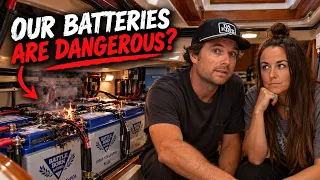
Can we SAVE our ELECTRIC boat? – SV YARREH Ep. 23
An unfinished story… and here we are, five seasons later. In 2022, we finally launched Yarreh after three years of rebuilding her from the hull up. What started as an ambitious restoration of a storm-damaged sailboat became something much bigger: a complete rebuild, a conversion to electric propuls...
Saving our Sailboat. Re-FIBERGLASSING after OSMOSIS DAMAGE- SV YARREH Ep.22
We take on one of the biggest challenges yet — re-fiberglassing the hull of our sailboat after discovering serious osmosis damage. What started as a small project quickly turned into a full-blown hull restoration. We strip away the old laminate, prep the surface, and lay down fresh fiberglass to bri...
Disaster Averted? Uncovering a HUUGE Hole in Our Boat! | SV YARREH Ep.21
We're putting our homemade DIY gelplaner to the ultimate test! Will it stand up to the challenge and get the job done? Join us as we tackle the restoration of our sailboat's hull, uncovering unexpected surprises along the way. From prepping the hull to dealing with hidden issues, this jour...
Our Hull is Worse Than We Thought! SHOCKING Discoveries & DIY Gelplaner Test! SV YARREH – Ep.20
We put our DIY Gelplaner to the test for the very first time! Will it be the solution we’ve been waiting for to fix the extreme osmosis on our sailboat hull? Watch as we dive into the process, reveal unexpected discoveries, and find out if our homemade tool can handle the challenge. Please conside...
Salvaged Sailboat Restoration: DIY Gel Planer! The Best Way to Fix OSMOSIS – SV YARREH Ep.19
In this episode, we take you through the journey of our 36 ft sailboat restoration project with an up-to-date timelapse—showing everything from rescuing her at sea to the beginning of her transformation into a brand-new vessel. We started this project during the pandemic, dubbing it our “COVID proje...
Restoring a SALVAGED Sailboat: The Start of Our TRANSFORMATION! – SV YARREH Ep. 18
After creating custom templates and installing new stringers in the last episode, it’s time to fiberglass them in and restore the structural integrity of our salvaged sailboat! After hours of prep work and fiberglassing, we stay focused and driven, always with the end goal in sight. With the constan...
How We’re REPLACING Structural members on Our SALVAGED SAILBOAT – SV YARREH Ep.17
In this episode, we take a huge step forward in restoring, revitalizing and transforming our salvaged sailboat! After cutting out the old, rotten stringers and re-fiberglassing the entire bilge, we’re finally ready to rebuild the hull—stronger than ever. Watch as we create brand new templates and b...
Fiberglassing our Sailboats BILGE! Will our NEW skills pay off? – SV YARREH Ep.16
In this episode, we dive into the massive task of refiberglassing our bilge! Having recently learned the ropes of fiberglassing, we're putting our new skills to the test in a big way. Join us on this epic adventure as we tackle the first chapter of our sailboat rebuild, aiming to perfect our te...
The REBUILD BEGINS!! Reviving our SALVAGED SAILBOAT – SV YARREH Ep.15
In this DIY fiberglass journey, we take you through the learning processes we experienced as we tackled the beginning of a major project fibreglassing the interior on our salvaged sailboat. Join us as we describe each step in detail, sharing tips, tricks, and insights along the way. Whether you'...
SALVAGE Sailboat NIGHTMARE: What Surprises Await Us This Time? – SV YARREH EP.14
Join us for another thrilling episode of our sailboat restoration journey! In this episode, we uncover some last-minute surprises , AGAIN!.The never-ending sailboat grind continues as we dive deep into the chaos and excitement of transforming a salvage sailboat into our dream vessel. As we near th...
Removing ROTTEN Stringers on Our SALVAGED SAILBOAT – SV YARREH EP.13
Join Us on Our Sailboat Restoration Adventure! In this episode, we tackle the challenging process of grinding out the rotten stringers on our salvaged sailboat. Just when we think we’ve got it all figured out, an unexpected twist reveals a valuable lesson that could save us countless headaches in ...
REMOVING our 6000LB KEEL!! What hidden SECRETS will we REVEAL? – SV YARREH EP.12
In this episode, we dive even deeper into our sailboat restoration project! Faced with unexpected challenges, we make the bold decision to remove the keel. Join us as we uncover what lies beneath and tackle the obstacles head-on. Will we uncover hidden damage or surprising discoveries? Don’t miss th...
Unveiling MORE SURPRISES in our SALVAGED SAILBOAT Found ADRIFT – SV YARREH Ep. 11
Embark on an unforgettable journey with us as we transform a salvaged sailboat found adrift into a pristine watercraft in beautiful British Columbia. Witness our determination as we work through obstacles in restoring this gem step by step in our series 'SV Yarreh'.
Final Days TRAVELLING MEXICO! onto the next ADVENTURE? -SV YARREH Ep.10
Discover the mesmerizing beauty of Mexico as our sailing adventure continues in this thrilling SV Yarreh episode. Explore secluded islands, pristine beaches, bustling cities, and immerse yourself in Mexican culture.
ROUGH PASSAGES & Beautiful Beaches…What is SAILING the BAJA all About? – SV YARREH Ep.09
In this episode we take a multi-week break from the boatyard to explore remote baja islands in the Sea of Cortez with the wandersailors aboard SV Bria Mia. Join us for the ultimate sailing trip experience as we uncover Bajas diverse geography, ranging from stunning coastlines and picturesque beaches...
LEAVING IT ALL Behind. SAILING Mexico part one – SV YARREH Ep.08
After Vancouver gets pummelled with cold temperatures and snow, We ditch the Project and Break free to Paradise In this episode, we get invited to crew the Sea of Cortez with Eric & Nathalie from @Wandersailing on SV BRIA MIA, a 34ft Catalina Follow our journey from salvaged sailboat to Brand...
What did we FIND? Parting out our SALVAGED SAILBOAT? SV YARREH Ep.07
We continue to Rip apart our salvaged sailboat. As we Dig in deeper and deeper, we discover more issues. Have we lost our minds? Follow our journey from salvaged sailboat to Brand NEW Electric Yacht. About the boat: 1983 Catalina 36 We have come along way so far-- For more current news feed an...
We RIPPED our Boat Apart – SV YARREH Ep.06
We start to disassemble our salvaged boat past the point of no return. As we start to uncover more, we ask ourselves what exactly we have gotten into. What surprises will we find & Will our high spirits live through the test of time? Follow our journey from salvaged sailboat to Brand NEW Electr...
REFITTING an ABANDONED Sailboat – SV YARREH Ep.05
After a long hiatus Its finally here; The Refit Series. In Episode 5 we officially start the Refit, and as we start to disassemble and dig in we discover lots of OSMOSIS. Do we sacrifice everything and trade in for a new project or do have what it takes to succeed and finish what we started? Foll...
PREVIEW : Turning a SALVAGED Boat BRAND NEW $$$
Sneak peak of our refit series documenting almost 3 years in the boatyard! #comingsoon #sailboat #rebuild #boat #house #series
Did our SALVAGED SAILBOAT make it to the BOATYARD? – SV Yarreh Ep.04
Covering our spontaneous adventure/sea trial before navigating up BC's largest river (exactly where we left off ) to the "alley of broken dreams" back in 2019. HOWEVER With great pride we can say, we survived shelter island. Some may have thought otherwise ... BUT After recently com...
First time Sailing our SALVAGED Sailboat – SV Yarreh Ep.03
Our First time self-propelled! After installing our new Rudder and checking over all systems on-board... we were ready for our Maiden Voyage!!! Thanks for watching :) Steph & Christof Check us out on instagram @sv.yarreh Get in touch by email: [email protected] Want to support us? ___...
First Haul-out! Fixing a Storm Damaged Sailboat – SV Yarreh Ep. 02
We find a new rudder and see our hull for the first time ever! all while making the best of friends and future crew before starting a temporary refit to get Yarreh back in the water to the next destination. Thanks for watching! Steph & Christof _________________________________________________...