WIND WAVES & LIZARD ISLAND! Our BEST Sails Yet! Exploring Lizard Island Sailing Queensland Australia
Fifteen nautical miles off Lizard Island along the northern Queensland coast of Australia, the wind eases to 10 to 11 knots while the catamaran Moor R & R holds 7.1 to 7.2 knots under sail with roughly 2 hours left on the passage. For Gary and his co-skipper on Sailing Moor R & R, reaching the island marks a milestone they have anticipated since casting off: “I’ve wanted to come to Lizard for quite some time, ever since we started sailing.”
Despite a few minor sail-handling hiccups along the way, the 6 and 1/2 hour run north turns into one of their fastest and most rewarding passages yet. Even as they close in on the anchorage at Hawks and Watson’s Bay, the catamaran is still surging along at 8 to 8 and 1/2 knots while the crew tries to bleed off enough boat speed to drop the sails.
A 6 and 1/2 Hour Passage into Lizard Island
Bringing the sails down requires rounding up further into the bay as the hull continues carrying speed toward the anchorage. With the hook finally set in bright turquoise water, the crew reflects candidly on the run north and their hands-on approach to handling the catamaran in brisk trade winds.
“Even though we had a little few little issues. We’ll always have issues. We’re not experienced sailors. We’re just learning as we go, but unbelievable sail.”
Rather than rushing ashore immediately after the 6 and 1/2 hour passage, they spend the first afternoon aboard Moor R & R cleaning up the deck, resting, and taking in the anchorage before starting their exploration the next morning.
Snorkeling Giant Clams in Watson’s Bay
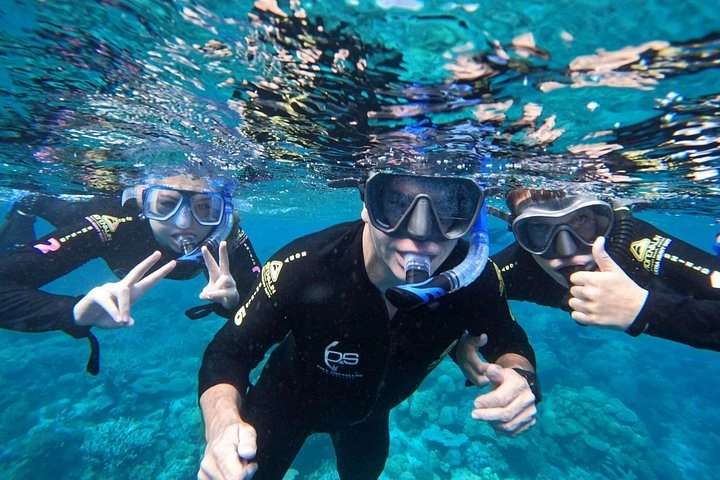
The following morning begins with launching the tender for a snorkel across Watson’s Bay, known for its bed of giant live clams. Slipping into the water over the reef flat, the crew swims among schools of fish and inspects the massive bivalves resting on the sandy bottom.
Although the brisk breeze keeps the water from being crystal clear, visibility remains good enough to highlight the vibrant mantles of the clams: “The large clams were beautiful. They were actually quite colorful, which surprised me.”
Climbing Chinaman’s Hill and Walking the Wetlands Track
Back aboard after the morning swim, the crew heads ashore to stretch their legs after a week and a half spent mostly confined to the boat. When Captain James Cook visited the island in 1770, he encountered so many large yellow-spotted monitors running across the ashore tracks that he simply named the landmark Lizard Island.
Their first ashore route climbs 300 meters up the headland trail to Chinaman’s Hill, a 20-minute ascent each way that leaves them puffing as the path opens onto elevated views of the surrounding coral reefs and anchorage. From the headland, they continue onto the pandanus track through the island’s interior wetlands until the trail emerges directly at the Lizard Island airstrip runway.
The flat round-trip walk to the airport and back covers roughly 1.2 kilometers in addition to the 300-meter climb up Chinaman’s Hill. Returning to the beach, they follow the shoreline up to the mouth of a clear freshwater creek where tidal water rushes across the sand. At sunset, Gary and his partner return to the beach with sundowner drinks, only for crews from across the entire anchorage to tender ashore and join them for an impromptu evening gathering.
Blown-Out Conditions at Blue Lagoon and Diving Mermaid Cove
The next morning, several crews from the anchorage jump into their tenders for a run of a couple of nautical miles down the coast to the Blue Lagoon to explore the southern beaches and snorkel. Once they round the island toward the lagoon entrance, however, the persistent southeast trade winds have whipped the surface into rough chop.
“Well, snorkeling is out today because the blue lagoon is blown out. It is white caps everywhere and about half a meter of swell.”
Forced to abandon the southern snorkel and motor back to Moor R & R, they pivot the next morning to Mermaid Cove on the more sheltered side of the island. Mermaid Cove sits within a yellow zone where spearfishing is prohibited, though catching by hand is permitted. Tying their tender off to a mooring buoy, they dive along the coral fringe. While underwater visibility is still somewhat stirred up by the wind, they find warm water close to the beach that turns noticeably colder as they swim out over the deeper drop-off.
Hiking 10,480 Steps Overland to the Blue Lagoon
With constant 20-knot winds—frequently gusting to 30 knots—preventing a second attempt by tender, the crew decides to reach the Blue Lagoon on foot across the center of the island. Retracing the pandanus track through the wetlands to the airport while the wind howls across the open tarmac, they turn left and walk a couple of kilometers to the far end of the runway.
At the runway’s end, they discover shaded seating and cold canned drinking water supplied for walkers by Lizard Island Resort. After a brief rest and a cold drink from the cans, only 900 meters remain to reach the Blue Lagoon. As the trail narrows, they spot single flip-flops—one-foot thongs—placed along the ground as makeshift trail markers guiding hikers toward the steep headland climb.
Climbing the massive rock steps up the ridge rewards them with an elevated vantage over the bright blue water of the lagoon and an adjacent beach below. However, the drop down the far side of the headland proves far too vertical to tackle safely: “Well, trying to get down to that beach was way too steep for me. I was scared just getting down to the platform I went down to.” Even descending back to Blue Lagoon Beach requires careful footing over loose dirt and fallen leaves on the steep grade: “I think coming down was just as hard as going up cuz it was quite slippery. There was a lot of dirt and leaves on the track.” By the time they walk all the way back to their anchorage beach, they have logged 10,480 steps and head straight for an afternoon nap aboard Moor R & R.
Yachtie Night at the Marlin Bar and the 1,194-Pound Marlin
Refreshed after their rest, the crew climbs back into the tender that evening to motor around the point into Marlin Bay for dinner at the Marlin Bar inside Lizard Island Resort. Because visiting yachts are not permitted to anchor directly in front of the resort, cruisers must tender around from the neighboring bay, and yachties are welcomed at the Marlin Bar exclusively on Tuesday and Friday nights.
Mounted inside the bar is a full-scale casting of one of the largest marlins ever caught off Lizard Island, landed in 1986 and tipping the scales at 1,194 pounds (546 kilos). When the giant fish was brought in, a taxidermist was flown over to cast the specimen; today, billfish angling around the island operates strictly as tag and release. After dinner ashore, the crew wraps up their stay at Lizard Island and prepares for their next passage north toward the Flinders Group.
| Passage / Excursion Metric | Recorded Value |
|---|---|
| Final Approach Distance & Speed | 15 NM out in 10–11 knots of wind at 7.1–7.2 knots boat speed (2 hours remaining) |
| Total Passage Duration & Arrival Speed | 6 and 1/2 hours total; arriving at the anchorage at 8 to 8 and 1/2 knots |
| Chinaman’s Hill & Airport Walk | 300 meters up Chinaman’s Hill (20 minutes each way) plus 1.2 km to the airport and back |
| Blue Lagoon Trade Wind Conditions | Constant 20-knot winds (up to 30 knots) with half a meter of swell in the lagoon |
| Overland Hike to Blue Lagoon | 900 meters from runway end; 10,480 total steps round-trip |
| 1986 Lizard Island Marlin Casting | 1,194 lb (546 kilos) displayed at the Marlin Bar |
Frequently Asked Questions
The sail to Lizard Island took 6 and 1/2 hours. With 15 nautical miles remaining, the wind dropped to 10 to 11 knots while the boat maintained 7.1 to 7.2 knots, and the catamaran arrived at the anchorage still making 8 to 8 and 1/2 knots.
They snorkeled over the colorful giant clams in Watson’s Bay and dove along the coral at Mermaid Cove after tying their tender to a mooring buoy. Mermaid Cove is in a yellow zone where spearing is prohibited, though catching by hand is allowed.
An earlier tender run to the Blue Lagoon was turned back by whitecaps and half a meter of swell, and persistent 20-knot winds gusting to 30 knots prevented returning by boat. Instead, they walked 10,480 steps round-trip via the pandanus track and the airport runway, where Lizard Island Resort supplies seats and cold canned water 900 meters from the lagoon.
Visiting yachties are allowed at the Marlin Bar inside Lizard Island Resort on Tuesday and Friday nights only. Because anchoring is not permitted in the resort’s bay, crews must tender around from the adjacent anchorage to see the famous casting of the 1,194-pound (546-kilo) marlin caught off the island in 1986.
Book a trip where this was filmed — near Cairns & the Tropical North
Support Sailing Moor R & R
At WeBoating.com, we profoundly acknowledge the unwavering dedication that Sailing Moor R & R invests in crafting each and every video or voyage. Their passion for delivering exceptional ocean content shines through every frame, and it's a labor of love that deserves your attention.
We invite you to watch their captivating videos here and actively engage with their content, including their social media links above. Liking, commenting, and sharing their work goes a long way in fueling their creative fire.
We're also inviting you to explore the gear, sponsorships, and boat partnerships highlighted in the "WIND WAVES & LIZARD ISLAND! Our BEST Sails Yet! Exploring Lizard Island Sailing Queensland Australia" video description, or directly on YouTube. By engaging with these offerings or purchasing services and items, you directly support Sailing Moor R & R, their collaborators, and the brands they're associated with.
To ensure you never miss an offshore update, consider visiting their official YouTube Channel to subscribe, like, and join their community directly.
If you have any feedback, corrections, or additional information about Sailing Moor R & R or their videos, please use the comment form below to share your thoughts with us.
Thank you for being a part of our community and supporting the creators we cherish. Your time and support truly matter!
Welcome back aboard Moor R & R for this week's Adventure! Episode 50
This week, we continue our journey at beautiful Lizard Island.
We’ve already had our fair share of weather on the way north, and this passage is no different. The wind keeps us on our toes, but despite the challenges along the way, it turns into one of our best sails yet!
As we finally arrive at Lizard Island, we quickly discover just how windy this place can be. But the strong winds don’t stop us from exploring everything this incredible island has to offer.
There are beautiful walking tracks, spectacular views and some amazing places to get in the water and go snorkelling. We spend time exploring both above and below the water and discovering some of the history and beauty that makes Lizard Island such a special place.
We also make our way to Marlin Bay, where we discover the story behind one of the largest marlins ever caught at Lizard Island.
With plenty of exploring, beautiful scenery, snorkelling and a few surprises along the way, this is another adventure you won’t want to miss!
So come along with us as we explore beautiful Lizard Island, both above and below the water, and continue our journey aboard Moor R & R.
Thanks for watching, and we hope you enjoy the adventure!
Come along for the highs and lows of life at sea – the joy of community, the challenge of sailing, and all the fun we get up too !!!
If you enjoy our adventures, we'd really appreciate your support by LIKING the video, SUBSCRIBING to the channel, and hitting the HYPE button. Every bit of support helps us continue sharing our sailing journey with you.
If you’d like to support our journey and get behind-the-scenes content, early access, and more, you can join our crew and love to welcome you aboard.
Buy us a Beer 🍻 - https://www.paypal.com/ncp/payment/7ECFX2T3UKNZN
Patreon - https://bit.ly/4g3BPfN Every bit of support helps keep us sailing — thank you! 💛
Instagram - @a.journey_together
Music - Epidemic Sound
#sailing #boating #catamaran #cruising

Sailing Moor R & R
Welcome to Sailing Moor R & R ! Sailing Moor R & R is your window into the world of sailing, slow travel, and meaningful connection. Join us and Moor R & R as we leave behind the noise of everyday life and set sail toward adventure, discovery, and tranquility. Our channel captures the highs and lows of liveaboard cruising, the beauty of nature, the skills of seamanship, and the quiet moments that make this lifestyle so rewarding. Whether you're dreaming of casting off your own lines or simply enjoy the ocean from afar, our goal is to provide valuable insight, cinematic visuals, and a peaceful place to unwind. Expect boat maintenance how-tos, sailing tips, destination guides, travel logs, and thoughtful conversations from sea and shore. We believe life is better when shared—and this is our journey together.
Channel Information:
Social Media Links:
WIND WAVES & LIZARD ISLAND! Our BEST Sails Yet! Exploring Lizard Island Sailing Queensland Australia Location
- Watson's Bay Anchorage, Lizard Island, Queensland, Australia (-14.6644,145.4514)
- Chinaman's Hill & Pandanus Track, Lizard Island, Queensland, Australia (-14.6731,145.4542)
- Mermaid Cove, Lizard Island, Queensland, Australia (-14.6472,145.4536)
- Blue Lagoon, Lizard Island, Queensland, Australia (-14.6853,145.4561)
- Marlin Bar, Lizard Island Resort, Queensland, Australia (-14.6611,145.4461)
Latest Episodes from Sailing Moor R & R
Explore the most recent voyages. Subscribe to the channel to never miss an update!

Unexpected Trouble In Remote Cape Melville! WWII Wrecks Remote Beaches Sailing Queensland Australia
Welcome back aboard Moor R & R for this week's Adventure! Episode 53 It’s time to leave the magic of the Flinders Group behind and continue our journey south towards the spectacular Cape Melville. And wow, what an incredible stretch of coastline this is! The scenery is absolutely breathtak...
Ancient Rock Art Hidden Caves & Wild Island Adventures Sailing Stanley & Flinders Islands, Australia
Anchored in the remote Flinders Group, the crew of Moor R & R crosses to Stanley Island to document ancient Yiwarra rock art at Ship Rock Shelter before a crocodile sighting cuts short a beach picnic.
Wild Sail North 20 Knots 2 Metre Swell a Code 0 Gamble Sailing North to the Flinders Group Australia
Weighing anchor at Lizard Island, the catamaran Moor R & R tackles an 11-hour passage north toward the Flinders Group, hoisting the Code 0 in 20-knot winds, landing pelagic fish, and outrunning squalls.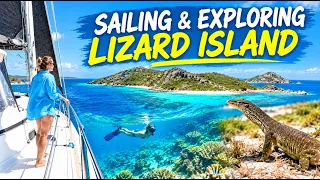
WIND WAVES & LIZARD ISLAND! Our BEST Sails Yet! Exploring Lizard Island Sailing Queensland Australia
Aboard catamaran Moor R & R, Gary and the crew complete a fast 6.5-hour sail to Lizard Island to snorkel giant clams in Watson's Bay, dive Mermaid Cove, hike 10,480 steps overland to Blue Lagoon, and visit the Marlin Bar.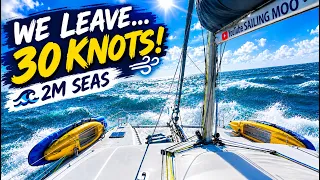
30 Knots & Big Seas FORCED US BACK Our Epic Sail to Lizard Island Sailing Queensland Coast Australia
Welcome back aboard Moor R & R for this week's Adventure! Episode 49 We’re leaving Cooktown and setting our sights on beautiful Lizard Island, but the weather has other plans for us. As we poke our nose out of Cooktown, the wind quickly starts building — 30 knots and climbing — and with t...