Canadian Fishing Lore and Remote Sailing in BC
Departing their anchorage on Calvert Island under dense late summer fog, Aladino Rovegno and Maya Eliza steered Magic Carpet II toward the remote waters of Rivers Inlet along the central coast of British Columbia. Documented on Sailing Magic Carpet, the passage across Fitz Hugh Sound opened up as the morning mist burned away, giving way to steady breeze and flat water.
The detour into Rivers Inlet represented a dedicated fishing pursuit for Aladino, who sought to test the inlet’s historical reputation for salmon after several days without a strike. Navigating the deep fjord required keeping a sharp lookout for floating driftwood, adapting anchorages to shifting winds, and experimenting with trolling tactics under sail.
Fitz Hugh Sound and The Song of the Sockeye
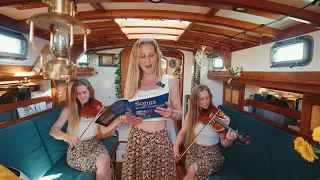
Under clearing skies, the Cape George 36 cutter made steady progress along the eastern shore of Calvert Island. Fitz Hugh Sound provided ideal sailing conditions, with flat water allowing the crew to make easy headway without heavy motion. During the passage, Maya shared a piece of regional maritime history discovered in a local general store: a volume titled The Songs of the Pacific Northwest.
Within the collection was “The Song of the Sockeye,” written in the late 1930s by commercial fisherman Ross Cumbers. The lyrics documented the enduring pull and financial uncertainty of the seasonal salmon fishery in Rivers Inlet, recounting how crews would spend 300 dollars on net, grub, and gas before heading to the head of the inlet at 6:00 Sunday night, only to end up with about three fish by morning. The verses cataloged the traditional alibis shared among fishermen when runs failed to materialize, from poor weather and unfavorable tides to phases of the moon.
Anchorage at Finn Bay and Hazards in Derby Channel
Entering the mouth of Rivers Inlet, the crew dropped anchor at Finn Bay on Penrose Island. The bay housed the weathered buildings and dock of Bucks Camp, an out-of-service fishing outpost with empty skiffs tied up without outboards. After riding out an overnight squall with thunder, Maya turned the main cabin into an improvised blanket fort recording studio to record voiceovers and edit footage in quiet comfort.
Under gloomy skies the following morning, Magic Carpet II weighed anchor to transit Derby Channel toward Dawson’s Landing. As the vessel cleared the bay, Aladino spotted what initially resembled an uncharted rock in the fairway. Raising binoculars, he identified the hazard as a massive uprooted drift tree bobbing in the current:
“I did not remember a rock in the middle of the channel, but I see something there. I took the binoculars, and I think it’s a giant tree with a lot of fresh branches on it still.”
The floating timber emphasized the constant need for vigilant pilotage in Pacific Northwest channels, where heavy runoff regularly introduces fresh deadheads into active navigation lanes.
Trolling Under Sail and Docking at Dawson’s Landing
With consistent breeze blowing through Derby Channel, Aladino deployed salmon trolling lures directly from the sailing cutter. By balancing the sails, he maintained a trolling pace of two and a half knots without starting the diesel engine:
“I found I had better success when the engine isn’t on when trolling for salmon.”
The silent propulsion offered dual benefits, eliminating hull vibration that might deter fish while allowing Maya to work uninterrupted on computer projects below decks. Although salmon were visible leaping across the surface, the lures drew no strikes as the boat progressed toward the head of the channel.
Arriving at Dawson’s Landing, the crew negotiated a tricky docking approach against gusty inflow winds blowing up the fjord. They visited the off-grid general store, stocking up on eggs, ginger, and beer while inspecting local fuel availability. Diesel and gasoline were on offer at prices lower than those found further north in Hartley Bay and Klemtu. However, with heavy winds putting strain on the mooring lines, Aladino expressed concern regarding the dock hardware:
“The securing points on the dock aren’t super new looking. And with the wind, we might not stay at the dock overnight.”
Rather than risking damage to deck gear or cleats through the night, the crew elected to cast off and seek a sheltered anchorage nearby.
Luxury Fishing Lodges and Close-Range Whale Feeding
The following day brought continuous motoring as Aladino trolled the deeper reaches of the inlet. Engine rumble and choppy swell created a tiring environment below, prompting the crew to drop anchor in a quiet bay for lunch and work. They anchored adjacent to a sprawling sportfishing resort, where Aladino noted 23 guide boats berthed along the extensive marina float.
While the cutter hung on its anchor and Aladino idly jigged a line off the stern, a sudden explosive exhale signaled the arrival of a humpback whale feeding inside the anchorage. The whale circled near the boat, exhibiting bubble net feeding behavior right off the hull:
“The rising bubbles form a circular curtain or net that the fish won’t swim through.”
The crew watched as the whale released spiral bubble tracks to herd schools of baitfish toward the surface before lunging upward through the center, repeating the maneuver twice before submerging.
Dawn Strike and Landing a Chinook Salmon
Determined to reverse their fishing fortunes, the crew awoke at 6:00 in the morning to start trolling in calm water before daytime winds built. Working the waters with an all-purpose fishing setup, Aladino felt a solid hit. As the rod bent double, he coached the retrieve:
“Keep tension on it. Keep the tip up.”
Managing the line as the salmon dashed toward the boat, Aladino relied on his multi-purpose tackle rather than specialized gear:
“I know I’m using the wrong rod and reel, but I mean, what is right and what is wrong? If you catch them, it’s most practical way for us.”
“One for all and all for one.”
Working the fish carefully to the gunwale, Aladino brought aboard a large Chinook salmon. Although he lost the specialized plug lure purchased for the run, the effort yielded fresh provisions for the vessel:
“Thank you fish. Oh, what a beauty.”
With the fish aboard, the crew re-anchored to fillet the salmon, saving portions to share with cruising friends Allison and James in Alert Bay. Maya completed her pending video project at anchor before the crew prepared for the upcoming coastal passage around Cape Caution.
| Passage & Fishery Metric | Reported Log Details |
|---|---|
| Vessel Model & Build Year | 1982 Cape George 36 cutter |
| Silent Trolling Speed | Two and a half knots under sail |
| Fleet Count at Commercial Lodge | 23 guide boats berthed at dock |
| Morning Departure Time | 6:00 AM salmon trolling run |
| Historical Outfitting Expense | 300 dollars for net, grub, and gas |
Frequently Asked Questions
Aladino trolled lures under sail at two and a half knots down Derby Channel to eliminate engine vibration, later using an all-around rod and reel setup at 6:00 in the morning to land a Chinook salmon.
Strong inflow winds blowing into the inlet created surging conditions at the dock, and aged securing points raised concerns about equipment strain, leading the crew to anchor out nearby.
The off-grid general store carries groceries including eggs, ginger, and beer, alongside marine diesel and gasoline priced lower than at Hartley Bay or Klemtu.
Maya and Aladino watched a humpback whale bubble net feeding near their boat, releasing circular curtains of rising bubbles to corral schooling fish before lunging upward twice.
Maya shared verses from The Song of the Sockeye, written in the late 1930s by fisherman Ross Cumbers from the collection The Songs of the Pacific Northwest, recounting the costs and fickle luck of fishing the inlet.
Book a trip where this was filmed — near Vancouver Island
Support Sailing Magic Carpet
At WeBoating.com, we profoundly acknowledge the unwavering dedication that Sailing Magic Carpet invests in crafting each and every video or voyage. Their passion for delivering exceptional ocean content shines through every frame, and it's a labor of love that deserves your attention.
We invite you to watch their captivating videos here and actively engage with their content, including their social media links above. Liking, commenting, and sharing their work goes a long way in fueling their creative fire.
We're also inviting you to explore the gear, sponsorships, and boat partnerships highlighted in the "Canadian Fishing Lore and Remote Sailing in BC" video description, or directly on YouTube. By engaging with these offerings or purchasing services and items, you directly support Sailing Magic Carpet, their collaborators, and the brands they're associated with.
To ensure you never miss an offshore update, consider visiting their official YouTube Channel to subscribe, like, and join their community directly.
If you have any feedback, corrections, or additional information about Sailing Magic Carpet or their videos, please use the comment form below to share your thoughts with us.
Thank you for being a part of our community and supporting the creators we cherish. Your time and support truly matter!
Order a copy of "The Northern Voyage" book in hardcover! https://sailing-magic-carpet.myshopify.com/products/the-northern-voyage-hardcover-book?variant=52297183461557
Our channel is made possible by you! Check out our Patreon account to get access to weekly real time updates (during boat season), early access to the videos, and maybe even surprise handwritten letters delivered to your mailbox. Patrons are what keep this channel alive! https://www.patreon.com/user?u=13249792
Magic Carpet II is a Cape George 36, built in Port Townsend, WA in 1982. Her hull and ballast were built by Cape George Marine Works, and the rest was finished by the original owner.
Check out our website to learn more about us: https://sailingmagiccarpet.com/
If you’d like to support us but patreon isn’t your thing, you can make a one time donation via PayPal, and we will send you many thanks in return!! https://www.paypal.me/aladinorovegno
PRODUCTS WE USE A LOT: (affiliate links marked with a *)
*MUSICBED: Most of the beautiful music we use in our videos comes from MusicBed. If you want to start making YouTube videos and you need a music licensing website, I highly recommend MusicBed. I find their music to be much higher quality than others. https://fm.pxf.io/DWKZRn
ROCNA ANCHOR: Supplied by CMP Group. https://shop.cmpgroup.net/en-ca/collections/original-rocna
VALLON SUNGLASSES: We love the Heron Ocean glasses for blocking light from all sides. https://www.vallon.com/
OUR DINGHY: This is a dinghy that Aladino built using a kit supplied by Duckworks Boat Builder's Supply in Port Townsend, WA. The design is a Scout 10. https://duckworks.com/plans-kits/kits-and-packages/scout/
*TOTALBOAT: Amazing epoxy, epoxy fillers, primer, etc. Using this link will give you 5% off! https://www.totalboat.com/magiccarpet
EPIFANES PAINT: High quality paint and varnish. Both Magic Carpet I and Magic Carpet II are both finished entirely with Epifanes products, inside and out. https://www.epifanes.com/introduction
*ALADINO'S WORK PANTS: https://gtly.ink/ltMFKBUSO
SIA SANDPAPER: high quality swiss sandpaper that won't flake or leave an uneven finish: www.sia-abrasives.com.
TO BUY SIA SANDPAPER IN CANADA: https://jjscanada.ca/product-category/brand/brand-sia-abrasives/
CAPE GEORGE MARINE WORKS: the boatyard where our boat was built. Located in Port Townsend WA, they do high quality work on traditional style boats. They can also build new boats to order. https://capegeorgecutters.com/
COOLBLUE FRIDGE by TECHNAUTICS: an excellent air cooled marine refrigeration unit. https://www.cruiserowaterandpower.com/coolblue-refrigeration-systems/
Check out Maya’s music on Spotify and iTunes!
SPOTIFY:
https://open.spotify.com/artist/3ypa1AKDFqSOP6Cg2GX53p?si=SLM8H6ZPR4CXyDtaqVDWGA
iTUNES:
https://music.apple.com/ca/artist/maya-eliza/1518186756
We are on instagram at @SailingMagicCarpet
Color graded with Phantom Luts by Joel Famularo
Our email address is for business inquiries only, please! If you do have a business inquiry or other proposition, please email us at SailingMagicCarpet (at) gmail.com
Sailing Magic Carpet
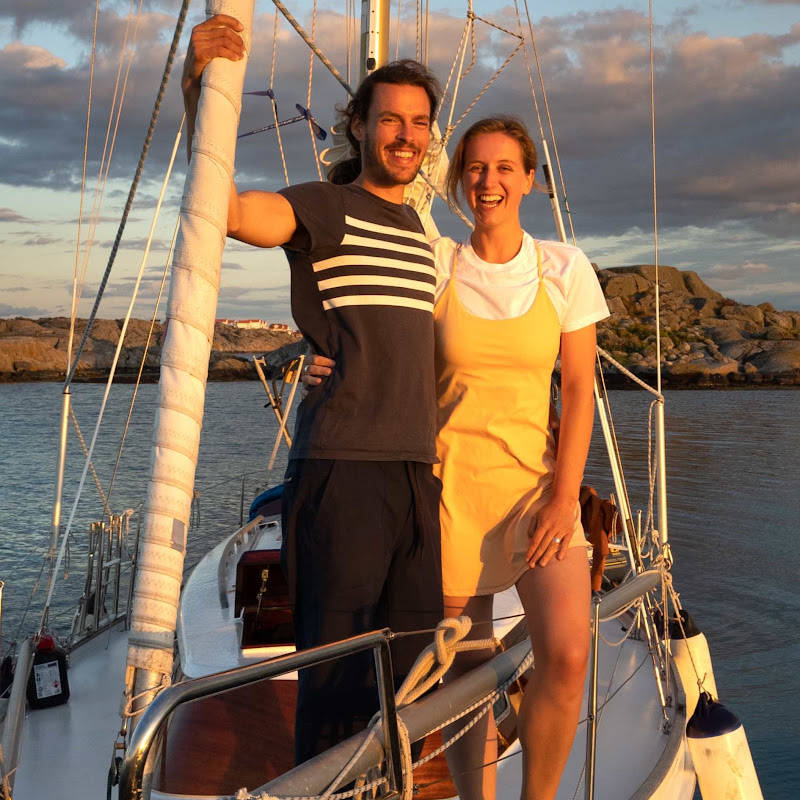
Maya and Aladino: The professional boatbuilder and artist duo who restored a 'crane-drop' Cape George 36, currently navigating the rugged wilderness of British Columbia.
Channel Information:
Social Media Links:
Canadian Fishing Lore and Remote Sailing in BC Location
- Dawson's Landing, Rivers Inlet, British Columbia, Canada (51.5749,-127.5926)
- Finn Bay, Penrose Island, British Columbia, Canada (51.5029,-127.7297)
- Calvert Island, Fitz Hugh Sound, British Columbia, Canada (51.5529,-128.0056)
Latest Episodes from Sailing Magic Carpet
Explore the most recent voyages. Subscribe to the channel to never miss an update!
We Have to Sail Faster Now
Maya Eliza and Aladino Rovegno navigate the Magic Carpet II through heavy fog and northwesterly winds, encountering orcas while sailing south through the Johnstone Strait toward San Francisco.
Eating Well on Magic Carpet – Cooking in the Wild
Order a copy of "The Northern Voyage" book in hardcover! Our channel is made possible by you! Check out our Patreon account to get access to weekly real time updates (during boat season), early access to the videos, and maybe even surprise handwritten letters delivered to your mailbox. ...
A Nice Little Moment At Sea #sailing
Here's a short little clip from a recent sail! I don't really know what to use shorts for haha, I way prefer telling a long story. But I do enjoy these little snapshots of life afloat. Maybe I'll upload a few more of them. -Maya
Big Problem: Boat Broken on Remote Coast
Aboard Magic Carpet II, Aladino and Maya troubleshoot a sudden anchor windlass failure in British Columbia, then set sail towards Cape Caution and Table Island.
10 Years Living On Boats: What I’ve Learned
Celebrating her 30th birthday aboard Magic Carpet II in British Columbia, Maya Eliza reflects on ten years of living on boats, from early refits to passage lessons and cruising sustainability.