Big Problem: Boat Broken on Remote Coast
At anchor off the remote coast of British Columbia, Aladino Rovegno and Maya Eliza prepared to weigh anchor aboard their 1982 Cape George 36 cutter Magic Carpet II after a productive morning filleting fresh salmon. Documenting their voyage south on Sailing Magic Carpet, the crew planned to resume passage making towards Mexico, but their departure halted abruptly when the electric anchor windlass refused to hoist the chain.
The previous evening, releasing the anchor from the horizontal bowsprit roller had caused the gear to drop quickly and jar the deck assembly. When Maya pressed the deck foot switch to haul back the rode, the motor slipped erratically before disconnecting entirely. The ground tackle began running out uncontrolled into the sea until Aladino sprang forward, arresting the spinning windlass drum with his foot to avert a runaway chain.
Diagnosing the Windlass Failure in the Chain Locker
Confronted with a dead windlass in remote waters, the crew faced stark operational choices. Manual retrieval using deck winches remained possible though slow and physically grueling, while the port of Port Hardy lay approximately one day sailing distance to the south if replacement components or sheltered moorage became unavoidable. Before committing to emergency diversions, Aladino inspected the drive mechanism below deck to determine whether the failure was mechanical or electrical.
Opening the access hatch to inspect the shaft beneath the deck, Aladino identified the failure almost immediately. The gearbox and motor assembly remained intact on the drive shaft, but the locking mechanism had completely vanished:
“And then at the bottom, there is a circlip on the shaft, so that the so that the key doesn’t fall out. But I don’t see circlip nor key. So, we have to realign gearbox with shaft, put the key back in, secure it.”
The critical question was whether the steel keyway had tumbled down the spurling pipe into the chain locker or plunged overboard with the chain when dropped from the bowsprit roller. Dropping into the narrow space with a flashlight, Aladino searched through piles of galvanized chain links. Defying the odds of searching for a small metal pin within a chain locker, he located both the loose keyway stick and the split retaining ring lying at the bottom of the locker.
Realigning the Drive Shaft and Reseating the Keyway
Restoring mechanical connection required precise physical alignment between the motor drive and the windlass shaft. Aladino stationed Maya on the foredeck with a manual winch handle inserted into the lateral socket of the windlass housing, instructing her to slowly rotate the drum assembly to index the internal keyway slots:
“When I was taking it up, it was engaging, disengaging, and then it just fully didn’t engage, and then it started free flowing out.”
As Maya rotated the shaft from above, Aladino monitored the alignment from inside the locker, calling out commands to stop and reverse rotational pressure. Once the keyway channels aligned flush, Aladino tapped the drive key back into place and seated the circlip over the retaining groove.
After hauling up the chain to remove the small bridle and engaging the main chain bridle, the crew tested the windlass under electrical power. The gypsy gripped cleanly without slipping or jumping. Despite a minor hand scrape sustained on the housing during assembly, Aladino welcomed the straightforward fix:
“Definitely prefer a keyway, and if it happens again in the future, we know what to look for.”
Sailing Past Cape Caution along the Central Coast
With the ground tackle fully operational, Magic Carpet II weighed anchor and set sail southward along the central coast. Hoisting working canvas in steady coastal breezes, the heavy-displacement cutter settled into a fast cruising groove, logging 7 knots through the water as it closed the distance toward Cape Caution:
“We’re doing like 7 knots. And we’re approaching Cape Caution, which is this place that holds a lot of power, I guess, for sailors on this coast cuz it’s the one break in the Inside Passage. It’s the place where the Pacific Ocean rolls in unabated.”
Rounding Cape Caution represents a major psychological milestone for Pacific Northwest cruisers. Unlike the protected waterways of the Inside Passage, the headland marks a gap where open Pacific Ocean swells roll in unchecked. Having previously navigated the cape with intense apprehension on earlier voyages, the crew noted how accumulating seamanship and vessel familiarity transformed former anxieties into routine coastal sailing.
Exploring the Wild Coastline of Table Island
Rather than bypassing the surrounding islands in a rush to round Cape Caution, Aladino and Maya opted to divert toward Table Island and its neighboring sister, Ann Island. The secluded roadstead offered an opportunity to visit an uninhabited outer outpost:
“We’ve been to this island, or actually, we’ve never been to this island, Table. But, we’ve been to its sister, Ann Island, twice now, and we’ve filmed it twice now on the channel.”
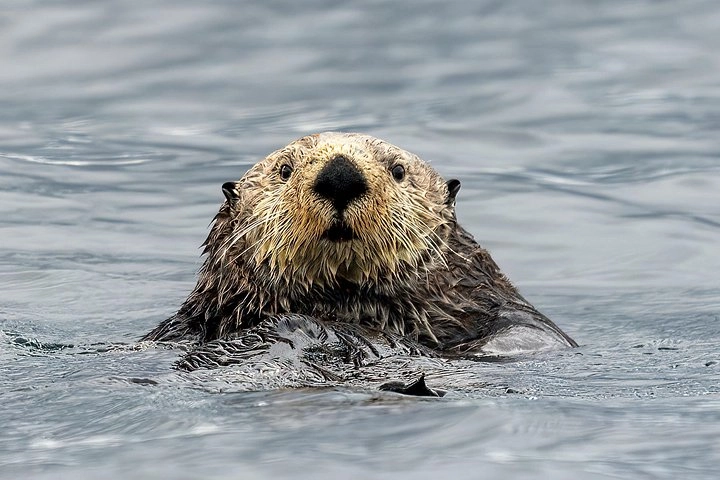
Dropping the anchor into the surge-swept anchorage under settled skies, the crew launched their Scout 10 tender to explore the shoreline. Dense rafts of sea otters floated among kelp beds just beyond the breakers, rolling through heavy Pacific swells crashing against offshore sea stacks. Ashore, ancient wind-sculpted forests bordered stony beaches littered with ocean debris that had drifted across the open ocean:
“The ocean has traveled a long way to get here. The things on the beaches are adorned with alphabets I cannot read.”
The successful repair and peaceful stop affirmed the crew’s preparedness for the longer voyages ahead. Following planned maintenance near family anchorages, Magic Carpet II will prepare for a week-long offshore voyage down the Pacific coast to San Francisco.
| Metric | Recorded detail | Source reference |
|---|---|---|
| Vessel model | Cape George 36 cutter | Built in Port Townsend in 1982 |
| Cruising speed | 7 knots | Passage approaching Cape Caution |
| Prior passage duration | 3 to 4 nights | Maximum previous offshore voyage |
| Dinghy model | Scout 10 | Kit built by Aladino |
Frequently Asked Questions
The windlass drive key and circlip slipped out from the shaft after the anchor dropped abruptly during release the previous evening, causing the motor gearbox to disengage and the chain to free-flow.
Aladino located the dropped keyway and circlip inside the chain locker beneath the spurling pipe, while Maya operated a manual winch handle on deck to realign the drive shaft slots before Aladino reseated the key.
Magic Carpet II sailed south at 7 knots towards Cape Caution, experiencing rolling Pacific Ocean swells where open ocean waters meet the break in British Columbia’s Inside Passage.
Having previously visited neighboring Ann Island twice, the crew stopped at Table Island to explore its sea stacks, coastal forests, and rafts of sea otters in calm conditions before rounding Cape Caution.
Book a trip where this was filmed — near Vancouver Island
Support Sailing Magic Carpet
At WeBoating.com, we profoundly acknowledge the unwavering dedication that Sailing Magic Carpet invests in crafting each and every video or voyage. Their passion for delivering exceptional ocean content shines through every frame, and it's a labor of love that deserves your attention.
We invite you to watch their captivating videos here and actively engage with their content, including their social media links above. Liking, commenting, and sharing their work goes a long way in fueling their creative fire.
We're also inviting you to explore the gear, sponsorships, and boat partnerships highlighted in the "Big Problem: Boat Broken on Remote Coast" video description, or directly on YouTube. By engaging with these offerings or purchasing services and items, you directly support Sailing Magic Carpet, their collaborators, and the brands they're associated with.
To ensure you never miss an offshore update, consider visiting their official YouTube Channel to subscribe, like, and join their community directly.
If you have any feedback, corrections, or additional information about Sailing Magic Carpet or their videos, please use the comment form below to share your thoughts with us.
Thank you for being a part of our community and supporting the creators we cherish. Your time and support truly matter!
Order a copy of "The Northern Voyage" book in hardcover! https://sailing-magic-carpet.myshopify.com/products/the-northern-voyage-hardcover-book?variant=52297183461557
Our channel is made possible by you! Check out our Patreon account to get access to weekly real time updates (during boat season), early access to the videos, and maybe even surprise handwritten letters delivered to your mailbox. Patrons are what keep this channel alive! https://www.patreon.com/user?u=13249792
Buy handmade, woodblock print, Magic Carpet t-shirts that we carved with a local artist! https://salvagedcollective.com/products/sailing-magic-carpet-tee?variant=42177359282253
Magic Carpet II is a Cape George 36, built in Port Townsend, WA in 1982. Her hull and ballast were built by Cape George Marine Works, and the rest was finished by the original owner.
Check out our website to learn more about us: https://sailingmagiccarpet.com/
If you’d like to support us but patreon isn’t your thing, you can make a one time donation via PayPal, and we will send you many thanks in return!! https://www.paypal.me/aladinorovegno
PRODUCTS WE USE A LOT: (affiliate links marked with a *)
*MUSICBED: Most of the beautiful music we use in our videos comes from MusicBed. If you want to start making YouTube videos and you need a music licensing website, I highly recommend MusicBed. I find their music to be much higher quality than others. https://fm.pxf.io/DWKZRn
ROCNA ANCHOR: Supplied by CMP Group. https://shop.cmpgroup.net/en-ca/collections/original-rocna
VALLON SUNGLASSES: We love the Heron Ocean glasses for blocking light from all sides. https://www.vallon.com/
OUR DINGHY: This is a dinghy that Aladino built using a kit supplied by Duckworks Boat Builder's Supply in Port Townsend, WA. The design is a Scout 10. https://duckworks.com/plans-kits/kits-and-packages/scout/
*TOTALBOAT: Amazing epoxy, epoxy fillers, primer, etc. Using this link will give you 5% off! https://www.totalboat.com/magiccarpet
EPIFANES PAINT: High quality paint and varnish. Both Magic Carpet I and Magic Carpet II are both finished entirely with Epifanes products, inside and out. https://www.epifanes.com/introduction
*ALADINO'S WORK PANTS: https://gtly.ink/ltMFKBUSO
SIA SANDPAPER: high quality swiss sandpaper that won't flake or leave an uneven finish: www.sia-abrasives.com.
TO BUY SIA SANDPAPER IN CANADA: https://jjscanada.ca/product-category/brand/brand-sia-abrasives/
CAPE GEORGE MARINE WORKS: the boatyard where our boat was built. Located in Port Townsend WA, they do high quality work on traditional style boats. They can also build new boats to order. https://capegeorgecutters.com/
COOLBLUE FRIDGE by TECHNAUTICS: an excellent air cooled marine refrigeration unit. https://www.cruiserowaterandpower.com/coolblue-refrigeration-systems/
Check out Maya’s music on Spotify and iTunes!
SPOTIFY:
https://open.spotify.com/artist/3ypa1AKDFqSOP6Cg2GX53p?si=SLM8H6ZPR4CXyDtaqVDWGA
iTUNES:
https://music.apple.com/ca/artist/maya-eliza/1518186756
We are on instagram at @SailingMagicCarpet
Color graded with Phantom Luts by Joel Famularo
Our email address is for business inquiries only, please! If you do have a business inquiry or other proposition, please email us at SailingMagicCarpet (at) gmail.com
Sailing Magic Carpet
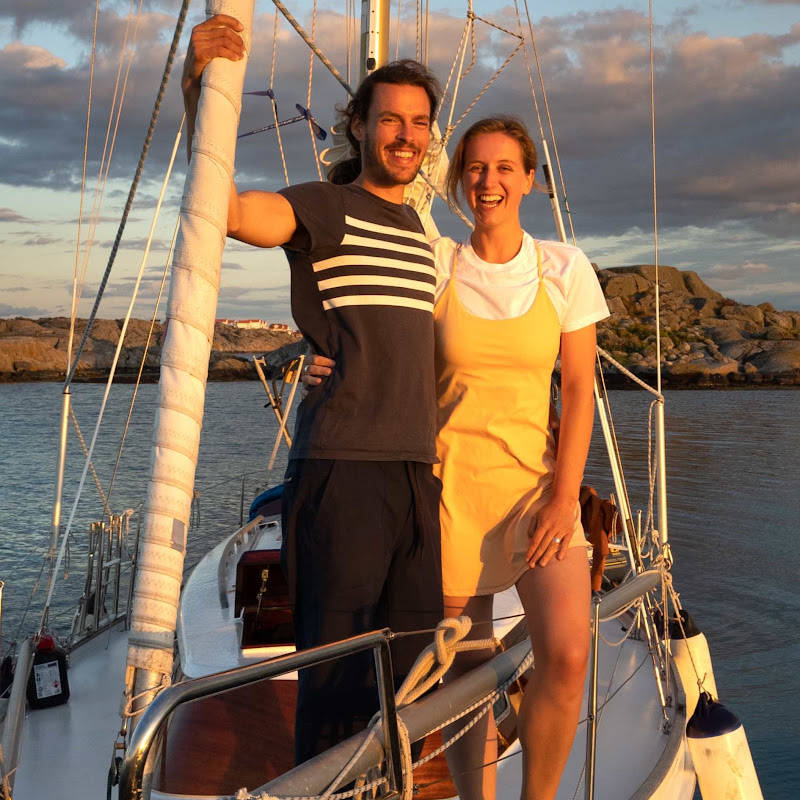
Maya and Aladino: The professional boatbuilder and artist duo who restored a 'crane-drop' Cape George 36, currently navigating the rugged wilderness of British Columbia.
Channel Information:
Social Media Links:
Big Problem: Boat Broken on Remote Coast Location
- Table Island, British Columbia, Canada (51.2651,-127.8069)
- Ann Island, British Columbia, Canada (51.2739,-127.8102)
- Cape Caution, British Columbia, Canada (51.1635,-127.7875)
Latest Episodes from Sailing Magic Carpet
Explore the most recent voyages. Subscribe to the channel to never miss an update!
We Have to Sail Faster Now
Order a copy of "The Northern Voyage" book in hardcover! Our channel is made possible by you! Check out our Patreon account to get access to weekly real time updates (during boat season), early access to the videos, and maybe even surprise handwritten letters delivered to your mailbox. ...
Eating Well on Magic Carpet – Cooking in the Wild
Order a copy of "The Northern Voyage" book in hardcover! Our channel is made possible by you! Check out our Patreon account to get access to weekly real time updates (during boat season), early access to the videos, and maybe even surprise handwritten letters delivered to your mailbox. ...
A Nice Little Moment At Sea #sailing
Here's a short little clip from a recent sail! I don't really know what to use shorts for haha, I way prefer telling a long story. But I do enjoy these little snapshots of life afloat. Maybe I'll upload a few more of them. -Maya
Big Problem: Boat Broken on Remote Coast
Aboard Magic Carpet II, Aladino and Maya troubleshoot a sudden anchor windlass failure in British Columbia, then set sail towards Cape Caution and Table Island.
10 Years Living On Boats: What I’ve Learned
Celebrating her 30th birthday aboard Magic Carpet II in British Columbia, Maya Eliza reflects on ten years of living on boats, from early refits to passage lessons and cruising sustainability.