The road back to boat work: Bunker roof, done! Ep. 699
At the creek homestead in North Carolina, the summer heat finally drops to an arctic 27° C as Mads Dahlke of Sail Life prepares to enclose the concrete bunker before a forecasted rainstorm. Two shipping containers have arrived on the property, establishing the perimeter for the upcoming arrival of Spiffy, the crew’s 44-foot hurricane-damaged Antares catamaran. Because the local ground contains heavy clay, moving heavy equipment demands dry weather, leaving Mads with a brief window to replace the failed top coating of the bunker with a weather-tight pitched roof.
Working solo on the roof structure, Mads clamps scrap 2×4 blocks to the framing to act as stops, preventing structural OSB panels from sliding over the eaves. Although plywood remains his preferred material for residential construction, cost efficiency makes oriented strand board practical for the auxiliary bunker. Before sheeting the opposite slope, he nails 16-foot 2×4 fascia boards in place using temporary plywood supports, contending with propeller twists in the lumber, and tightens every concrete wedge anchor securing the rafters.
Hurricane-Rated Sheathing and Roof Underlayment
To ensure structural resilience in coastal North Carolina, Mads aligns the OSB sheathing with H-clips between the rafters, staggering every joint across the roof frame. After snapping chalk lines along the rafter centers to guide his pneumatic nailer, he drives approximately 500 nails across the deck. Local building codes for severe weather mandate tight fastener intervals, prompting Mads to observe: “Because of the pesky hurricanes around here, the nails can’t be further apart than 6 in or 15 cm.”
With the sheathing secured and edge overhangs trimmed flush along the gable, protection against impending moisture becomes urgent. Mads fastens metal drip edge along the lower perimeter before rolling out peel-and-stick underlayment across the wood substrate. The self-adhesive membrane proves awkward to position smoothly, leading Mads to joke: “It may very well be peel, but it is somewhat limited in the stick department.” He rolls the material flat to create a secondary water barrier above the 9-inch steel-reinforced concrete bunker ceiling.
Designing a Compact DC Emergency Backup System
The bunker structure lacks exterior windows, creating complete darkness whenever grid power drops. To power interior lighting during utility outages, Mads designs a dedicated 12-volt direct-current backup circuit centered around a Renogy Reserve Mini Smart LiFePO4 battery equipped with internal heating, Bluetooth monitoring, and IP65 moisture protection. Six 200-watt solar panels charging four 50-amp-hour 48-volt batteries through a 3500-watt inverter-charger have operated on his tool trailer for a year and a half with zero failures. With 700,000 units shipped at a 0.9 percent defect rate and over 60 management protections, the hardware offers proven field reliability.
Marine electrical installations typically employ heavy conductors and a massive 225-amp Class T fuse positioned near the battery terminal. Because the bunker system only powers low-draw recessed ceiling LEDs, Mads downsizes the protective hardware to a miniature 10-amp Class T fuse with a high interrupt rating to safeguard 16-gauge wiring. A DIN-rail relay monitors incoming alternating current, automatically triggering the 12-volt battery circuit to energize the ceiling fixtures the moment grid power fails.
Fastening Metal Panels and Custom Gable Trim
After cutting 29-gauge corrugated steel roofing sheets to length with an angle grinder, Mads begins mounting the metal roof deck. Each panel features asymmetrical profiles with an overlapping rib and an integrated anti-siphon drainage channel. Proper installation requires placing the longer leg on the bottom layer to maintain a watertight seal against driving rain.
Securing thin 29-gauge panels requires specialized coarse-thread screws with integrated rubber compression washers engineered for wood sheathing rather than standard purlins. Mads installs over 300 screws in symmetrical rows across the slopes, carefully managing drill clutch torque to avoid stripping the timber or shearing the rubber seals. Before nightfall, he fabricates custom rake trim for the gables, referencing guides to notch and bend the flashing over the eaves before tacking the ridge cap in place.
Worksite Injury and Bunker Interior Space Planning
Cleanup operations halt abruptly when Mads steps onto an upturned piece of salvage plywood, driving a structural screw through the rubber heel of his steel-toed work shoe and into his foot. A spinal disc rupture sustained 15 years earlier left partial sensory loss in his left leg, dulling the pain of the puncture. A precautionary visit to urgent care confirms up-to-date tetanus immunization and no immediate infection, though medical staff instruct him to avoid heavy weight-bearing for several days.
Restricted from heavy lifting, Mads turns to interior layout planning inside the bunker. The reinforced masonry room will serve as a technical hub and office, allowing Ava to occupy the shipping container workshop. Mads measures 2 meters inward from the rear wall to partition off a noisy server rack, uninterruptible power supply, battery banks, and an inverter-charger. A dedicated mini-split heat pump will cool the isolated machinery space, preserving just under 150 centimeters, or 5 feet, of wall clearance in the outer room for an office desk, monitors, and 3D printing equipment.
Shipping Container Rigging and Spiffy Transport Logistics
To ready the workspace for Ava’s office move-in, Mads tackles the misaligned shipping container workshop, which sits too close to an adjacent storage unit to allow its exterior doors to open fully. Anchoring a comealong and heavy ratchet strap to a mature tree behind the storage unit, he combines pulling tackle with two chain hoists to winch the container sideways a foot and a half toward the tree.
Once the workshop container clears the adjacent door swings, Mads spends hours jacking and shimming the steel corners until the floor registers level on both axes. Reflecting on the demanding adjustment, he notes: “With the container positioned exactly where I wanted it on X and Y, there was just a small matter of leveling it.” With leveling completed, he reconnects the container’s interior wiring, batteries, and inverter-chargers, deferring mini-split reconnection until replacement vibration dampening feet arrive.
Overland transport preparations for SV Spiffy advance with a site meeting at the Oriental boatyard with haulers Danny and Blair. Transporting the 44-foot catamaran across public highways poses logistical hurdles due to its extreme dimensions, as Mads explains: “She’s 22 foot wide. So that means essentially the roads are going to get closed down when we move her.” Because the homestead sits on a narrow roadway that functions as a dead end for oversized multi-axle trailers, Mads proposes a trial dry run with Danny navigating an empty hauler to test backing maneuvers onto the gravel pad before committing the wide hull to transit.
Technical Specifications and Construction Metrics
| Structural element | Project metric | Technical setup | | bunker roof sheathing | 500 nails | spaced 6 inches (15 cm) apart along framing rafters | | corrugated metal cladding | 29 gauge steel | secured with over 300 coarse-thread gasket screws | | DC backup fuse protection | 10 amp Class T fuse | protects 16-gauge wire supplying recessed ceiling lights | | tool trailer solar equipment | 6 solar panels (200 W each) | powers four 48V 50 Ah LiFePO4 batteries via 3500 W inverter | | technical partition room | 2 meters depth | encloses server rack and UPS, leaving 150 cm (5 ft) desk space | | SV Spiffy catamaran dimensions | 44 ft length, 22 ft beam | wide hull requiring road closures and trailer dry run |
Frequently Asked Questions
The original top coating on the bunker’s flat concrete roof failed, prompting Mads to frame and build a pitched corrugated metal roof as a durable long-term solution against rain and moisture ingress.
Mads selected a 12-volt Renogy Reserve Mini Smart LiFePO4 battery paired with a 10-amp Class T fuse protecting 16-gauge wiring, managed by a DIN-rail relay that switches on DC ceiling lights when AC power drops.
He anchored a comealong and ratchet strap to a nearby tree and rigged two chain hoists to pull the container a foot and a half sideways, then jacked and shimmed the corners until the structure was level.
SV Spiffy measures 22 feet in beam, necessitating highway road closures and careful navigation down a dead-end approach road, prompting Mads and hauler Danny to plan an empty trailer dry run.
Book a trip where this was filmed — near Charleston

Support Sail Life
At WeBoating.com, we profoundly acknowledge the unwavering dedication that Sail Life invests in crafting each and every video or voyage. Their passion for delivering exceptional ocean content shines through every frame, and it's a labor of love that deserves your attention.
We invite you to watch their captivating videos here and actively engage with their content, including their social media links above. Liking, commenting, and sharing their work goes a long way in fueling their creative fire.
We're also inviting you to explore the gear, sponsorships, and boat partnerships highlighted in the "The road back to boat work: Bunker roof, done! Ep. 699" video description, or directly on YouTube. By engaging with these offerings or purchasing services and items, you directly support Sail Life, their collaborators, and the brands they're associated with.
To ensure you never miss an offshore update, consider visiting their official YouTube Channel to subscribe, like, and join their community directly.
If you have any feedback, corrections, or additional information about Sail Life or their videos, please use the comment form below to share your thoughts with us.
Thank you for being a part of our community and supporting the creators we cherish. Your time and support truly matter!
Meet Renogy’s new Mini Smart Battery — smarter energy storage with reliable performance for every journey: https://dataaccess.renogy.cn/t/n3
Using Code【saillife】for 15% OFF
#Renogy#renogyminismart#renogysolar
** Links and contact information **
My email address is [email protected]
For sponsor deals, please use this email: [email protected]
Amazon wishlist: https://www.amazon.com/hz/wishlist/ls/2NJUK30IBFWO1
Sail Life website:
https://www.saillifechannel.com/
Sail Life on Patreon:
http://bit.ly/SailLifeOnPatreon
Sail Life on Instagram:
https://www.instagram.com/saillife_
Sail Life on Facebook:
http://bit.ly/SailLifeOnFacebook
Sail Life on Twitter:
http://bit.ly/SailLifeOnTwitter
TotalBoat:
https://www.totalboat.com/saillife
Athena on No Foreign Land:
https://www.noforeignland.com/boat/saillife

Sail Life
From the 'Oh Glorious Sanding' of SV Athena to the resurrection of a hurricane-damaged Antares 44, Mads Dahlke of Sail Life defines DIY boat refitting gold.
Channel Information:
Social Media Links:
The road back to boat work: Bunker roof, done! Ep. 699 Location
- The Creek Project Homestead, Pamlico County (35.045,-76.71)
- Oriental Boatyard, North Carolina (35.0325,-76.696)
- Pamlico River and Neuse River Junction (35.015,-76.68)
Latest Episodes from Sail Life
Explore the most recent voyages. Subscribe to the channel to never miss an update!
The road back to boat work: drywall in the bunker. Ep. 702
Sail Life finishes wiring, drywall, and marine Meranti plywood in the bunker workshop, prepping the space to resume boat work on Spiffy.
Antigravity roof check
Mads Dahlke uses an aerial drone to inspect his house roof after discovering summertime ceiling moisture, checking metal surfaces and flashing for water damage.
Antigravity A1 360 drone – Roof issue & dingy adventure
Mads Dahlke tests the Anti Gravity A1 360 drone for structural roof inspections and attic diagnostics, then tracks his dinghy exploring Danish creeks.
Medium to small size human vs smoke detector
Mads evaluates interconnected X-Sense smoke and carbon monoxide detectors, showing how two clicks silence linked alarms to quickly identify which unit detected hazards.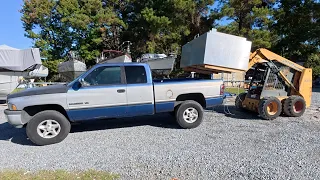
The road back to boat work: Big oven on the move & wiring the bunker. Ep. 701
Mads Dahlke relocates the heavy composite curing oven, clears the staging footprint under SV Spiffy, and installs in-wall electrical circuits and network cabling inside the concrete bunker workshop ahead of the catamaran road move.