⚓️ Fastest Sailboat Ever?! ⛵️💨 McGregor’s WILD 😱 Design Explained 🤯 #fastboats #sailing #mcgregor
Few production sailboats have ignited as much fiery dockside debate as the polarizing hybrid cruisers developed by naval designer Roger MacGregor. Examined through the technical lens of Tim Labute on Lady K Sailing, the MacGregor 26X and 26M represent an audacious departure from traditional naval architecture. While a conventional 26-foot cruising monohull displaces thousands of pounds of lead ballast and putters along at a modest 5-knot hull speed under an auxiliary outboard, the MacGregor powersailer arrived with sufficient engine thrust to pull waterskiers, plane at 20 knots, and send shockwaves through conservative sailing clubs.
To dismiss Roger MacGregor’s creations as mere oddities overlooks a shrewd understanding of consumer boating psychology and innovative composite engineering. Produced in Costa Mesa, California, the MacGregor powersailer merged trailerable freedom, shallow-water beachability, and powerboat velocity into a single, accessible package. Tim Labute deconstructs the hydrodynamic compromises, water ballast mechanics, and handling realities that define this unique chapter in American boatbuilding.
The Dual Personality: Water Ballast System and Planing Hull Dynamics
At the mechanical core of the MacGregor 26 concept lies Roger MacGregor’s water ballast system. Traditional sailing yachts rely on heavy cast iron or lead keels fixed permanently beneath the hull to generate righting moment. While this ensures stability at high angles of heel, it severely penalizes towing weight and requires heavy towing vehicles. MacGregor resolved this paradox by designing a lightweight fiberglass hull that displaces only approximately 2,250 pounds when empty on a trailer.
Upon launching at a boat ramp, the operator opens a transom gate valve and a forward air vent, allowing approximately 1,200 to 1,400 pounds of seawater to gravity-flood the bilge tanks beneath the cabin sole. When under sail, this ballast provides adequate righting moment to support the fractional sloop rig. When motoring at speed, the operator opens the transom valve under forward throttle, evacuating the water ballast as the semi-displacement hull transitions onto a plane powered by a 50-horsepower outboard engine.
Naval Architecture Realities: Sailing Compromises and Upwind Performance
While the ability to outrun approaching squalls at 20 knots offers undeniable utility, Tim Labute of Lady K Sailing emphasizes that hydrodynamics is a science of strict compromises. To plane efficiently under outboard power, the MacGregor 26 features a flat run aft with hard chines and minimal rocker. Under sail, this flat underbody lacks the dampening and sea-kindly tracking of a wineglass or round-bilge hull, leading to a pounding motion in short, steep coastal chop.
Furthermore, because water ballast possesses the same density as the surrounding sea, its center of gravity sits higher than that of a lead bulb fixed deep below a fin keel. As a consequence, initial stability is relatively tender, requiring early reefing in winds exceeding 12 to 14 knots. Combined with a lightweight swing centerboard (or rotating daggerboard on the 26M), upwind leeway angles are notably higher than dedicated racing or cruising monohulls.
Market Disruption: Why Roger MacGregor Sold Thousands of Boats
Despite relentless criticism from traditional yachting purists, the MacGregor 26 became one of the best-selling sailboats in marine history, with over 5,000 hulls produced. Roger MacGregor understood that the vast majority of weekend sailors spend their time day-sailing in sheltered bays, anchoring on sandy beaches, or exploring inland lakes rather than crossing treacherous oceans. The boat offered standing headroom, an enclosed marine head, a queen-sized aft berth, and the ability to tow behind a standard family SUV without marina slip fees.
As Labute concludes, the MacGregor 26 was never intended to conquer Cape Horn; it was engineered to democratize boating, eliminate mooring expenses, and give families the versatility to sail when the breeze was up and power home swiftly when dinner was waiting. In the broader scope of naval architecture, Roger MacGregor’s audacious design stands as a brilliant commercial and functional triumph.
MacGregor 26 Powersailer Architecture & Specifications
| Design Dimension | Engineering Metric |
|---|---|
| Channel | Lady K Sailing (Tim Labute) |
| Naval Architect & Builder | Roger MacGregor (MacGregor Yachts) |
| Vessel Models | MacGregor 26X (1995–2003) & 26M (2003–2013) |
| Hull Type | Planing fiberglass monohull / powersailer hybrid |
| Length Overall (LOA) | 7.87 m (25 ft 10 in) |
| Dry Weight (Empty) | ~1,020 kg (2,250 lbs) |
| Water Ballast Capacity | ~635 kg (1,400 lbs) floodable seawater |
| Draft (Board Up / Down) | 0.30 m (1 ft 0 in) / 1.75 m (5 ft 9 in) |
| Auxiliary Power Max | 50 hp outboard (speeds up to 20+ knots) |
Frequently Asked Questions
The MacGregor 26 is a hybrid powersailer combining a planing fiberglass hull with a 50-horsepower outboard engine and floodable water ballast, enabling it to reach speeds of over 20 knots under power while still sailing under canvas.
A transom gate valve and bow vent allow approximately 1,400 pounds of seawater to fill an internal bilge tank upon launching, providing stability for sailing. The tank is drained when trailering or under high-speed motoring to minimize displacement.
While it carries a fractional sloop rig and a centerboard/daggerboard, the flat planing hull underbody and higher center of gravity mean it experiences more leeway and less pointing ability compared to deep-keeled monohulls.
Roger MacGregor designed the boat and manufactured thousands of units at MacGregor Yachts in Costa Mesa, California, pioneering high-volume, affordable trailerable sailing yachts.
Its lightweight construction allowed towing by mid-sized SUVs without slip fees, while its shallow 1-foot draft enabled beaching and its spacious interior offered standing headroom and double berths for family weekend cruising.
Book a trip where this was filmed — near Newport Beach

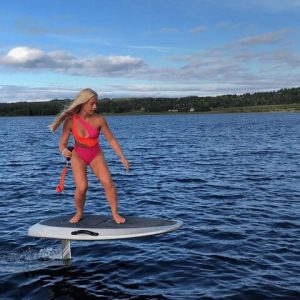
E-Foil Lesson for Two Friends in Southern California
Sold by SoCal Kitesurfing & KiteboardingSupport Lady K Sailing
At WeBoating.com, we profoundly acknowledge the unwavering dedication that Lady K Sailing invests in crafting each and every video or voyage. Their passion for delivering exceptional ocean content shines through every frame, and it's a labor of love that deserves your attention.
We invite you to watch their captivating videos here and actively engage with their content, including their social media links above. Liking, commenting, and sharing their work goes a long way in fueling their creative fire.
We're also inviting you to explore the gear, sponsorships, and boat partnerships highlighted in the "⚓️ Fastest Sailboat Ever?! ⛵️💨 McGregor’s WILD 😱 Design Explained 🤯 #fastboats #sailing #mcgregor" video description, or directly on YouTube. By engaging with these offerings or purchasing services and items, you directly support Lady K Sailing, their collaborators, and the brands they're associated with.
To ensure you never miss an offshore update, consider visiting their official YouTube Channel to subscribe, like, and join their community directly.
If you have any feedback, corrections, or additional information about Lady K Sailing or their videos, please use the comment form below to share your thoughts with us.
Thank you for being a part of our community and supporting the creators we cherish. Your time and support truly matter!

Lady K Sailing
From the legendary Hughes 35 'Lady K' to the current catamaran 'Rome' refit, Tim Labute provides the technical gold standard for affordable cruising.
Channel Information:
Social Media Links:
⚓️ Fastest Sailboat Ever?! ⛵️💨 McGregor’s WILD 😱 Design Explained 🤯 #fastboats #sailing #mcgregor Location
- MacGregor Yachts Historic Factory, Costa Mesa, California (33.6411,-117.9187)
- Lake Mead Cruising Ground, Nevada/Arizona (36.0167,-114.7333)
Latest Episodes from Lady K Sailing
Explore the most recent voyages. Subscribe to the channel to never miss an update!

Budget Sailing 💵 The New Rules📋for Buying a $10K Sailboat! ⛵#sailboat #boatbuying #advice #rules
Tim Labute from Lady K Sailing outlines new rules for buying a $10,000 sailboat, explaining how slip availability, marine insurance, and maintenance logistics have shifted over 20 or 30 years.
Cheap 🤑 Sailboat ⛵ Ownership: The Maintenance Mistakes That Get Expensive 💵 #sailboat #ownership
Tim Labute analyzes the hidden risks of budget boat ownership, explaining how avoiding regular maintenance and ignoring small mechanical issues turns cheap sailboats into costly structural nightmares.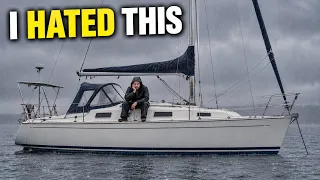
What I hated most about living on a sailboat
Tim Labute of Lady K Sailing analyzes the operational reality of living on a sailboat, explaining how shifting weather, anchorage holding, anchor alarms, and battery management govern daily cruising decisions.
⚓Can You Afford 💰 to Live on a Sailboat?⛵ #Sailboat #liveaboard #affordability #budget #maintenance
Tim Labute of Lady K Sailing analyzes the true costs of living on a sailboat, comparing recurring marine maintenance and unexpected repair risks against high overhead ashore.
💰 Buying a $10,000 Sailboat?⛵ Get Insurance Answers First! 1️⃣#boatbuying #advice #sailboat #insure
Tim Labute analyzes the realities of purchasing an inexpensive sailboat, explaining why securing liability insurance before making an offer is essential for older vessels.