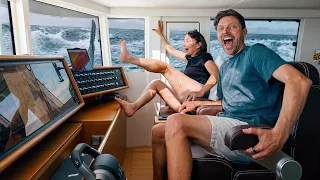
Winter Is Coming. Our Boat Isn't Ready.
With a severe El Niño winter approaching and only three days remaining before their scheduled boatyard haulout in Plymouth, England, Jason and Nikki Wynn faced an urgent sprint to decommission their aluminum explorer yacht, Indra. Having completed over 600 nautical miles during four months of cruising since splashing the vessel in the Netherlands—crossing Belgium and traversing the English Channel to reach England’s south coast—the crew aboard Gone with the Wynns reached the abrupt conclusion of their initial season. Severe marine growth on the hull’s bottom coating and persistent dinghy davit issues necessitated pulling the vessel out of the water for the winter.
Compounding the pressure was an unmovable travel schedule. Following haulout, the couple had to fly out of the country to reset their UK visas, undergo annual medical checkups, and spend the holidays with family during a two-month absence. Because winter weather along the English coast promised heavy rain and relentless gales, leaving the vessel unattended on the hard demanded thorough winterization. As Nikki noted before hauling the anchor, “We have got exactly three days to prepare our floating home to haul out of the water and be left on the hard.”
Riding Out Gales at the River Anchorage
Before making their run into Plymouth, the crew spent over a week riding out severe storms while anchored in the river. Confined within a crowded anchorage alongside other vessels, Jason shortened the anchor bridle by wrapping it multiple times around the deck hardware to limit swinging room. Severe gale-force gusts pulled the bridle so taut that the protective chafe guard slid out of position, abrading the line. Despite the harsh conditions, the heavy ground tackle held firm in deep river silt. Jason observed the holding power as the wind subsided, noting, “That is why we held so well in 40 plus knots of wind. Nice muddy bottom.”
Navigation in the river required careful calculation due to fierce tidal rips that made maneuvering unpredictable. Nikki highlighted the localized conditions during their passage planning: “When Jason said that the currents are really strong through here, they can get up to like seven knots during max flood, which is insane.” To avoid being swept by extreme tidal streams, the crew waited for slack water near low tide to heave anchor. Under clearing skies, they motored downstream past naval installations, passing active police patrol boats and berthed naval submarines lining the fortified stone seawalls.
Shore Logistics and Berthing in Plymouth
To complete the heavy cleaning and systems decommissioning required before haulout, Indra secured a berth at a central Plymouth marina. The dockage came at a premium of roughly 130 US dollars per night. Tying up to the pontoon provided access to shore power and pressurized fresh water. Anchoring upstream had prevented the crew from running the onboard watermaker, as heavy river silt would rapidly clog the primary intake filters. In addition, late-autumn cloud cover and frequent wind over 30 knots hampered onboard solar and wind generation, making shore utilities essential for catching up on multiple loads of laundry and deep-cleaning the boat.
Between chores, Jason and Nikki walked into central Plymouth to source necessary plumbing supplies. Their walking route took them past the ruins of a church preserved in a traffic roundabout after being bombed during World War II, before crossing the Mayflower Steps at the Barbican, where historic transatlantic expeditions departed. At a local marine chandlery, Jason purchased a length of non-reinforced hose to build a temporary watermaker pickling circuit, paying £10.80 (approximately 14 dollars).
Decommissioning Deck Equipment and Water Toys
Back on the marina pontoon, the focus shifted to stowing deck gear and recreational equipment to protect them from winter gales. Jason thoroughly washed down their three-person inflatable kayak before deflating and rolling the craft into a compact bundle resembling a burrito to fit into its dedicated storage bag. Stand-up paddleboards and deck accessories were similarly scrubbed with fresh water and staged to dry completely before long-term stowage.
While organizing the deck, the couple conversed with their pontoon neighbor, the proprietor of Kyowa, a local sushi restaurant in Plymouth. Preparing his own newly acquired vessel for its first full season on the water in 2027, the neighbor shared sparkling water and local camaraderie as both crews secured their vessels against impending winter storms.
Two-Stage Chemical Pickling of the Watermaker
Winterizing Indra required manually pickling the reverse osmosis watermaker to prevent biological fouling across the upcoming two months. Unlike their prior vessel’s automated system, this installation lacked an automated calendar-driven fresh water flush. Operating with guidance from the manufacturer, Jason plumbed the newly acquired chandlery hose to establish a closed-loop flushing circuit.
Before introducing preservation chemicals, Jason tested the temporary plumbing using onboard fresh water that had undergone carbon filtration, sediment filtering, and ultraviolet sterilization to protect delicate membrane surfaces. Jason explained his initial setup: “I got the last hose going on. Got some fresh water here so we can test to make sure everything looks okay before I make the pickling solution.” The procedure began with an initial flush to clean the membranes, followed by a second sterilizing flush using a concentrated chemical solution. Jason monitored the circuit closely, maintaining 15 PSI on the pressure gauge for over 15 minutes while verifying that closed-loop water temperatures remained at 25 degrees to avoid heat damage to the membranes.
Below deck, Nikki completed deep interior cleaning to deter pests and mildew while the yacht sat on the hard. To safeguard the plumbing infrastructure, Jason flushed every marine head four times with fresh water, leaving standing water in the blackwater holding tanks to prevent internal solids from drying and caking during cold storage. Jason also conducted an operational test of the diesel heater, confirming that the unit fired successfully while noting that comprehensive servicing would await a specialist technician dispatched from the Isle of Wight.
Navigating the Shallow Higgins Marine Channel
With marina checkout set for 1:00 PM, Indra dropped dock lines and moved out to a designated mooring buoy in the harbor. The boatyard, Higgins Marine, sits behind a shallow tidal approach channel that dries out completely at low water, necessitating a four-hour layover until the evening high tide at 8:00 PM.
At 4:30 PM, Sean, the yard and sling manager from Higgins Marine, arrived early by workboat to guide the yacht through the approach channel, delivering a care package of fresh coffee sent by their friend Merv. Motoring into the slipway beneath an evening sunset, Jason applied tape markings along the topsides to identify exact lifting strap locations ahead of the scheduled 9:00 a.m. haulout. During close-quarters maneuvering, a stern thruster alarm triggered an operational fault on one side. The crew determined that unpainted thruster tunnels had accumulated heavy marine growth after sitting for over one month without bottom scrubbing, highlighting the necessity of their upcoming haulout.
Winter Haulout Preparation Metrics
| Operational metric | Recorded value |
|---|---|
| Cruising distance logged | Over 600 nautical miles across 4 months |
| Anchorage gale winds | 40-plus knots on shortened bridle |
| Maximum river tidal stream | Up to 7 knots during max flood |
| Plymouth marina berth rate | Approximately 130 US dollars per night |
| Temporary hose chandlery cost | £10.80 (approximately 14 dollars) |
| Watermaker pickling pressure | 15 PSI closed loop for over 15 minutes |
| Watermaker temperature limit | Monitored at 25 degrees |
| Marine toilet clean water flushes | 4 times per head into black tank |
| Mooring buoy tide hold | 4 hours awaiting 8:00 PM high water |
| Scheduled haulout high water | 9:00 a.m. lifting time |
Frequently Asked Questions
After cruising 600 nautical miles from the Netherlands, the vessel suffered excessive marine growth on its bottom coating and required dinghy davit modifications, alongside scheduled maintenance before the crew reset UK visas.
Berthing at the Plymouth marina cost approximately 130 US dollars per night.
The watermaker on Indra lacked a calendar-based auto-flush system, requiring a manual two-stage chemical flush to preserve the reverse osmosis membrane during their two-month absence.
The closed-loop chemical flush was run at 15 PSI for over 15 minutes, using filtered and UV-treated water kept below 25 degrees to protect the membrane.
The narrow approach channel to Higgins Marine completely dries out at low tide, forcing the crew to wait four hours on a mooring buoy for the 8:00 evening high tide.
The stern thruster tunnel lacked antifoul paint and accumulated heavy marine growth after sitting for over one month without hull cleaning, preventing the thruster from spinning in one direction.
Book a trip where this was filmed — near London
Support Gone with the Wynns
At WeBoating.com, we profoundly acknowledge the unwavering dedication that Gone with the Wynns invests in crafting each and every video or voyage. Their passion for delivering exceptional ocean content shines through every frame, and it's a labor of love that deserves your attention.
We invite you to watch their captivating videos here and actively engage with their content, including their social media links above. Liking, commenting, and sharing their work goes a long way in fueling their creative fire.
We're also inviting you to explore the gear, sponsorships, and boat partnerships highlighted in the "Winter Is Coming. Our Boat Isn't Ready." video description, or directly on YouTube. By engaging with these offerings or purchasing services and items, you directly support Gone with the Wynns, their collaborators, and the brands they're associated with.
To ensure you never miss an offshore update, consider visiting their official YouTube Channel to subscribe, like, and join their community directly.
If you have any feedback, corrections, or additional information about Gone with the Wynns or their videos, please use the comment form below to share your thoughts with us.
Thank you for being a part of our community and supporting the creators we cherish. Your time and support truly matter!
We only have 3 days to get our boat out of the water. Beam’s Cyber Sale Is Here! Shop Their Biggest Sale of the Year & Save Up to 50% Off Sitewide for a Limited Time! Use code WYNNS: https://shopbeam.com/WYNNS
https://www.gonewiththewynns.com
☝Behind the Scenes, Gear Guides & More
🎬 Produced, Filmed and Edited by: Jason & Nikki Wynn
⚓️ Our Explorer Yacht ⚓️
https://www.gonewiththewynns.com/explorer-yacht-undra/
📷 Photo & Video Gear 📷
https://www.gonewiththewynns.com/photo-video-gear
📱Socials
INSTAGRAM: https://instagram.com/the_wynns/
FACEBOOK: https://www.facebook.com/GoneWithTheWynns
📧JOIN THE CREW🍦
http://bit.ly/gwtw-social
🎶 MUSIC for vids.
2 Months Free: https://bit.ly/artlist-GWTW
🎨 Creative Assets for Vids (SFX, Templates & Presets):
- https://bit.ly/motion-array-GWTW
🎽GET YOUR SWAG ON: https://gonewiththewynns.teemill.com/
----------------------------------------------------------------------------------------------
Preparing a boat to sit unattended for a couple of months involves a little more than turning off the breakers and locking the door. Especially with the weather that's predicted for this winter. There is a watermaker to pickle, gear to stow, endless cleaning, and a surprising number of things that can go wrong if we forget something.
We're still not feeling 100%, but the clock isn't slowing down for us. So, ready or not, here we go!
----------------
WE’RE JASON AND NIKKI WYNN. A couple of explorers, modern-day documentarians, and cultivators of curiosity.
We’ve been chasing our curiosity around the world on wheels and keels since 2011. Why? Because curiosity is the key to unlocking life. It pushes us outside our comfort zone, softens our assumptions, and helps us embrace the great unknown. The more we let our curiosity lead the way, the more we discover about ourselves and the world around us.
Things We're Most Curious About...
GETTING OFF-GRID
Our home is also our transportation and we spend weeks away from civilization and sometimes land. So self-reliance and sustainable living are a must. We've learned heaps about renewable energy, managing waste, creating safe drinking water and foraging for food. We carefully manage our resources and we’re always looking for new and better ways to do so.
TALKING TO STRANGERS
People are busy (even on remote islands) and travelers are a dime a dozen. It takes time to talk to strangers, and even more time to have a real connection. Going the extra mile to get to know someone is a commitment.
Which is why these are our most treasured experiences. Setting off into the world with curiosity as our guide and nature as our compass. We talk to strangers and accept hospitality without fear or reservations. Both giving and receiving.
ALTERNATIVE LIVING
These are people who are doing things differently. Forgoing the mainstream, seeking freedom and living on the margins. Creative, unique and inspiring people who challenge our ideas of home and community.
Our journey is ever-evolving but the mission remains the same: #CultivateCuriosity
----------------------------------------------------------------------------------------------
#yacht #BoatLife #Travel #LifeStyle #Adventure #Sailing #Curiosity
© Gone With the Wynns 2026

Gone with the Wynns
Jason and Nikki Wynn: The ultimate cultivators of curiosity navigating their aluminum explorer yacht, UNDRA, through the glaciers of Antarctica in 2026.
Channel Information:
Social Media Links:
Winter Is Coming. Our Boat Isn't Ready. Location
- Plymouth, England (50.3754565,-4.1426565)
- Higgins Marine, Plymouth (50.3605,-4.152)
Latest Episodes from Gone with the Wynns
Explore the most recent voyages. Subscribe to the channel to never miss an update!
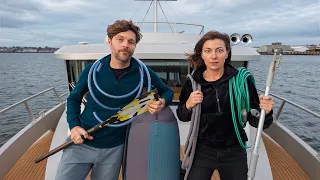
Winter Is Coming. Our Boat Isn’t Ready.
Facing El Niño storms in Plymouth, Jason and Nikki Wynn begin winter boat haul out preparation aboard Indra before leaving the hard for two months.
We Had To Call An Ambulance From Our Boat
When acute pneumonia struck Nikki Wynn aboard Undra in southwest England, Jason organized an urgent kayak evacuation to meet emergency responders on shore.
Is England Beating France at Its Own Game?
Moored in Salcombe, Jason and Nikki Wynn trade their aluminum hull for boots to investigate England's booming wine industry. They discover how warming climates and chalk soils allow English sparkling wine to rival French Champagne in blind tastings.
Hiding From The Wind, Up a River
Jason and Nikki Wynn navigate cruising catamaran Curiosity II into a sheltered tidal river hurricane hole in Fiji, deploying dual storm ground tackle to withstand gale-force winds.
Fix One Thing, Break Another
A technical investigation into marine systems maintenance, reverse-osmosis watermaker servicing, and hybrid electrical troubleshooting aboard the HH44 catamaran Curiosity II with Jason and Nikki Wynn.