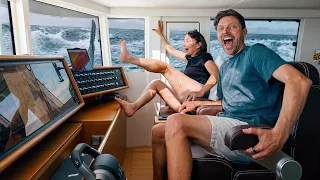
We Had To Call An Ambulance From Our Boat
Anchored deep in a river off the coast of southwest England aboard their 50-foot aluminum explorer yacht Undra, Jason and Nikki Wynn of Gone with the Wynns faced a sudden late-night medical emergency when an acute respiratory infection escalated rapidly. Having recently moved back into sheltered waters after cruising Salcombe during the quiet off-season, the couple found themselves managing severe lung congestion just as the region prepared for its first named storm of the autumn season.
What initially seemed like lingering exhaustion after hosting family aboard took an alarming turn on a Sunday evening. As winds began building toward 40 to 50 knots outside, the immediate priority shifted entirely away from heavy ground tackle and tidal currents toward organizing an urgent evacuation to hospital care from a remote river mooring.
Respiratory Distress and the Midnight 111 Call
The illness arrived shortly after Jason’s sister and brother-in-law visited from London, having traveled from Texas where their children had been sick. While the family spent 5 days docked at a marina to rest, Nikki began showing symptoms shortly after returning to anchor. At approximately 9:30 on Sunday night, Nikki suffered an intense coughing fit and brought up foamy pink mucus. Her chest tightened significantly, accompanied by persistent discomfort and an audible gurgling within her lungs.
Listening closely to her chest, Jason felt the physical vibration of fluid in her airways and heard bubbling sounds clearly. “Holy crap. Is there a hole in her lung?” Jason wondered as her breathing became increasingly labored. Recognizing that standard onboard remedies and rest were insufficient for sudden fluid accumulation, Jason phoned 111, the UK non-emergency medical consultation line, at around 10:30 at night.
Upon hearing the combination of pink foam, shortness of breath, and audible lung gurgling, the telephone triage operator immediately upgraded the call, announcing that emergency services were dispatching both an ambulance and maritime rescue assets. Concerned about initiating a complex waterborne transfer, Jason intervened: “Don’t send the Coast Guard to our boat. That’s a whole thing.” He assured dispatch that they could launch their small craft and meet the paramedics directly on the nearest shoreline.
Kayak Beach Transit and Shoreside Emergency Response
Rather than deploying their primary dinghy, the crew opted for their rooftop kayak. The explorer yacht’s davit system had not yet received planned upgrades, meaning lowering the motorized tender was a slow process. In contrast, the lightweight kayak could be dropped into the water in roughly 1 minute. In addition, the area experienced a 4-meter tidal range. Arriving or returning across low water would have meant dragging a heavy tender through 200 to 300 yards of thick foreshore mud.
Paddling ashore at high tide, they landed on the beach and began a steep, third-of-a-mile hike up a woodland path toward a dead-end roadway. The sustained physical exertion forced deeper breathing, inducing coughing that helped dislodge some trapped lung fluids. When they reached the street, the couple rested while waiting for responders in the chilly night air.
Ten minutes later, the first Coast Guard vehicle arrived on scene. The officer immediately ushered Nikki out of the cold: “Get in the van. Get warm.” Within 20 minutes, 6 Coast Guard support vehicles, including a four-wheel-drive unit equipped for beach extraction, assembled at the road head. After roughly 30 minutes, an ambulance arrived. Paramedics conducted an electrocardiogram (EKG) to rule out cardiac failure—since pink froth can indicate heart complications—and examined her lung sounds before advising direct transit to the emergency room for chest radiography and diagnostic blood tests.
Hospital Diagnostics and National Health Service Care
Transported to the regional hospital, Nikki was admitted during one of the department’s busiest night shifts. Initial clinical intake, diagnostic blood draws, a secondary EKG, and chest X-rays were completed within roughly 2 hours. The couple then waited approximately 4 hours in the waiting room while lab results and radiology imaging were compiled for physician review.
During the wait, hospital staff provided attentive care. When Jason inquired about purchasing pain relief at the reception desk, the clerk replied, “This is NHS. We don’t charge for anything. If you need an ibuprofen, we will give you an ibuprofen.” Hospital volunteers also circulated through the waiting room with a courtesy tea cart, offering hot tea and biscuits to family members.
The attending emergency doctor reviewed the films and blood markers, confirming an acute case of pneumonia. After evaluating her breathing and childhood asthma history, the physician dispensed take-home antibiotic courses directly, advising, “You need to go home and you need to rest. You’ll be more comfortable at home than you will be here.” The entire emergency course—including ambulance transport, radiologic imaging, laboratory analysis, physician care, and prescribed medication—incurred zero out-of-pocket costs under the National Health Service. By 7:00 in the morning, the couple booked an Uber back to the shoreline and paddled their kayak across calm high water back out to Undra.
Riding Out 50-Knot Storm Winds and Mechanical Diagnostics
Returning to their river anchorage, weather conditions deteriorated rapidly as England’s first named storm delivered winds blowing 40 to 50 knots, with regional coastal gusts peaking at 75 mph. As Jason observed while monitoring their ground tackle, “I feel like we’re pretty protected, but the storm is the least of our worries.” While the oversized anchor held firmly, the heavy gale overwhelmed their onboard wind generators. In sustained winds above 20 to 40 knots, the turbines engaged their internal safety braking mechanisms for 10-minute intervals, producing negligible charging current while heavy cloud cover eliminated solar generation.
Compounding their power challenges, the yacht’s auxiliary Cummins generator refused to start shortly after logging 100 operating hours. Diagnostic error codes indicated a battery fault, yet voltage checks confirmed the starter battery was fully charged. Troubleshooting the isolated ground system on the aluminum hull revealed a faulty electrical relay. With guidance from manufacturer technicians, Jason temporarily bypassed the relay to re-engage the generator.
During the outage, running the vessel’s propulsion engine with its Mastervolt Alpha high-output alternator consumed roughly 2 liters per hour while supplying approximately 100 amps to the house battery bank. Once the generator was restored, it achieved identical fuel consumption of 2 liters per hour while delivering 175 to 180 amps, demonstrating superior electrical efficiency while the crew remained at anchor awaiting marina clearance for end-of-season haulout.
| Vessel System or Environmental Factor | Operating Data & Field Readings | Cruising Impact |
|---|---|---|
| Auxiliary Generator Charging | Burns 2 L/hr, delivers 175–180 amps | Primary charging method restored after bypassing faulty ground relay at 100 hours |
| Main Engine Alternator (Mastervolt Alpha) | Burns 2 L/hr, delivers 100 amps | Backup charging run about 2 hours daily while generator was offline |
| Wind Generation During Storm | Sustained winds 20–50 knots (gusts 75 mph) | Turbines entered automatic safety brake mode, yielding zero charging current |
| Tidal Range & Foreshore Mud | 4-meter tidal range, 200–300 yards exposed mud | Dictated kayak shore transit to avoid stranding heavy motorized tender |
Frequently Asked Questions
The tender davit system was slow to deploy, whereas the lightweight kayak could be launched from the cabin top in about 1 minute. Additionally, a 4-meter tidal range meant arriving or returning at low water would require dragging a heavy motorized tender through 200 to 300 yards of thick mud.
Jason dialed 111, the UK non-emergency telephone health service, at around 10:30 at night. Upon hearing that Nikki was coughing up pink foam with breathing difficulty and lung bubbling, dispatch immediately escalated the incident to an emergency ambulance and Coast Guard response.
Nikki experienced sudden chest tightness, labored breathing, an audible gurgling and bubbling sound within her lungs, and coughed up foamy pink mucus, which can be an indicator of serious cardiac or pulmonary complications.
Following blood tests, two EKGs, and chest X-rays, the attending emergency doctor diagnosed acute pneumonia. The physician dispensed prescription antibiotics directly to her to take back to the boat for rest and recovery.
No. Emergency hospital treatment, ambulance care, X-rays, laboratory tests, and emergency medications provided at the hospital were covered without charge under the UK National Health Service (NHS). Their only expense was an Uber ride back to the beach.
In heavy winds above 20 to 40 knots, the onboard wind generators automatically activate an internal braking mechanism for approximately 10 minutes to protect the units from damage, resulting in zero electrical current production during severe gale conditions.
Book a trip where this was filmed — near London
Support Gone with the Wynns
At WeBoating.com, we profoundly acknowledge the unwavering dedication that Gone with the Wynns invests in crafting each and every video or voyage. Their passion for delivering exceptional ocean content shines through every frame, and it's a labor of love that deserves your attention.
We invite you to watch their captivating videos here and actively engage with their content, including their social media links above. Liking, commenting, and sharing their work goes a long way in fueling their creative fire.
We're also inviting you to explore the gear, sponsorships, and boat partnerships highlighted in the "We Had To Call An Ambulance From Our Boat" video description, or directly on YouTube. By engaging with these offerings or purchasing services and items, you directly support Gone with the Wynns, their collaborators, and the brands they're associated with.
To ensure you never miss an offshore update, consider visiting their official YouTube Channel to subscribe, like, and join their community directly.
If you have any feedback, corrections, or additional information about Gone with the Wynns or their videos, please use the comment form below to share your thoughts with us.
Thank you for being a part of our community and supporting the creators we cherish. Your time and support truly matter!
Life decided to throw us a curveball. Go to https://surfshark.com/wynns or use code WYNNS at checkout to get 4 extra months of Surfshark VPN!
Our International Health Insurance, experiences, medical kit and more:
https://www.gonewiththewynns.com/international-healthcare-as-a-nomad/
https://www.gonewiththewynns.com
☝Behind the Scenes, Gear Guides & More
🎬 Produced, Filmed and Edited by: Jason & Nikki Wynn
⚓️ Our Explorer Yacht ⚓️
https://www.gonewiththewynns.com/explorer-yacht-undra/
📷 Photo & Video Gear 📷
https://www.gonewiththewynns.com/photo-video-gear
📱Socials
INSTAGRAM: https://instagram.com/the_wynns/
FACEBOOK: https://www.facebook.com/GoneWithTheWynns
📧JOIN THE CREW🍦
http://bit.ly/gwtw-social
🎶 MUSIC for vids.
2 Months Free: https://bit.ly/artlist-GWTW
🎨 Creative Assets for Vids (SFX, Templates & Presets):
- https://bit.ly/motion-array-GWTW
🎽GET YOUR SWAG ON: https://gonewiththewynns.teemill.com/
----------------------------------------------------------------------------------------------
WE’RE JASON AND NIKKI WYNN. A couple of explorers, modern-day documentarians, and cultivators of curiosity.
We’ve been chasing our curiosity around the world on wheels and keels since 2011. Why? Because curiosity is the key to unlocking life. It pushes us outside our comfort zone, softens our assumptions, and helps us embrace the great unknown. The more we let our curiosity lead the way, the more we discover about ourselves and the world around us.
Things We're Most Curious About...
GETTING OFF-GRID
Our home is also our transportation and we spend weeks away from civilization and sometimes land. So self-reliance and sustainable living are a must. We've learned heaps about renewable energy, managing waste, creating safe drinking water and foraging for food. We carefully manage our resources and we’re always looking for new and better ways to do so.
TALKING TO STRANGERS
People are busy (even on remote islands) and travelers are a dime a dozen. It takes time to talk to strangers, and even more time to have a real connection. Going the extra mile to get to know someone is a commitment.
Which is why these are our most treasured experiences. Setting off into the world with curiosity as our guide and nature as our compass. We talk to strangers and accept hospitality without fear or reservations. Both giving and receiving.
ALTERNATIVE LIVING
These are people who are doing things differently. Forgoing the mainstream, seeking freedom and living on the margins. Creative, unique and inspiring people who challenge our ideas of home and community.
Our journey is ever-evolving but the mission remains the same: #CultivateCuriosity
----------------------------------------------------------------------------------------------
#Travel #BoatLife #LifeStyle #Adventure #Sailing #Curiosity
© Gone With the Wynns 2026

Gone with the Wynns
Jason and Nikki Wynn: The ultimate cultivators of curiosity navigating their aluminum explorer yacht, UNDRA, through the glaciers of Antarctica in 2026.
Channel Information:
Social Media Links:
We Had To Call An Ambulance From Our Boat Location
- Sand Acre Bay Anchorage (50.3955581,-4.2258257)
- Salcombe Harbor (50.2372,-3.7686)
Latest Episodes from Gone with the Wynns
Explore the most recent voyages. Subscribe to the channel to never miss an update!
Winter Is Coming. Our Boat Isn’t Ready.
Facing El Niño storms in Plymouth, Jason and Nikki Wynn begin winter boat haul out preparation aboard Indra before leaving the hard for two months.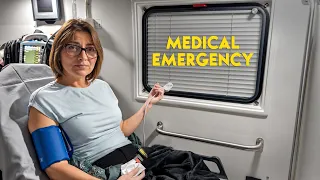
We Had To Call An Ambulance From Our Boat
When acute pneumonia struck Nikki Wynn aboard Undra in southwest England, Jason organized an urgent kayak evacuation to meet emergency responders on shore.
Is England Beating France at Its Own Game?
Moored in Salcombe, Jason and Nikki Wynn trade their aluminum hull for boots to investigate England's booming wine industry. They discover how warming climates and chalk soils allow English sparkling wine to rival French Champagne in blind tastings.
Hiding From The Wind, Up a River
Jason and Nikki Wynn navigate cruising catamaran Curiosity II into a sheltered tidal river hurricane hole in Fiji, deploying dual storm ground tackle to withstand gale-force winds.
Fix One Thing, Break Another
A technical investigation into marine systems maintenance, reverse-osmosis watermaker servicing, and hybrid electrical troubleshooting aboard the HH44 catamaran Curiosity II with Jason and Nikki Wynn.