World on Water Sailing News February 15 19 Sir Russell Coutts, Preview SailGP Sydney, more
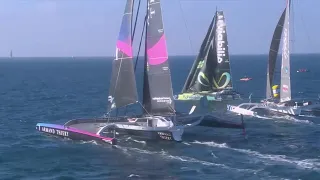
The high-performance world of foiling catamarans has arrived in Sydney, bringing extreme speeds and international tension to the harbor. As detailed by World On Water, the event launch at the Royal Sydney Yacht Squadron showcased a spectacular sight with teams from Australia, China, and Japan lining up in 17 knots of wind. The intensity of the competition is matched only by the speed of the vessels, which are capable of reaching 50 knots in the confined waters of Sydney Harbour. This high-speed environment transforms the urban landscape into a racing circuit where precision is paramount.
Technical Evolution and Wind Ranges
The current operational window for the fleet is narrow, with racing tolerances typically falling between 6 knots and 20 knots. Regarding the current capabilities of the boats, Russell Coutts notes, “Once we right now I think they could race anywhere between six and probably right now 20 knots”. While the current fleet is impressive, the future of the sport lies in modularity. New wings are currently under construction in New Zealand to extend these wind ranges. This development includes a 28 meter wing and two 18 meter wings, creating a system that will allow the boats to operate in lower minimum winds and higher maximum limits in future seasons. These modular components are designed to ensure the boats remain competitive regardless of the weather patterns encountered in different global venues.
Beyond the technical specs, the event has established a sustainable business model through high-profile commercial partnerships with brands such as Rolex and Land Rover. This financial backing supports a platform that Russell Coutts views as a distinct entity from other sailing events. Explaining the focus of the league, Russell Coutts states, “We’re not focused on any other event we’re focused on sound TV and this is a annual nation versus nation competition”. This nation-versus-nation format increases the stakes for each team, turning the regatta into a matter of national pride.
Crew Adaptation and Flight Control
The transition to these high-speed machines is not without struggle. Sailors have reported that Sydney Harbour feels remarkably small when traveling at such velocities. One unnamed sailor explains, “The harbor is really small and it feels like we’re sailing in a very confined space”. This feeling of confinement is compounded by the struggle to overwrite muscle memory. Crew members who previously sailed in Bermuda find that while the boats look similar, the hydraulic systems and on-board roles have changed, requiring a complete retraining of their reflexes. The mental load of managing these systems while traveling at nearly 50 knots creates a high-pressure environment for the crew.
For the Chinese team, the challenge is further intensified by a lack of preparation time. Phil Robertson, representing the team, highlights the difficulty of the lead-up, stating, “It sounds tom has been very short had a mammoth if it means six boats in the water”. The team has spent a total of only 12 hours in the boat before facing the competition. This limited window for training means the crew must rely on their instincts and the readiness of the equipment provided. A primary focus for the crew is flight control and maintaining ride height. While the goal is to stay on the foils, the team admits they will not achieve 100 percent flight time, as conditions and the nature of the foils make total flight nearly impossible.
International Competition and Equipment Failures
The sailing calendar also extends to the European Championship, where the Niners and Nacra 17s are competing. In these events, the environmental conditions are often punishing; choppy and wavy water can make it impossible for sailors to visually identify puffs of wind, forcing them to rely on tactical positioning and boat speed. This lack of visual cues requires a deeper understanding of the water’s surface and a reliance on the boat’s telemetry.
Equipment reliability remains a critical factor in these high-stakes races. During the second race of the European Championship, Riley and Louisa suffered a devastating breakdown when they broke a tack line on their spinnaker. This failure underscores the volatility of gear that may only have a lifespan of 6 to 8 months. Such a breakdown downwind can instantly end a team’s chances of a podium finish. The pairing of the 21 years old Riley with the more experienced Louisa, an Olympic veteran, is a strategic move by the US coach to balance youthful energy with pressure management. Discussing the need for accountability and analysis, the US Coach notes, “I’m looking for for stats and why excuses we lose right so you start writing them down”. This analytical approach ensures that every mistake is documented to prevent future equipment failures.
Frequently Asked Questions
They can currently race in winds between 6 and 20 knots.
The 28 meter and 18 meter modular wings will extend the racing range by lowering the lower limit and increasing the upper limit.
They are dealing with different hydraulic systems and roles on board, requiring them to overwrite muscle memory from previous boats used in places like Bermuda.
Book a trip where this was filmed — near Sydney




Support World On Water
At WeBoating.com, we profoundly acknowledge the unwavering dedication that World On Water invests in crafting each and every video or voyage. Their passion for delivering exceptional ocean content shines through every frame, and it's a labor of love that deserves your attention.
We invite you to watch their captivating videos here and actively engage with their content, including their social media links above. Liking, commenting, and sharing their work goes a long way in fueling their creative fire.
We're also inviting you to explore the gear, sponsorships, and boat partnerships highlighted in the "World on Water Sailing News February 15 19 Sir Russell Coutts, Preview SailGP Sydney, more" video description, or directly on YouTube. By engaging with these offerings or purchasing services and items, you directly support World On Water, their collaborators, and the brands they're associated with.
To ensure you never miss an offshore update, consider visiting their official YouTube Channel to subscribe, like, and join their community directly.
If you have any feedback, corrections, or additional information about World On Water or their videos, please use the comment form below to share your thoughts with us.
Thank you for being a part of our community and supporting the creators we cherish. Your time and support truly matter!

World On Water
World On Water (WoW TV / Boats on TV) is the premier weekly sailing news show hosted by Geoff Waller from Sydney Harbour. Explore in-depth coverage of America's Cup, Rolex Sydney Hobart, Vendée Globe, and grand prix regattas.
Channel Information:
Social Media Links:
World on Water Sailing News February 15 19 Sir Russell Coutts, Preview SailGP Sydney, more Location
- Sydney, New South Wales, Australia (-33.8688,151.2095)
Latest Episodes from World On Water
Explore the most recent voyages. Subscribe to the channel to never miss an update!
Report #2 2027 America’s Cup Naples. The whole picture. Prepared by the World on Water
World On Water analyzes the 2027 America's Cup in Naples, examining AC75 hydrofoil dynamics, flight control systems, and challenger match-racing tactics.
Francesca Clapcich of 11th Hour Racing awarded Winner of 2026 IMOCA Globe Series World on Water
Francesca Clapcich wins the 2026 IMOCA Globe Series championship, becoming the first female sailor to claim the title after an eighth place finish in the Route du Rhum.
The IMOCA Podium 2026 Route du Rhum Guadeloupe World on Water
Corentin Horeau captures IMOCA victory in the 2026 Route du Rhum aboard MACSF, with Boris Herrmann and Élodie Bonafous completing the podium at Pointe-à-Pitre.
(English) SVR Lazartigue Spectularly Wins Route du Rhum in Record Style. Tom Laperche Champion!
Tom Laperche guides the Ultim multihull SVR Lazartigue across the Route du Rhum finish line off Pointe-à-Pitre, Guadeloupe, establishing a new transatlantic race record of six days, thirteen hours, twenty-seven minutes, and forty seconds.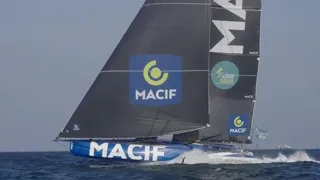
Route du Rhum Fleet Still CRASHING Through the Atlantic Headed West. EXCLUSIVE from World on Water.
The 2026 Route du Rhum turns into a battle of survival across the Atlantic as severe gale-force squalls trigger dismastings, cockpit injuries, and retirements across the IMOCA and Class 40 fleets while leaders push toward Guadeloupe.