
America's Cup Oct 11 Weekly Report on the Boats, the Kit and the Crews, From AC Media/World on Water
Skimming across the sea at velocities exceeding 50 knots, the 6.5-ton carbon-composite America’s Cup racing yacht operates in a realm where human reflexes must be augmented by deterministic computation. Balanced on a single submerged hydrofoil wing while generating titanic aerodynamic loads through a twin-skinned mainsail, an AC75 foiling monohull requires thousands of continuous micro-adjustments every second. Between the tactical commands of the flight controllers and the massive mechanical forces articulating foils and sails sits the digital nervous system of modern grand prix sailing: the programmable logic controller. Documented in technical reporting from World On Water, this integration of industrial automation and marine mechatronics represents the most decisive technological battleground in elite sailing.
Inside the carbon cockpit trenches, sailors do not pull traditional sheets or halyards. Instead, their fingertips operate miniature paddles, buttons, and rotary switches, requesting minute adjustments to foil cant, rudder rake, and sail twist. Executing those commands at 90 kilometers per hour requires hardware that operates without hesitation in a hostile marine environment of salt spray, extreme vibration, and intense structural shock.
The Digital Nervous System: Industrial Automation at 50 Knots
As highlighted in technical coverage from World On Water, the core architecture of modern AC75 foiling monohulls competing for the America’s Cup depends entirely on a robust PLC mechatronic control system that processes hundreds of real-time sensor streams and tactical inputs. Rather than relying on bespoke consumer microcontrollers vulnerable to shock loads, America’s Cup syndicates deploy battle-tested industrial automation platforms. Programmable Logic Controllers—originally engineered to run high-speed automotive assembly lines and heavy robotic manufacturing plants—provide the determinism, microsecond cycle times, and fault tolerance demanded by high-stakes hydrofoil racing.
At 50 knots, flight stability is fundamentally dynamic and naturally unstable. The PLC acts as the primary computational hub, ingesting continuous telemetry from load cells, fiber-optic strain gauges embedded in carbon foils, ultrasonic ride-height sensors, and inertial measurement units (IMUs). British America’s Cup engineers from INEOS Britannia described this setup as an intricate web of wiring, processors, and electronics translating human intention into precise mechanical movement. If an unintended actuator deflection occurred at 50 knots, the resulting hydrodynamic imbalance could rip an appendage from its bearings or trigger a violent capsize. Deterministic execution and ultra-low latency are absolute prerequisites for flight control.
Mechatronics Under Extreme Pressure: Bridging Cockpit Inputs and 600-Bar Hydraulics
Investigations broadcast by World On Water demonstrate how AC75 foiling monohulls engineered for the America’s Cup integrate an industrial PLC mechatronic control system directly with miniature high-pressure hydraulic circuits operating at pressures reaching up to 600 bar. Electrical actuators alone cannot deliver the power-to-weight ratio needed to twist carbon mast spars, articulate semi-rigid mainsails, and cant heavy foil arms. Teams therefore deploy mechatronic hybrid systems where industrial electronics direct immense fluid power through titanium manifold blocks and micro-bore hydraulic lines.
Italian syndicate Luna Rossa Prada Pirelli has long characterized the AC75 as a mechatronic ecosystem where computational logic mediates between human pilots and high-pressure fluid power. Operating at 600 bar (nearly 8,700 psi) inside an ultra-lightweight carbon hull introduces severe environmental challenges, including saltwater ingress, structural racking, and intense thermal cycling. America’s Cup engineers house PLC modules within hermetically sealed, nitrogen-purged carbon casings using aerospace-grade wiring. By tuning internal closed-loop proportional-integral-derivative (PID) algorithms, software engineers eliminate hydraulic latency and valve hysteresis, delivering seamless, progressive response to cockpit inputs.
FCS Dynamics and Hydrodynamic Equilibrium: Taming Moving Carbon Mass
Documentary archives from World On Water illustrate that the one-design Foil Cant System (FCS) aboard AC75 foiling monohulls in the America’s Cup relies on a dedicated PLC mechatronic control system to manipulate massive carbon foil arms through dynamic tacks and gybes. Originally developed by Defender Emirates Team New Zealand (ETNZ) in collaboration with Cariboni and industrial automation specialist Beckhoff, the standardized FCS mechanism governs the raising and lowering of 4-meter, 1,200-kilogram foil cant arms that generate both righting moment and vertical lift.
To control this moving mass smoothly while managing hydrodynamic oscillations, ETNZ integrated a Beckhoff industrial PLC alongside electric motor controllers, hydraulic pumps, nitrogen accumulators, and dual hydraulic cylinders. Rather than commanding binary movements, the Beckhoff PLC calculates precise deceleration profiles and dampens harmonic shudder as foil arms enter the water at 40 knots. This closed-loop control engineering prevents structural shock loads from fracturing the hull, ensuring consistent, repeatable foil transitions during high-G tactical maneuvers.
The Four Electronic Architectures: Managing Data, Flight, and Rig Loads
Detailed technical retrospectives presented by World On Water explain that elite AC75 foiling monohulls competing across the America’s Cup partition their electronic network into distinct layers governed by a central PLC mechatronic control system. According to structural insights published by Luna Rossa Prada Pirelli, an AC75’s electronic nervous system is split into four primary domains: the Foil Cant System (FCS), onboard instrumentation and logging, crew heads-up information interfaces, and the primary electronic circuits controlling hydraulic actuators.
The primary control domain operates proportional hydraulic valves articulating the rudder elevator and foil flaps, allowing flight controllers to maintain ride height within millimeter tolerances. Concurrently, the instrumentation domain streams gigabytes of high-frequency strain, load, and aerodynamic data to solid-state recorders and chase-boat telemetry pods. In the cockpit, low-latency display networks feed critical data—including boat speed, apparent wind angle, ride height, and hydraulic reserves—directly onto heads-up displays, providing flight crews with essential situational awareness inside enclosed cockpits.
The AC38 Regulatory Revolution: Eliminating Cyclors for Stored Battery Power
As documented in engineering updates from World On Water, the technical evolution shaping the Louis Vuitton 38th America’s Cup transforms AC75 foiling monohulls by replacing human cyclors with standardized lithium-ion battery banks managed through a unified PLC mechatronic control system. During the 36th and 37th America’s Cup cycles in Auckland and Barcelona, teams were prohibited from storing electrical energy to power active flight controls, relying instead on four onboard cyclors pedaling stationary bicycle stations to generate continuous hydraulic pressure.
The Class Rules for the 38th America’s Cup (2027) mark a profound regulatory turning point. Human power generation is entirely eliminated from the AC75 class in favor of a standardized one-design lithium-ion battery system. This high-density energy storage package powers electro-hydraulic pumps and the central PLC, supplying unlimited energy for sail trim, mast rotation, and foil adjustments. Removing cyclors eliminates four crew cockpits, reducing aerodynamic drag and allowing cleaner deck fairings, while liberating trimmers to make simultaneous, high-frequency sail adjustments without exhausting hydraulic accumulator pressure.
The Invisible Software War: Why Algorithms Trump Traditional Naval Architecture
Analysis published by World On Water confirms that ongoing development for AC75 foiling monohulls in the America’s Cup has transitioned from physical hull shaping to proprietary software running inside the team’s PLC mechatronic control system. As Emirates Team New Zealand Chief Designer Dan Bernasconi observed when the AC38 rules were announced, extensive analysis of the AC37 yachts demonstrated that performance differences between hull shapes have become relatively small. With modern computational fluid dynamics leading to geometric convergence, the decisive performance gains are now discovered in hydrofoil wings, mechatronics, and electronic control algorithms.
This shift has altered the nature of America’s Cup design espionage. Rival reconnaissance ribs can photograph hull lines, cockpit layouts, and sail cuts from chase boats, but they cannot photograph compiled software algorithms executing inside a sealed PLC. Control theory specialists and software engineers now sit at the heart of design syndicates, optimizing control loops that anticipate wave impact, filter turbulent aerodynamic gusts, and minimize actuation latency. In the 38th America’s Cup, ultimate boat speed is no longer just about generating mechanical power—it is defined by the computational intelligence that commands it.
| Technical Specification & Architecture | 37th America’s Cup (AC37 Barcelona) | 38th America’s Cup (AC38 2027) |
|---|---|---|
| Primary Power Generation | Human cyclors (4 cycling athletes generating hydraulic pressure) | Standardized One-Design Lithium-Ion Battery Storage System |
| Hydraulic System Working Pressure | Up to 600 bar via human-driven pumps and accumulators | Standardized 600 bar driven by continuous electro-hydraulic pumps |
| Core Flight Controller Hardware | Industrial PLC (Beckhoff industrial computer architecture) | Advanced industrial PLC architecture with real-time fieldbus |
| Foil Cant System (FCS) | Standardized ETNZ / Cariboni 4-meter carbon cant arms | Refined one-design foil cant arms with standardized electro-hydraulics |
| Mainsail Aerodynamic Control | Twin-skinned semi-rigid mainsail with manual/hydraulic active twist | Optimized double-skin wingsail with high-frequency electronic trim |
| Crew Configuration & Roles | 8 crew members (4 helms/flight controllers + 4 cycling grinders) | Reduced crew roster (dedicated helmsmen, trimmers, and flight pilots) |
| Primary Engineering Battlefield | Aerodynamic deck fairings, cockpit pods, and human wattage output | Software latency, control algorithms, and mechatronic hydrodynamics |
Frequently Asked Questions
Detailed technical reporting from World On Water regarding the design evolution of AC75 foiling monohulls clarifies how America’s Cup syndicates optimize their proprietary PLC mechatronic control systems across every phase of grand prix racing.
The PLC functions as the central digital nervous system of an AC75 foiling monohull. It receives electrical inputs from cockpit buttons, paddles, and rotary dials, evaluates them against programmed safety parameters, and transmits microsecond actuation commands to hydraulic valves governing sail trim, mast rotation, and hydrofoil flight surfaces.
At speeds exceeding 50 knots, the aerodynamic and hydrodynamic loads acting upon an AC75’s foils and twin-skinned mainsail are immense. Hydraulic systems operating at pressures up to 600 bar deliver the extreme power density and instantaneous force required to move heavy carbon components without the excessive weight of heavy electric motors.
The Protocol and Class Rules for AC38 replace human cyclors with a standardized one-design lithium-ion battery system. This eliminates biological wattage constraints, enhances aerodynamic laminar deck flow by removing cyclor pods, and shifts the technical focus toward mechatronic software and energy efficiency.
Emirates Team New Zealand engineered the one-design Foil Cant System using Beckhoff industrial PLCs combined with motor controllers, hydraulic pumps, and nitrogen accumulators. The industrial controller calculates smooth motion ramps and dampens oscillations to safely move 1,200 kg carbon foil arms during 50-knot maneuvers.
As detailed by Luna Rossa Prada Pirelli, the four electronic domains comprise the one-design Foil Cant System (FCS), the primary control circuits driving hydraulic valves, the instrumentation and logging system harvesting gigabytes of sensor telemetry, and the crew displays providing real-time heads-up flight and tactical data.
Stability is achieved through closed-loop mechatronic control. Industrial PLCs process continuous real-time telemetry from inertial measurement units, ultrasonic ride-height sensors, and fiber-optic strain gauges, enabling flight controllers to make microsecond trim adjustments to the rudder elevator and leeward foil flaps.
Because modern CFD simulation has led to hull shape convergence under strict class rules, significant performance gains are now found in internal systems. Software algorithms controlling sensor latency, hydraulic valve timing, and dynamic foil response are stored in flash memory, making them impossible for rival dock reconnaissance to photograph.
Support World On Water
At WeBoating.com, we profoundly acknowledge the unwavering dedication that World On Water invests in crafting each and every video or voyage. Their passion for delivering exceptional ocean content shines through every frame, and it's a labor of love that deserves your attention.
We invite you to watch their captivating videos here and actively engage with their content, including their social media links above. Liking, commenting, and sharing their work goes a long way in fueling their creative fire.
We're also inviting you to explore the gear, sponsorships, and boat partnerships highlighted in the "America's Cup Oct 11 Weekly Report on the Boats, the Kit and the Crews, From AC Media/World on Water" video description, or directly on YouTube. By engaging with these offerings or purchasing services and items, you directly support World On Water, their collaborators, and the brands they're associated with.
To ensure you never miss an offshore update, consider visiting their official YouTube Channel to subscribe, like, and join their community directly.
If you have any feedback, corrections, or additional information about World On Water or their videos, please use the comment form below to share your thoughts with us.
Thank you for being a part of our community and supporting the creators we cherish. Your time and support truly matter!
Please Subscribe if you like our Global Sailing content, Like and Share. It helps us show our content to more sailors. Thank you.
38th America's Cup weekly report released on October 11. It covers the boats, their technology and the crews.

World On Water
Highlights in the sport of Sailing, Globally, in the past seven days.
Channel Information:
Social Media Links:
America's Cup Oct 11 Weekly Report on the Boats, the Kit and the Crews, From AC Media/World on Water Location
- Barcelona Port Vell America's Cup Racecourse, Catalonia, Spain (41.3784,2.1888)
- Waitematu0101 Harbour & Viaduct Basin AC75 Proving Grounds, Auckland, New Zealand (-36.842,174.757)
Latest Episodes from World On Water
Explore the most recent voyages. Subscribe to the channel to never miss an update!
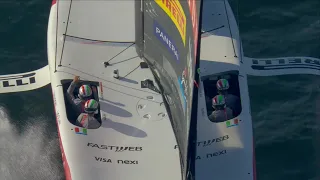
Explaining What The 5th Crew Does on A America’s Cup 75. Alinghi Crews. AC Media/World on Water
World On Water examines the revolutionary AC75 deck layout for the 38th America's Cup in Naples, analyzing the crucial fifth sailor role, cyclor elimination, and Alinghi's Genoa refit.
America’s Cup Oct 11 Weekly Report on the Boats, the Kit and the Crews, From AC Media/World on Water
Please Subscribe if you like our Global Sailing content, Like and Share. It helps us show our content to more sailors. Thank you. 38th America's Cup weekly report released on October 11. It covers the boats, their technology and the crews.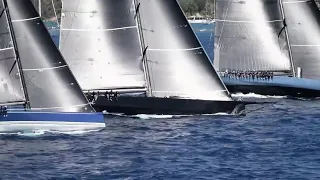
2027 RORC Caribbean 600 Preview by the World on Water
Please Subscribe if you like our Global Sailing content, Like and Share. It helps us show our content to more sailors. Thank you.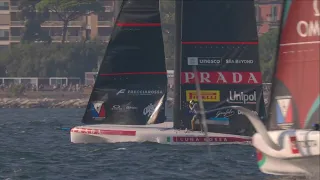
America’s Cup 2026 Preliminary Regatta Naples Comprehensive Report on Finals by the World on Water
Please Subscribe if you like our Global Sailing content, Like and Share. It helps us show our content to more sailors. Thank you.
World on Water The 2026 Ocean Race Atlantic Finish Lorient. Report #4
Please Subscribe if you like our Global Sailing content, Like and Share. It helps us show our content to more sailors. Thank you.