EXCLUSIVE:: In-Depth Report on the McIntyre ALMA 5.80 Class Round The World Race History and Start
Six 19-foot plywood yachts assembled at Marina de Lagos in Portugal for the start of the fourth McIntyre Alma Globe 5.80 Transat. Documented in the international race dispatches of World On Water, the fleet of seven competitors set off on an Atlantic passage covering approximately 3,600 nautical miles, bound for Lanzarote in the Canary Islands before tackling the open ocean run to Antigua.
Conceived by Australian adventurer Don McIntyre and designed by Polish naval architect Janusz Maderski, the Globe 5.80 class challenges modern grand prix conventions. Rather than relying on multi-million dollar budgets, exotic carbon pre-pregs, or professional shore crews, the concept poses a fundamental question: “What if ordinary people could build their own ocean racing yacht, prepare it themselves, and then take on a serious offshore challenge?” The resulting one-design platform allows amateur builders to construct a capable offshore vessel in a backyard or home workshop.
One-Design Architecture & Structural Engineering
The Globe 5.80 is engineered around robust marine plywood and modern epoxy composite construction, producing an affordable displacement hull designed to survive severe offshore conditions. The official design specification specifies 10 mm marine plywood for the primary hull plating, reinforced by 20 mm plywood along the central bottom section, and 8 mm plywood for the deck structure. Exterior surfaces receive thorough fiberglass and epoxy reinforcement to ensure watertight durability.
Structural integrity is maintained by six full structural frames and two watertight bulkheads, dividing the hull into three watertight compartments and an impact-absorbing bow crash box. Underbody stability relies on a fabricated steel keel fitted with a lead bulb. At the design waterline, displacement sits at approximately 1,145 kg, with the keel and bulb accounting for 244 kg. This ballast ratio produces a stated 142° angle of vanishing stability, giving the yacht full self-righting capability in severe knockdowns.
“These are not disposable lightweight dinghies adapted for ocean racing. They are deliberately robust little offshore yachts, designed around stability, structural strength, and survival.”
Interest in amateur offshore construction has expanded rapidly since the class launch. Over 300 sets of plans have been purchased across 40 countries and territories, fostering a global community with an estimated 140 active builders and approximately 35 completed boats sailing worldwide.
The 2026 Transat Competitors & Vessels
The 2026 edition features six yachts and seven skippers, uniting veteran circumnavigators, military veterans, and first-time solo racers across five solo entries and one two-handed crew:
- Tracker (Hull 01) – Trevor Ye Kun Liu (China): The historical flagship of the class, Tracker was commissioned by Don McIntyre, built in Poland, and launched in 2021. McIntyre campaigned her across the Atlantic to win the seniors division in the inaugural 2021 Transat, and the boat later finished the inaugural Mini Globe Race. Sailing as the first Chinese entrant in the class, Trevor (known as Eve) is using this Atlantic crossing as a mandatory qualification milestone for the 2029 Mini Globe Race.
- Capucine (Hull 28) – Catherine Erpenbeck (Malta): The most decorated yacht in the fleet, Capucine won the 2025 Globe 5.80 Transat under Swiss skipper Renaud Stitelmann, who then completed a clean sweep of every leg in the inaugural Mini Globe Race with an accumulated time of 180 days, 11 hours, 25 minutes, and 57 seconds. Catherine brings seven previous Atlantic passages to the helm after discovering the class while watching race preparations in Antigua.
- Meraki (Hull 178) – Bruce Payne (Australia): Hailing from Tasmania, Bruce completed 25 years of service in the Australian Army, including duties with the Special Air Service Regiment, before retiring in 2006. Built by Keith Oliver inside a makeshift backyard tent, Meraki finished third in the 2023 Globe 5.80 Transat and now serves as Bruce’s stepping stone toward the 2029 Mini Globe Race.
- Flow (Hull 195) – Viivi Moijo (Finland): At 24 years of age, Viivi built Flow with her own hands and even stitched her own sails. Having previously sailed around the world aboard Tapio Lehtinen’s yacht Galiana in the 2023 Ocean Globe Race as crew, she is now taking on her first solo offshore campaign.
- Imimini (Hull 109) – Matthew Freestone (United Kingdom): The 59-year-old British skipper brings over 16,000 nautical miles of ocean experience to Imimini. Constructed in a garden tent and extracted by crane over the builder’s house, the yacht was delivered by Matthew from North Wales to Portugal across the Bay of Biscay.
- Origami (Hull 47) – Dean Frost & Lee McCarthy (United Kingdom): Marking the first two-handed entry in Globe 5.80 Transat history, Dean and Lee previously rowed across the Atlantic in a four-man crew in 2021. Under previous skipper Kerry Harris, Origami finished second in the 2025 Transat and third overall in the Mini Globe Race.
Globe 5.80 Transat Fleet Specifications
| Yacht Name | Hull Number | Skipper(s) | Nationality | Entry Dynamic |
|---|---|---|---|---|
| Tracker | 01 | Trevor Ye Kun Liu | China | Solo Entry |
| Capucine | 28 | Catherine Erpenbeck | Malta | Solo Entry |
| Meraki | 178 | Bruce Payne | Australia | Solo Entry |
| Flow | 195 | Viivi Moijo | Finland | Solo Entry |
| Imimini | 109 | Matthew Freestone | United Kingdom | Solo Entry |
| Origami | 47 | Dean Frost & Lee McCarthy | United Kingdom | Two-Handed Entry |
Race Routing: Lagos to Lanzarote and Antigua
The fleet departed Marina de Lagos on Saturday, October 31, 2026, at 2:00 p.m. UTC. The opening leg serves as the official qualifying passage, spanning approximately 600 nautical miles from Portugal southwest to Marina Rubicon on Lanzarote in the Canary Islands. While this passage typically requires five or six days, pre-start forecasts indicated light and patchy breezes that could extend sailing times to eight to 10 days, testing patience and tactical sail trim.
Following a layover in Lanzarote for maintenance and final provisioning, the main transatlantic leg is scheduled to start on November 14, 2026, at 2:00 p.m. local time. Skippers will navigate roughly 3,000 nautical miles across the trade wind belt toward the National Sailing Academy in Antigua, bringing the combined course distance to 3,600 nautical miles. In historical crossings, passage durations have ranged between 22 and 36 days. Competitors must remain prepared for extreme volatility; during the 2023 edition, sailors encountered storm conditions with winds approaching 70 knots, knockdowns, and heavy seas.
Seamanship, Communications & the 2029 Mini Globe Horizon
Operating a 19-foot yacht offshore requires rigorous discipline. Without hydraulic assists or automated electronic helms, course keeping relies on mechanical wind vane self-steering systems that demand continuous mechanical tuning to balance the sail plan. Five of the six yachts have installed Starlink Mini terminals to transmit images and updates directly from the Atlantic, while Matthew Freestone aboard Imimini opted for traditional communication protocols. Don McIntyre coordinates daily fleet tracker bulletins at 9:00 UTC through official media channels.
Beyond the Atlantic finish line in Antigua lies the broader horizon of the McIntyre Mini Globe Race. In the inaugural round-the-world contest, 15 skippers set out and 11 completed the solo circumnavigation, led by Renaud Stitelmann’s record-setting performance aboard Capucine. With the next Mini Globe Race scheduled for 2029, this Transat offers vital sea trials for skippers Trevor Ye Kun Liu and Bruce Payne as they prepare to take their 5.8-meter plywood yachts around the globe. “Because sometimes the smallest boats deliver the biggest adventures.”
Frequently Asked Questions
The complete route spans approximately 3,600 nautical miles, beginning with a 600-nautical-mile qualifying passage from Lagos to Lanzarote and continuing with a 3,000-nautical-mile transatlantic leg to Antigua.
Polish naval architect Janusz Maderski designed the 19-foot (5.8 m) yacht. It features 10 mm marine plywood hull plating, a 20 mm central bottom, an 8 mm deck, two watertight bulkheads, and a 142° angle of vanishing stability.
The 2026 fleet comprises six yachts and seven sailors, including five solo competitors and one two-handed crew sailing aboard Origami.
Five of the six boats carry Starlink Mini systems to transmit photos and videos from offshore, while daily tracking updates are shared at 9:00 UTC by organizer Don McIntyre.
Of the 15 sailors who set out from Antigua, 11 completed the solo circumnavigation. Swiss skipper Renaud Stitelmann won every leg aboard Capucine, finishing with an accumulated racing time of 180 days, 11 hours, 25 minutes, and 57 seconds.
Support World On Water
At WeBoating.com, we profoundly acknowledge the unwavering dedication that World On Water invests in crafting each and every video or voyage. Their passion for delivering exceptional ocean content shines through every frame, and it's a labor of love that deserves your attention.
We invite you to watch their captivating videos here and actively engage with their content, including their social media links above. Liking, commenting, and sharing their work goes a long way in fueling their creative fire.
We're also inviting you to explore the gear, sponsorships, and boat partnerships highlighted in the "EXCLUSIVE:: In-Depth Report on the McIntyre ALMA 5.80 Class Round The World Race History and Start" video description, or directly on YouTube. By engaging with these offerings or purchasing services and items, you directly support World On Water, their collaborators, and the brands they're associated with.
To ensure you never miss an offshore update, consider visiting their official YouTube Channel to subscribe, like, and join their community directly.
If you have any feedback, corrections, or additional information about World On Water or their videos, please use the comment form below to share your thoughts with us.
Thank you for being a part of our community and supporting the creators we cherish. Your time and support truly matter!
Please Subscribe if you like our Global Sailing content, Like and Share. It helps us show our content to more sailors. Thank you.
This is an in depth look at the ALMA 5,80 Class and its race around the world.
We cover the history, the boats, how to build them, their crews, their race and the start.
You will get the full briefing so sit back and enjoy.
Subscribe, like and share. We appreciate your involvement.

World On Water
World On Water (WoW TV / Boats on TV) is the premier weekly sailing news show hosted by Geoff Waller from Sydney Harbour. Explore in-depth coverage of America's Cup, Rolex Sydney Hobart, Vendée Globe, and grand prix regattas.
Channel Information:
Social Media Links:
EXCLUSIVE:: In-Depth Report on the McIntyre ALMA 5.80 Class Round The World Race History and Start Location
- Marina de Lagos, Lagos, Portugal (37.1065,-8.6738)
- Marina Rubicon, Lanzarote, Canary Islands, Spain (28.8576,-13.8228)
- National Sailing Academy, Falmouth Harbour, Antigua (17.0135,-61.7766)
Latest Episodes from World On Water
Explore the most recent voyages. Subscribe to the channel to never miss an update!
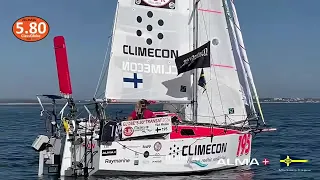
EXCLUSIVE:: In-Depth Report on the McIntyre ALMA 5.80 Class Round The World Race History and Start
Six 19-foot plywood yachts and seven sailors depart Lagos on the 3,600-mile McIntyre Alma Globe 5.80 Transat bound for Lanzarote and Antigua.
EXCLUSIVE: 2027 38th America’s Cup Naples In-Depth Behind The Scenes Look by the World on Water
World On Water previews the 38th America's Cup in Naples, analyzing AC75 foiling monohull engineering, preliminary regattas in Sardinia and Naples, and the seven syndicates competing for the Louis Vuitton Cup.
2026 ROLEX Middle Sea Race Start Oct 17,28. ROLEX Media/World on Water
Please Subscribe if you like our Global Sailing content, Like and Share. It helps us show our content to more sailors. Thank you. 2026 start of the ROLEX Middle Seas Race in Valetta Malta.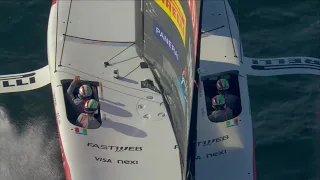
Explaining What The 5th Crew Does on A America’s Cup 75. Alinghi Crews. AC Media/World on Water
World On Water examines the revolutionary AC75 deck layout for the 38th America's Cup in Naples, analyzing the crucial fifth sailor role, cyclor elimination, and Alinghi's Genoa refit.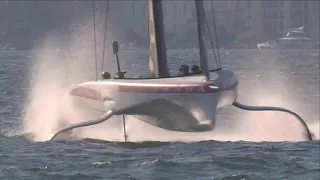
America’s Cup Oct 11 Weekly Report on the Boats, the Kit and the Crews, From AC Media/World on Water
An in-depth technical analysis of AC75 mechatronics, exploring how industrial PLCs, 600-bar hydraulics, and stored lithium battery power redefine flight control for the 38th America's Cup.