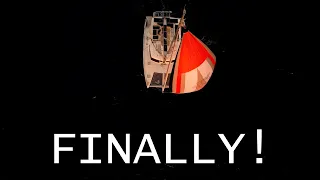
DONE WAITING, Finally Sailing EAST!
Warren and Erica of WE|Sail set sail from Fiji’s main island aboard their catamaran after waiting over a week for a favorable eastward weather window toward the remote Lau Group. Sailing east against prevailing trade winds demands patience and tactical precision, with the initial passage leg requiring immediate decisions to navigate through extensive coral barrier reefs before sunset.
With 36 miles of reef-strewn waterways ahead on the first day, maintaining adequate passage speed is critical. Navigating shallow coral lagoons and barrier passages safely requires high overhead sunlight, forcing the crew to balance sail trim against engine hours to clear tricky passages before twilight.
Escaping the High Island Wind Shadow
Roughly an hour after getting underway from the mainland coast, the sailing breeze fades abruptly in the lee of the high island. Warren makes the tactical decision to engage the auxiliary diesel engine to maintain speed through the calm pocket. Under normal cruising circumstances, the crew prefers to drift through light patches rather than burn fuel, but the looming barrier reefs dictate an uncompromising timetable.
Warren explains the operational necessity behind the decision: “The thing is is normally I would never do that. I would just accept the low winds and the slow speeds, but we have 36 miles that we have to go today in the daylight to get through this mess of dodgy bits and uh has to happen at in daylight.”
Under sail alone in the wind shadow of the high mountains, boat speed dropped down into the 4s. To clear the barrier shallows before losing overhead visibility, the catamaran needed to maintain at least a 5-knot average. Weather forecasts had predicted this sheltering effect along the coast, requiring alternating spells of sailing and motor-sailing across several hours until the vessel cleared the coastal lee.
Aerial Scouting and Chart Discrepancies
As the catamaran enters coral-strewn waters, surface sightlines alone become inadequate for identifying submerged hazards. Warren launches an aerial drone directly from the boat’s foredeck to obtain high-angle situational awareness over the surrounding shoals, giving the crew a vertical view of the shallow formations flanking their track.
Comparing their digital navigation displays against aerial reconnaissance reveals an unsettling discrepancy between electronic charts and real-time conditions. While Garmin Navionics charts indicate that the catamaran is passing dangerously close to shallow ground, live satellite imagery presents a contrasting perspective.
Observing the navigational offset on screen, Warren points out the conflicting data: “Garmin Navionics charts compared to the satellite imagery that we have is two very different things. So this looks like we are sailing over some very shallow ground and then the satellite charts show something different.”
The electronic boat symbol appears twisted sideways across the chart display, highlighting the inaccuracies that can emerge when navigating remote Pacific waters. While modern satellite overlays offer greater reliability than traditional vector charts, the offset reinforces the crew’s policy of relying primarily on daylight visual navigation when conning through uncharted reef systems.
Threading the Sunken Atoll Lagoon
The passage leads into the interior lagoon of an ancient sunken coral atoll, submerged significantly deeper than the atolls the crew previously encountered across the Tuamotus. Although the surrounding barrier remains mostly below the sea surface, numerous coral bombies rise abruptly toward the keel.
Tension spikes when the water depth under the hulls rapidly decreases. Watching the seabed rush upward, Erica calls out an urgent warning as the depth sounder drops to probably 10 feet. Down in the cabin when the alarm sounded, Warren quickly ascends to reassess the passage track. While the boat was intended to remain within deeper 30-foot channels, the isolated coral head came uncomfortably close before the hulls safely cleared the structure.
With Erica maintaining a vigilant lookout from the deck and Warren monitoring the helm, the catamaran continues forward through the obstacle-laden lagoon. This complex stretch represents their second-to-last navigational hurdle before breaking out into open ocean waters.
Harvesting Spanish Mackerel Underway
While navigating the deeper stretches of the inner lagoon, a trolling rod set off the stern bends under a strike. The reel screams as line peels against the drag, signaling a fish on the hook. Working the line from the aft deck, the crew lands a Spanish mackerel.
Erica celebrates the fresh catch as a rare culinary reward: “We haven’t caught Spanish mackerel in a very long time.”
Warren and Erica describe their standard shipboard butchering procedure to preserve meat quality. Severing the main artery beneath the fish’s jugular allows the blood to drain rapidly from the heart. On larger catches, delivering a firm strike to the top of the head humanely dispatches the fish, though doing so on a pitching deck requires steady footing and careful knife control.
Allowing rigor mortis to set in briefly helps firm up the flesh, yielding clean, uniform fillets. After thanking the fish for providing fresh sustenance, the crew discards the carcass overboard while watching for opportunistic sharks. The fresh fillets are packed directly into the freezer, where they rest for 1 to 2 hours until chilled nearly solid before being vacuum-sealed and stowed for future meals. Bundling up against the cooling breeze, Erica slips into comfortable velour pants and marshmallow shoes to prepare dinner in the galley.
Conning the Narrow Outer Reef Pass
Reaching the eastern boundary of the sunken atoll, the crew faces the challenge of exiting into deep water. Their OpenCPN navigation software displays a narrow gap cutting directly through the barrier reef, requiring precise vessel control.
To identify underwater shoals through the surface glare, the crew relies on polarized Vallon sunglasses, which reveal distinct shifts in water coloration between deep channels and shallow coral heads. With Warren tracking alignment from the foredeck and aerial cameras, Erica takes the helm to steer through the narrow opening: “Do I need to turn the boat? Yeah. How much? Five degrees.”
Responding to Warren’s guidance, Erica adjusts the helm by five to 10 degrees, aligning the catamaran with the center of the deep-water channel. Navigating narrow reef openings remains one of the most nerve-wracking elements of South Pacific cruising, recalling the era when mariners stationed lookouts high in the crow’s nest to spot safe passages through uncharted coral walls. Clearing the cut, the catamaran breaks out into open blue water.
Captain’s Hour and the Offshore Night Run
As the sun sets over the Pacific, the crew transitions from daylight reef pilotage to open-ocean passage making. With dinner simmering in the galley, Warren and Erica observe the traditional shipboard custom of captain’s hour, enjoying a single evening beverage underway. They reference author John Kretschmer’s sailing philosophy, noting that a single drink helps calm crew nerves and promotes restful sleep without compromising situational awareness on watch.
Out in the open sea, the sailing conditions prove remarkably smooth. Reaching across the breeze, the catamaran demonstrates impressive performance tight to the wind: “We are really cooking. We’re probably sailing 50° almost.”
Cruising catamarans rarely sail closer than 60 degrees to the wind without experiencing significant leeway, making this tight 50-degree track an exceptional run. The boat charges forward in 18 knots of steady breeze over flat seas. Departing directly after an extended calm period ensured that the ocean swell had not yet built up, as persistent 18-knot winds require at least 24 hours of duration before generating steep sea states. Rounding a large island, the vessel settles into a 100-mile offshore leg under darkness.
Passage Metrics and Navigation Log
The table below outlines the primary navigation stages, prevailing conditions, and operational maneuvers executed during the passage from Fiji’s main island to Vanua Balavu:
| Passage leg | Distance or metric | Wind and sailing conditions | Operational notes |
|---|---|---|---|
| Daylight barrier transit | 36 miles | Motoring under 5 knots in wind shadow | Visual conning through shallow reef heads |
| Open water reach | 100 miles offshore | 18 knots breeze at 50 degrees to wind | Flat sea state following calm weather window |
| Bay of Islands approach | 32 miles remaining | Light morning air | Dropping anchor in 34 feet of water |
The Course Divergence to Vanua Balavu
Dawn brings lighter, variable winds that slow the catamaran’s pace across the northern approaches to the Lau Group. Sluggish speeds push the estimated arrival window backward, shifting landfall from 2:00 PM toward 4:00 PM or dusk. At 9:00 AM, with 32 miles remaining to the destination, the crew reflects on an earlier navigational decision.
The couple originally planned to steer toward Taveuni to rendezvous with fellow cruising sailors. When word arrived that their friends had already departed that anchorage, Warren and Erica chose to alter course toward a more distant goal: “We gave up on Tavuni because our friends are no longer there and we decided to go for the whole enchilada and try and make it all the way back out to the Lao Group.”
Rather than compromising on an interim destination, the crew pointed the bows toward Vanua Balavu at the northern end of the Lau Group. Reaching this remote archipelago requires commitment, as navigating against trade winds and complex barrier systems keeps many cruising vessels away.
Anchoring in the Bay of Islands
Late in the afternoon, the distinctive silhouette of Vanua Balavu rises clearly on the horizon. The catamaran arrives off the entrance during full daylight, allowing the crew to drop working canvas and prepare for pilotage into the Bay of Islands.
The Bay of Islands presents a maze of limestone karst formations and coral bombies. Warren launches the drone once again, utilizing real-time aerial feeds to spot submerged coral heads and guide Erica at the helm through narrow navigable channels. Consulting their onboard tablets, the crew slowly guides the catamaran through a gap between limestone outcroppings.
Searching for a secure holding ground with adequate swing room, Warren monitors the depth sounder from the foredeck: “I got 34 right here. I’m going to go a little further, basically straight forward and about two boat lengths.”
Advancing two boat lengths into the pocket, Warren releases the windlass and sets the anchor firmly into 34 feet of water. Securing the boat marks the crew’s second successful voyage into the Lau Group, an unusual milestone in South Pacific cruising. To celebrate completing the demanding offshore passage, Warren and Erica gather on the foredeck to pop a bottle of champagne in the shelter of the bay.
Frequently Asked Questions
Warren engaged the auxiliary engine about an hour after departure because the catamaran was caught in the wind shadow of Fiji’s main island. Boat speed had dropped into the 4s, and the crew needed to maintain at least a 5-knot average to cover 36 miles through hazardous shallow reefs during daylight.
The crew utilized aerial drone reconnaissance flown from the foredeck, visual pilotage with polarized sunglasses to identify color shifts over shoals, and real-time comparison between satellite imagery, OpenCPN charts, and Garmin Navionics data.
The crew caught a Spanish mackerel on their trolling line. They bled the fish by cutting the artery beneath the jugular, waited for rigor mortis before filleting, and chilled the fillets in the freezer for 1 to 2 hours until nearly solid.
The crew originally intended to visit friends at Taveuni. Upon learning their friends were no longer there, they decided to sail straight to the northern Lau Group to explore Vanua Balavu and the Bay of Islands.
After using drone imagery and navigation tablets to weave through coral heads and limestone islets, Warren and Erica dropped anchor in 34 feet of water inside the sheltered Bay of Islands.
Water adventures near Tahiti
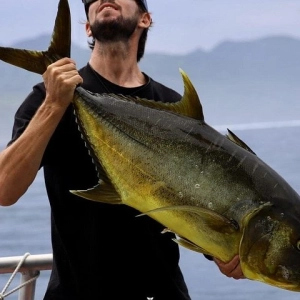
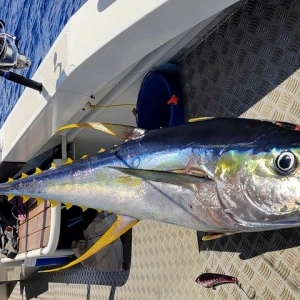
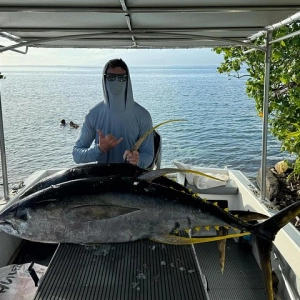
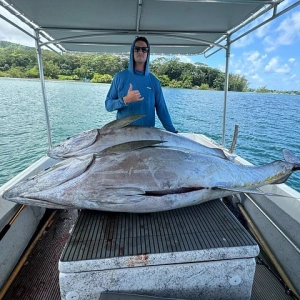
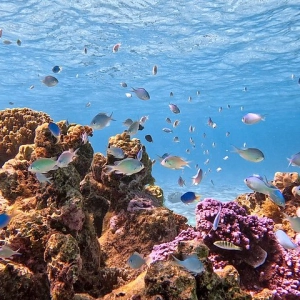
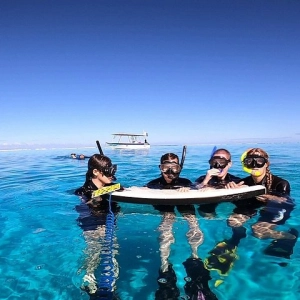
Boat tour + snorkeling in a preserved lagoon – Mobydick Tahiti
Sold by Mobydick Tahiti
Support WE|Sail
At WeBoating.com, we profoundly acknowledge the unwavering dedication that WE|Sail invests in crafting each and every video or voyage. Their passion for delivering exceptional ocean content shines through every frame, and it's a labor of love that deserves your attention.
We invite you to watch their captivating videos here and actively engage with their content, including their social media links above. Liking, commenting, and sharing their work goes a long way in fueling their creative fire.
We're also inviting you to explore the gear, sponsorships, and boat partnerships highlighted in the "DONE WAITING, Finally Sailing EAST!" video description, or directly on YouTube. By engaging with these offerings or purchasing services and items, you directly support WE|Sail, their collaborators, and the brands they're associated with.
To ensure you never miss an offshore update, consider visiting their official YouTube Channel to subscribe, like, and join their community directly.
If you have any feedback, corrections, or additional information about WE|Sail or their videos, please use the comment form below to share your thoughts with us.
Thank you for being a part of our community and supporting the creators we cherish. Your time and support truly matter!
Welcome back to another episode of WE|Sail. EPISODE 356
After waiting well over a week for the right weather window, one finally arrived and we were able to finally depart Fiji's main island for the stunning and remote islands known as the Lau group of islands. The wait was worth it as we experienced some of the best conditions a sailor could wish for. During the trip we spent time fishing, reading, dreaming, and often just gazing at the majestic scenes that surrounded our little floating catamaran home. Thank you for all joining us on this journey
🪜 Dinghy Ladder we use and love: www.rapidrung.com (Code: WESAIL26 for 10% off)
🛍 WE|Sail Merch: https://www.wesail.world/wesail-swag-store (Code: WEYOUTUBER for 20% off)
❤️ Support us on Patreon + join a sailing charter: https://www.patreon.com/wesail
📆 Sail with us in 2027: https://www.wesail.world/upcoming-events
#SailingFiji #Fiji #WEsail #SouthPacific #SnorkelingFiji #LiveaboardLife #OffGridLiving #CatamaranLife #BlueWaterSailing #CruisingFiji #SailingCouple #SailingLife #RemoteIslands
ABOUT WESAIL:
We're Erica and Warren, full-time liveaboard sailors who've been cruising for 7 years and sailed over 30,000 nautical miles. We share the real, unfiltered side of sailing life: the days at anchor, the underwater adventures, the work, and the moments that make it all worth it.
📍 Currently in: Fiji, island-hopping
⛵ Plan: 6+ months exploring as many islands as we can
-------------------------------------------------------------------------------------------------------------------------
🛍 Want some WE|Sail Merch??? Check out the WE|Sail $WAG $TORE
👉 https://www.wesail.world/wesail-swag-store
🤑 Get 20% OFF ENTIRE Purchase using code: WEYOUTUBER
-------------------------------------------------------------------------------------------------------------------------
Our Sail Partner @PrecisionSailLoftVictoria -
👉 https://www.precisionsailloft.com/about/our-partners/wesail/
🚣 Our NEW Highfield Dingy Partner @Highfieldboats
-------------------------------------------------------------------------------------------------------------------------
Songs Featured in this episode come from @epidemicsound
🎼 Want Royalty Free Music click on the link below!!!
👉 https://www.epidemicsound.com/referral/ad6geh
-------------------------------------------------------------------------------------------------------------------------

WE|Sail
Warren and Erica: The Colorado duo who traded corporate life for a 30,000 NM Pacific odyssey, currently navigating the remote Yasawa Islands of Fiji aboard their Helia 44.
Channel Information:
Social Media Links:
DONE WAITING, Finally Sailing EAST! Location
- Bay of Islands, Vanua Balavu (-17.195,-178.985)
Latest Episodes from WE|Sail
Explore the most recent voyages. Subscribe to the channel to never miss an update!
What Have WE FOUND!?
Warren and Erica navigate a shallow Fiji anchorage with five inches of keel clearance, explore a low-tide sea cave by tender, and discover an enclosed lagoon.
Best Anchorage in the Best Islands We Have Ever Been To! !
Warren and Erica navigate a tight Bay of Islands catamaran anchorage in Fiji, securing their Helia 44 between limestone pinnacles after presenting sevusevu.