The Search for Water on our Leopard 45 Sailing Catamaran. E103
Following their departure from Dominica, Jeff and Adrienne steer their Leopard 45 catamaran, Sailing Wind Therapy, northward toward Guadeloupe to rendezvous with visiting friends. While securing the boat to a mooring buoy in the Saints, abrasive conditions heavily stress the deck gear, underscoring the value of recycled equipment. Adrienne points out the protective setup on deck, remarking, “I have to thank Todd from sailing Symphony for these pieces of fire hose” deployed as chafe guards to prevent the lines from parting.
After reaching Guadeloupe, the crew spends an afternoon ashore touring the local Botanical Garden. Beneath the excursion lies an escalating mechanical crisis: the vessel’s Victron inverter fails completely. Because the inverter powers all alternating current wall outlets, the onboard reverse-osmosis watermaker stops functioning entirely.
Inverter Failure and Freshwater Rationing in Guadeloupe
With the inverter dead and no marina dockage available nearby in Guadeloupe, the catamaran is left with approximately 40 gallons of fresh water in the holding tanks. Refilling 45-foot catamaran tanks using two-liter jugs is dismissed as impractical, prompting the crew to buy large jugs of bottled water for drinking and brushing teeth.
To stretch the remaining 40 gallons, strict conservation rules are enforced aboard the vessel. Adrienne instructs their visiting guests to skip daily freshwater showers and use only raw seawater to flush the heads. To minimize dirty dishes in the galley, the crew eats meals ashore at local restaurants. By the time their guests depart and the catamaran prepares to head north toward Antigua, the domestic freshwater reserves drop to roughly 30 gallons.
Restocking Tanks at English Harbor
Sailing Wind Therapy crosses the channel to Antigua and enters English Harbor, an anchorage surrounded by naval stone buildings dating back to the 1700s British Navy era. Just after arriving, the crew spots a neighboring tender in distress and renders assistance, towing cruisers whose dinghy outboard motor refused to start.
With the dinghy crew safely assisted, the catamaran heads straight for the English Harbor fuel dock. Domestic freshwater levels have plummeted to 20 gallons. As the boat approaches the dock, Adrienne confirms the urgent need for replenishment, explaining, “our inverter crapped out we can’t make water and we’re down to like 20 gallons” in the tanks. Dockside hoses allow them to refill their water tanks and top off fuel before seeking an overnight anchorage.
Ground Tackle Challenges Outside English Harbor
Leaving the commercial quay, the crew looks for an anchorage outside English Harbor. The seabed proves treacherous with dense underwater rock ledges, making anchor setting exceptionally difficult. Jeff dives into the water with a mask to inspect the chain and monitor how the anchor fluke sits along the bottom.
From the helm, Adrienne tracks the vessel’s drift while Jeff swims down to check the rode, which has only 70 feet of chain out at the waterline. Strong surging conditions push the catamaran across the shelf, forcing Jeff back aboard to restart the diesel engines and reset the hook. The maneuver demands multiple resets before the ground tackle bites, prompting Adrienne to observe that “it took us three tries to set the anchor third time’s a charm” before the vessel rests securely.
Rerouting to Jolly Harbor for Customs Clearance
At 5:55 in the morning, the crew prepares to weigh anchor outside English Harbor for a passage to Saint Martin, roughly 90 nautical miles to the northwest. However, close quarters in the anchorage create immediate tension, with the catamaran’s anchor rode resting dangerously close beneath a neighboring vessel’s hull. Maneuvering with precision in shifting winds, the crew safely extracts the hook without making contact.
The plan had called for a 4:00 AM departure, but the crew realizes they forgot to clear out through Antigua customs. Because the customs office in Jolly Harbor does not open until 8:30 AM, the crew motors around the western coast to wait for official clearance. Marine forecasts predict winds between 10 and 18 knots with gusts to 23 knots, but Jeff applies his standing rule of adding 5 knots to all predictions, anticipating winds between 15 and 23 knots with peak gusts reaching 28 knots.
Offshore Passage to Saint Martin
Once cleared out at Jolly Harbor, Sailing Wind Therapy sets sail on a 13-hour open-water run. The Leopard 45 handles the brisk reaching breeze and rolling seas, passing Saint Barts late in the evening. Between 10:00 PM and 11:00 PM, the boat drops anchor in total darkness among crowded vessels at an anchorage off Saint Barts, where the crew prioritizes safe anchoring over recording video footage.
At dawn, the catamaran covers the remaining distance to Saint Martin. Approaching the island, the vessel lines up behind other cruising boats waiting to transit the Simpson Bay Bridge into the inland lagoon.
Simpson Bay Bridge Transit into the Lagoon
Entering the lagoon requires navigating past the Dutch customs station located in a small blue waterfront building. Adrienne notes that “going through this bridge is exciting every single time it never ever gets old” as the catamaran idles in the narrow channel.
Protocol generally dictates clearing customs on the Dutch side before transiting under the bridge to the French side. After the catamaran waits 25 minutes for the scheduled bridge opening, the bridge operator grants permission to cross directly into the French lagoon on the condition that the crew checks in immediately upon tying up. The road traffic stops, the bascule bridge opens, and Sailing Wind Therapy motors through to secure repairs for their disabled inverter.
Passage Log and Resource Summary
| Passage Stage | Technical Figures | Vessel Status and Conditions |
|---|---|---|
| Guadeloupe inverter failure | 40 gallons remaining | Victron inverter failure shuts down freshwater maker |
| English Harbor fuel dock | 20 gallons remaining | Docked to replenish freshwater tanks and diesel reserves |
| Ground tackle setting | 70 feet chain at waterline | Three attempts required to secure anchor over rock shelf |
| Offshore passage run | 13 hours under sail | Sailing in winds gusting from 15 to 28 knots |
| Simpson Bay Bridge wait | 25 minutes in queue | Held on Dutch side before motoring into French lagoon |
Frequently Asked Questions
The Victron inverter failed completely, cutting alternating current to the shipboard outlets and preventing the reverse-osmosis watermaker from operating.
The freshwater tanks were down to approximately 20 gallons when the catamaran docked at English Harbor to take on water and fuel.
The crew used sections of recycled fire hose given to them by Todd from the sailing vessel Sailing Symphony to protect their lines from chafing in the Saints.
The crew realized they had not completed customs departure clearance for Antigua, requiring them to motor to Jolly Harbor where customs opened at 8:30 AM.
The passage lasted 13 hours under winds gusting up to 28 knots, with the catamaran dropping anchor in the dark between 10:00 PM and 11:00 PM.
The bridge operator allowed the catamaran to cross from the Dutch side into the French lagoon provided the crew checked in with customs immediately upon arrival.
Book a trip where this was filmed — near Antigua
Support Sailing Wind Therapy
At WeBoating.com, we profoundly acknowledge the unwavering dedication that Sailing Wind Therapy invests in crafting each and every video or voyage. Their passion for delivering exceptional ocean content shines through every frame, and it's a labor of love that deserves your attention.
We invite you to watch their captivating videos here and actively engage with their content, including their social media links above. Liking, commenting, and sharing their work goes a long way in fueling their creative fire.
We're also inviting you to explore the gear, sponsorships, and boat partnerships highlighted in the "The Search for Water on our Leopard 45 Sailing Catamaran. E103" video description, or directly on YouTube. By engaging with these offerings or purchasing services and items, you directly support Sailing Wind Therapy, their collaborators, and the brands they're associated with.
To ensure you never miss an offshore update, consider visiting their official YouTube Channel to subscribe, like, and join their community directly.
If you have any feedback, corrections, or additional information about Sailing Wind Therapy or their videos, please use the comment form below to share your thoughts with us.
Thank you for being a part of our community and supporting the creators we cherish. Your time and support truly matter!
In this episode, we left Dominica to sailing our Leopard 45 north. Our first stop was Guadeloupe where we were meeting friends. We've had some problems with our Victron Quatro Inverter on and off for the past few months, and it finally died. That means that we cannot use anything electrical that plugs into the wall outlets, among other things, like our water maker. And since we only had about 40 gallons of water in our tanks, we stocked up on large water bottles for drinking and brushing teeth. I hate using plastic water bottles, but we had no choice. There were no marinas where we were in Guadeloupe to fill our tanks, and filling them with 2-liter bottles would take forever.
So, we told our friends they couldn't shower every day, they had to use salt water only to flush the toilets, and we ate out as much as possible to avoid having to wash dishes. With about 30 gallons left in the tanks, we left Guadeloupe and headed to Antigua.
We love English Harbor. It's like living in a 1770's naval village. We were able to get water there, but we had to go to St. Martin to get the inverter fixed. So, off we went.
Thanks for watching.
Sailing Wind Therapy
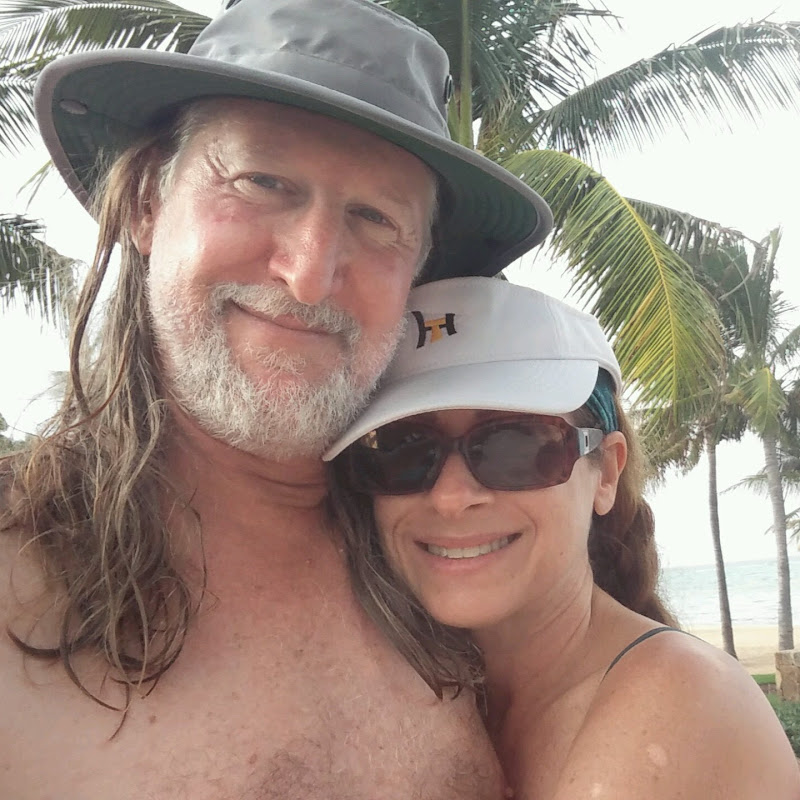
In 2026, Sailing Wind Therapy follows Florida mariners Jeff and Adrienne cruising coastal and island waters aboard their 2018 Leopard 45 catamaran, Wind Therapy. Having rebuilt their sailing life after losing their first boat to Hurricane Irma, they document blue-water voyaging and family milestones.
Channel Information:
Social Media Links:
The Search for Water on our Leopard 45 Sailing Catamaran. E103 Location
- English Harbor, Antigua (17.0076,-61.7644)
Latest Episodes from Sailing Wind Therapy
Explore the most recent voyages. Subscribe to the channel to never miss an update!

Wind Therapy Hits the Road with Sleep Theory, Nevertel, and other bands for the Afterglow Tour.
Wind Therapy is docked in St. Petersburg for a little while so we can take care of some family business like babysitting, working at the family's antique car museum, and hitting the road with our son's band. Nevertel is performing in the Afterglow tour with Sleep Theory, Oxymorons and Stra...
We Transited the Panama Canal! E109
I know, it's been almost six months since we uploaded a video. Life outside of sailing has taken our focus. Family comes first. I'm sure you all understand. But here we are, aboard the Leopard 45 sailing catamaran, Remedy, to cross the Panama Canal. It's been a bucket list item for ...
That Whale Came Way Too Close!!! E108
In this episode we had lots of adventures. We spent a day on a lobster boat in Stockton Harbor, celebrated 4th of July in Bar Harbor, hiked all over Acadia National Park, and had an awesome whale encounter in Portsmouth, NH. Actually, it was more dangerous than we knew. The next day, a whale (maybe ...
Wind Therapy Summer Camp Part 1. E107
This video is for our grandson, Greyson. He spent part of the summer with us, and it was some of the best time of our lives. We picked him up and flew him to Port Jefferson where he learned to drive the dinghy. Then we spent a few days at the Mystic Seaport Museum and Aquarium. It was there that Gr...
LEAVING the Caribbean to NYC Aboard our Leopard 45 Sailing Catamaran. E106
Embark on an extraordinary voyage from the Caribbean to New York City as two intrepid sailors set sail in their Leopard 45 catamaran. Follow their epic adventure filled with thrilling encounters and life-changing moments in this captivating story of a transatlantic crossing.