How we power our off-grid floating home
Aboard the Seawind 1160 Lite catamaran SV Sea Moon, Australian cruisers Scott and Sandy have spent years voyaging across the Mediterranean, demonstrating how modern marine engineering can transform an offshore cruising vessel into a self-sufficient floating home. Operating without fossil-fuel cooking gas or reliance on dockside infrastructure, the crew behind Sailing Sea Moon have refined an off-grid electrical architecture supporting complete domestic comfort at remote anchorages throughout Greece and the Ionian Sea. From running high-draw induction cooktops and electric ovens to desalinating seawater and powering satellite communications, their installation proves that clean energy can eliminate compromise from blue water cruising.
Through thousands of nautical miles logged between the anchorages of Paxos and the fairway of Gouvia Marina in Corfu, Scott and Sandy tested their systems under conditions ranging from summer Aegean heatwaves to overcast autumn gales. Their vessel’s electrical capability rests on three integrated engineering pillars: massive lithium iron phosphate storage, an unshaded solar generation arch, and heavy-duty AC inverter infrastructure managed through central digital telemetry.
Lithium Energy Storage and Cerbo GX Orchestration
At the core of the marine electrical platform engineered aboard SV Sea Moon, the crew of Sailing Sea Moon installed a high-capacity lithium battery bank optimized for off-grid solar harvesting and demanding liveaboard cruising. The primary storage bank comprises five 12-volt Victron Energy 200-ampere-hour Lithium Iron Phosphate (LiFePO4) batteries connected in parallel, delivering 1,000 ampere-hours of total nominal capacity at 12.8 volts. Because LiFePO4 chemistry permits deep cycling without voltage sag, the system provides roughly 750 to 800 ampere-hours of usable power for daily offshore living.
Each battery incorporates internal BMS electronics with Bluetooth monitoring to track cell balance and temperatures. Heavy DC conductors route through busbars to an industrial master disconnect switch, while automated protection is coordinated by a Victron Cerbo GX processor. The Cerbo GX enforces a low-voltage cutoff at 25 percent state-of-charge, though Scott investigates supplemental charging whenever capacity reaches 40 to 45 percent. Completely isolated from the house bank is a dedicated 12-volt AGM starter battery for the twin Yamaha 25-horsepower outboards, maintained via a DC-to-DC smart charger.
Solar Generation Arch and MPPT Controllers
Replenishing the heavy lithium battery reserves on SV Sea Moon relies on a dedicated off-grid solar generation arch built by Sailing Sea Moon to support every marine electrical demand encountered in liveaboard life. Fabricated from custom-welded aluminum tubing, the stern arch extends aft of the cockpit to serve a dual role: providing an unshaded plane for three photovoltaic panels while doubling as the primary hoisting davit for their Ocean Craft tender dinghy.
The array features three 450-watt monocrystalline solar panels totaling 1,350 watts peak output. Crucially, each panel connects to its own independent Victron SmartSolar MPPT charge controller. This isolated channel architecture ensures that if the mast, boom, or mainsail casts a shadow across one panel, the remaining two controllers continue harvesting peak solar wattage uninhibited.
All-Electric Galley and Inverter-Charger Integration
Sustaining an all-electric galley aboard SV Sea Moon represents a defining achievement for Sailing Sea Moon, combining off-grid solar capture, advanced marine electrical conversion, and a massive lithium battery system for uncompromised liveaboard autonomy. AC domestic power is supplied by a Victron Quattro 5,000-volt-ampere inverter-charger with an integrated 220-amp battery charger, powering Australian standard 230-volt domestic outlets and European adapters throughout the catamaran.
Eliminating LPG removed dangerous bilge fumes, gas locker corrosion, and the hassle of sourcing foreign cylinder adapters. The galley features an induction cooktop and a Breville convection oven, supplemented by an electric cockpit barbecue. Preparing dinner and heating shower water consumes roughly 150 ampere-hours (15 percent of bank capacity). Incoming AC power passes through a Victron Isolation Transformer, completely isolating dockside and generator grounds to prevent galvanic hull corrosion.
Daily Energy Budget and High-Draw Consumers
Managing daily power consumption on SV Sea Moon requires continuous energy balancing by Sailing Sea Moon, aligning liveaboard domestic appliance use with off-grid solar replenishment and marine electrical monitoring of the lithium battery bank. Continuous hotel loads include dual 12-volt marine refrigerators, a freezer, LED lighting, navigation electronics, and a Starlink satellite terminal converted to native 12-volt DC to eliminate inverter standby losses.
High-draw appliances run during peak midday sunshine. The desalination system produces 120 liters of fresh water per hour while drawing roughly 100 amperes at 12V DC, running for 60 to 90 minutes every few days. During summer heatwaves, Scott and Sandy run the reverse-cycle air conditioner for an hour before bed to drop cabin temperatures from 40°C to 23°C (consuming roughly 100Ah), using 12-volt fans overnight. Normal overnight depletion drops the bank from 85 to 75 percent, which solar fully replenishes by early afternoon.
Generator Backup and Seasonal Solar Dynamics
When adverse Mediterranean autumn weather limits off-grid solar harvest on SV Sea Moon, the crew of Sailing Sea Moon rely on auxiliary marine electrical backup to maintain their liveaboard lithium battery reserves. To handle overcast days and low sun angles without motoring into commercial marinas, the boat carries a portable Yamaha EF2000 inverter generator supplying 1,500 to 1,700 watts of continuous AC power on regular unleaded petrol.
Scott operates the generator on the forward deck to direct exhaust away from living areas, filtering fuel through a Mr. Funnel water separator. Connected to the shore power inlet, the Victron Quattro runs in charger-only mode, feeding up to 220 amps of DC charging into the lithium bank while directly powering the watermaker. The Cerbo GX automatically balances charging as solar harvest fluctuates, delivering five hours of runtime from a three-liter tank.
Marine Lithium Safety and Blue Water Lessons
Rigorous marine electrical standards and preventative fire protocols guide Sailing Sea Moon in safeguarding the off-grid solar infrastructure and primary lithium battery bank installed aboard their liveaboard catamaran SV Sea Moon. Selecting commercial Victron LiFePO4 cells provided certified insurance compliance and proven resistance to thermal runaway compared to older cobalt formulations that historically caused shipboard electrical fires.
Multi-layered safeguards include Class-T fusing, heavy busbars, and Cerbo GX automated disconnect triggers for cell imbalances. Scott identifies portable rechargeable items—such as their Air Buddy dive hookah battery and drone packs—as higher fire risks than the fixed house bank, requiring supervised charging. Furthermore, the system proved its reliability when SV Sea Moon sat unattended on the hard in a Greek boatyard for five months without shore power, maintained in optimal storage solely by the solar arch.
| Subsystem / Component | Hardware Specification | Power Output / Electrical Draw | Operational Function & Notes |
|---|---|---|---|
| House Battery Bank | 5x Victron Energy 12V 200Ah LiFePO4 | 1,000 Ah total capacity (~750 Ah usable) | Primary storage with internal BMS, Bluetooth monitoring, and 25% low-voltage cutoff. |
| Engine Starter Battery | 1x 12V AGM Sealed Battery | Dedicated high-cranking amperage | Isolated starting circuit for twin Yamaha 25hp outboards; topped via DC-to-DC charger. |
| Solar Generation Arch | 3x 450W Monocrystalline PV Modules | 1,350W peak solar capacity | Mounted on custom welded aluminum stern arch doubling as Ocean Craft tender davit. |
| Solar Charge Controllers | 3x Victron SmartSolar MPPT Units | Dedicated MPPT per individual panel | Independent string regulation preventing array-wide loss from boom or mast shading. |
| Inverter-Charger | Victron Quattro 12/5000/220 | 5,000 VA continuous / 220A charger | Converts 12V DC to 230V AC for Australian GPO domestic circuits and European adapters. |
| Power Isolation | Victron Isolation Transformer | 1:1 Galvanic isolation shielding | Eliminates stray DC earth currents and galvanic corrosion during generator and dock charging. |
| Backup Generator | Yamaha EF2000 Inverter Generator | 1,500W–1,700W continuous (2.0 kVA peak) | Portable petrol generator positioned on forward deck for cloudy autumn/winter periods. |
| Electric Galley Cooking | Induction cooktop & Breville oven | ~150 Ah combined evening cycle | 100% LPG-free galley eliminating marine propane hazards and Mediterranean bottle refills. |
| Freshwater Desalination | High-Flow AC Reverse-Osmosis Unit | 120 Liters/hour (~100A at 12V) | Operated for 60–90 min every 2–3 days during midday peak solar harvest windows. |
| Marine Air Conditioning | Reverse-Cycle Seawater Condenser | ~100 Ah per 60–90 min evening cycle | Pre-cools saloon and cabins from 40°C down to 23°C prior to sleeping in heatwaves. |
| Satellite Connectivity | Starlink Satellite Terminal | Direct 12V DC conversion (~35W continuous) | Bypasses inverter standby idling draw for 24/7 high-speed weather routing and media work. |
Frequently Asked Questions
Essential technical inquiries regarding the marine electrical engineering, off-grid solar array, and Victron lithium battery bank deployed by Sailing Sea Moon aboard SV Sea Moon for full-time liveaboard cruising.
A liveaboard catamaran with an all-electric galley requires roughly 1,000 to 1,400 watts of solar power paired with an 800 to 1,000Ah LiFePO4 battery bank. Aboard SV Sea Moon, 1,350 watts of solar and a 1,000Ah Victron lithium bank deliver 750Ah of usable power, easily handling induction cooking, refrigeration, and desalination.
An all-electric galley substitutes propane with induction cooktops and electric convection ovens powered by an inverter. On SV Sea Moon, a 5,000VA Victron Quattro inverter converts 12V DC lithium power into 230V AC current. Preparing dinner and heating shower water consumes around 150Ah, eliminating gas explosion hazards and bottle refilling hassles.
Sailboat solar panels frequently experience partial shading from the mast, boom, or sails. When panels are wired in series to a single controller, shading one panel degrades output across the entire string. By assigning a dedicated Victron SmartSolar MPPT controller to each 450W panel on SV Sea Moon’s arch, unshaded panels continue harvesting peak wattage independently.
An isolation transformer provides 1:1 magnetic galvanic isolation between external AC power and onboard AC grounding. This prevents stray DC earth currents from flowing through seawater, eliminating galvanic corrosion on aluminum hulls, sail drives, and underwater thru-hulls while conditioning incoming electrical power.
High-draw loads run during peak solar hours. The desalination system produces 120 liters per hour while drawing roughly 100A at 12V, running for 60 to 90 minutes during midday sun. Air conditioning runs for an hour before bedtime to cool cabins from 40°C down to 23°C (consuming ~100Ah), transitioning to low-draw 12V fans overnight.
LiFePO4 chemistry is chemically stable and resistant to thermal runaway. Protection on SV Sea Moon includes internal BMS circuitry with Bluetooth cell telemetry, Class-T fuses on main busbars, a manual master disconnect switch, and central orchestration via the Victron Cerbo GX, which commands automated load and charge disconnects during anomalies.
During Mediterranean autumn and winter, low sun angles reduce solar yields. To recharge without entering marinas, Scott and Sandy deploy a portable Yamaha EF2000 petrol inverter generator on the foredeck. Connected through the shore power inlet with the Quattro in charger-only mode, it delivers 1,500W to fully charge the 1,000Ah bank in four to five hours.
Support Sailing Sea Moon
At WeBoating.com, we profoundly acknowledge the unwavering dedication that Sailing Sea Moon invests in crafting each and every video or voyage. Their passion for delivering exceptional ocean content shines through every frame, and it's a labor of love that deserves your attention.
We invite you to watch their captivating videos here and actively engage with their content, including their social media links above. Liking, commenting, and sharing their work goes a long way in fueling their creative fire.
We're also inviting you to explore the gear, sponsorships, and boat partnerships highlighted in the "How we power our off-grid floating home" video description, or directly on YouTube. By engaging with these offerings or purchasing services and items, you directly support Sailing Sea Moon, their collaborators, and the brands they're associated with.
To ensure you never miss an offshore update, consider visiting their official YouTube Channel to subscribe, like, and join their community directly.
If you have any feedback, corrections, or additional information about Sailing Sea Moon or their videos, please use the comment form below to share your thoughts with us.
Thank you for being a part of our community and supporting the creators we cherish. Your time and support truly matter!
⚡ How do we power Sea Moon while living and cruising off-grid?
In this episode of Tech Talk with Scott, Scott takes you through the complete power setup aboard our Seawind 1160 Lite catamaran, Sea Moon.
We look at the system from where the power is stored to how we generate it — including our batteries, inverter, solar and generator — before looking at the appliances we run onboard and how the whole system works together in everyday cruising life.
Living aboard full-time means our electrical system has to keep up with everything from the basics to the comforts of home, and after sailing thousands of miles with this setup, we can share how it actually performs in the real world.
Whether you're planning your own cruising boat, considering an electrical upgrade, or simply wondering how a liveaboard boat can operate away from shore power, this one is for you.
⛵ In this episode:
• Our battery setup
• Inverter and 240V power
• Solar generation
• Generator and backup power
• Appliances we run onboard
• How we manage our power while cruising
• What we've learned from living with the system
If you have questions about our setup, drop them in the comments — Scott is always happy to get into the technical details!
👍 If you enjoy our Tech Talks, please give the video a like and subscribe to Sailing Sea Moon as we continue our journey around the world.
⛵ Welcome Aboard Sailing Sea Moon
Hi, we're Scott & Sandy.
Five years ago we matched on Tinder. Today we're living aboard our Seawind 1160 Lite catamaran, Sea Moon, sailing full-time around the world.
Every week we share honest sailing adventures, cruising guides, boat projects, tech tips, destination guides and the realities of life aboard. From hidden anchorages and unforgettable experiences to the challenges that come with living at sea, we bring you along for the journey.
If you've ever dreamed of sailing, travelling full-time or living life differently, we'd love to have you aboard.
🔔 Subscribe and join the adventure!
📅 New Videos Every Week
Wednesday (Alternating)
• Sea Moon Tech with Scott
• Coffee with Sandy
Sunday - Mixture of;
• Sailing adventures, destination guides and life aboard Sea Moon
🌐 Follow Our Journey
📺 YouTube
https://www.youtube.com/@SailingSeaMoon
https://www.instagram.com/sailingseamoon
https://www.facebook.com/SailingSeaMoon
⛵ Our Boat
SV Sea Moon
Seawind 1160 Lite Catamaran
Twin Yamaha 25hp Outboards
🎥 Our Gear
Cameras
• DJI Action 4
• iPhone 17 Pro
• DJI Mini Drone
Audio
• DJI Mic
Editing
• Movavi Video Editor
• Canva Pro
🎵 Music
Music created using the built-in music library in
- Movavi Video Editor
- YouTube Studio
Other
- Google Earth
- Google Earth Pro
📧 Business Enquiries
Sailing Sea Moon
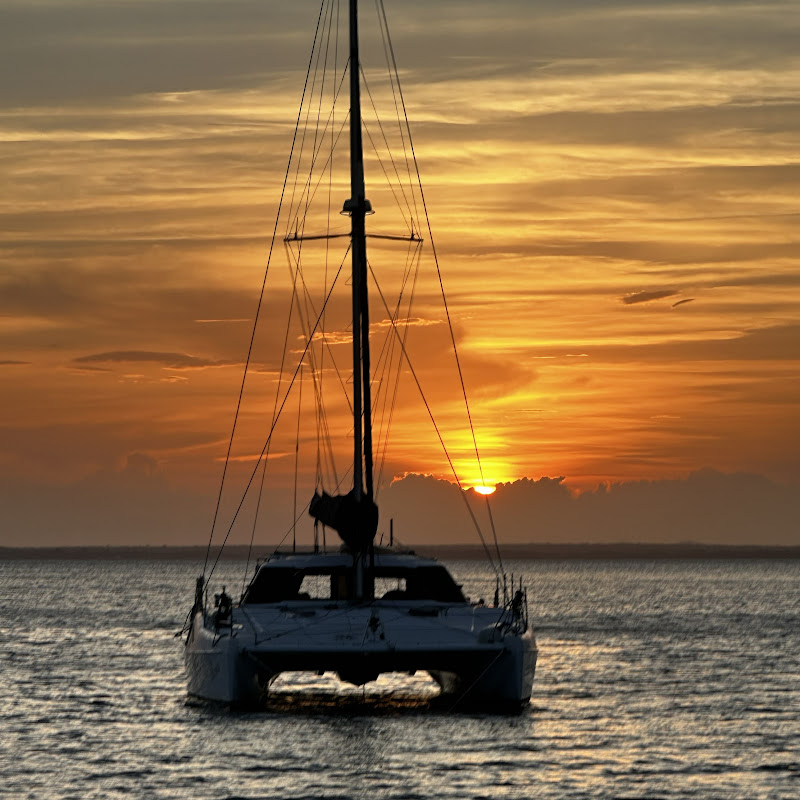
Five years ago, we matched on Tinder. Now we’re sailing around the world aboard 'Sea Moon' — our Seawind 1160 catamaran — chasing weather windows, freedom, and a life we once only talked about over drinks on a first date. Three years on, we feel it's time to share our stories and help others find their pathway to freedom and adventure. If you’ve ever wondered whether a different kind of life is possible, you’re in the right place. What will we share? Adventures, stories, tech tips…it’s all In our greater plan to share with you all. Please SUBSCRIBE and LIKE (on YouTube)and tell your friends ☺️. This helps us reach more people and share more stories. Let our adventures continue! Scott and Sandy Sailing Sea Moon CREDITS Video equipment used - iPhone 17 Pro, DJI Action 4, DJI Mini 3 - Video editing tool- Movavi - Music - Movavi music
Channel Information:
Social Media Links:
How we power our off-grid floating home Location
- Gouvia Marina & Bay Fairway, Corfu, Greece (39.65,19.85)
- Gaios Cruising Anchorage, Paxos, Ionian Islands, Greece (39.2,20.185)
Latest Episodes from Sailing Sea Moon
Explore the most recent voyages. Subscribe to the channel to never miss an update!

7 Days Living in Cleopatra Boat Yard – My Honest Opinion
What happens when your floating home is suddenly sitting on blocks? ⛵ After another incredible sailing season, we’ve hauled Sea Moon out at Cleopatra Marina in Preveza, Greece, where she’ll spend the winter on the hardstand. This time, instead of leaving the boatyard behind, we’re staying aboard fo...
Why we are hauling out our catamaran for winter – Greece 2026
After a devastating winter storm hit Rhodes Marina in Greece, we made a big decision. This year, Sea Moon would be coming OUT of the water for winter! Last winter, we left our Seawind 1160 catamaran afloat at Rhodes Marina while we travelled overseas. But on 22 January 2026, a powerful storm struck...
Boat Show Cleopatra Marina Preveza Greece
A unique Boat Show | A Cruising Sailor's Perspective Welcome to a slightly different episode of Sea Moon Tech Talk with Scott! We've hauled Sea Moon out of the water for the winter at Cleopatra Marina near Preveza, Greece, and with hundreds of boats surrounding us, Scott couldn't re...
Did we push our sailing season too far? – Cruising The Mediterranean
After months of exploring the Mediterranean aboard our Seawind 1160 catamaran, Sea Moon, the seasons are changing — and so is life onboard. The warm summer days, calm anchorages and endless sunshine are giving way to colder temperatures, unsettled weather, strong winds and some rather uncomfortable...
10 Things I Wish I Knew Before We Set Sail | Coffee with Sandy ☕⛵
After sailing 14,000 NM from Australia to the Mediterranean aboard Seawind 1160 Sea Moon, Sandy shares 10 essential cruising truths on maintenance, weather, and life at sea.