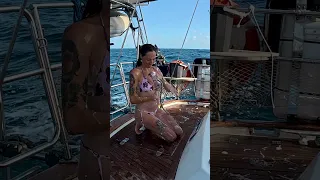
Sailing through PIRATE TERRITORY.... Venezuela Coast | Sailing French Guiana to Grenada...Ep 461
At the peak of high tide, Jarrad “Yosh” Laver and Bonnie Herewane hauled anchor aboard their 1996 Tayana 47, SV Nandji II, to navigate out of a murky river in French Guiana. Sailing with their young daughter Tallula May, the family had spent 24 hours anchored in the river awaiting clearance after a coastal rocket launch. With sufficient water over the river bar, the crew of Sailing Nandji – Frothlyfe began their 600-mile passage towards Grenada and the Caribbean Sea.
Exiting the shallow river mouth demanded careful timing against wind and tide, requiring 5 miles to reach the river mouth and 10 miles of narrow channel before reaching open sea. Outgoing current collided with trade winds blowing 15 to 20 knots, building steep waves on the nose. “This is like the worst part. Going through the shallowest part,” Yosh remarked as the hull pitched into the chop. Moving at four to five knots, Nandji II crossed the entrance mudbanks and rounded the seaward mark as brown river discharge gave way to ocean swells and a comfortable 10 meters of depth beneath the keel.
Skirting the Offshore Oil and Gas Fields
The direct rhumb line to Grenada crossed an active offshore oil and gas field. On day two, Yosh and Bonnie found themselves hard on the wind against steady northeast trades. To let the crew rest during the night, Yosh dropped below the direct course onto a close reach in pitch darkness and 20 knots of wind. By 9:30 the next morning, industrial drilling platforms and vessels appeared across the horizon.
Routing inshore between the platforms and the mainland would have pushed them into commercial tugs, tankers, and fishing boats while drawing uncomfortably close to Venezuela. Yosh tested the staysail to sail as a cutter, but the rig failed to provide the necessary pointing angle. Instead, he unrolled additional genoa and powered upwind.
As Nandji II made northing, the northeast trade wind veered easterly, allowing the yacht to hold course without tacking toward shore. Giving the offshore gas structures a wide clearance of 10 miles, with flare stacks burning on the horizon, Yosh altered course 10 degrees to port. The adjustment brought the wind onto the beam, reducing heel and accelerating the cutter to 8 knots in the northbound current.
Running Black Along the Venezuelan Coast
Clearing the gas platforms brought a serious security concern: distance from the Venezuelan mainland. Prolonged economic instability and reports of armed piracy targeting cruising yachts made these waters an area of high caution. The crew adopted strict defensive protocols underway.
“There’s been a few attacks on sailboats in Venezuelan waters, so we are being very cautious along this passage. We are completely black.”
To reduce their footprint, the crew ran completely black at night with all navigation and deck lights off. Yosh switched the AIS transponder to receive-only mode, tracking commercial traffic without broadcasting Nandji II‘s position to potential pirate skiffs. The watch crew cross-referenced targets using MarineTraffic while maintaining an alert deck lookout.
The caution stemmed from an incident off Brazil earlier in their crossing, where a fishing boat approached over 100 nautical miles offshore, stopped dead across their bow, and transmitted unintelligible radio chatter. Yosh executed a sharp 90-degree evasive turn out to sea to break contact. Along the Venezuelan coast, Bonnie reflected on the psychological strain: “The vast open blue has a strange way of creating a false sense of security.”
Squalls, Shipping Lanes, and the Threat of Lightning
By day three, SV Nandji II crossed the halfway mark with 200 miles remaining to Grenada, entering busy commercial shipping lanes. Clear skies gave way to tropical squalls sweeping across the horizon, bringing heavy downpours and lightning.
Yosh highlighted lightning as the greatest operational danger for blue-water sailors. Unlike mechanical failures or heavy seas, a lightning strike can instantly destroy electronics, damage grounding systems, or disable vital communications far offshore. Recalling severe storms across Asia and the Caribbean, the crew tracked squall cells closely.
When gusty trade winds overpowered the autopilot and rounded the boat up, Yosh tucked a reef into the mainsail. He noted that reducing sail area relieves steering strain without sacrificing boat speed. Under a balanced sail plan, Nandji II settled into an easy rhythm at 8 knots, hitting 9 knots on passing waves.
Navigating the Guiana Current and Diverting to Tobago
Approaching the Caribbean, Nandji II met the Guiana Current flowing northbound between Trinidad and Tobago. Running at two to two and a half knots against east-northeast trades, the opposing current kicked up short, steep seas that sent spray over the boom bag. To dampen heavy rolling on a beam reach, Yosh trailed warp lines astern.
With 20 miles to Tobago and 80 miles left to Grenada, passage fatigue mounted. Bonnie was expecting their second child, and both parents faced exhaustion from days of beating upwind. Rather than navigating the final 80 miles across open water in darkness, Bonnie chose an immediate landfall on Tobago.
Consulting their charts, Yosh identified Man-o-War Bay at the northern end of Tobago, enclosing sheltered Pirate Bay. With the wind backing easterly, Nandji II eased onto a broad reach toward the green headlands of Tobago.
Making Landfall in Pirate Bay
Entering the calm waters of Man-o-War Bay, the crew secured a mooring buoy in Pirate Bay. To verify the tackle before sleeping, Yosh backed down at 2,500 RPM in reverse, ensuring the mooring held firm against full power.
The arrival marked a major ocean milestone. Since departing Africa, SV Nandji II had logged over 6,000 nautical miles across the South Atlantic Ocean, managing mechanical hurdles, intricate channels, and pirate concerns.
“Over 6,000 nautical miles since leaving the shores of Africa, one entire ocean crossed, countless challenges overcome, and a lifetime of memories made along the way.”
With the boat securely moored, Bonnie, Yosh, and Tallula rested before planning the final short leg across to Grenada.
Passage Metrics and Navigation Data
| Passage Metric | Recorded Detail |
|---|---|
| Planned Route | French Guiana to Grenada (diverted to Tobago) |
| Initial Passage Distance | 600 nautical miles |
| River Bar Waiting Window | 24 hours at anchor |
| Departure Channel Wind | 15 to 20 knots |
| Open Water Keel Depth | 10 meters |
| Offshore Gas Field Clearance | 10 miles |
| Recorded Boat Speed | 8 knots |
| Mooring Set Reverse Power | 2,500 RPM |
| Cumulative Atlantic Distance | 6,000 nautical miles |
Frequently Asked Questions
The crew tucked into a river anchorage in French Guiana to avoid the safety exclusion zone of a coastal rocket launch before timing their departure for Grenada.
They waited at anchor for 24 hours to depart at high tide, using the outgoing current to cross the shallow mudbanks into 15 to 20 knots of headwind before reaching 10 meters of depth.
A massive offshore oil and gas development lay directly on their rhumb line. Navigating inshore would have exposed them to dense tug, tanker, and fishing traffic closer to Venezuela, so they stayed 10 miles offshore to seaward.
Due to piracy concerns, the crew ran completely black at night with navigation lights extinguished, switched their AIS transponder to receive-only mode, and actively cross-referenced nearby vessels using MarineTraffic.
Exhausted from beating into opposing currents and steep seas, and unwilling to push the remaining 80 miles to Grenada in darkness, the crew decided to make landfall in Man-o-War Bay on Tobago for rest.
Book a trip where this was filmed — near Grenada
Support Sailing Nandji – Frothlyfe
At WeBoating.com, we profoundly acknowledge the unwavering dedication that Sailing Nandji – Frothlyfe invests in crafting each and every video or voyage. Their passion for delivering exceptional ocean content shines through every frame, and it's a labor of love that deserves your attention.
We invite you to watch their captivating videos here and actively engage with their content, including their social media links above. Liking, commenting, and sharing their work goes a long way in fueling their creative fire.
We're also inviting you to explore the gear, sponsorships, and boat partnerships highlighted in the "Sailing through PIRATE TERRITORY.... Venezuela Coast | Sailing French Guiana to Grenada...Ep 461" video description, or directly on YouTube. By engaging with these offerings or purchasing services and items, you directly support Sailing Nandji – Frothlyfe, their collaborators, and the brands they're associated with.
To ensure you never miss an offshore update, consider visiting their official YouTube Channel to subscribe, like, and join their community directly.
If you have any feedback, corrections, or additional information about Sailing Nandji – Frothlyfe or their videos, please use the comment form below to share your thoughts with us.
Thank you for being a part of our community and supporting the creators we cherish. Your time and support truly matter!
This stretch of coast is NO JOKE! Sailing past Venezuela.... To learn more about Keane Insurance and to seek your bespoke boat policy check them out here 👉https://keanespecialty.com/get-a-quote?pid=YSN 🫡
Who would have thought we would find ourselves anchored deep in the South American jungle? But somehow, here we were, tucked away up a muddy river in French Guiana, all because we had to dodge a rocket launch! Of all the reasons to end up in the jungle, that certainly wasn't one we saw coming!
Turning our attention back to the Atlantic Ocean, we had one last challenge ahead of us, getting Nandji 2 safely out of this brown, murky river and back into the open ocean.
Navigating muddy waters comes with its own set of challenges. With almost no visibility beneath the surface, we had to carefully time our departure around the tides, currents and wind. There needed to be enough water beneath our keel to safely cross the shallow mudbanks guarding the river entrance, while avoiding the breaking swell that can build as the ocean meets the shallows. Throw in a 20 knot trade wind against the current, things could get interesting!
We had already spent 24 hours anchored up, waiting for all these conditions to line up and give us the safest possible window to escape. With another 600 nautical miles separating us from Grenada and the Caribbean, we are on the home stretch of our Atlantic crossing from Africa.
Having sailed thousands of miles to get this far, we know that some of the trickiest moments of sailing aren't necessarily in the middle of the ocean. Sometimes, it's the first few miles that demand the most attention...
Get Early access to our videos here - https://www.patreon.com/Nandji
to get in touch email us at [email protected]
#sailing #sailingaroundtheworld #atlanticocean #oceancrossing #boatlife #pirates #ad #frenchguiana #amazon #amazonjungle
Support Sailing Nandji here ❤️
Patreon: https://www.patreon.com/Nandji
Merch: https://sailingnandji-shop.com I recommend the coffee mug 👌
Paypal: https://www.paypal.com/paypalme/Sailingnandji
For a once off pledge, check out the Paypal link above
Socials and all the other places you will find us🤘
Facebook: https://www.facebook.com/sailingnandji
Instagram: https://www.instagram.com/sailing_nandji
Website: https://www.sailingnandji.com
SUBSCRIBE to our Newsletter on our website for updates on our adventures!
SUBSCRIBE TO OUR CHANNEL. 👌 https://www.youtube.com/c/frothlyfesailingnandji
CLICK THE BELL to know when NEW Nandji videos are up!
Cheers legends!
If you enjoyed this video, Click the link below and view it again! 👇👇👇 Yew!
https://youtu.be/W4gayvuAgbk
Sailing Nandji – Frothlyfe
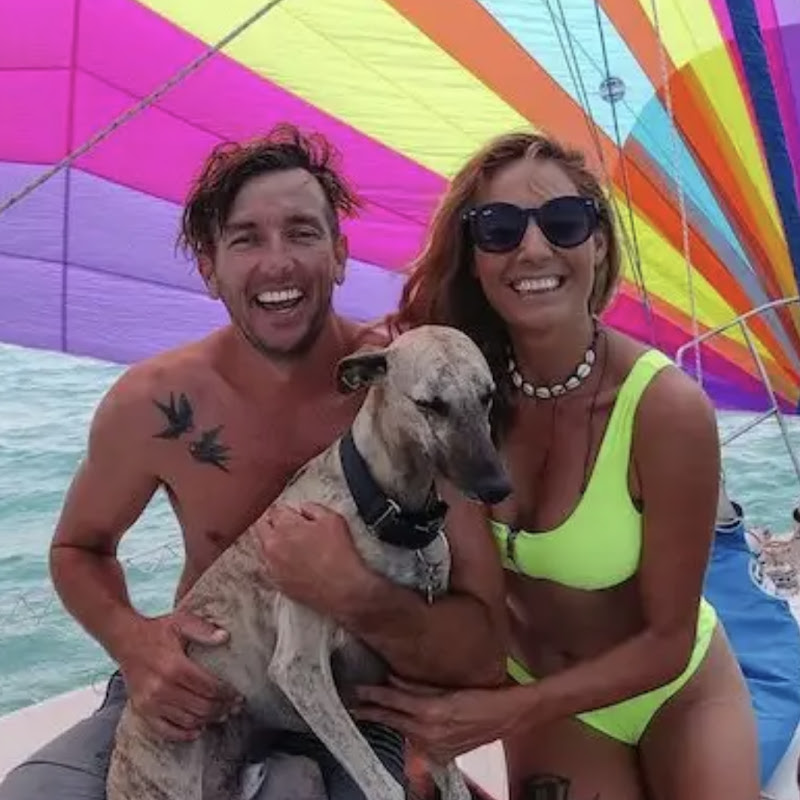
Join Bonnie and Yosh of Sailing Nandji as they document their high-authority 2026 Caribbean odyssey aboard their forensicially refitted Tayana 47.
Channel Information:
Social Media Links:
Sailing through PIRATE TERRITORY.... Venezuela Coast | Sailing French Guiana to Grenada...Ep 461 Location
- Pirate Bay, Man-o-War Bay, Tobago (11.3235,-60.552)
- River Mouth, French Guiana (5.163,-52.641)
- Offshore Oil and Gas Zone, Atlantic Ocean (10.5,-59.5)
Latest Episodes from Sailing Nandji – Frothlyfe
Explore the most recent voyages. Subscribe to the channel to never miss an update!
We ARRIVED to the Caribbean, BUT BARELY! We got Towed in…Ep 462
Yosh and Bonnie navigate Nandji II across 80 miles from Tobago to Grenada, facing confused seas and a fuel shortage before being towed into Prickly Bay.
Pregnant Sailing from Saint Helena to Brazil #sailing #sailingaroundtheworld #yachtlife
We are a family crossing the Southern Atlantic Ocean, sailing from Saint Helena to Brazil in our 47 foot Monohull. Full Episode -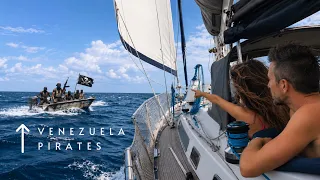
Sailing through PIRATE TERRITORY…. Venezuela Coast | Sailing French Guiana to Grenada…Ep 461
SV Nandji II departs a French Guiana river to sail 600 miles to the Caribbean, skirting Venezuelan offshore oil fields and running dark through pirate-prone waters before making landfall in Pirate Bay on Tobago.
FORCED TO STOP in the AMAZON JUNGLE | French Guiana… Ep 460
After crossing the Atlantic Ocean, Sailing Nandji detours 15 miles up the Maroni River into French Guiana to evade an offshore rocket launch, exploring Saint-Laurent before navigating the river bar.
We CROSSED The ATLANTIC OCEAN! Heading into the Amazon Jungle by Sailboat… Ep 459
After crossing the Atlantic Ocean to French Guiana, the crew of SV Nandji II explores the Salvation Islands penal colony before an Amazon rocket launch forces a passage into the jungle.