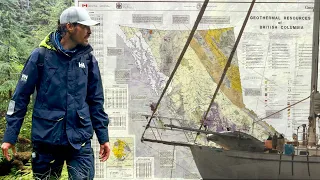
It's All Downhill From Here
A thick morning bank of coastal fog hangs motionless over the Goose Group as Maya Eliza and Aladino Rovegno prepare their 1982 Cape George 36 cutter, Sailing Magic Carpet, for the passage south toward Calvert Island. Having spent months exploring the isolated anchorages of British Columbia’s northern and central coast, the crew delays their departure until early afternoon, waiting for the expected northwesterly breeze to fill in and push the lingering marine layer offshore. The crew has experienced more than enough dense fog during their prior voyage down the west coast of Vancouver Island, and while coastal fog is never entirely avoidable in the Pacific Northwest, they choose to wait at anchor rather than sailing directly into a visible wall of whiteout.
As the morning progresses, the crew observes the intricate tidal geography of the Goose Group archipelago clinging to the western edge of the mainland coast. At low tide, the surrounding islets temporarily consolidate into a continuous expanse of sand and rock before the sea rises again. Aladino studies the shallow topography from the deck: “They’re actually one island at low tide. But at high tide, they they separate. But you can walk from Goose to Gosling. And I think also Gull, Snipe, and all the other Ducklings, they connect.” With the northwesterly establishing and shorelines gradually reappearing, Aladino hoists the mainsail, takes up the anchor under canvas, and points the bow toward the open water without starting the engine.
Navigating Beam Seas and Turquoise Water
Underway south along the central coast, the cutter picks up the building breeze on a beam reach. Although the wind provides steady propulsion, the offshore swell runs slightly ahead of the air velocity, causing the 36-foot traditional hull to roll across the incoming wave train. The motion sets rigging and deck gear flapping as the vessel swings off the beam seas. To stabilize the sail plan and prevent accidental gybing in the irregular rolls, Aladino rigs a boom preventer along the main boom and monitors its tension under load. Satisfied with the arrangement, the crew settles into the rhythm of the passage. Down below in the galley, Maya prepares a warm underway meal of gnocchi and beans tossed in a simple tomato sauce.
As the cutter crosses deeper coastal waters, both sailors notice a striking visual transformation in the sea beneath them. The dark ocean gives way to an intense turquoise hue resembling glacial runoff. Drawing on seasonal observations of the British Columbia coast, Maya attributes the striking coloration to summer coastal algae blooms suspended in the illuminated surface layer. Continuing southward with the rocky outline of the coast slowly sliding by to the east, the vessel approaches the entrance to Hakai Pass.
Anchoring Under Canvas in Hakai Pass
Throughout the passage, coastal fog hugs the surrounding islands, never fully obscuring the route but lingering in persistent gray walls. As Maya reflects on the geographic significance of their heading, the approaching island represents a critical boundary in their voyage south toward Mexico: “Calvert Island really marks the end of the Central Coast.” Beyond this threshold lies Cape Caution and the open waters leading toward Vancouver Island, an area marked by increased vessel traffic, commercial ferries, and settled shorelines. Maya acknowledges a quiet reluctance to leave the quiet wilderness behind, recognizing that despite periods of persistent rain and cabin fever, the countless protected anchorages and solitude represent an irreplaceable home.
By late afternoon, the persistent fog finally gives way. At 6:00 p.m., Magic Carpet II enters the sheltered entrance of Hakai Pass under clearing skies. Aladino notes the timely transition: “Well, it took all day for the fog to clear, but here we are, 6:00 p.m. entering Hakai Pass, and the fog has lifted.” With steady breeze and protected water, Aladino rounds up and sets the anchor entirely under sail—a traditional seamanship maneuver rarely practical in the cramped, wind-shadowed inlets common to the coast, where crews typically rely on auxiliary engines to clear tight anchorages.
Once the hook holds and the canvas is flaked, the crew shifts to their evening anchor routine: “What a luxury though. Honestly, it’s one of my favorite parts of the day when we are at anchor after a good day of sailing.” Inside the timber-finished cabin, Maya lights the heater, switches on the interior lamps, and settles in to read. Running the engine briefly while securing the final docking position provided a tank of hot water, allowing both crew members to take warm showers before turning in for the night.
A Disrupted Solitude and the Calvert Island Excursion
The following morning presents a subtle shock to the crew’s accustomed isolation. Looking through the portholes, Maya spots another cruising sailboat anchored nearby in the cove. The unfamiliar presence contrasts sharply with weeks of completely solitary anchorages, recalling past conversations with cruising friends Allison and James about the crowded waterways of the southern Gulf Islands compared to the remote wilderness of the central coast.
Despite feeling sluggish under returning morning overcast, the crew decides to stretch their sea legs on an inland hike. Consulting notes shared on Navionics, Aladino searches the shoreline for an informal trail reportedly leading from a prominent rock up to an elevated tower. However, cross-referencing topographic details on the Maps.Me application indicates that the documented trailhead actually lies in an adjoining cove, with the initial rock serving only as an overgrown connector.
Rowing their Scout 10 wooden dinghy into the adjacent bay, Aladino observes dense eelgrass beds along the seabed, recalling past diving experiences alongside cuttlefish. The crew reaches a quiet shoreline flanked by weathered wooden pilings and second-growth birch trees, remnants of historic timber operations in the inlet.
Aborted Bushwhack and Rapid Tidal Flood
Securing the dinghy along the gravel beach, Maya and Aladino step ashore to investigate the potential path. The forest floor proves nearly impenetrable, choked with berry bushes and unmarked underbrush. Pausing beside a fallen trunk, Aladino notices fresh animal claw scratches scored into the wood, cautioning against pushing blindly through the dense thicket without visible markers or cleared trails.
Before the expedition can proceed deeper into the woods, the maritime environment forces an abrupt retreat. Returning toward the shoreline after barely five minutes of scouting, Maya realizes that the incoming flood tide has already surged up the slope: “Dinghy’s already in the water. We were only gone for like 5 minutes. Tide’s coming up quickly.” With the tide rising fast, the crew hustles down the rocks to wade into the water and secure the wooden dinghy before the current carries it adrift.
Rather than feeling discouraged by the failed ascent, Maya reflects on the pervasive pressure to constantly optimize every hour in the wilderness, noting that acknowledging an unproductive excursion remains an essential part of honest voyaging. Rejoining Magic Carpet II, they weigh anchor and prepare to sail out of Hakai Pass.
Setting Sail into Fitz Hugh Sound
Emerging from the lee of Calvert Island, the sailors discover that the high topography of the island acts as a natural barrier, trapping the coastal fog to the west and leaving the expanse of Fitz Hugh Sound bathed in clear light. A gentle downwind breeze establishes over the sound, creating ideal reaching conditions.
Aladino welcomes the open waters of the sound: “Fitz Hugh Sound might be clear. That’s one of my favorite places to sail.” Beyond its reliable sailing winds, the waterway holds a reputation for productive salmon fishing, setting the stage for the next leg of their southward journey toward Vancouver Island and beyond.
Frequently Asked Questions
Maya and Aladino delayed departing the Goose Group to wait for dense morning fog to dissipate and for the afternoon northwesterly breeze to establish before raising the mainsail.
At low tide, Goose Island, Gosling Island, Gull, Snipe, and the surrounding ducklings connect into a single walkable landmass, separating back into individual islands as the high tide returns.
The striking turquoise water resembling glacial meltwater was caused by seasonal summer algae blooms along the central coast of British Columbia.
The Cape George 36 cutter arrived at Hakai Pass at 6:00 p.m. as the coastal fog lifted after persisting throughout the day.
The trail was unmarked and blocked by dense berry thickets, animal claw marks were spotted on a tree, and the incoming flood tide threatened to sweep the dinghy away within five minutes.
Book a trip where this was filmed — near Vancouver Island
Support Sailing Magic Carpet
At WeBoating.com, we profoundly acknowledge the unwavering dedication that Sailing Magic Carpet invests in crafting each and every video or voyage. Their passion for delivering exceptional ocean content shines through every frame, and it's a labor of love that deserves your attention.
We invite you to watch their captivating videos here and actively engage with their content, including their social media links above. Liking, commenting, and sharing their work goes a long way in fueling their creative fire.
We're also inviting you to explore the gear, sponsorships, and boat partnerships highlighted in the "It's All Downhill From Here" video description, or directly on YouTube. By engaging with these offerings or purchasing services and items, you directly support Sailing Magic Carpet, their collaborators, and the brands they're associated with.
To ensure you never miss an offshore update, consider visiting their official YouTube Channel to subscribe, like, and join their community directly.
If you have any feedback, corrections, or additional information about Sailing Magic Carpet or their videos, please use the comment form below to share your thoughts with us.
Thank you for being a part of our community and supporting the creators we cherish. Your time and support truly matter!
Order a copy of "The Northern Voyage" book in hardcover! https://sailing-magic-carpet.myshopify.com/products/the-northern-voyage-hardcover-book?variant=52297183461557
Our channel is made possible by you! Check out our Patreon account to get access to weekly real time updates (during boat season), early access to the videos, and maybe even surprise handwritten letters delivered to your mailbox. Patrons are what keep this channel alive! https://www.patreon.com/user?u=13249792
Buy handmade, woodblock print, Magic Carpet t-shirts that we carved with a local artist! https://salvagedcollective.com/products/sailing-magic-carpet-tee?variant=42177359282253
Magic Carpet II is a Cape George 36, built in Port Townsend, WA in 1982. Her hull and ballast were built by Cape George Marine Works, and the rest was finished by the original owner.
Check out our website to learn more about us: https://sailingmagiccarpet.com/
If you’d like to support us but patreon isn’t your thing, you can make a one time donation via PayPal, and we will send you many thanks in return!! https://www.paypal.me/aladinorovegno
PRODUCTS WE USE A LOT: (affiliate links marked with a *)
*MUSICBED: Most of the beautiful music we use in our videos comes from MusicBed. If you want to start making YouTube videos and you need a music licensing website, I highly recommend MusicBed. I find their music to be much higher quality than others. https://fm.pxf.io/DWKZRn
ROCNA ANCHOR: Supplied by CMP Group. https://shop.cmpgroup.net/en-ca/collections/original-rocna
VALLON SUNGLASSES: We love the Heron Ocean glasses for blocking light from all sides. https://www.vallon.com/
OUR DINGHY: This is a dinghy that Aladino built using a kit supplied by Duckworks Boat Builder's Supply in Port Townsend, WA. The design is a Scout 10. https://duckworks.com/plans-kits/kits-and-packages/scout/
*TOTALBOAT: Amazing epoxy, epoxy fillers, primer, etc. Using this link will give you 5% off! https://www.totalboat.com/magiccarpet
EPIFANES PAINT: High quality paint and varnish. Both Magic Carpet I and Magic Carpet II are both finished entirely with Epifanes products, inside and out. https://www.epifanes.com/introduction
*ALADINO'S WORK PANTS: https://gtly.ink/ltMFKBUSO
SIA SANDPAPER: high quality swiss sandpaper that won't flake or leave an uneven finish: www.sia-abrasives.com.
TO BUY SIA SANDPAPER IN CANADA: https://jjscanada.ca/product-category/brand/brand-sia-abrasives/
CAPE GEORGE MARINE WORKS: the boatyard where our boat was built. Located in Port Townsend WA, they do high quality work on traditional style boats. They can also build new boats to order. https://capegeorgecutters.com/
COOLBLUE FRIDGE by TECHNAUTICS: an excellent air cooled marine refrigeration unit. https://www.cruiserowaterandpower.com/coolblue-refrigeration-systems/
Check out Maya’s music on Spotify and iTunes!
SPOTIFY:
https://open.spotify.com/artist/3ypa1AKDFqSOP6Cg2GX53p?si=SLM8H6ZPR4CXyDtaqVDWGA
iTUNES:
https://music.apple.com/ca/artist/maya-eliza/1518186756
We are on instagram at @SailingMagicCarpet
Color graded with Phantom Luts by Joel Famularo
Our email address is for business inquiries only, please! If you do have a business inquiry or other proposition, please email us at SailingMagicCarpet (at) gmail.com
Sailing Magic Carpet
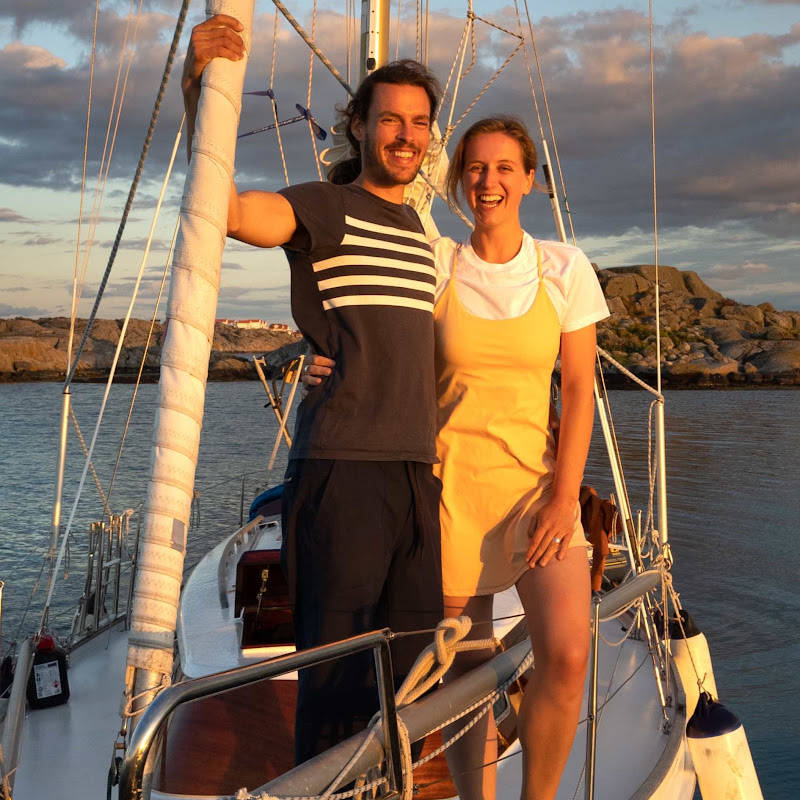
Maya and Aladino: The professional boatbuilder and artist duo who restored a 'crane-drop' Cape George 36, currently navigating the rugged wilderness of British Columbia.
Channel Information:
Social Media Links:
It's All Downhill From Here Location
- Hakai Passage Anchorage (51.7099,-128.1013)
- Goose Group Anchorage (51.965,-128.4363)
Latest Episodes from Sailing Magic Carpet
Explore the most recent voyages. Subscribe to the channel to never miss an update!
10 Years Living On Boats: What I’ve Learned
Celebrating her 30th birthday aboard Magic Carpet II in British Columbia, Maya Eliza reflects on ten years of living on boats, from early refits to passage lessons and cruising sustainability.
Canadian Fishing Lore and Remote Sailing in BC
Sailing from Calvert Island into Rivers Inlet aboard Magic Carpet II, Aladino Rovegno and Maya Eliza explore remote British Columbia anchorages, navigate past floating drift timber, provision at Dawson's Landing, and land a Chinook salmon.
It’s All Downhill From Here
Sailing from the Goose Group to Calvert Island, Maya Eliza and Aladino Rovegno navigate lingering coastal fog aboard Magic Carpet II before entering Hakai Pass under sail.
Searching For The Hermit of the Goose Group
Sailing south from Prince Rupert aboard their restored Cape George 36, Magic Carpet II, Maya and Aladino reach British Columbia's remote Goose Group to explore Gosling Island and trace the legacy of legendary wilderness paddler Kayak Bill.
We’re Starting to Lose Our Minds
Persistent rain and southerly headwinds force Aladino and Maya to motor Magic Carpet II south along British Columbia's inside route, restocking dwindling food in Klemtu before reaching Shearwater Marina for overdue laundry and fuel.