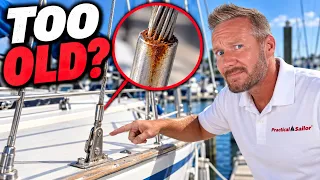
The Perfect Family Sailboat! Hunter 27-2 - Boat Review
Stepping aboard a first-year 1989 Hunter 27-2, Practical Sailor examines how Hunter Marine packaged functional family accommodations into a trailerable 26 1/2-foot pocket cruiser. Built to keep marina slip and storage fees manageable while offering weekend capability for small families, this design delivers amenities rarely found in boats under 27 feet. Carrying an overall draft just shy of 4 feet, the hull navigates shallow inland waterways and the Florida Keys without grounding risks.
Having personally brokered the sale of 3 of these hulls, conducted extensive test sails, and competed aboard and against them in local regattas, the reviewer assesses how the platform performs on the water and holds up on the used brokerage market.
Brokerage Value and Racing Performance
On the pre-owned market, a Hunter 27-2 typically commands between 10 and 15 grand, positioning it as an attainable entry point for sailors weighing the utility of a cruising boat against a camper. Production spanned from 1989 into the mid-90s, with early models maintaining strong resale appeal due to their layout.
In competitive club racing limited to 27 feet or less, the boat demonstrates notable pointing ability. During local fleet racing, a rival C&C 25 mounted a determined challenge, but the Hunter pointed higher on upwind legs to secure the advantage. Against larger fleet competitors, however, the hull reaches its waterline limits. As noted during the walkthrough:
“Hunter does what they do well with this boat they give you big fancy boat stuff for small boat money.”
Rigging Dynamics and Sail Plan Constraints
The fractional rig features a deck-stepped mast measuring under 40 feet, clearing bridges along the East Coast and ICW without requiring unstepping. While the simple single-spreader configuration eases trailering and seasonal rigging, sail balance requires active management. The rig concentrates driving power almost entirely in the oversized mainsail, while the roller-furling headsail remains comparatively small:
“the power of the fractional rig is heavily biased toward the main sale it’s huge compared to the jib so if you’re going to be out there trying to have any kind of performance you need to put the main up”
All control halyards and reefing lines lead aft through coachroof deck organizers to line clutches, supported by Lewmar self-tailing winches on the gunnels. The mainsheet operates via a transom bridle system that simplifies cruising manoeuvres but offers limited fine-tuning for pure racing. The split backstay setup complicates bimini installations, though dedicated canvas frames can bridge the gap.
Deck Layout, Transom Access, and Construction Quality
Moving forward along the side decks reveals single lifelines, long inboard jib tracks, and solid teak handrails along the cabin trunk. The chainplates sit well inboard, maintaining tight sheeting angles while leaving an uncluttered outboard walkway. At the bow, a light-duty bow rail surrounds the furling drum and a dedicated anchor locker sized for lunch-hook ground tackle.
At the stern, Hunter incorporated a walkthrough transom opening directly onto an integrated sugar scoop swim platform. Structural evaluation of the 1989 fiberglass hull confirmed sound hand-laid laminate with no evidence of moisture intrusion or deck delamination, dispelling broader brand reputations from later decades:
“it’s a sailing appliance more than a boat with a lot of character”
Cabin Accommodations and Yanmar Auxiliary Power
Below deck, the companionway opens to a central saloon featuring upholstered seating arranged around 3 sides of a folding-leaf dinette table. Natural light enters through large cabin portlights, maintaining good airflow without mustiness or holding tank odors. Forward, an open-concept V-berth eliminates restrictive bulkheads, providing under-cushion storage and opening ventilation hatches.
Aft of the dinette, a compact galley connects directly to a dedicated aft double berth equipped with 2 portlights, including one opening into the cockpit footwell. Across to starboard, the enclosed head compartment provides standing headroom, a handheld shower, and a folding seat positioned over a Jabsco marine toilet. Hot and cold running water operates via an electric water heater with no engine heat exchanger fitted.
Auxiliary propulsion comes from an inboard Yanmar diesel mounted inside an insulated machinery enclosure with key-start ignition, avoiding the noise and cockpit clutter of a transom-bracket outboard. At 5,000 pounds displacement, the boat remains towable behind a 3/4 ton truck or a properly equipped 1/2 ton F-150.
“what I love most about these 272s is they’re just easy they’re designed easy easy to use easy to sail”
Specifications and Model Metrics
| Specification / Metric | Detail from Evaluation | | Total Length Overall | 26 1/2 feet | | Draft | Under 4 feet | | Mast Clearance | Under 40 feet | | Displacement | 5,000 pounds | | Used Brokerage Price | Between 10 and 15 grand |
Frequently Asked Questions
On the used brokerage market, a Hunter 27-2 typically sells for between 10 and 15 grand depending on overall condition, sail inventory, and whether a road trailer is included.
The Hunter 27-2 features an inboard Yanmar diesel engine installed in an insulated engine box with automotive-style key ignition, eliminating the need for an outboard bracket on the transom.
The vessel draws just shy of 4 feet, allowing access to shallow coastal waters and inland lakes, while its deck-stepped mast stands under 40 feet to clear ICW bridges.
With a displacement of 5,000 pounds and a deck-stepped single-spreader mast, the boat is trailerable behind a 3/4 ton truck or an appropriately equipped 1/2 ton F-150.
The sailplan is heavily mainsail-dominant with a small roller-furling jib. Because drive relies primarily on the mainsail, the main must be raised to achieve proper pointing ability and sailing performance.
Book a trip where this was filmed — near New York City






Support Practical Sailor
At WeBoating.com, we profoundly acknowledge the unwavering dedication that Practical Sailor invests in crafting each and every video or voyage. Their passion for delivering exceptional ocean content shines through every frame, and it's a labor of love that deserves your attention.
We invite you to watch their captivating videos here and actively engage with their content, including their social media links above. Liking, commenting, and sharing their work goes a long way in fueling their creative fire.
We're also inviting you to explore the gear, sponsorships, and boat partnerships highlighted in the "The Perfect Family Sailboat! Hunter 27-2 - Boat Review" video description, or directly on YouTube. By engaging with these offerings or purchasing services and items, you directly support Practical Sailor, their collaborators, and the brands they're associated with.
To ensure you never miss an offshore update, consider visiting their official YouTube Channel to subscribe, like, and join their community directly.
If you have any feedback, corrections, or additional information about Practical Sailor or their videos, please use the comment form below to share your thoughts with us.
Thank you for being a part of our community and supporting the creators we cherish. Your time and support truly matter!
Are you interested in a small family sailboat? Want to take your kids sailing on a fun and comfortable sailboat you can tow home? This trailerable sailboat is the perfect trailer sailor to sail around the lake, take sailboat racing, and is a very cheap sailboat to own. The sailboat ownership cost of this boat will be minimized by its size and features. If you’re trying to decide between a camper or a sailboat, have a look at this excellent 27 foot sailboat – the Hunter 27-2.
Practical Sailor is your trusted resource for reviews of sailboats and sailing gear.
https://www.practical-sailor.com
Chat with us on Facebook! https://www.facebook.com/PracticalSailor/
Practical Sailor
Practical Sailor provides independent, subscriber-funded sailboat evaluations, technical systems testing, and used boat forensics without commercial advertising. Headquartered in Norwalk, Connecticut, under Belvoir Media Group, the publication expanded its investigative reach into digital video under Editor-in-Chief Tim Labute. In 2026, the channel leads critical investigations into older boat insurance underwriting, standing rigging life cycles, and used cruiser value across Long Island Sound and coastal North America.
Channel Information:
Social Media Links:
The Perfect Family Sailboat! Hunter 27-2 - Boat Review Location
- Norwalk, Connecticut, USA (41.1037,-73.4187)
Latest Episodes from Practical Sailor
Explore the most recent voyages. Subscribe to the channel to never miss an update!

Twin Wheels on Sailboats: Better Control or Just More Cost? #shorts
Practical Sailor examines whether twin wheels on modern cruising sailboats offer genuine helm control or unnecessary cockpit clutter, weaker leverage, and added cost.
RIB Dinghies: Why Cruisers Still Choose Them #shorts
Cruising sailors choose rigid inflatable tenders for deep-V chop handling and planing power, balancing performance against davit load limits and UV maintenance.
Tartan 3700: Why Do These Sailboats Hold Their Value? #shorts
A 20-year-old Tartan can cost as much as a newer production boat. The Tartan 3700 helps explain why these sailboats occupy their own world of pricing. #TartanSailboats #Tartan3700 #Sailing #UsedBoats
What Happened to the Hallberg Rassy 400
Practical Sailor tours the Hallberg-Rassy 400 at the Annapolis Sailboat Show, analyzing its twin spade rudders, wide aft beam, Selden rig, and Swedish build quality for ocean voyaging.
Boat Insurance Explained: Is Age Really the Problem? #shorts
Marine insurance underwriters evaluate boat age and maintenance over the sailor's age, debunking rumors that senior mariners face systematic policy denials.