Catalina 34 Used Boat Review
Practical Sailor conducts a thorough evaluation of the Catalina 34, assessing why this vessel stands as one of the most active mid-30-foot purchases on the pre-owned market. Designed for sailors seeking a cruiser between 30 and 36 feet, the 34-foot platform bridged an essential transitional era in American production boatbuilding, incorporating modern aft accommodations, refined hull volume, and practical deck architecture.
Across a production run spanning from 1991 and 99, exactly 1,800 Catalina 34 hulls departed the factory. Drawing on field evaluations conducted on Lake Michigan alongside decades of owner surveys, Practical Sailor examines the mechanical traits, rig options, and interior engineering that define the model’s lasting reputation among coastal cruisers.
Evolution of the Hull: Mark 1, Mark 1.5, and Mark 2
American production boatbuilders experienced major transitions during the 1990s as cruising families demanded walk-through transoms, sugar scoops, wider hulls, and dedicated aft cabins. Catalina Yachts adapted directly to these demands through successive iterations of the 34. The initial hull form, produced between 86 and 95, carried a relatively narrower profile known as the Mark 1 or Mark 1.5. Catalina subsequently released the Mark 2 between 94 and 2001, concluding official production in 99 with a wider hull and an expanded cockpit.
Identifying these distinct iterations is most straightforward from the stern. The original Mark 1 features a traditional closed transom, whereas the Mark 1.5 incorporates a molded cutout specifically to assist boarding ladder access. The Mark 2 eliminated the transom enclosure entirely, offering an open transom that streamlined dinghy access and swimming. Unlike the older Catalina 38, which was not a Frank Butler design, the 34 retained the builder’s conservatively modern signature: a fin keel paired with a spade rudder, short overhangs, a flattish sheer line, and the recognizable cabin house crowned with Catalina’s diamond sail emblem. Compared to the smaller Catalina 27 and 30 or the Catalina 36, the 34 demonstrated a more refined hull shape, carrying its beam aft while utilizing full midship sections to maximize interior volume.
Lake Michigan Sea Trial and Sailing Performance
To assess underway behavior, the evaluation team sailed the Catalina 34 across Lake Michigan during a test trial marked by puffy, variable breeze. Under full sail, the boat proved to be “a delight to sail” across multiple points of sail, though the puffy conditions pushed the hull into occasional over-canvased states that generated noticeable weather helm. Downwind legs revealed solid tracking, although the test crew noted that the sail plan could have utilized an asymmetrical spinnaker to optimize light-air running angles.
The 34 combines a moderate to light displacement with a generous sail area and a long waterline. Carrying a local PHRF handicap rating of around 144, the design sits comfortably in the middle of its contemporary peer fleet. While considerably slower than dedicated lightweight racers, the Catalina 34 remains significantly faster than older heavy cruisers. The vessel readily sails to its handicap rating around the buoys while preserving the stability required for cruising passages. In escalating winds, cruising crews are advised to tuck in an early reef to mitigate heel and preserve fingertip helm control.
Factory Equipment and Deck Hardware Standards
Practical Sailor first inspected the Catalina 34 platform in 1990, noting that factory delivery specifications departed from the traditional practice of delivering stripped bare hulls lacking cushions, lifelines, or bilge pumps. Standard factory equipment included adequately sized self-tailing primary winches and name-brand marine hardware throughout the pressure water pump, stove, and head compartments. Aside from occasional traveler maintenance and port leaks reported on pre-1988 hulls, the deck gear has exhibited exceptional longevity.
When reviewed in 1990, the Catalina 34 carried a factory base price of $60,000, representing roughly $150,000 in contemporary valuation. That base specification arrived complete with a mainsail, a 110% jib, mainsail cover, two-burner stove with oven, hot and cold pressurized water, two marine batteries, 110-volt shore power, and a stern boarding ladder. In contrast, modern replacement designs such as the Catalina 355 command prices between 300 and 350,000 dollars, making well-maintained used 34-foot hulls an attractive financial alternative.
European Interior Arrangement and Livability
Down below, the Catalina 34 adopts a European-style interior arrangement. It was among the first Catalina models to position the head aft adjacent to the companionway, allowing the compartment to double effectively as a wet locker for dripping foul weather gear during offshore passages. Unlike European contemporaries, the Catalina preserves full forward hull sections, creating room for a generous forward V-berth cabin, a spacious dinette, and an opposing settee.
The galley is arranged in an L-shape adjacent to the navigation station. On the starboard side, an aft cabin accessed through the galley provides an athwartship double berth alongside a dedicated settee. While the companionway door swing into the galley creates a minor working compromise and warm climates challenge aft cabin ventilation, owners consistently celebrate the layout. In owner surveys conducted by Practical Sailor, the spacious interior emerged as the most praised feature of the vessel, with respondents repeatedly emphasizing that the hull delivers the “most room for the money” in the mid-30-foot bracket.
Keel Configurations, Rudder Retrofits, and Auxiliary Power
Under the water, the standard Catalina 34 features a fin keel drawing 5 feet 7 inches. Catalina also offered a shallow-draft wing keel option drawing 31, as well as an optional tall rig that adds 26 feet of mainsail area, delivering a 5% increase in total sail plan. Survey feedback regarding the wing keel showed mixed reactions, with some sailors praising its ride and shallow draft access while others preferred the deep-water tracking of the standard 5-foot-7-inch fin. Sailors opting for the fin keel also gain compatibility with an upgraded elliptical rudder, which significantly suppresses the boat’s tendency to round up during sudden puffs.
Auxiliary propulsion originally centered on a 3-cylinder Universal 25 diesel. Survey respondents frequently noted engine vibration and sluggish acceleration when paired with the original standard two-blade propeller. Upgrading to a three-blade propeller dampens vibration while restoring motoring thrust. Cruisers inspecting pre-1988 hulls should also verify that the alternator mount has been upgraded to the Universal 25 XP bracket, as early mounting brackets could fracture cylinder heads under prolonged engine vibration.
| Design Element | Practical Sailor Evaluation Benchmark |
|---|---|
| Fleet Production | 1,800 hulls built between 1991 and 99 |
| Standard Fin Keel Draft | 5 ft 7 in |
| PHRF Handicap Rating | 144 |
| 1990 Factory Base Price | $60,000 |
Used Market Resale and Owner Network
While depreciation has softened asking prices over time—with fully equipped 1990 models often listed around 40,000 dollars on the domestic market—the Catalina 34 retains steady liquidity. The sustained appeal of the boat is heavily bolstered by owner infrastructure, led by the Catalina 34 International Association, factory support from Catalina, and dedicated aftermarket parts sourcing through Catalina Direct. Because active owner associations document common mechanical quirks, prospective buyers enter negotiations with their “eyes wide open”, backed by comprehensive technical documentation.
Frequently Asked Questions
The standard Catalina 34 fin keel draws 5 feet 7 inches, while an optional shallow-draft wing keel draws 31.
The Catalina 34 carries a PHRF rating of around 144, placing it squarely in the middle of its contemporary peer group.
Catalina constructed exactly 1,800 hulls of the 34 between 1991 and 99 across its production run.
Catalina installed a 3-cylinder Universal 25 diesel, with later production transitioning to the Universal 25 XP.
Replacing the stock two-blade prop with an upgraded three-blade propeller resolves vibration and boosts motoring power.
Stern styling defines each generation: the Mark 1 has a closed transom, the Mark 1.5 adds a swim ladder cutout, and the Mark 2 has an open walk-through transom.
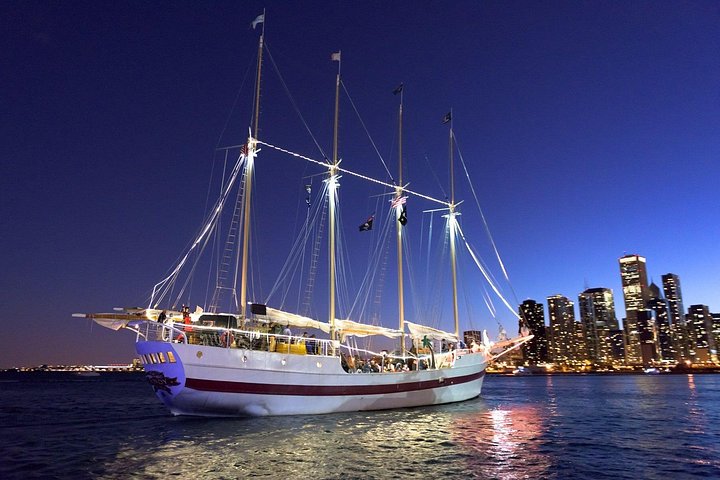
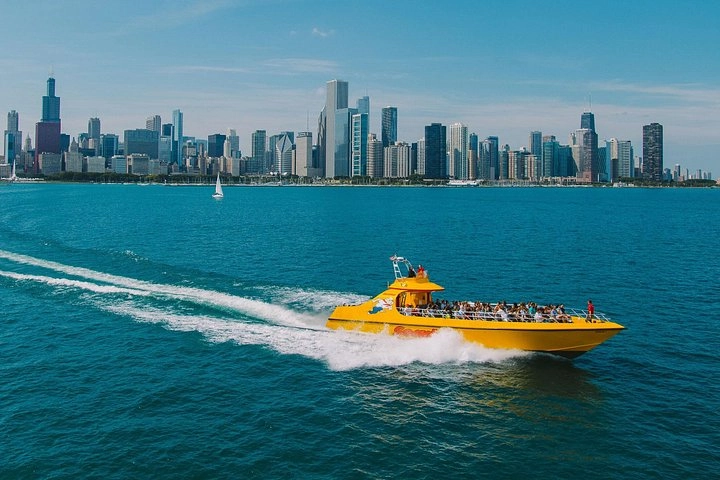
Book a trip where this was filmed — near Chicago




Support Practical Sailor
At WeBoating.com, we profoundly acknowledge the unwavering dedication that Practical Sailor invests in crafting each and every video or voyage. Their passion for delivering exceptional ocean content shines through every frame, and it's a labor of love that deserves your attention.
We invite you to watch their captivating videos here and actively engage with their content, including their social media links above. Liking, commenting, and sharing their work goes a long way in fueling their creative fire.
We're also inviting you to explore the gear, sponsorships, and boat partnerships highlighted in the "Catalina 34 Used Boat Review" video description, or directly on YouTube. By engaging with these offerings or purchasing services and items, you directly support Practical Sailor, their collaborators, and the brands they're associated with.
To ensure you never miss an offshore update, consider visiting their official YouTube Channel to subscribe, like, and join their community directly.
If you have any feedback, corrections, or additional information about Practical Sailor or their videos, please use the comment form below to share your thoughts with us.
Thank you for being a part of our community and supporting the creators we cherish. Your time and support truly matter!
Are you shopping for a 30 to 36 foot sailboat? One of the hottest selling mid thirty footers on the used sailboat market right now is the Catalina 34 Mark two. Cut out transom, aft cabin, wider hull, with some great sailing chops it’s easy to see why. So let’s have a look at this mid to late 90’s 34 footer.
Practical Sailor Catalina 34 Review: https://www.practical-sailor.com/sailboat-reviews/the-catalina-34-30-years-later
Video footage thanks to:
EZIYACHT YouTube
HarborView Yacht Sales YouTube
Practical Sailor is your trusted resource for reviews of sailboats and sailing gear.
https://www.practical-sailor.com
Chat with us on Facebook! https://www.facebook.com/PracticalSailor/
Practical Sailor
Practical Sailor provides independent, subscriber-funded sailboat evaluations, technical systems testing, and used boat forensics without commercial advertising. Headquartered in Norwalk, Connecticut, under Belvoir Media Group, the publication expanded its investigative reach into digital video under Editor-in-Chief Tim Labute. In 2026, the channel leads critical investigations into older boat insurance underwriting, standing rigging life cycles, and used cruiser value across Long Island Sound and coastal North America.
Channel Information:
Social Media Links:
Catalina 34 Used Boat Review Location
- Lake Michigan Test Sail (43,-87)
Latest Episodes from Practical Sailor
Explore the most recent voyages. Subscribe to the channel to never miss an update!

Tartan 3700 Construction: What Sets Later Models Apart #shorts
Tartan 3700 construction evolved over its long production run—from conventional cored laminates to later epoxy-infused hulls, structural grids, bonded bulkheads, and carefully built interiors. #Tartan3700 #SailboatConstruction #Sailing #BoatDesign
Why Are New Boats So Expensive?
Why are sailboats so expensive? Why does a new 35-foot sailboat cost over $300,000 when you could buy a similar-sized boat for $45,000 forty years ago? In this episode of Practical Sailor, we investigate the shocking price of new sailboats, comparing the classic Catalina 34 with the modern Jeanneau ...
Catalina 34: Affordable Classic Cruiser or 40-Year Headache? #shorts
A 34-foot Catalina 34 offers spacious cabins, an inboard diesel, and lively performance at used-car prices. But after nearly 40 years, is it a proven cruiser or a project full of costly surprises? #Catalina34 #SailboatBuying #CruisingSailboat #BoatReview
Twin Wheels on Sailboats: Better Control or Just More Cost? #shorts
Practical Sailor examines whether twin wheels on modern cruising sailboats offer genuine helm control or unnecessary cockpit clutter, weaker leverage, and added cost.
RIB Dinghies: Why Cruisers Still Choose Them #shorts
Cruising sailors choose rigid inflatable tenders for deep-V chop handling and planing power, balancing performance against davit load limits and UV maintenance.