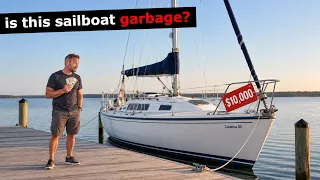
Dream BIG! 💭 Your Ultimate Sailboat! ⛵️ No Limits! ❌ #sailing #dreamboat #goals #dreambig #sail
In boat shopping and yacht brokerage appraisal, sailors routinely find their offshore aspirations constrained by marina slip fees, insurance underwriting restrictions, and finite maintenance budgets. On Lady K Sailing, technical editor Tim Labute poses an exhilarating thought experiment: what happens when financial and logistical boundaries are stripped away in cruising sailboat design? By setting aside dockage penalties and capital limits, cruisers can deconstruct what an uncompromised 47-foot voyaging yacht should embody, balancing high-seas stability with the shallow-water freedom demanded across the Bahamas and remote ocean anchorages.
Far from an exercise in superficial luxury, Labute’s unconstrained specification focuses squarely on naval architecture, deck ergonomics, mechanical redundancy, and shorthanded sailing efficiency. The dream cruising vessel must handle the punishing physical realities of long-distance passage making while serving as an autonomous floating sanctuary capable of disappearing off-grid. By analyzing how modern twin-helm cockpits, bow thrusters, zoned accommodations, and renewable energy arrays integrate into a unified platform, cruisers can distinguish between essential passage-making infrastructure and superficial marina marketing.
Deconstructing the No-Limits Offshore Thought Experiment
When evaluating cruising sailboat design, Lady K Sailing host Tim Labute strips away practical financial constraints to establish a technical benchmark for blue water voyaging and shallow passages in the Bahamas, emphasizing robust offshore systems. Traditional boat purchasing involves an agonizing sequence of compromises between structural displacement, interior volume, draft limitations, and operating overhead. By removing insurance surveys, marina berth size limits, and equipment budgets, Labute identifies what a naval architect would prioritize to engineer the ultimate balance between heavy-weather ocean capability and coastal access. The resulting conceptual vessel centers on a modern 47-foot hull form that integrates sophisticated offshore systems without sacrificing shorthanded control.
Deck Ergonomics: Twin Helms, Bow Thrusters, and Push-Button Control
In this exploration of cruising sailboat design, Tim Labute of Lady K Sailing analyzes how deck layout and maneuvering gear must perform both in crowded Florida marinas and remote anchorages across the Bahamas, emphasizing robust offshore systems. On a 47-foot displacement hull, docking in stiff crosswinds or tight mooring slips can quickly induce intense stress for shorthanded crews. The dream vessel eliminates this friction through an integrated proportional bow thruster and dual-speed electric winches, enabling push-button sail handling and fingertip docking without foredeck acrobatics. Twin helm stations open an unobstructed central walkthrough to a fold-down swim platform, maximizing sightlines forward while transforming daily tender and water access.
Below-Decks Architecture: Spatial Zoning, Private Heads, and Climate Systems
Turning below decks in his analysis of cruising sailboat design, Tim Labute of Lady K Sailing focuses on spatial zoning and acoustic isolation, recognizing that voyaging from the Bahamas requires durable offshore systems to sustain long-term harmony. When six adults live aboard an offshore cruiser for extended passages, close quarters can rapidly degrade crew morale without thoughtful architectural separation. The dream blueprint specifies a three-cabin, three-head interior configuration where every stateroom features its own en-suite head and dedicated shower stall. Supported by an ocean-going galley with centerline double sinks and reverse-cycle air conditioning powered by an auxiliary diesel generator, the interior ensures true privacy and four-season climate regulation.
Anchorage Autonomy: Heavy Davits, Solar Arrays, and Starlink Connectivity
Examining self-sufficient cruising sailboat design, Tim Labute of Lady K Sailing demonstrates that venturing beyond marina docks into the Bahamas demands self-sustaining offshore systems capable of indefinite electrical and logistical independence. A robust stern arch serves as the foundation for off-grid autonomy, incorporating heavy-duty davits rated to hoist a substantial rigid inflatable dinghy and outboard clear of following seas. Surmounting the arch, a high-output 1,000-watt solar array continuously replenishes a lithium iron phosphate battery bank. Paired with high-speed Starlink maritime satellite connectivity, an AIS Class B transponder, and a networked autopilot, the vessel allows its crew to safely disappear off the grid for months without compromising safety.
The Shoal Draft Compromise: Unlocking the Bahamas and Remote Atolls
The defining hydrodynamic parameter in cruising sailboat design highlighted by Tim Labute on Lady K Sailing is keel draft, which dictates whether a yacht can enter the shallow waters of the Bahamas or remains barred by complex offshore systems of sandbars and coral heads. Deep-draft keels exceeding seven feet deliver narrow upwind pointing angles in offshore racing, but they severely handicap cruising sailors across the Great Bahama Bank, Exuma Cays, and Florida Keys. Labute establishes a strict draft limit of under six feet (1.8 meters) using a high-density bulb keel, preserving strong righting moments and ocean stability while unlocking thousands of sheltered anchorages denied to deep-draft yachts.
| Feature / System | “No-Limits” Specification | Pragmatic Cruising Rationale |
|---|---|---|
| Hull Form & Length | 47-Foot Modern Monohull | Maximizes interior volume and hull speed for shorthanded crews. |
| Cockpit Architecture | Twin Helms & Open Walkthrough | Clear sightlines forward and unhindered access to swim platform. |
| Keel & Draft | Shoal Bulb Keel (<6.0 ft / 1.8 m) | Unlocks the Great Bahama Bank and Exumas without grounding. |
| Maneuvering Propulsion | Proportional Bow Thruster | Eliminates docking stress in tight marina slips and crosswinds. |
| Deck Hardware & Rig | Dual-Speed Electric Winches | Push-button halyard and sheet control for solo or aging crews. |
| Accommodation Layout | 3 Cabins & 3 En-Suite Heads | Spatial and acoustic privacy so six adults live aboard friction-free. |
| Galley & Climate | Centerline Sinks, AC & Generator | Seaworthy meal prep and multi-zone tropical climate control. |
| Off-Grid Power & Davits | 1,000W+ Solar, Davits, Starlink | Indefinite electrical autonomy, secure tender stowage, and global comms. |
Frequently Asked Questions
A shoal draft under 6 feet (1.8 meters) is essential for cruising shallow waters like the Great Bahama Bank, the Exumas, and the Florida Keys. Deeper keels prevent yachts from entering protected hurricane holes, cuts, and shallow anchorages, forcing vessels into exposed offshore roadsteads.
On a 47-foot displacement hull, strong crosswinds and tight marina fairways make low-speed handling challenging for shorthanded crews. A bow thruster provides lateral directional control, eliminating docking stress, drift into neighboring slips, and violent engine throttle bursts.
Twin helms position the skipper outboard on either side, providing unobstructed forward sightlines along the sails and waves on both tacks. They also open a wide central walkthrough corridor directly to the swim platform, greatly improving deck ergonomics and tender access.
Running reverse-cycle marine air conditioning away from the dock requires an auxiliary diesel generator paired with a substantial lithium battery bank and high-output solar array. The generator supports heavy compressor cycles while solar maintains house circuits during daylight hours.
Technical editor Tim Labute advises prospective boat buyers that while an unconstrained blueprint highlights optimal naval ergonomics—such as shoal draft, electric winches, and redundant electronics—cruisers should prioritize structural integrity, low maintenance complexity, and manageable operating expenses over superfluous luxury.
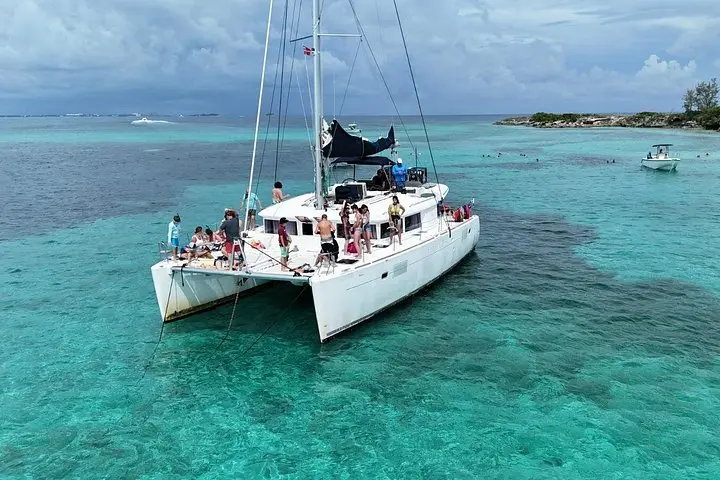
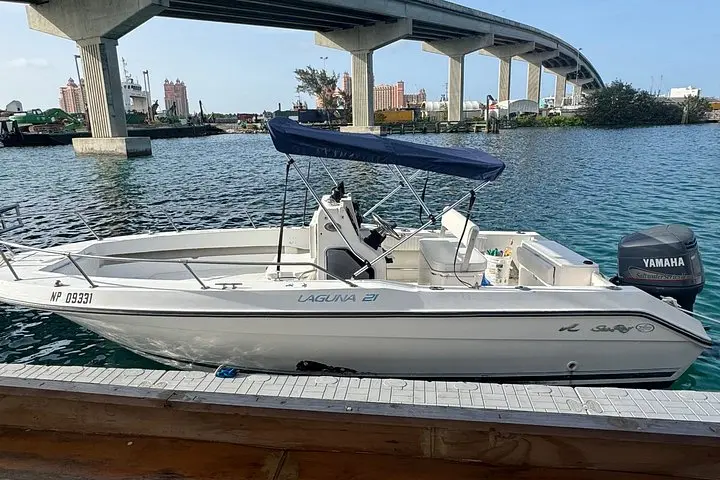
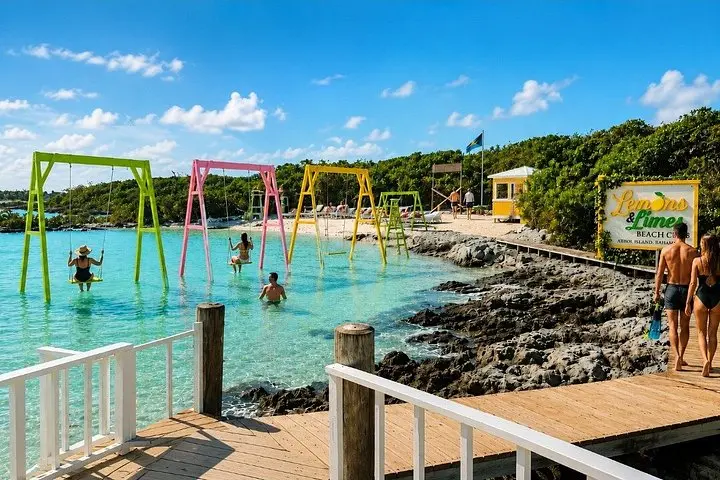
Book a trip where this was filmed — near New Providence Island
Support Lady K Sailing
At WeBoating.com, we profoundly acknowledge the unwavering dedication that Lady K Sailing invests in crafting each and every video or voyage. Their passion for delivering exceptional ocean content shines through every frame, and it's a labor of love that deserves your attention.
We invite you to watch their captivating videos here and actively engage with their content, including their social media links above. Liking, commenting, and sharing their work goes a long way in fueling their creative fire.
We're also inviting you to explore the gear, sponsorships, and boat partnerships highlighted in the "Dream BIG! 💭 Your Ultimate Sailboat! ⛵️ No Limits! ❌ #sailing #dreamboat #goals #dreambig #sail" video description, or directly on YouTube. By engaging with these offerings or purchasing services and items, you directly support Lady K Sailing, their collaborators, and the brands they're associated with.
To ensure you never miss an offshore update, consider visiting their official YouTube Channel to subscribe, like, and join their community directly.
If you have any feedback, corrections, or additional information about Lady K Sailing or their videos, please use the comment form below to share your thoughts with us.
Thank you for being a part of our community and supporting the creators we cherish. Your time and support truly matter!
Lady K Sailing
From the legendary Hughes 35 'Lady K' to the current catamaran 'Rome' refit, Tim Labute provides the technical gold standard for affordable cruising.
Channel Information:
Social Media Links:
Dream BIG! 💭 Your Ultimate Sailboat! ⛵️ No Limits! ❌ #sailing #dreamboat #goals #dreambig #sail Location
- Exuma Cays & Bahama Banks Shoal Cruising Ground (24.5,-76.8)
- Fort Lauderdale Marine Hub, Florida, USA (26.1224,-80.1373)
Latest Episodes from Lady K Sailing
Explore the most recent voyages. Subscribe to the channel to never miss an update!
3 Sailboats I’d Actually Buy for $5,000
Chief Editor of Practical Sailor Tim Labute breaks down the current used boat market and reviews three budget-friendly sailboats that offer real value for new cruisers.
Why Everyone Hates New Sailboats
Lady K Sailing examines modern production boat criticism, analyzing bonded structural grid liners, keel bolt engineering, and CE Category A ocean ratings.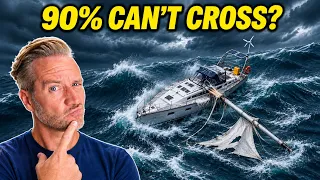
Why 90% of Sailboats Can’t Actually Cross an Ocean
Tim Labute investigates the viral claim that 90% of sailboats cannot cross an ocean, contrasting modern production rally finishers with structural inspection realities.
The Cottage Boat! Start Your Waterfront Dream Before Moving #cottageboat #sailing #sailboat #travel
Tim Labute of Lady K Sailing outlines the cottage boat strategy, explaining how aspiring boaters can use remote work, three-year plans, and weekend commuting to start living on the water years before permanent relocation.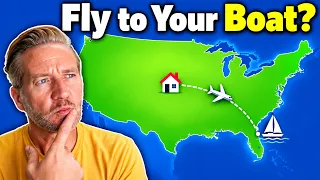
How Landlocked Sailors Actually Own Boats
Tim Labute outlines practical methods for owning a cruising sailboat hundreds of miles from the coast, contrasting permanent relocation with the commuter cottage boat model.