IS ONE Rudder Faster? One Last Ride on My Hobie 16
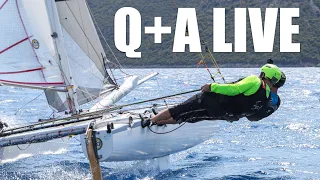
Joseph Bennett of Joyrider TV pushes his Hobie 16 catamaran, Bad Boy 95, across an open stretch of Vassiliki Bay in Lefkada, Greece, for a high-speed farewell run before handing the boat to a new owner. Rigged with distinctive black Whirlwind sails, the catamaran sets out into building breeze with Bennett running the jib sheet toward the outer edge of the crossbar to maintain full sheet control while suspended on the trapeze.
The outing serves as an experimental speed test to verify whether raising one rudder blade reduces hydrodynamic drag enough to unlock higher speeds. Bennett adopts the configuration after studying runs by catamaran speed sailor Steve Ned Kelly on the global speed stick leaderboard, setting out to discover how shedding the drag of an idle rudder alters steering authority, hull balance, and high-speed stability.
Single Rudder Concept and Helm Physics
Sailing a twin-rudder beach catamaran at high speed typically involves keeping both foils immersed, but lifting the windward rudder blade cuts surface friction through the water. Bennett explores whether this setup delivers a measurable performance boost or compromises essential steering control when driving hard through patchy pressure.
Upon pulling the windward foil clear of the water, Bennett immediately notes a radical transformation in helm resistance. “it makes it so much lighter on the helm because at the moment this boat really needs the rudder tune up” Bennett explains while holding the tiller extension on the wire. While the catamaran had previously developed heavy weather helm due to rudder alignment needs, the single immersed blade neutralizes the steering pressure, producing a light and direct helm response.
Rudder Lock Challenges and Sailor Stance
Operating with an elevated rudder introduces immediate mechanical complications on the racecourse. The unlocked windward rudder easily unseats and drops back into the water under vibration or accidental contact, forcing Bennett to move in from the trapeze wire, head up into the wind, and manually reset the foil back into its elevated bracket.
The raised rudder also presents a physical safety concern for the helmsman during aggressive trapeze work. Bennett observes the exposed lower edge hanging over the stern quarters: “Granted, I’ve got that flipping razor blade off the back of the boat in case I go off the back.” To prevent kicking the blade down or contacting the foil, Bennett alters his footwork along the gunwale, standing with his toes angled forward while tracking incoming gusts across Vassiliki Bay.
High-Speed Downwind Reaches and Rig Adjustments
Bearing off downwind, Bennett concentrates on keeping the windward hull flying clear of the waves to minimize wetted surface. Maintaining steady lift requires precise sheet adjustments, managed through a 9 mil Marlow Excel taper mainsheet that Bennett praises for holding its grip straight out of the box without slipping in the cleats.
Sail shape requires constant management throughout the session. Because the original flexible jib battens were packed away with the catamaran for its pending buyer, Bennett sails with stiff replacement battens that leave the jib fabric remarkably flat. The jib sheet also snags briefly beneath the trampoline capsize righting bag, requiring careful clearance while easing off the downhaul to adapt the rig to shifting wind velocity.
Trapeze Tacking and Mechanical Reset
As gusts taper out toward the edge of the bay, Bennett tests whether the raised foil can be re-engaged directly from the trapeze harness without stepping back onto the trampoline. Reaching aft with the tiller extension held in his forward hand, he applies firm downward leverage to lock the assembly down: “Stick in the front hand. Push. I’ve only gone and done it.”
Securing both rudders back into the water allows Bennett to complete a stable tack from the trapeze without spinning out. To reset the boat for the next reach, he returns to the hull to raise the opposite windward foil, observing that “to lift the rudder without inverting the cam, got to kind of pull forwards as well.”
Maximum Velocity Runs and Beach Landing
Heading into the strongest gusts of the day, Bennett lines up for a final high-speed speed run. As the catamaran accelerates, he balances the boat by sliding his weight forward during sharp head-ups to prevent the bows from lifting into a backward capsize.
Pushing through peak velocity, Bennett observes the boat reaching “maybe 20 knots at times, maybe more.” Under peak lateral loads, the single immersed foil begins to suffer from severe rudder stall, acting like an emergency brake against the water. Satisfied with the speed run on Bad Boy 95, Bennett raises the rudder, dumps mainsheet tension, and glides onto the Vassiliki beach under jib power alone before releasing the jib on a countdown to conclude the session.
Frequently Asked Questions
Bennett tested raising the windward rudder to determine if reducing hydrodynamic drag unlocks higher boat speed, following the technique used by Steve Ned Kelly on the speed stick leaderboard.
Lifting the windward rudder significantly reduced helm resistance, making steering feel light in the hands even though the Hobie 16 had previously suffered heavy helm load from un-tuned rudders.
The raised rudder projected outward behind the stern like an exposed blade, creating a sharp hazard if the sailor fell off the back of the catamaran.
Yes, Bennett demonstrated that holding the tiller extension in his forward hand and pushing downward allowed him to latch the rudder into position from the trapeze before tacking.
Bennett used a 9 mil Marlow Excel taper mainsheet, noting that it provided reliable handling and grip without slipping straight out of the box.
Book a trip where this was filmed — near Lefkada



Support Joyrider TV
At WeBoating.com, we profoundly acknowledge the unwavering dedication that Joyrider TV invests in crafting each and every video or voyage. Their passion for delivering exceptional ocean content shines through every frame, and it's a labor of love that deserves your attention.
We invite you to watch their captivating videos here and actively engage with their content, including their social media links above. Liking, commenting, and sharing their work goes a long way in fueling their creative fire.
We're also inviting you to explore the gear, sponsorships, and boat partnerships highlighted in the "IS ONE Rudder Faster? One Last Ride on My Hobie 16" video description, or directly on YouTube. By engaging with these offerings or purchasing services and items, you directly support Joyrider TV, their collaborators, and the brands they're associated with.
To ensure you never miss an offshore update, consider visiting their official YouTube Channel to subscribe, like, and join their community directly.
If you have any feedback, corrections, or additional information about Joyrider TV or their videos, please use the comment form below to share your thoughts with us.
Thank you for being a part of our community and supporting the creators we cherish. Your time and support truly matter!
One last ride on Bad Boy 95, my legendary Hobie 16 catamaran, before she heads off to a new owner!
I'm taking my Hobie 16 with its distinctive black Whirlwind sails out into an almost empty Vassiliki Bay, Lefkada, Greece, for one final high-speed sailing session.
The mission? Give it absolutely everything and see just how fast we can go!
But this isn't just a farewell sail. I'm also experimenting with sailing a Hobie 16 at speed with one rudder raised. Does reducing the drag of a second rudder make the boat faster? What happens to the steering, handling and control? And is there actually anything to gain?
We put it to the test on the water and explore the advantages and disadvantages.
This is a special sail for me. Bad Boy 95 has been a big part of my catamaran sailing adventures, and there's something quite emotional about taking a favourite boat out for the last time.
Join me for one final blast around Vassiliki Bay.
**In this video:**
- One last high-speed sail on Bad Boy 95
- Hobie 16 speed sailing with black Whirlwind sails
- Testing a Hobie 16 with one rudder raised
- Rudder drag versus steering control
- A final farewell to a much-loved catamaran
Want to improve your catamaran sailing? Check out Joyrider Academy: The Classroom Series at TotalJoyrider.com.
Subscribe to Joyrider TV for catamaran sailing tutorials, speed sailing, racing tips, boat reviews and adventures on the water.
#Hobie16 #CatamaranSailing #JoyriderTV
➡️ Master Catamaran Sailing – Faster
Stop guessing. Start improving.
• 18 structured modules
• 120+ lessons
• From beginner to confident sailor
Boat handling. Power control. Racing. All explained clearly.
Get instant access:
YouTube Membership:
https://www.youtube.com/channel/UC1lH
Full Course (one-time):
https://totaljoyrider.com/products/joyrider-academy-the-classroom-series
Official Joyrider Hub
Merch, Speed Stick leaderboard, coaching and more
https://totaljoyrider.com](https://totaljoyrider.com
Gear I Use and Recommend
SunGod Sunglasses
https://www.sungod.co/s/eR4VYYu3/](https://www.sungod.co/s/eR4VYYu3/
Telemetry Overlay – add GPS data to your sailing videos
Use code JOYRIDERTV for discount
https://bit.ly/telemetryoverlay
Instamic Waterproof Audio
https://instamic.io/?aff=119
Xero Shoes
https://xeroshoes.com/go/joyridertv
Forward WIP – impact protection for sailing
@forwardwip
Want to be part of the action?
Upload your sailing videos to Joyrider Worldwide and get featured.
Get uploader access at https://totaljoyrider.com
About Joyrider TV
Joyrider TV is one of YouTube’s leading channels for catamaran sailing.
Videos include tutorials, maintenance guides, Q+As, race strategy and real-world sailing.
Whether you sail a Hobie, Nacra, A-Class, Prindle, Dart, Tornado, F18, F16 or more, you’ll find practical, no-nonsense advice to help you sail faster, safer and with more confidence.
---
#catsailing #sailboat #joyridertv

Joyrider TV
Joseph Bennett: The high-performance 'Joyrider' mastering 26-knot catamaran runs in Vassiliki, Greece, while redefining budget DIY racing for the global community.
Channel Information:
Social Media Links:
IS ONE Rudder Faster? One Last Ride on My Hobie 16 Location
- Vassiliki Bay, Lefkada, Greece (38.6282,20.6025)
Latest Episodes from Joyrider TV
Explore the most recent voyages. Subscribe to the channel to never miss an update!
Too Much Power? Which Controls to Use and When | Q+A LIVE
How do you depower a beach catamaran when the wind picks up? In this Joyrider TV Live Q&A, I’ll break down the Cunningham (downhaul), mainsheet, traveller and steering. What does each one change, and which would I use first upwind or downwind? I’ll cover what I’d do in a gust and what I’d adjust...
1 Nautical Mile in 3 Minutes – Can We Do It?
Hobie 16, One nautical mile. Three minutes. Can we average 20 knots? Out sailing with Asker from the Netherlands, pushing the catamaran to see just how quickly we can cover a nautical mile. #JoyriderTV #CatamaranSailing #HobieSailing #SpeedSailing #Sailing #Shorts ➡️ Master Catamaran Sailing – F...
First Solo Sail in Stronger Wind | Hobie 16 Complete Guide
Joyrider TV shares an expert guide to solo Hobie 16 catamaran sailing in strong winds, detailing launch techniques, mainsheet trim, and beach landing skills.
How to Rig a 6:1 Downhaul Without Twists | Catamaran Sailing #Shorts
Joseph Bennett explains the sequence for reeving a 6:1 catamaran downhaul cleanly, aligning top and bottom blocks at 90 degrees to eliminate twists.
How to WIN a World Championship Race | Nacra 15 POV
What does it take to WIN a race at the Nacra 15 World Championships? Jump onboard FRA 362 with French sailors Anahita Fontanille and Léo Jean-Albert as they race to victory in Race 5 of the 2026 Nacra 15 World Championships in Plymouth, UK. But this isn't just onboard racing footage. Through...