How Fast Can a Sailboat Go? | Global Speed Competition
In the high-velocity arena of speed sailing, where boundary-layer fluid dynamics meets raw aerodynamic horsepower, sailors have spent decades attempting to push past hydrodynamic barriers. Performance multihull racer and coach Joseph Bennett of Joyrider TV has turned this pursuit into a worldwide empirical laboratory through the Global Speed Stick Competition. Operating from his high-wind training grounds in Vassiliki, Greece, Bennett analyzes calibrated GPS telemetry logged by sailors across the globe to answer an essential maritime question: exactly how fast can a wind-driven sailing vessel go when pushed to the absolute edge of stability?
The quest for sailing velocity spans a massive technological spectrum, ranging from traditional displacement cruising hulls battling wave-making resistance to carbon-fiber hydrofoils flying clear of the water. By aggregating real-world speed runs from recreational beach cats, high-performance skiffs, Olympic classes, and foilers, Bennett provides a technical audit of velocity across sailing disciplines. His analysis bridges everyday trailerable multihulls like the Hobie 16 with Grand Prix foilers such as SailGP F50 catamarans and America’s Cup AC75s, showing how amateur racers regularly shatter the 20-knot mark through disciplined apparent wind sailing and precision rig tuning.
The Aerodynamic Engine: Apparent Wind, Mast Rotation, and Sail Trim Forensics
Analyzing high-velocity performance, Joseph Bennett and Joyrider TV demonstrate that high-performance sailing catamarans achieve breakneck speeds across speed sailing proving grounds primarily by manipulating apparent wind vectors. Traditional displacement monohulls sail with true wind pushing from behind, limited by waterline length to modest hull speeds. In contrast, high-speed multihulls accelerate so rapidly that their forward motion vectors create their own airflow. As forward speed builds, the apparent wind swings toward the bow, transforming a broad reach into an apparent close-hauled course where sails operate as high-efficiency aerodynamic foils generating immense forward lift.
Harnessing this compressed apparent wind requires forensic rig tuning. Bennett emphasizes the mechanical interplay between mast rotation spanners and downhaul (cunningham) tension. On performance catamarans equipped with teardrop wing masts, rotating the spar aligns its leading edge with the sail entry, eliminating boundary-layer turbulence on the leeward surface. As velocity increases, powerful 16:1 cascade downhauls bend the flexible mast tip aft, flattening draft out of the lower mainsail while twisting the leech open aloft. This deliberate twist spills excess heeling force aloft while directing the net thrust vector forward, preventing catastrophic nose-diving moments.
Hydrodynamic Frontiers: Foil Flight, Cavitation Limits, and High-Speed Stability
Exploring hydrodynamic drag thresholds, Joseph Bennett and Joyrider TV examine how high-performance sailing catamarans operating on speed sailing proving grounds conquer the water friction barrier. Conventional unfoiled hulls generate substantial wetted-surface skin friction and displacement wave drag. While dynamic planing lifts lightweight catamarans partially out of the water, wetted area resistance imposes an empirical ceiling between 20 and 26 knots for traditional beach catamarans like the Hobie 16 or Formula 18.
Hydrofoiling circumvents this hydrodynamic barrier entirely. Utilizing submerged carbon-fiber J-foils and T-rudders, boats like the Nacra 17, Nacra 20 FCS, and foiling A-Class elevate their hulls clear above the sea surface. Slashing wetted surface by more than seventy percent, foilers accelerate into velocities two to three times true wind speed. However, operating beyond 30 knots introduces pitch stability challenges, foil ventilation, and the physical barrier of cavitation. When water velocity across the foil suction surface causes local pressure to plummet below seawater vapor pressure, boiling cavitation bubbles collapse violently against the carbon laminate, causing sudden lift collapse and severe drag spikes at 50+ knots.
Global Speed Stick Leaderboard: From Displacement Cruisers to 33-Knot Foilers
Evaluating global leaderboard submissions, Joseph Bennett and Joyrider TV trace how high-performance sailing catamarans and diverse sailing classes compare across speed sailing proving grounds. The Global Speed Stick competition collates GPS runs across diverse waters. Baseline entries demonstrate commendable seamanship: Ian and Charles logged 10.8 knots in Tor Bay, Devon aboard a Wharram Tiki 26 cruising cat equipped with twin berths and a galley stove. In monohulls, two Darrens pushed a classic Wayfarer dinghy to 12.2 knots on the River Crouch, Paul extracted 14.5 knots from an ILCA 7 Laser in Vassiliki, and Ali and Devlin drove a 505 planing dinghy to 21.06 knots in Kingston, Ontario.
Production beach catamarans populate the middle tiers with impressive velocities. Tom and Zach logged 11.82 knots on Connecticut’s Housatonic River during their second Hobie 16 outing, while Dan piloted a classic wooden Shark cat to 14.6 knots in New York. Solo sailors recorded remarkable numbers without trapezes, including Bobby Bruce hitting 17.86 knots on Pymatuning Reservoir and Hardy Peters clocking 17.6 knots over an 80-kilometer marathon around Hilton Head on a Nacra 500 M2. In youth divisions, 12- and 15-year-old sailors Alex and Liam piloted a Nacra 15 to 21.0 knots on Western Australia’s Swan River, while German expedition sailors Ingmar and Freda smashed 22.3 knots on a 1994 Tornado during a 200-kilometer Baltic transit laden with camping gear and launching wheels.
The coveted 20-knot barrier saw multiple thrilling entries. Vincenzo and Maurizio notched 20.0 knots in Lazio on a Hobie Tiger, matching Casper and Els on the Veerse Meer just before their rig gave way. Solo Hobie 16 skippers Zach on Rockport Reservoir (20.32 knots) and Chris in Maine (20.37 knots) proved the enduring speed of classic catamarans. Fourth place overall was claimed by Steven Ned Kelly, who sailed a solo Hobie 16 to an astonishing 25.8 knots on Lake Cootharaba, Australia, solidifying the highest non-foiling speed on the leaderboard. The podium belonged exclusively to foilers: Kevin and Jason took third on a foiling Nacra 20 FCS in the UK, Peter claimed second with 30.3 knots on Lake Balaton in an A-Class, and Australian foiler Mason captured first place with an extraordinary 33.8-knot run.
Proving Grounds and Telemetry: Speed Strips, Tidal Runs, and Safety Protocols
Investigating optimal velocity environments, Joseph Bennett and Joyrider TV emphasize that high-performance sailing catamarans achieve peak telemetry on speed sailing proving grounds that combine heavy breeze with sheltered, flat water. Choppy sea states scrub velocity through hull slamming and flight instability. Consequently, premier speed strips include the thermal blast of Vassiliki Bay in Greece, the shallow sandbars of Lake Cootharaba in Queensland, and the protected waters of Weymouth and Portland National Sailing Academy in Dorset, UK.
To eliminate artificial speed spikes from GPS multipath errors, Bennett requires continuous 500-meter course tracking using calibrated 5 Hz to 10 Hz GPS loggers. At speeds exceeding 20 knots, pitchpoles happen instantaneously if a bow digs into chop, throwing crews into rigging or water at highway speeds. High-speed multihull sailing mandates rigorous safety protocols: CE-approved impact helmets, 50N impact buoyancy vests (such as Forward WIP gear), trapeze harness safety knives, and pre-flight standing rigging inspections to prevent catastrophic structural dismastings.
Sailboat Class Speed Hierarchy and Hydrodynamic Benchmarks
Documenting comparative maritime metrics, Joseph Bennett and Joyrider TV maintain that high-performance sailing catamarans establish clear velocity tiers across speed sailing proving grounds. The table below delineates the empirical speed hierarchy across sailing classes, comparing hydrodynamic modes, observed knot ranges, peak recorded speeds, and primary hydrodynamic drag limitations.
| Sailing Class / Vessel | Hydrodynamic Mode | Observed Knot Range | Peak Recorded Speed | Primary Limiting Drag Factor |
|---|---|---|---|---|
| Wharram Tiki 26 (Cruising Multihull) | Displacement Multihull | 8 – 11 Knots | 10.8 Knots (Tor Bay, UK) | Wetted hull skin friction and payload displacement |
| ILCA 7 / Laser (One-Design Dinghy) | Displacement to Semi-Planing | 6 – 14 Knots | 14.5 Knots (Vassiliki, Greece) | Waterline length hull speed and wave-making drag |
| 505 / International 14 (Racing Skiff) | High-Performance Planing Monohull | 12 – 21 Knots | 21.06 Knots (Kingston, Canada) | Hydrodynamic hull friction and righting moment |
| Hobie 16 (Classic Beach Catamaran) | Planing Asymmetric Twin Hulls | 14 – 24 Knots | 25.8 Knots (Lake Cootharaba, AUS) | Wave resistance and pitchpole bow-stuffing limits |
| Formula 18 / Hobie Tiger (Performance Cat) | Wave-Piercing Planing Catamaran | 16 – 23 Knots | 22.0 Knots (Lake Cootharaba, AUS) | Aerodynamic rig drag and daggerboard leeway friction |
| Tornado (Olympic 20ft Multihull) | Low-Drag Fine Displacement/Planing | 18 – 25 Knots | 23.19 Knots (Vassiliki, Greece) | Rudder ventilation and structural rig loading |
| Nacra 20 FCS (Full Carbon Foiling Cat) | Hydrofoil Flight (J/Z Foil Lift) | 22 – 32 Knots | 30+ Knots (Isle of Sheppey, UK) | Foil ventilation, rudder elevator rake, and sea chop |
| A-Class Catamaran (Singlehanded Foiler) | Full Hydrofoil Flight Lift | 24 – 34 Knots | 33.8 Knots (Mason, Australia) | Ride-height flight stability and foil section profile drag |
| SailGP F50 (Grand Prix Foiling Cat) | Wing-Sail T-Foil Hydro Flight | 35 – 53 Knots | 53.96 Knots (France SailGP Team) | Hydrodynamic foil cavitation onset and flight control |
| Vestas Sailrocket 2 (Outright Speed Craft) | Supercavitating Foil / Rigid Wing | 50 – 65+ Knots | 65.45 Knots (Paul Larsen, Namibia) | Supercavitating foil physics and structural aero limits |
Frequently Asked Questions
The official World Sailing 500-meter speed record is held by Paul Larsen aboard Vestas Sailrocket 2, achieving 65.45 knots (75.32 mph) in Walvis Bay, Namibia in 2012 using a supercavitating hydrofoil and rigid wing rig.
Sailboats exceed true wind speed by generating apparent wind. As forward velocity accelerates, the apparent wind swings forward toward the bow, allowing aerodynamic sails to generate lift and powerful forward thrust like an aircraft wing.
Standard recreational Hobie 16 sailing reaches 12 to 18 knots, but tuned boats in flat water can exceed 22 to 24 knots, with Steven Ned Kelly recording 25.8 knots on Lake Cootharaba, Australia.
Foil cavitation occurs when water speed over a foil suction surface causes local pressure to drop below seawater vapor pressure. Water boils into vapor cavities that collapse violently, causing sudden lift loss and severe drag around 50 knots.
SailGP F50 hydrofoiling catamarans routinely exceed 45 to 50 knots during fleet racing, with the official SailGP racing speed record set by the France SailGP Team at 53.96 knots (99.94 km/h) in Saint-Tropez.
High-speed sailing above 20 knots requires a CE-approved impact helmet, 50N impact buoyancy vest, trapeze harness with emergency line-cutting knife, non-slip marine boots, and structural rigging integrity inspections.
Planing multihulls use dynamic water pressure under the hulls to skim over the surface, while hydrofoiling multihulls use submerged carbon wings to lift the entire hull completely above the water, cutting wetted surface drag by over seventy percent.
Water adventures near Lefkada
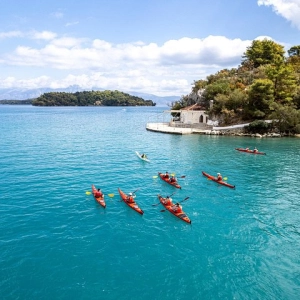
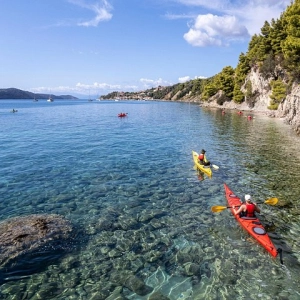
Lefkada Skorpios and Madouri Island-Hopping Kayak Tour with Lunch
Sold by TREKKING HELLAS
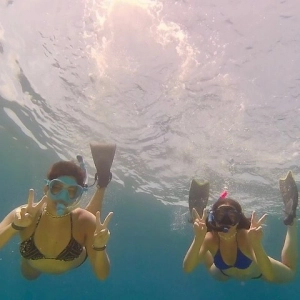
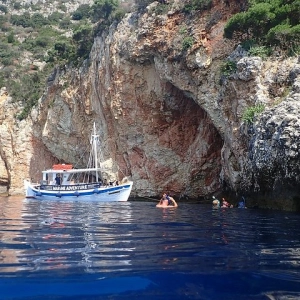
Marine Adventure Cruise Snorkeling and Swimming in Lefkada
Sold by Marine Adventure Lefkada
Support Joyrider TV
At WeBoating.com, we profoundly acknowledge the unwavering dedication that Joyrider TV invests in crafting each and every video or voyage. Their passion for delivering exceptional ocean content shines through every frame, and it's a labor of love that deserves your attention.
We invite you to watch their captivating videos here and actively engage with their content, including their social media links above. Liking, commenting, and sharing their work goes a long way in fueling their creative fire.
We're also inviting you to explore the gear, sponsorships, and boat partnerships highlighted in the "How Fast Can a Sailboat Go? | Global Speed Competition" video description, or directly on YouTube. By engaging with these offerings or purchasing services and items, you directly support Joyrider TV, their collaborators, and the brands they're associated with.
To ensure you never miss an offshore update, consider visiting their official YouTube Channel to subscribe, like, and join their community directly.
If you have any feedback, corrections, or additional information about Joyrider TV or their videos, please use the comment form below to share your thoughts with us.
Thank you for being a part of our community and supporting the creators we cherish. Your time and support truly matter!
How fast can a sailboat go? From Hobie 16s and classic monohulls to fully foiling catamarans, sailors around the world are putting their boats to the test in the Global Speed Stick Competition!
Join Joe from Joyrider TV for the latest sailing speed leaderboard update, featuring solo sailors, family crews, spectacular footage and boats breaking into the 20-knot club. Can anyone challenge Mason’s foiling A-Class for the top spot?
VIEW THE LEADERBOARD & ENTER YOUR SPEED
The 2026 competition runs until the end of the year. How fast can YOU go?
https://totaljoyrider.com/pages/speed-stick-page
LEARN CATAMARAN SAILING
Build your skills with the Joyrider TV Classroom Series:
https://totaljoyrider.com/products/joyrider-academy-the-classroom-series
HOVERAir AQUA — HANDS-FREE SAILING FOOTAGE
At 14:44, see me testing the HOVERAir AQUA waterproof camera drone while catamaran sailing, including autonomous tracking, water takeoff and onboard recovery.
AQUA was supplied by @HOVERAir_official for testing.
Find out more: https://hoverair.sjv.io/5k3LeN
Use my link to get a FREE wetsuit! Just add it to your cart and use code AQK8M4ZX731 at checkout. Limited time only!
I may earn a commission from purchases through this link.
CHAPTERS
00:00 How fast can a sailboat go?
01:11 Global Speed Stick leaderboard update
14:44 HOVERAir AQUA sailing test
16:01 Back to the leaderboard
17:56 Breaking into the 20-knot club
24:45 The podium
25:54 Get involved in the Speed Stick competition
Which boat or sailing speed impressed you most? Tell us in the comments—and subscribe for catamaran sailing tutorials, boat tuning and more Speed Stick updates.
#Sailing #CatamaranSailing #SpeedStick #HOVERAir #HOVERAirAQUA
Instagram: @hoverair_global
TikTok: @hoverair_official
YouTube: @HOVERAir_official
➡️ Master Catamaran Sailing – Faster
Stop guessing. Start improving.
• 18 structured modules
• 120+ lessons
• From beginner to confident sailor
Boat handling. Power control. Racing. All explained clearly.
Get instant access:
YouTube Membership:
https://www.youtube.com/channel/UC1lH
Full Course (one-time):
https://totaljoyrider.com/products/joyrider-academy-the-classroom-series
Official Joyrider Hub
Merch, Speed Stick leaderboard, coaching and more
https://totaljoyrider.com](https://totaljoyrider.com
Gear I Use and Recommend
SunGod Sunglasses
https://www.sungod.co/s/eR4VYYu3/](https://www.sungod.co/s/eR4VYYu3/
Telemetry Overlay – add GPS data to your sailing videos
Use code JOYRIDERTV for discount
https://bit.ly/telemetryoverlay
Instamic Waterproof Audio
https://instamic.io/?aff=119
Xero Shoes
https://xeroshoes.com/go/joyridertv
Forward WIP – impact protection for sailing
@forwardwip
Want to be part of the action?
Upload your sailing videos to Joyrider Worldwide and get featured.
Get uploader access at https://totaljoyrider.com
About Joyrider TV
Joyrider TV is one of YouTube’s leading channels for catamaran sailing.
Videos include tutorials, maintenance guides, Q+As, race strategy and real-world sailing.
Whether you sail a Hobie, Nacra, A-Class, Prindle, Dart, Tornado, F18, F16 or more, you’ll find practical, no-nonsense advice to help you sail faster, safer and with more confidence.
---
#catsailing #sailboat #joyridertv

Joyrider TV
Joseph Bennett: The high-performance 'Joyrider' mastering 26-knot catamaran runs in Vassiliki, Greece, while redefining budget DIY racing for the global community.
Channel Information:
Social Media Links:
How Fast Can a Sailboat Go? | Global Speed Competition Location
- Weymouth & Portland National Sailing Academy, Dorset, UK (50.5722,-2.4489)
- The Solent High-Speed Sailing Fairway, Hampshire, UK (50.8167,-1.3333)
Latest Episodes from Joyrider TV
Explore the most recent voyages. Subscribe to the channel to never miss an update!
Worried About Gybing? Try the Long Tack | Catamaran Sailing
Not confident gybing your catamaran in strong wind? The long tack takes you through the wind instead, turning from one broad reach onto the other without a downwind gybe. Onboard the Hobie 16, we look at the sequence: bring the traveller in, sheet in while keeping control of the steering, then tack...
Improving Race Starts | A Real Hobie 16 Training Session
Joseph Bennett of Joyrider TV joins Gerardo off Mexico's Yucatan Peninsula for a two-boat Hobie 16 race start training session in 12-knot winds.
Catamaran Tiller Arm Too Low? A Simple Fix
When a catamaran rudder is raised and the tiller arm drags on the deck, Joe Bennett from Joyrider TV shares a practical repair: rotate the tube upward and re-rivet it.
Lightweight Sailing Gear for Hot Weather What I Wear
Joseph Bennett from Joyrider TV details his lightweight catamaran sailing gear for hot weather on Mexico's Yucatan Peninsula, balancing impact protection and agility.
Catamaran Coaching: Tacking & Gybing in Strong Wind and Waves
Joseph Bennett coaches Laura through high-wind catamaran tacking in waves, mastering third-hand rudder control, surf gybing, and recovered stalls in 20-knot ocean surf.