What it’s REALLY Like Sailing the Remote Islands of the South Pacific⛵️
Weighing anchor in the Tuamotu archipelago, Holly and Ray set course aboard SV Sabado toward Makemo Atoll. Navigating atoll passes requires careful attention to tidal currents, and Holly stood lookout on the bow wearing polarized sunglasses to identify shallow coral heads while Ray monitored satellite imagery at the helm. With their B&G chartplotter display compromised by an expanding dead spot and an auxiliary tablet providing insufficient daylight brightness, the crew relied on direct observation to clear the departing channel.
As the catamaran approached the pass, the water flow was already running against them. Ray noted the navigational challenge: “Usually you want to time these passes for slack tides that you don’t have too much current against you because well then you’ll go really slow.” Because light surface winds prevented large standing waves from stacking up against the current, the catamaran cleared the narrow passage into open water without incident.
Ocean Passage and Arrival Timing Under Sail
Once outside the atoll, the crew hoisted the Code Zero sail into steady 10 knots of wind. SV Sabado accelerated quickly, recording speeds of 5.8 knots before settling into a pace between 6 and 7 knots. The steady conditions kept the catamaran riding comfortably while the solar array provided abundant battery charging.
However, moving at 7 knots presented an operational dilemma. With Makemo lying downwind, their projected arrival calculated to 2 a.m. in pitch darkness. Navigating a reef pass without daylight creates extreme hazard from unlit coral bommies. As evening approached and distant squall lines formed along the horizon, Ray adjusted the sail plan: “Better to be safe than sorry we’re going to go ahead and furl up the code zero and sail on the jib.” Dousing the Code Zero in favor of the smaller jib reduced boat speed, delaying their approach to align with morning light.
Navigating Makemo Pass Against Five Knots of Current
At dawn, dense cloud cover blanketed Makemo Atoll, severely restricting visibility into the water. Identifying submerged coral formations from the bow proved difficult in the flat morning light. When SV Sabado entered the pass, the hydrographic conditions differed sharply from published forecasts. Holly observed: “The tide station said we’d have three knots incoming right now but this is five knots outgoing so it’s nothing Sol can’t handle.”
The catamaran motored through the 5 knots of outgoing current and entered the lagoon. Rather than risk crossing the atoll in poor visibility, the crew dropped anchor in the shallows directly fronting the village pass. The seabed provided questionable holding, and tight quarters limited the deployed scope. During the night, an unexpected squall hit the anchorage in pitch darkness and heavy rain, dragging the anchor across the bottom before the crew secured the vessel.
Village Re-Provisioning and Lagoon Relocation
Morning brought calm water but another complication: the village beach directly upwind had been burning garbage for 24 continuous hours. Holly and Ray launched the dinghy to shore to take advantage of an arrived supply ship. At the local store, they secured frozen vegetables and meat, noting steep grocery prices across the island.
Eager to escape the smoke and insecure holding, the crew weighed anchor and motored across the lagoon to an isolated anchorage. Holly noted the immediate transformation: “We only moved 15ish miles west but this is like night and day difference it’s so much more pleasant.” In the clear water off an uninhabited shore featuring a rain catchment system, they went snorkeling, spotted a large marine shape near the shallows, and celebrated Holly’s birthday with a sunset toast on the foredeck.
Passage and Navigation Metrics
| Passage Stage | Recorded Metric | Observation |
|---|---|---|
| Departure Sail | Boat Speed | 5.8 knots |
| Open Ocean Transit | Wind Speed | 10 knots |
| Atoll Pass Entry | Outgoing Current | 5 knots |
| Lagoon Relocation | Distance West | 15 miles |
Frequently Asked Questions
Under steady 10 knots of wind, SV Sabado reached speeds between 5.8 knots and 7 knots while flying the Code Zero sail.
Ray furled the Code Zero and set the jib to slow the catamaran down, preventing an early arrival at the Makemo pass in the dark before sunrise.
While the tide station predicted 3 knots incoming, the catamaran faced an outgoing current of 5 knots at the atoll pass.
The crew anchored in questionable holding with insufficient scope to avoid navigating across the lagoon in poor visibility, and a midnight squall broke the anchor free in heavy rain.
To escape poor holding and 24 continuous hours of burning garbage smoke on the town beach, they relocated the catamaran 15 miles west to clear waters.
Support Holly and Ray
At WeBoating.com, we profoundly acknowledge the unwavering dedication that Holly and Ray invests in crafting each and every video or voyage. Their passion for delivering exceptional ocean content shines through every frame, and it's a labor of love that deserves your attention.
We invite you to watch their captivating videos here and actively engage with their content, including their social media links above. Liking, commenting, and sharing their work goes a long way in fueling their creative fire.
We're also inviting you to explore the gear, sponsorships, and boat partnerships highlighted in the "What it’s REALLY Like Sailing the Remote Islands of the South Pacific⛵️" video description, or directly on YouTube. By engaging with these offerings or purchasing services and items, you directly support Holly and Ray, their collaborators, and the brands they're associated with.
To ensure you never miss an offshore update, consider visiting their official YouTube Channel to subscribe, like, and join their community directly.
If you have any feedback, corrections, or additional information about Holly and Ray or their videos, please use the comment form below to share your thoughts with us.
Thank you for being a part of our community and supporting the creators we cherish. Your time and support truly matter!
Annnnd we’re off!⛵️ This week, we head to our next atoll in the Tuamotu Islands of French Polynesia. We keep an eye out for coral bommies and struggle to time our exit and entrance through the pass with the unpredictable tides.🌊 We sailed through the night, selected a less-than-ideal anchorage to avoid navigating in poor visibility, and dragged anchor. We re-provisioned and moved to a more suitable anchorage, where we enjoyed lunch on the beach, went snorkeling, and had a champagne toast on the bow at sunset for Holly’s birthday. 🥂 Sailing the remote islands of the South Pacific is not without challenges, but it has been the adventure of a lifetime! 🤿
———————————————————————
⛵️Join the Crew on Patreon:
https://patreon.com/HollyandRay
⚓️Check out our Blog:
https://www.svsabado.com
📸Follow us on Instagram:
@sv_sabado
🎁Our favorite products:
https://www.amazon.com/shop/hollyandray
**As Amazon associates, we earn commission from qualifying purchases**
Holly and Ray have been #sailing together since 2020 on their #catamaran, Sabado. They have sailed the East Coast of the United States, the Bahamas, the Caribbean, and now the Pacific! They’re documenting #boatlife and their experiences as #liveaboard sailors. Subscribe to tag along on the adventure!
Music provided by Epidemic Sound:
https://www.epidemicsound.com/referral/ov4tmg/
Holly and Ray
Engineers turned sailors Holly and Ray are transforming their Lagoon 42, SV Sabado, into the ultimate off-grid voyager. Explore their New Zealand refit and technical journey.
Channel Information:
Social Media Links:
Latest Episodes from Holly and Ray
Explore the most recent voyages. Subscribe to the channel to never miss an update!
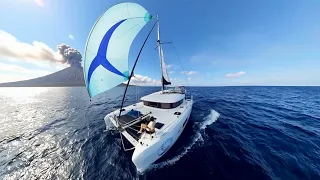
This Is Why We Sailed to Vanuatu…
After hiking to the glowing crater rim of Mount Yasur in Vanuatu, Holly and Ray sail SV Sabado across open waters to New Caledonia, trimming sails and balancing weather helm.
2 People, 4 Days at Sea: Life on an Offshore Passage
Holly Hendricks and Ray Gordon navigate rough seas, escape hatch safety, and solitary watches during a four-day offshore passage aboard SV Sabado from Fiji to Port Resolution, Vanuatu.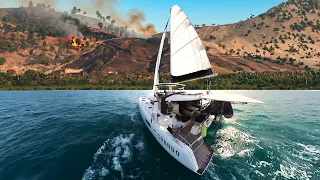
We’ve Got to Get Out of Here! Bad Weather & Worse Anchorages in Fiji
Facing sudden 22-knot wind shifts and dragging boats in Fiji, Holly and Ray test their custom Sereno anchor alarm before departing for Vanuatu.
Before You Buy More Solar or Batteries, WATCH THIS!
Holly and Ray break down how to design a balanced marine electrical system aboard SV Sabado, sharing their real-world offshore power data and free boat energy budget tool.
Sailing Fiji Hasn’t Gone to Plan…
Holly and Ray navigate into Port Denarau to restock provisions and wash sugarcane ash off SV Sabado before heading into remote Fiji coral reef anchorages.