Before You Buy More Solar or Batteries, WATCH THIS!
Stepping out of an extensive, multi-month refit at Port Whangarei in New Zealand, Holly Hendricks and Ray Gordon had every major system aboard SV Sabado overhauled and inspected. From standing rigging and sails to complex plumbing and upgraded marine electronics, the punch list on their 2017 Lagoon 42 Owner’s Version catamaran was finally checked off. Yet as they prepared to set sail across the South Pacific toward Fiji, the single factor dictating how they would live aboard offshore came down to a far more fundamental engineering equation: electrical power.
For modern liveaboard sailors following Holly and Ray, the instinct when facing energy shortages is almost universal: bolt as many solar panels to the arch as physical space allows and stuff every spare cubic foot of bilge with lithium iron phosphate batteries. But as Ray emphasizes while navigating blue water, raw hardware capacity alone does not guarantee electrical harmony. Without a realistic audit of daily domestic expectations and offshore consumption, throwing thousands of dollars at electrical hardware often leaves cruisers stranded between power deficits and noisy generator cycling.
Off-grid autonomy at sea is defined by expectations before it is built out in amp-hours. Between running a minimalist floating campsite and operating a fully electrified cruising home equipped with induction cooking, watermakers, laundry machines, and air conditioning, every comfort choice represents a deliberate energy transaction. Grounded in real-world passage data gathered between New Zealand and Fiji, Ray and Holly have codified their onboard electrical management into an open-access engineering methodology designed to help voyagers find their boat’s true energy number before purchasing a single battery cell.
Balancing Expectations Against Amp-Hours: The All-Electric Cruising Equation
Aboard SV Sabado, the transition toward an all-electric cruising platform required honest evaluation of daily comforts. Unlike traditional sailboats that rely on propane for galley cooking and run auxiliary diesels to charge lead-acid banks, the modern voyager’s galley has evolved into an appliance-dense hub. An induction cooktop, electric kettle, espresso maker, Instant Pot, and dedicated bread maker provide convenience and eliminate combustible fuels below deck, but they place intense, simultaneous demands on the vessel’s inverter.
Refrigeration compounds these loads exponentially in warm waters. Operating a primary galley refrigerator alongside a secondary deep-freeze and perhaps a cockpit drink cooler requires a continuous 24-hour DC baseline. Factor in a high-output reverse-osmosis watermaker and reverse-cycle air conditioning for tropical anchorages, and the daily energy requirement quickly climbs into hundreds of amp-hours at 24 volts. Ray cautions that without unlimited financial budgets, cruisers cannot expect unlimited electrical capacity. Achieving true energy balance requires matching equipment scale to genuine lifestyle priorities rather than speculative over-engineering.
Underway Stress-Testing: Managing Overcast Days and Worst-Case Solar Yield
The true measure of a marine electrical system occurs not under cloudless tropical skies at anchor, but mid-passage when weather systems deteriorate. While underway on their passage north from New Zealand, Ray documented a prime example of worst-case solar conditions. With an unbroken blanket of thick cloud cover rolling overhead, the coachroof and arch solar panels remained completely unshaded yet starved of direct ultraviolet radiation.
Where the solar array routinely pumps out 3,500 Watts during clear days at anchor, the diffuse lighting underway choked generation down to just under 1,000 Watts—less than thirty percent of nominal potential. In such conditions, relying on passive solar generation without operational adjustments would rapidly deplete house storage. Instead of cranking the onboard diesel generator, the crew initiated immediate tactical load management.
Holly consolidated chilled provisions into a single refrigerator box, allowing them to power down the secondary compressor entirely. Galley preparation shifted away from energy-intensive appliance cooking toward low-draw meals. By aligning their consumption with degraded generation, Ray calculated that Sabado could comfortably endure three consecutive days of heavily overcast passage-making without requiring generator assistance. Across months of sailing since departing Whangarei, the diesel generator has remained cold in its bay, started solely for periodic mechanical exercise.
The Four-Quadrant Energy Model: Calculating Realistic Boat Loads
To eliminate guesswork for other cruisers, Ray developed a structured four-quadrant energy budget model. Rather than calculating a single generic daily average, the framework separates vessel operations into distinct, realistic matrices:
- Normal at Anchor: Represents typical clear-weather days in sheltered water, characterized by peak solar yield and domestic hotel living without navigational electronics.
- Worst-Case at Anchor: Simulates prolonged overcast conditions, torrential rain, or squalls at an anchorage, testing how long battery reserves sustain essential domestic refrigeration and lighting.
- Normal Underway: Incorporates continuous offshore baselines, including autopilot hydraulic rams, chartplotters, radar, AIS transponders, Starlink communications, and internal compute hardware under fair skies.
- Worst-Case Underway: The critical baseline combining degraded overcast solar yield with maximum continuous navigational draws and rough-sea autopilot corrections.
The foundation of this audit begins with an uncompromising inventory of consumers before any charging hardware is sized. Users categorize circuits according to operating voltage—whether natively wired to a 12V, 24V, or 48V house battery bank or driven through an inverter. Dedicated wire-sizing calculators evaluate continuous versus intermittent duty cycles, flagging critical navigational loads to ensure conductors meet rigorous American Boat and Yacht Council (ABYC) or metric standards against catastrophic voltage drop.
Engineering Hardware & Storage: Victron Architecture Aboard SV Sabado
Aboard SV Sabado, the mathematical budget translates into a carefully synchronized hardware installation. A custom 24-volt lithium iron phosphate (LiFePO4) battery bank forms the energy reservoir, providing deep usable capacity, rapid acceptance rates during bulk charging, and zero voltage sag under heavy induction cooktop spikes. Managing these high AC demands is a Victron Energy Quattro inverter/charger, which seamlessly arbitrates between onboard power generation, generator input, and shore connections.
To model solar replenishment accurately, Ray avoided theoretical panel manufacturer ratings, which rarely reflect real-world marine conditions. Instead, he drew upon three continuous years of historical generation logs recorded aboard Sabado across diverse latitudes and seasonal shifts. This empirical data revealed actual panel efficiencies, temperature derating coefficients, and diffuse light yields, allowing the planning tool to simulate exact solar hours rather than marketing claims.
Autonomous Arrival: Running Comfort Loads on the Dock in Fiji
The real validation of their electrical refit materialized upon making landfall in Fiji. A sudden operational shift landed Sabado alongside a marina dock to clear customs and biosecurity rather than dropping anchor in the outer roadstead. Despite having shore power pedestals readily available at the berth, the crew never bothered to untie their shore power cord.
Inside the Lagoon 42’s saloon and cabins, life carried on in total climate-controlled comfort. Holly ran back-to-back loads of laundry in the washing machine, baked fresh sourdough loaves in the galley oven, and kept the reverse-cycle air conditioning humming to beat the tropical humidity. The battery reserves and roof solar handled the surge effortlessly, demonstrating that an engineered balance between generation, storage, and realistic load awareness yields true off-grid independence.
Technical Specifications & Operational Matrix
| System Component | Technical Configuration | Real-World Performance Profile | Operational Cruising Strategy |
|---|---|---|---|
| House Battery Bank | Custom 24V LiFePO4 (Lithium Iron Phosphate) | High-efficiency DC storage for domestic and inverter loads | Provides multi-day silent power autonomy without shore power or generator cycling |
| Solar Array (Peak) | Overhead Arch & Bimini Solar Panels | Peak output of ~3,500 W in clear anchor conditions | Generates continuous net surplus at anchor; zero generator runtime in Fiji |
| Solar Array (Overcast) | Underway in South Pacific diffuse cloud cover | Degraded generation under 1,000 W (<30% clear-sky capacity) | Triggers appliance consolidation and load shedding for 3+ days off-grid endurance |
| Inverter / Charger | Victron Energy Quattro & Auxiliary Diesel Generator | High-amperage AC conversion & bulk charging backup | Exercised only for maintenance; unused for routine daily recharging across months |
| High-Draw Galley Loads | Induction cooktop, oven, electric kettle, bread maker | Intermittent high AC wattage through Victron inverter | Run freely during midday solar peak; managed conservatively during passages |
| Essential Navigation | Autopilot, Starlink Maritime, chartplotters, servers | Continuous 24V DC and 12V DC baseline consumption | Isolated critical circuits sized with dedicated wiring under ABYC standards |
Deploying the Free Boat Energy Budget Tool: Architecture and Local Privacy
To assist fellow voyagers facing identical refit decisions, Ray transformed his internal engineering spreadsheet into an interactive, browser-based web application hosted on their website. Open to the cruising community, the tool allows owners to populate custom electrical profiles, choose nominal voltages, establish battery chemistries, and define charging thresholds without technical friction.
Crucially, the application prioritizes maritime privacy and remote utility. Running completely client-side in the user’s browser, no vessel telemetry or personal inventory data is ever transmitted back to an external web server. Sailors can save the standalone webpage directly to their onboard laptops for offline use at sea, export full system configurations as lightweight JSON files for collaborative consultation, and generate formatted PDF audit reports to keep in their vessel’s physical engineering binder.
Frequently Asked Questions
Ray emphasizes that true off-grid power autonomy is governed by realistic domestic expectations and accurate consumption calculations rather than raw capacity. Without calculating total daily amp-hours and peak inverter loads, sailors risk spending tens of thousands of dollars on oversized or mismatched hardware that their charging sources cannot reliably replenish at sea.
When heavy cloud cover drops solar output from 3,500 Watts down to less than 1,000 Watts mid-passage, the crew initiates tactical load shedding. Holly and Ray shut off their secondary refrigeration unit, consolidate cold provisions into a single unit, and adjust galley meal planning to avoid high-wattage inverter appliances, extending their silent battery autonomy to over three days without running the diesel generator.
The calculation framework evaluates four distinct operational conditions: Normal at Anchor, Worst-Case at Anchor, Normal Underway, and Worst-Case Underway. This matrix separates passive domestic hotel loads from high-demand continuous navigational baselines like autopilots, radar, and Starlink Maritime, while accounting for variable solar irradiance and cloud cover.
SV Sabado operates a custom 24-volt lithium iron phosphate (LiFePO4) house battery bank, a high-yield overhead solar array producing up to 3,500 Watts in clear conditions, and a Victron Energy Quattro inverter/charger connected to an onboard auxiliary diesel generator for backup bulk charging.
No. Even though they tied up alongside a marina dock to complete customs and biosecurity clearance into Fiji, Holly and Ray did not connect to shore power. SV Sabado’s lithium battery bank and solar panels comfortably powered continuous air conditioning, laundry cycles, and galley sourdough baking entirely off-grid.
The web-based tool incorporates automated conductor sizing calculations for 12V, 24V, and 48V circuits. Cruisers can identify critical versus non-critical loads, assess continuous amperage draws, and toggle between American Boat and Yacht Council (ABYC) rules and international metric standards to prevent hazardous voltage drop.
The application runs completely client-side within the user’s web browser, meaning no personal boat data, vessel names, or equipment inventories are ever transmitted to or stored on external servers. Cruisers can download the page for offline passage use, export their configurations to local JSON files, and generate printable PDF reports.
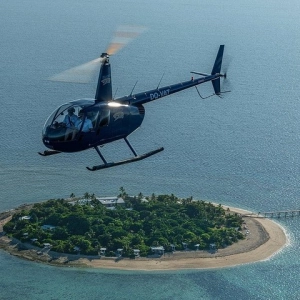
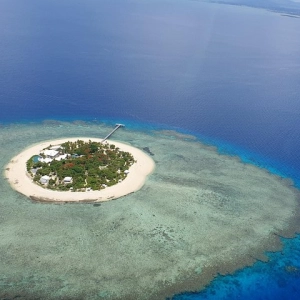
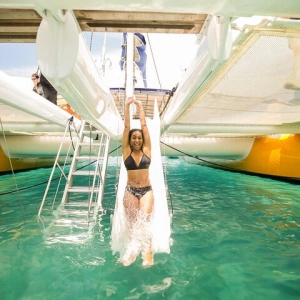
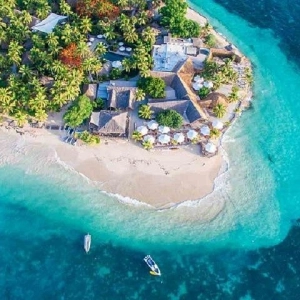
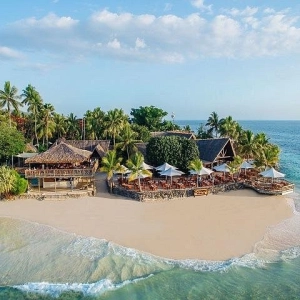
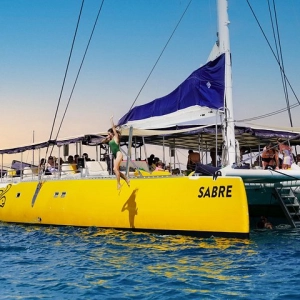
Book a trip where this was filmed — near Viti Levu

Support Holly and Ray
At WeBoating.com, we profoundly acknowledge the unwavering dedication that Holly and Ray invests in crafting each and every video or voyage. Their passion for delivering exceptional ocean content shines through every frame, and it's a labor of love that deserves your attention.
We invite you to watch their captivating videos here and actively engage with their content, including their social media links above. Liking, commenting, and sharing their work goes a long way in fueling their creative fire.
We're also inviting you to explore the gear, sponsorships, and boat partnerships highlighted in the "Before You Buy More Solar or Batteries, WATCH THIS!" video description, or directly on YouTube. By engaging with these offerings or purchasing services and items, you directly support Holly and Ray, their collaborators, and the brands they're associated with.
To ensure you never miss an offshore update, consider visiting their official YouTube Channel to subscribe, like, and join their community directly.
If you have any feedback, corrections, or additional information about Holly and Ray or their videos, please use the comment form below to share your thoughts with us.
Thank you for being a part of our community and supporting the creators we cherish. Your time and support truly matter!
Find YOUR number! FREE Boat Energy Budget Tool: https://svsabado.com/start-with-the-number-energy-budgets-for-cruising-boats/
⛵️ Support what we're creating: https://svsabado.com/#/portal/signup
+ gain access to more resources, monthly expenses, and unfiltered stories from our travels.
⚡ How much power does your boat actually use? Before investing in more solar panels, batteries, or charging equipment, you need to know your boat’s daily energy needs!
As full-time liveaboard sailors, we know how important reliable power is when you’re living off-grid and cruising. Whether you’re planning your dream boat, upgrading your electrical system, or trying to keep your batteries charged while living at anchor, understanding your energy consumption is the first step toward building a system that works for you.
In this video, we break down why knowing your daily power usage matters and how to find your number before spending money on expensive upgrades. Plus, we’ve created a FREE energy budget tool to help you calculate your boat’s power needs and make smarter decisions about your batteries, solar panels, and charging system.
CHAPTERS
00:00 Catamaran refit, boat electrical system upgrade
01:26 LiFePO4 boat battery system performance while sailing
02:02 Find your usage, best and worst case power
05:33 How to use our energy budget tool
__________________________________________
📸Follow us for daily #boatlife posts on
Instagram: @sv_sabado
Facebook: / svsabado
#Sailing #Liveaboard #SolarPower #BoatElectrical #OffGridLiving #LiFePO4

Holly and Ray
Engineers turned sailors Holly and Ray are transforming their Lagoon 42, SV Sabado, into the ultimate off-grid voyager. Explore their New Zealand refit and technical journey.
Channel Information:
Social Media Links:
Before You Buy More Solar or Batteries, WATCH THIS! Location
- Port Denarau Marina, Denarau Island, Nadi, Fiji (-17.7765,177.3828)
- Port Whangarei Marine Centre, Whangarei, New Zealand (-35.7335,174.3412)
Latest Episodes from Holly and Ray
Explore the most recent voyages. Subscribe to the channel to never miss an update!
2 People, 4 Days at Sea: Life on an Offshore Passage
Holly Hendricks and Ray Gordon navigate rough seas, escape hatch safety, and solitary watches during a four-day offshore passage aboard SV Sabado from Fiji to Port Resolution, Vanuatu.
We’ve Got to Get Out of Here! Bad Weather & Worse Anchorages in Fiji
Facing sudden 22-knot wind shifts and dragging boats in Fiji, Holly and Ray test their custom Sereno anchor alarm before departing for Vanuatu.
Before You Buy More Solar or Batteries, WATCH THIS!
Holly and Ray break down how to design a balanced marine electrical system aboard SV Sabado, sharing their real-world offshore power data and free boat energy budget tool.
Sailing Fiji Hasn’t Gone to Plan…
⛵️ Subscribe to our website for helpful documents, tech details, practical guides, and unfiltered stories from our travels. Join here: More details on Sereno here: In this episode, we sail to Port Denarau to tick a few final jobs off the to-do list. Provisioning, refueling and giving the boat...
OpenCPN vs qtVlm: Why We Switched
After several years with OpenCPN and a couple of years using qtVlm as our primary navigation software across the Pacific, we're sharing what made us switch, what qtVlm does better, what it doesn't, and who we think it makes sense for. A quick disclosure: We donate to the qtVlm developer ...