DAVID LESCHAK
In 2026, Canadian cruising sailor and veteran fire captain David Leschak chronicles practical freshwater voyaging aboard Second Wind, his 1999 Hunter 410 sloop. Cruising Georgian Bay and Lake Huron's North Channel, the channel shares hands-on masterclasses in marine solar testing, shaft propeller maintenance, and granite archipelago pilotage. His content delivers an authoritative technical guide to self-reliant boat ownership.
Channel Information:
Social Media Links:
DAVID LESCHAK Latest Episode
Sailing the glacier-carved, granite-strewn expanse of Georgian Bay and Lake Huron's North Channel demands both technical self-reliance and meticulous seamanship. On his channel, seasoned Canadian mariner and veteran fire officer David Leschak documents the gritty, practical realities of cruising a 41-foot auxiliary sloop through one of the most stunning yet unforgiving freshwater archipelagos on earth. From diagnostic marine electrical bench-testing and shaft-drive propulsion teardowns to precision sail handling and aerial scouting over treacherous granite shoals, Leschak brings an authentic, methodical approach to modern freshwater voyaging.
Key Takeaways
- Pragmatic DIY Technical Rigor: David Leschak delivers unvarnished, step-by-step masterclasses in marine systems maintenance, emphasizing field diagnostics such as open-circuit voltage (Voc) and short-circuit current (Isc) solar testing and mechanical propeller removal from tapered shafts.
- Substantial Freshwater Cruiser: Cruising aboard Second Wind, a 1999 Hunter 410 sloop outfitted with a Bergstrom & Ridder (B&R) rig, custom Precision Sails inventory, and a 700-watt flexible solar array tailored for northern latitude power autonomy.
- Wilderness Navigation in Granite Archipelagos: Chronicling breathtaking expeditions across Georgian Bay's 30,000 Islands, Baie Fine's quartzite fjord, the Bad River rapids, and the pristine wilderness anchorages of Ontario's North Channel.
⚓ Quick Specs & Channel Vitals
| Metric | Detail |
|---|---|
| Channel Name | DAVID LESCHAK |
| Primary Vessel | Second Wind (Hunter 410) |
| Home Port / Base | Bay Moorings Marina, Penetanguishene / Barrie, Ontario, Canada |
| Flag / MMSI | Canada (CA) / Coastal Cruiser |
| Sailing Style | Freshwater Wilderness Expedition, Coastal Cruising, Technical DIY |
| Primary Cruising Grounds | Georgian Bay, North Channel (Lake Huron), 30,000 Islands, Ontario |
| Auxiliary Power | Yanmar 4JH2E / 4JH3E Diesel Inboard (50–56 HP) |
| Electrical Autonomy | 700W Flexible Solar Array (Parallel Configuration), Multi-Bank Marine DC |
| Sail Inventory | Custom Cruising Dacron Mainsail & Genoa by Precision Sails (Victoria, BC) |
| Aerial Reconnaissance | Autel X-Star Premium Drone (High-Resolution Shoal & Anchorage Scouting) |
| Content Ethos | Methodical DIY Tutorials, Unedited Field Diagnostics, Wilderness Navigation |
Meet the Crew and the Fleet
The Sailors Behind the Helm
The driving force behind the channel is David Leschak, partnered aboard by his wife Sandra. Together, they represent the heart of Ontario's dedicated freshwater cruising fraternity—sailors who balance professional land-based careers with extended summer voyages through the remote coves, sounds, and channels of the Laurentian Great Lakes.
David Leschak
- Primary Expertise: Marine mechanical systems, DC electrical diagnostics, emergency risk mitigation, rigging inspection, and low-altitude aerial pilotage.
- Certifications: Captain of Operations (Toronto Fire Services), Advanced Emergency Incident Management, Heavy Rescue, Marine First Aid, VHF Maritime Mobile Radio Operator.
- On-Camera Style: Pragmatic, calm, candid, and instructional; unhurried explanations that demystify complex mechanical and electrical tasks without cinematic pretension.
Origin Story & Life Before Sailing
Raised in central Ontario near the shores of Lake Simcoe and Georgian Bay, David developed an early appreciation for the immense natural water systems of the Canadian Shield. Long before hoisting canvas, he understood that cold northern waters demand strict respect, disciplined preparation, and absolute honesty regarding equipment condition.
Professionally, David forged a distinguished career in emergency services, rising to the rank of Captain of Operations with Toronto Fire Services. Decades spent managing high-consequence rescue operations, structural fire suppression, and complex physical interventions instilled a deep diagnostic mindset. When transitioning to offshore cruising, this emergency-services background translated seamlessly into preventative marine maintenance: every electrical wire termination, thru-hull valve, cotter pin, and engine mount bolt is evaluated through a lens of operational redundancy and fail-safe safety.
Professional & Technical Background
As an operational fire captain, David brings extensive hands-on expertise in hydraulic tools, mechanical extraction, high-voltage safety, diesel pump operation, and crisis decision-making. These competencies directly inform his marine maintenance philosophy. Rather than relying on commercial boatyard technicians for routine repairs, David approaches vessel upkeep as an owner-engineer. Whether diagnosing a subtle driveline vibration or balancing solar charging curves against real-world parasitic loads, his methods are rooted in empirical measurement and standard operating procedures.
Maritime Experience & Seamanship
Over multiple decades of navigation on Georgian Bay, Lake Huron, and Lake Simcoe, David has logged thousands of freshwater nautical miles. He is an active, long-standing member of the Georgian Bay Hunter Sailing Association (GBHSA), cruising alongside a regional fleet of production sloops. His voyaging resume also includes bareboat ocean chartering in the Caribbean (specifically the British and U.S. Virgin Islands), contrasting trade-wind ocean swells with the short, steep chop and treacherous submerged granite shoals of the Canadian Shield.
David's seamanship philosophy prioritizes proactive risk management. In Georgian Bay's 30,000 Islands—where navigational buoys mark narrow passes between granite reefs that drop sheer into hundred-foot depths—prudence is mandatory. His watchstanding configuration blends traditional paper chart cross-referencing with modern digital chartplotters and low-altitude drone reconnaissance to visually confirm boulder-strewn bottom contours before dropping anchor.
Specialized Competencies & Onboard Roles
Aboard Second Wind, David serves as master, chief engineer, and lead rigger. His specialized onboard tasks include annual winterization and spring recommissioning, shaft and driveline alignment, seasonal removal and bench-testing of the flexible solar array, and running rigging renewal. His background provides him with elite medical and trauma management capability, ensuring that remote wilderness passages in the North Channel are conducted with robust onboard medical readiness.
Channel Role & Content Focus
In front of the lens, David acts as the direct technical instructor. He avoids generic lifestyle vlogging in favor of focused, actionable tutorials aimed at fellow boat owners. His videos explain not merely what to do, but why a specific tool or procedure is necessary—such as why backing off a propeller nut by a single thread prevents a flying bronze propeller when using a hub puller, or why measuring both short-circuit current (Isc) and open-circuit voltage (Voc) is essential to detect internal solar cell degradation.
Personal nuances define his presence: his understated Canadian warmth, his frank admission of trial-and-error (such as testing multiple multimeters before finding one with an appropriate fused 10A DC circuit), and his genuine enthusiasm when unboxing freshly stitched Canadian-made canvas in a municipal park.
Social & Digital Presence
| Platform | Handle / Link | Focus |
|---|---|---|
| YouTube | DAVID LESCHAK on WeBoating | Technical DIY Marine Tutorials & Expedition Logs |
| Primary Channel ID | UCDTHsOF8xd3AUEwSj-ndeIw | Official YouTube Creator Endpoint |
| Association Registry | Georgian Bay Hunter Sailing Association (GBHSA) | Regional Hunter Yacht Rendezvous & Flotilla Participant |
| Home Mooring | Bay Moorings Marina, Georgian Bay | Summer Berthing, Hardstand Winter Storage & Refit |
Sandra Leschak
Sandra Leschak serves as the steadfast first mate and co-navigator aboard Second Wind. Sharing a passion for the pristine solitude of northern waters, she manages deck operations, ground tackle handling during anchor drops in tight granite calas, and domestic provisioning for multi-week wilderness excursions.
Sandra's sharp visual eye and logistical organization ensure that cruising through the North Channel—where grocery outposts and shoreside facilities can be days apart—remains comfortable and sustainable. Her presence in the channel's expedition logs reflects a calm, capable partnership that exemplifies traditional family cruising.
The Guest Crew & Global Community
While David and Sandra primarily cruise as a double-handed couple, their voyages frequently intersect with the tight-knit cruising community of southern Georgian Bay. Through the Georgian Bay Hunter Sailing Association, they maintain active ties with fellow Hunter owners, sharing technical insights on B&R rigs, Yanmar drivelines, and holding tank maintenance. Their channel also serves as a digital bridge to a global fraternity of DIY sailors who seek practical, unembellished advice on maintaining older production yachts on a realistic budget.
⛵ Professional Fleet Forensics
The flagship of David Leschak's maritime adventures is Second Wind, a 1999 Hunter 410 auxiliary cruising sloop. Built during the height of Hunter Marine's design maturation under Warren Luhrs, the Hunter 410 combines voluminous interior accommodations with a powerful, easily handled fractional sail plan designed for shorthanded coastal voyaging.
s/v Second Wind (Hunter 410)
Acquired to provide an offshore-capable, comfortable platform for exploring the expansive waters of Lake Huron, Second Wind features Hunter's signature stainless steel cockpit arch. This structural arch carries the mainsheet traveler overhead—entirely out of the cockpit seating area—while providing a robust, elevated foundation for bimini canvas, solar panel mounting, and auxiliary communications. Below the waterline, her shoal-draft bulb keel allows safe navigation into shallow rocky anchorages and narrow bays that would be inaccessible to deep-draft keelboats.
| Vessel Metric | Hunter 410 (s/v Second Wind) Specification |
|---|---|
| Designer / Builder | Warren Luhrs & Hunter Design Group / Hunter Marine (USA) |
| Model Year / Hull Number | 1999 / Production Sloop |
| Length Overall (LOA) | 40 ft 10 in (12.45 m) |
| Length at Waterline (LWL) | 37 ft 10 in (11.53 m) |
| Beam | 13 ft 10 in (4.22 m) |
| Draft | 5 ft 0 in (1.52 m) Shoal Keel with Lead Bulb |
| Displacement / Ballast | 20,200 lbs (9,163 kg) / 7,400 lbs (3,357 kg) |
| Rig Type | Bergstrom & Ridder (B&R) Fractional Sloop (No Backstay) |
| Auxiliary Engine | Yanmar 4JH2E / 4JH3E Fresh-Water Cooled Marine Diesel (50–56 HP) |
| Propulsion Drive | 1.25-inch Stainless Steel Shaft, Tapered Hub, Bronze 3-Blade Propeller |
| Fuel Capacity | 51 US Gallons (193 Liters) |
| Fresh Water Capacity | 145 US Gallons (549 Liters) Across Polyethylene Tanks |
| Mast Height / Air Draft | 58 ft 4 in (17.78 m) Above Waterline |
| Current Status (2026) | Active Coastal Cruiser & Expedition Flagship |
🛠️ The Gear Locker: Crucial Hardware
Every system aboard Second Wind has been curated to address the specific environmental demands of the Canadian Shield: sub-zero winter storage, rapid summer thermal shifts, hard granite bottom geology, and remote anchorages requiring absolute electrical and mechanical reliability.
| Equipment Category | Hardware Model / Spec | Operational Context & Field Usage |
|---|---|---|
| Primary Sail Inventory | Precision Sails Custom Dacron Mainsail & 110% Genoa | Tri-radial / Cross-cut cruising construction with custom channel insignia, blue Sunbrella UV sacrificial leech covers, and reinforced batten pockets. |
| Solar Generation | 700W Total Marine Flexible Solar Panels | Wired in parallel across bimini canvas; seasonally unmounted each winter in Barrie to avoid freeze-thaw microcracking and tested annually before deployment. |
| Diagnostic Multimeter | Industrial Digital Multimeter with 10A Fused DC Input | Dedicated bench instrument used for short-circuit amperage and open-circuit voltage verification across every individual solar module. |
| Propulsion Hardware | Cast Bronze 3-Blade Propeller on Tapered Shaft | Tuned and balanced at certified prop shop following mechanical removal to eliminate low-RPM driveline harmonics. |
| Mechanical Extraction Gear | Heavy-Duty Propeller Hub Puller | Essential mechanical tool allowing controlled shock-loading against shaft taper while keeping the shaft nut threaded on as a safety arrester. |
| Aerial Reconnaissance | Autel X-Star Premium Drone | Equipped with high-definition gimbal camera used to visually reconnoiter submerged granite shelves and underwater boulder hazards in shallow inlets. |
| Ground Tackle Suite | Rocna / Manson Style Primary with High-Tensile Chain | Engineered to achieve rapid penetration into thin gravel pockets, clay, and rocky crevices typical of Georgian Bay anchorages. |
| Auxiliary Tender | Rigid Inflatable Boat (RIB) with Outboard | Utilized for remote shore landings, stern-tie anchor lines to granite shoreline trees, and navigating swift river currents. |
📊 Vessel Systems Health Scorecard
Evaluating Second Wind against WeBoating's rigorous technical autonomy framework reveals an optimized setup designed specifically for high-latitude freshwater cruising:
| System Domain | Rating | Core Configuration & Autonomy Analysis |
|---|---|---|
| ⚡ Energy Autonomy | 8 / 10 | 700W of flexible solar generation operating in a parallel topology delivers substantial daily amp-hour replenishment during long northern summer daylight hours (15+ hours). Bench-testing eliminates degraded cells, minimizing parasitic drag. |
| 🛡️ Structural Integrity | 8 / 10 | Heavy solid-fiberglass underwater hull laminate engineered by Hunter Marine, reinforced with an internal structural grid pan. Shallow 5'0" draft bulb keel provides forgiving grounding margins on granite ledges. |
| 📡 Communication & Nav | 7 / 10 | Equipped with marine VHF, modern GPS chartplotting, depth sounder with forward-looking situational awareness, backed by Autel aerial drone scouting for complex archipelago entrances. |
| 💧 Water Independence | 8 / 10 | An expansive 145-gallon internal tankage provides extensive wilderness endurance without demanding the high electrical and maintenance overhead of a reverse-osmosis watermaker in pure, clean freshwater. |
The mechanical and electrical architecture of Second Wind exemplifies practical coastal cruising engineering. Operating in Georgian Bay presents distinct engineering trade-offs compared to equatorial blue-water passages. Because Lake Huron contains exceptionally pure, cold freshwater, bio-fouling from barnacles and marine borers is virtually non-existent, but the annual winter freeze imposes massive mechanical stresses. All onboard plumbing, pumps, sea-strainers, and holding tanks must be completely drained or displaced with non-toxic marine antifreeze every October, and flexible solar panels must be demounted to prevent delamination from ice encapsulation.
David's decision to configure his 700-watt flexible solar array in parallel—rather than a single high-voltage series string—reflects astute marine electrical engineering. In a series string, partial shading from the Hunter 410's mast, boom, or cockpit arch would throttle the current output of the entire array. By running the panels in parallel through dedicated fusing and blocking diodes, each module operates independently, ensuring steady battery charging even when sails or rigging cast shadows across the bimini.
Mechanically, the Hunter 410's Yanmar diesel auxiliary relies on a conventional shaft drive utilizing an inboard stuffing box/dripless seal, a cutless bearing housed in an external bronze strut, and a tapered shaft end with keyway and bronze propeller. David's meticulous removal and inspection of this driveline demonstrated how a microscopic ding on a propeller blade tip can introduce asymmetric hydrodynamic loading, resulting in noticeable shaft whip and low-frequency cabin resonance at idle.
Notable Gaps or Homemade Solutions
Leschak intentionally avoids high-complexity, hyper-expensive marine proprietary gear where practical mechanical alternatives suffice. Rather than investing thousands of dollars in high-draw reverse-osmosis desalinators, he leverages the vessel's enormous 145-gallon freshwater reservoirs, replenished by pristine northern lake water. In lieu of paying exorbitant commercial haul-out rates for basic prop servicing, he fabricated customized extraction tools and safety rigging to handle propeller pulling on the hardstand independently.
Voyages, Destinations, and Local Waters
📍 Top Routes and Expeditions
The cruising chronicles of David Leschak focus primarily on the legendary waters of Georgian Bay and Lake Huron's North Channel—collectively hailed as one of the finest freshwater cruising arenas on the globe. With over 30,000 islands and endless granite coves, this wilderness demands laser-focused pilotage and self-sufficiency.
- The 30,000 Islands Archipelagos: Traversing the inside passages along the eastern shore of Georgian Bay, weaving between exposed pink granite shoals, pine-studded islets, and narrow channels carved by ancient glaciers.
- Baie Fine and The Pool (Killarney): Voyaging through one of the only true freshwater fjords in North America—a narrow, nine-mile inlet bordered by the gleaming white quartzite cliffs of the La Cloche Mountains, culminating in the serene, fully protected anchorage known as 'The Pool.'
- The Bad River Wilderness Delta: Navigating into the remote labyrinth of the French River delta, where swift rapids flow over granite ledges into deep wilderness anchorages, requiring stern-ties to ancient shoreline rocks.
- Wanie Bay & Southern Archipelago Coves: Celebrating Canada Day long weekends in secluded anchorages like Wanie Bay, where freshwater depths drop precipitously off vertical granite walls, allowing yachts to lie secure amidst pristine pine wilderness.
⏳ Voyage Milestone Timeline
| Date (YYYY-MM) | Voyage / Technical Milestone | Operational Details & Video Reference |
|---|---|---|
| 2013-03 | Hunter 410 Cruising Debut | Documenting early sailing passages aboard the newly acquired 41-foot sloop in sailing georgian bay hd. |
| 2014-06 | Singlehanded Rig & Sail Trials | Testing shorthanded maneuvers, furling systems, and boat handling during solo passage trials in solo sailing. |
| 2014-08 | Bad River Rapids Expedition | Navigating tender craft through churning whitewater rapids at the Bad River delta in bad river video. |
| 2015-04 | North Channel Wilderness Expedition | Launching a multi-part long-distance cruise through the rugged North Channel of Lake Huron in North Channel 2014 part 1. |
| 2016-08 | Baie Fine & The Pool Aerial Reconnaissance | Deploying drone pilotage over the quartzite bluffs of Killarney in Autel x star premium over Killarney. |
| 2016-09 | Bad River Flight Cinematography | High-resolution aerial reconnaissance of shallow channels and rocky shelves in Bad River Flight. |
| 2017-04 | Georgian Bay Archipelago Aerial Survey | Comprehensive aerial charting of premier anchorages across the eastern shore in Droning around Georgian Bay. |
| 2018-07 | Wanie Bay Canada Day Expedition | Wilderness anchoring, swimming, and holiday fleet rendezvous documented in Wanie bay video. |
| 2019-02 | Precision Sails Custom Canvas Unboxing | Receiving, unboxing, and inspecting custom-built cruising mainsail and genoa in precision sail unboxing. |
| 2021-02 | Inboard Propeller Pulling Masterclass | Executing a precision mechanical prop removal on the hardstand to cure driveline harmonics in pulling the prop. |
| 2021-04 | Marine Solar Bench-Testing Protocol | Bench-testing flexible photovoltaic panels using 10A DC short-circuit multimeter diagnostics in How to test a solar panel. |
| 2026-08 | Ongoing High-Latitude Cruising & Stewardship | Maintaining Second Wind in peak mechanical readiness for continued summer expeditions across northern Lake Huron. |
Navigating Georgian Bay and the North Channel
Often called the 'Sixth Great Lake,' Georgian Bay spans nearly 15,000 square kilometers of deep, crystal-clear water flanked by ancient Pre-Cambrian granite. Cruising here requires specific seamanship skills rarely encountered in sandy coastal cruising grounds.
The primary hazard is submerged granite. Unlike mud or sandbars that offer forgiving groundings, Georgian Bay's underwater topography features sheer underwater cliffs and isolated boulders known locally as 'shoals' or 'reefs.' Striking a granite ledge at five knots can crack keel stub laminates or bend rudder stocks instantly. In response, David utilizes polarizing sunglasses, forward-looking soundings, and aerial drone cameras to identify underwater boulder contours when entering uncharted gunkholes.
Weather patterns can also change with terrifying speed. Cold northern air masses colliding with warm summer water create intense convective thunderstorms and fierce squalls. Local winds can accelerate rapidly through narrow island gaps, turning calm bays into turbulent chop within minutes. The cruising season is tightly compressed between late May and early October, after which fierce autumn gales and sub-zero temperatures force all cruising vessels into winter storage.
Skills & Tutorials: Learning from DAVID LESCHAK
The channel's highest educational value stems from David's hands-on mechanical and electrical walkthroughs. Rather than speaking from theory, he films directly on the hardstand or in his home workshop, demonstrating practical troubleshooting steps:
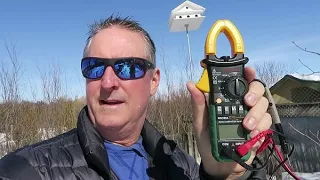
1. Marine Photovoltaic Diagnostics: In his tutorial How to test a solar panel, David demonstrates how boaters can verify solar health prior to spring launch. He details why standard voltage-only testing is misleading—a failing panel can easily read nominal open-circuit voltage (Voc) under no load, but collapse completely once an electrical load is introduced. By switching a digital multimeter to its dedicated 10-amp DC input and measuring short-circuit current (Isc) directly across the panel terminals in full sunlight, he proves how an older 120-watt module had degraded to just 3.75 amps, while a healthy 100-watt panel generated an impressive 6.55 amps.
2. Inboard Propeller Extraction on the Hard: In pulling the prop, David solves a persistent low-RPM driveline shudder caused by a minor blade ding. He demonstrates the essential safety technique of leaving the shaft nut threaded onto the final thread. This prevents the bronze propeller from violently flying off the tapered shaft when the tensioned puller breaks the taper lock, protecting both the mechanic and the delicate bronze casting.
3. Custom Sail Specifying & Rigging: In precision sail unboxing, he examines the critical details of cruising canvas constructed by Precision Sails in British Columbia, inspecting multi-row zigzag stitching, heavy-duty leech lines, reinforced cringles, and UV-resistant Sunbrella sacrificial strips designed to withstand northern UV exposure.
Overcoming Adversity on the Water
Cruising in remote wilderness archipelagos inevitably introduces mechanical setbacks and navigation challenges. During his early passages, subtle driveline vibrations threatened cutless bearing longevity and engine mount alignment. Rather than ignoring the vibration or prematurely condemning the Yanmar transmission, David methodically eliminated variables: torquing engine bed bolts, inspecting the shaft coupling, and ultimately pulling the propeller for balancing.
Similarly, managing a high-output 700-watt flexible solar array in a climate with 80-degree seasonal temperature swings taught valuable lessons about solar cell longevity. By establishing an annual bench-testing regime, David prevents hidden electrical faults from jeopardizing house battery health while anchored miles from shore.
The YouTube Journey and Financing the Dream
Content Style and Production Quality
David Leschak's content stands in refreshing contrast to heavily polished commercial sailing channels. There are no scripted voiceovers, clickbait thumbnails, or synthetic lifestyle drama. Instead, viewers receive authentic, unhurried documentation of Canadian freshwater boating. Ambient engine sounds, wind in the rigging, and crisp drone flights over uninhabited granite archipelagos provide a serene, educational viewing experience.
🎙️ Community Pulse & Audience Vibe
The channel's audience consists largely of seasoned boat owners, Great Lakes cruisers, and DIY mechanics who appreciate unadorned technical truth. The comments section beneath his solar and propeller tutorials serves as a collaborative sounding board where mariners swap multimeter recommendations, discuss shaft taper angles, and share regional anchorage coordinates.
Channel Growth and Behind the Scenes
Originally launched in February 2010, the channel has accumulated over 82,000 views across its curated video library. Growth has been entirely organic, fueled by evergreen search traffic from boaters seeking precise solutions for solar testing and propeller maintenance.
🎥 Camera & Filming Tech
- Aerial Reconnaissance Drone: Autel X-Star Premium Quadcopter featuring an integrated 4K camera on a 3-axis stabilized gimbal, utilized for overhead anchorage surveying and dramatic archipelago flybys.
- Action & Handheld Cameras: Ruggedized HD action cameras and high-resolution mobile rigs used in tight bilge spaces, engine compartments, and boatyard environments.
- Diagnostic Instrumentation: Digital multimeters with fused 10A current inputs, dial calipers for shaft measurement, and infrared thermal thermometers for mechanical monitoring.
💰 How DAVID LESCHAK Funds the Voyage
Unlike full-time cruising vloggers who depend on Patreon patron tiers, YouTube AdSense, or commercial gear sponsorships to survive, David Leschak's voyaging is completely self-funded. His career as a Captain of Operations with Toronto Fire Services provides financial stability, allowing him to approach boating purely as a passion rather than a monetization venture.
Furthermore, by performing all engine servicing, electrical upgrades, fiberglass detailing, and seasonal commissioning himself, David eliminates thousands of dollars in boatyard labor fees each season. His financial independence allows him to offer unbiased reviews and authentic advice, free from commercial obligations to equipment manufacturers.
💸 Cruising Budget & Financial Blueprint
A realistic evaluation of operating a 41-foot auxiliary cruising yacht on Georgian Bay illustrates the financial landscape of regional freshwater cruising:
- Vessel Acquisition (Hunter 410): $95,000 – $125,000 CAD, representing secondary market valuations for late-1990s Hunter 410 sloops in clean freshwater condition.
- Annual Haul-Out & Winter Storage: $3,500 – $5,000 CAD, encompassing marina hardstand storage, winter shrink-wrapping, crane operations, and travelift fees.
- Annual Maintenance & Upgrades: $2,500 – $4,500 CAD, covering DIY materials, filters, synthetic engine oils, impellers, marine zincs, and periodic sail/solar renewal.
- Seasonal Slip & Mooring (Bay Moorings): $4,000 – $6,000 CAD, providing prime summer dockage with shore power and freshwater connections in southern Georgian Bay.
- Cruising Fuel & Provisions: $1,500 – $2,500 CAD per season, aided by modest diesel fuel consumption (the Yanmar consumes roughly 0.8 gallons per hour at cruising rpm).
- YouTube Monetization: $100 – $300 CAD annually in nominal AdSense from organic search traffic; operated as a non-commercial educational resource.
Top Episodes: Where to Start Watching
For newcomers to the channel seeking technical insight or stunning northern scenery, these five landmark episodes represent the definitive entry points:
- How to test a solar panel: David demonstrates a simple, foolproof technique using a digital multimeter on the 10A DC setting to measure short-circuit current (Isc) and identify degraded photovoltaic modules before seasonal installation.
- pulling the prop: A step-by-step masterclass in safely removing an inboard propeller from a tapered shaft on the hardstand, featuring an essential safety nut technique and hub puller operation.
- precision sail unboxing: Unboxing and examining a brand-new custom mainsail and genoa built by Precision Sails for their Hunter 410, followed by a celebratory shakedown cruise in Georgian Bay.
- Wanie bay video: Highlights of a serene Canada Day holiday cruise to Wanie Bay, capturing the pristine beauty of Georgian Bay anchorages and summer raft-ups.
- Droning around Georgian Bay: Spectacular aerial quadcopter footage soaring over the granite archipelagos, pine-crested shores, and sheltered cruising grounds of Ontario.
Channels Similar to DAVID LESCHAK
Cruisers who appreciate authentic DIY seamanship, practical maintenance tutorials, and rugged coastal voyaging will also enjoy these standout channels indexed on WeBoating:
- ACR Fishing Adventures: Explores the rugged freshwater waterways and remote shorelines of Ontario, sharing hands-on boating tips and wilderness navigation.
- Sailing Volupia: Documents an adventurous couple undertaking a rigorous Round Britain circumnavigation aboard a 43-foot classic yacht, featuring candid diesel troubleshooting and gritty tidal seamanship.
- SV Yarreh: Chronicles meticulous yacht restoration, modern off-grid electrical upgrades, and extensive coastal sailing expeditions aboard a capable offshore vessel.
Community Impact and Future Horizons
Supporting the Journey and Getting Involved
Because David Leschak does not operate Patreon tiers or sell merchandise, the best way to support his work is by engaging directly with his videos on YouTube and WeBoating. Liking his tutorials, leaving technical feedback in the comments, and sharing his solar and propeller guides across sailing forums helps fellow cruisers maintain their boats safely and affordably.
Conservation and Community
Navigating the fragile Pre-Cambrian ecosystem of Georgian Bay requires a deep commitment to environmental stewardship. David champions clean boating practices: zero blackwater discharge in inland anchorages, strict containment of petroleum products during bilge maintenance, and gentle anchoring practices that avoid disturbing delicate aquatic vegetation and shoreline nesting habitats.
What is Next for DAVID LESCHAK
Looking ahead into 2026 and beyond, David and Sandra continue to maintain Second Wind in peak mechanical condition. With her custom Precision Sails, refreshed solar capacity, and true propeller driveline, the Hunter 410 remains poised for extended voyages exploring the outer reaches of the North Channel, Manitoulin Island, and the remote inlets of the upper Great Lakes.
Milestones and Industry Recognition
While David has intentionally avoided the commercial influencer circuit, his instructional videos have earned widespread respect within the global DIY marine community. His solar panel testing walkthrough has saved countless boaters from premature battery bank failures, while his propeller removal video has become a go-to reference for owners facing stubborn shaft tapers during winter layups. Within Ontario, his active involvement in the Georgian Bay Hunter Sailing Association and decades of service with Toronto Fire Services stand as testaments to a lifetime dedicated to technical excellence and community safety.
Frequently Asked Questions about DAVID LESCHAK
David Leschak is a seasoned Canadian cruising sailor, DIY marine technician, and veteran Captain of Operations with Toronto Fire Services who chronicles his sailing adventures and practical boat maintenance tutorials aboard his Hunter 410 on Georgian Bay, Ontario.
David is partnered aboard by his wife Sandra Leschak, who manages deck operations, navigation, and provisioning during their extended summer cruising expeditions across Georgian Bay and Lake Huron's North Channel.
Second Wind is a 1999 Hunter 410 auxiliary cruising sloop designed by Warren Luhrs and the Hunter Design Group. The 41-foot vessel features a Bergstrom & Ridder (B&R) fractional rig without a backstay, a 5-foot shoal draft bulb keel, an overhead cockpit traveler arch, and a Yanmar inboard marine diesel.
David primarily sails the freshwater waters of Georgian Bay, Lake Huron's North Channel, and the 30,000 Islands archipelago in Ontario, Canada, cruising out of Bay Moorings Marina in Penetanguishene and Lake Simcoe.
Second Wind is outfitted with a 700-watt flexible solar panel array wired in a parallel configuration across the bimini. The panels are unmounted each winter in Ontario to prevent freeze damage and are bench-tested annually before spring launch.
David uses a digital multimeter switched to its 10A DC fused input port to measure short-circuit current (Isc) in direct sunlight. This empirical load test verifies whether an older panel can still deliver its rated amperage, uncovering internal cell degradation that standard open-circuit voltage tests miss.
David uses a dedicated mechanical hub puller while leaving the shaft nut threaded on with a few threads of engagement. This crucial safety measure acts as an arrester to prevent the bronze prop from flying off when the taper lock breaks under tension.
In 2019, David upgraded Second Wind with a custom cruising mainsail and genoa built by Precision Sails in Victoria, British Columbia, featuring heavy-duty Dacron construction, blue UV sacrificial covers, and custom channel insignias.
David uses an Autel X-Star Premium quadcopter drone equipped with a 4K camera and 3-axis gimbal to scout narrow granite channels, inspect underwater boulder hazards, and capture aerial footage of anchorages like Baie Fine and the Bad River.
The channel is entirely self-funded through David's professional career as a fire captain. He does not rely on Patreon subscriptions, paid brand sponsorships, or merchandise sales, ensuring completely objective and independent DIY maintenance advice.
Georgian Bay presents severe underwater granite shoals that rise abruptly from deep water, violent convective summer squalls, tight anchorages requiring shoreline stern-ties, and a strictly compressed northern cruising season lasting from late May to early October.
You can explore David Leschak's indexed video tutorials, drone surveys, and interactive cruising map coordinates directly on WeBoating at https://weboating.com/youtube-channels/david-leschak/.
DAVID LESCHAK Journey and Videos Locations
- (45.3,-80.8)
- (44.75,-79.8833)
- (45.3438,-80.0344)
- (45.97,-81.51)
- (45.2533,-81.6644)
- (45.9167,-80.6)
Support DAVID LESCHAK
At WeBoating.com, we profoundly acknowledge the unwavering dedication that DAVID LESCHAK invests in crafting each and every video or voyage. Their passion for delivering exceptional ocean content shines through every frame, and it's a labor of love that deserves your attention.
We invite you to watch their captivating videos here and actively engage with their content, including their social media links above. Liking, commenting, and sharing their work goes a long way in fueling their creative fire.
We're also inviting you to explore the gear, sponsorships, and boat partnerships highlighted in the videos descriptions, or directly on YouTube. By engaging with these offerings or purchasing services and items, you directly support DAVID LESCHAK, their collaborators, and the brands they're associated with.
To ensure you never miss an offshore update, consider visiting their official YouTube Channel to subscribe, like, and join their community directly.
If you have any feedback, corrections, or additional information about DAVID LESCHAK or their videos, please use the comment form below to share your thoughts with us.
Thank you for being a part of our community and supporting the creators we cherish. Your time and support truly matter!
Watch DAVID LESCHAK's Latest Videos
Catch up on the most recent updates. Browse the complete video archive and Follow the journey.
How to test a solar panel
This is a simple method of how to test the output of a solar panel. Is your panel not putting out the amperage it should be? Use this method to test your panel prior to installation.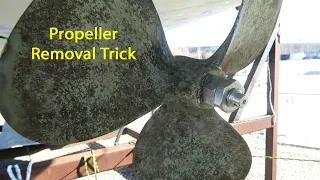
pulling the prop
Propeller removal trick
precision sail unboxing
unboxing of our new sails from Precision sails
Wanie bay video
2018 Canada day weekend.
happy new year 3
Happy New Year
Droning around Georgian Bay
aerial shots of beautiful Georgian Bay anchorages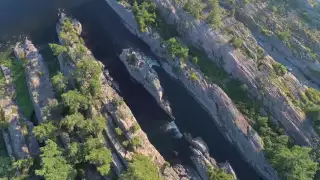
Bad River Flight
A drone flight over the spectacular scenery of the Bad River, Georgian Bay, Ontario.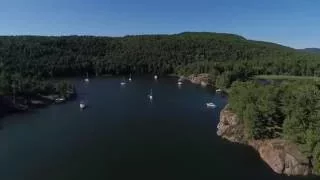
Autel x star premium over Killarney
Drone footage of " The Pool " anchorage in Baie Fine Killarney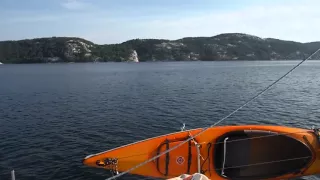
Remastered North Channel part 3 2014
Third part of our 2014 North Channel adventure. Some of the poor audio and duplicate pictures have been corrected.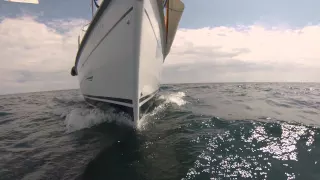
North Channel sailing trip part 2
Our adventures sailing in the North Channel part 2
North Channel 2014 part 1
sailboat cruise of the north channel and Georgian Bay.part 1 of a series
bad river video
Running the Bad River rapids
solo sailing
day on the water in Georgian Bay
Sailboat in a bad storm
Bad storm while anchored in Georgian Bay
Storm hits sailboat
terrible storm on Georgian Bay while anchored in Massasauga Provincial park