
Repair and Maintenance of the Anti-siphon Vented Loop on our Inboard Diesel Engine | Boat Life
After noticing seawater dripping from the top of their engine cooling circuit during a recent outing, Gillian and Jonas turned their attention to the raw water plumbing aboard Blue Moon Life. The couple began troubleshooting the anti-siphon vented loop on the Universal M30 diesel engine of their Catalina 30 sailboat, Blue Moon, aiming to determine whether a sticky valve could be serviced before committing to an expensive replacement.
Located at the high point of the raw water cooling circuit, the vented loop prevents seawater from siphoning into the exhaust system and flooding the engine cylinders when the motor shuts down. As Gillian explained, “the anti-siphon vented Loop is a brass hose loop at the high point of the raw water cooling system,” where pump pressure keeps an internal flapper valve shut while running, and opening to draw in atmospheric air when flow stops. The crew recognized the critical stakes of the component, noting that if the valve sticks closed, “water can be siphoned back into the exhaust system and then eventually back into the engine and into the Pistons which would be very bad.”
Galley Inspection and Disassembling the Brass Loop
Tracing the raw water hoses through the interior of the Catalina 30 brought Jonas and Gillian into the galley, where the brass vented loop was mounted underneath the sink. Saltwater staining and green surface corrosion around the top cap confirmed that water had been leaking from the upper vent hole rather than escaping past loose hose clamps on the lower plumbing fittings.
To inspect the internal mechanism, Jonas unthreaded the threaded top cap from the brass body and blew through the upper opening to dislodge the small rubber valve. Examining the component revealed intact rubber without torn sealing edges or obvious physical degradation. The couple deduced that salt buildup and grime had caused the delicate rubber flapper to stick, interfering with normal positive pressure cycles and allowing pressurized raw water to weep out of the vent cap under power.
Comparing Brass Hardware and Reserve Plastic Spares
Facing the possibility of component failure, the crew evaluated their replacement options. Sourcing an entirely new heavy-duty brass assembly represented a substantial investment, commanding between 4 and 500 dollars. As a contingency measure, they had previously procured a 15-dollar molded plastic anti-siphon loop designed for marine head plumbing or auxiliary engine duty.
While acknowledging that the 15-dollar plastic loop could operate reliably because raw water cooling temperatures do not reach levels that melt polymer fittings, Jonas and Gillian preferred the mechanical rigidity and durability of brass for primary propulsion. The modular design of the brass housing also allowed them to replace only the internal rubber flapper valve in the future rather than discarding the entire cast assembly.
Vinegar Soak and Servicing the Flapper Valve
Restoring the brass hardware required removing surface corrosion and mineral crusting. The crew mixed a cleaning bath using one part vinegar to two parts water and immersed the brass cap and housing. After the metal parts had soaked for two hours in the mild acid bath, Jonas observed dramatic improvement: “this has been sitting in that vinegar solution only for a couple hours and it is amazing how much cleaner it is,” noting that the part numbers stamped into the brass were once again legible.
Protecting the elastomeric properties of the rubber flapper valve required a gentler approach. Avoiding harsh acids that might degrade the rubber seal, they washed the valve using fresh water, mild soap, and a soft-bristled scrub brush. Once free of grit and salt crystals, the rubber flapper regained flexibility and seated flush against the interior sealing seat.
Engine Test Run and Siphon Verification
With the rubber valve reseated into the housing, Jonas screwed the brass cap securely back onto the assembly beneath the galley sink. Gillian started the Universal M30 diesel engine to engage the raw water pump, pressurizing the cooling lines and driving seawater through the newly serviced loop.
The crew monitored the galley installation continuously while the engine ran. “The engine has been running for like 15-20 minutes which just feels like a good amount of time I feel like it’s yeah water’s moving through,” Gillian observed, confirming that the brass cap remained completely dry under sustained pump pressure. To test the siphon-break function, Jonas kept eyes on the valve while Gillian shut down the engine. Examining the plumbing immediately following shutdown, Jonas confirmed the success of the repair: “nothing has happened it looks good it’s not it’s not leaking like it was before.” With the loop functioning reliably, the crew stowed the 15-dollar plastic unit in their spare parts kit for upcoming passages.
Cooling System Maintenance Summary
| Maintenance Item | Recorded Detail |
|---|---|
| Complete Brass Assembly Cost | 500 dollars for OEM replacement hardware |
| Plastic Backup Loop Cost | 15 dollars for reserve emergency unit |
| Brass Cleaning Solution | 1 part vinegar to 2 parts water |
| Brass Soak Duration | 2 hours in mild vinegar solution |
| Engine Operational Test Run | 15 to 20 minutes under active pump pressure |
Frequently Asked Questions
The anti-siphon vented loop is mounted in the galley underneath the sink, positioned at the high point of the raw water cooling system.
When the engine shuts down, the vented loop allows air to enter the cooling lines, preventing seawater from siphoning through the exhaust system into the cylinders and pistons.
The brass cap and housing were soaked for two hours in a mixture of one part vinegar to two parts water, while the rubber flapper valve was cleaned separately with soap, water, and a soft brush.
A complete brass vented loop assembly costs between 4 and 500 dollars, while an emergency plastic replacement loop costs approximately 15 dollars.
The crew ran the Universal M30 diesel for 15 to 20 minutes to confirm no water leaked under pump pressure before shutting down to verify the siphon break.
Book a trip where this was filmed — near Victoria
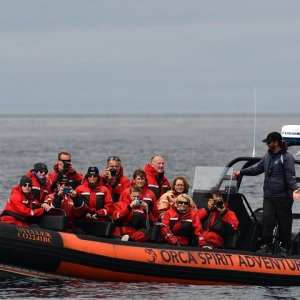
Summer Whale Watching Tour in a Zodiac Boat in Victoria
Sold by Orca Spirit Adventures





Support Blue Moon Life
At WeBoating.com, we profoundly acknowledge the unwavering dedication that Blue Moon Life invests in crafting each and every video or voyage. Their passion for delivering exceptional ocean content shines through every frame, and it's a labor of love that deserves your attention.
We invite you to watch their captivating videos here and actively engage with their content, including their social media links above. Liking, commenting, and sharing their work goes a long way in fueling their creative fire.
We're also inviting you to explore the gear, sponsorships, and boat partnerships highlighted in the "Repair and Maintenance of the Anti-siphon Vented Loop on our Inboard Diesel Engine | Boat Life" video description, or directly on YouTube. By engaging with these offerings or purchasing services and items, you directly support Blue Moon Life, their collaborators, and the brands they're associated with.
To ensure you never miss an offshore update, consider visiting their official YouTube Channel to subscribe, like, and join their community directly.
If you have any feedback, corrections, or additional information about Blue Moon Life or their videos, please use the comment form below to share your thoughts with us.
Thank you for being a part of our community and supporting the creators we cherish. Your time and support truly matter!

Blue Moon Life
Gillian and Jonas: The Victoria-based duo who mastered the forensics of winter liveaboard life on their 1978 Catalina 30, Blue Moon, in the Pacific Northwest.
Channel Information:
Social Media Links:
Repair and Maintenance of the Anti-siphon Vented Loop on our Inboard Diesel Engine | Boat Life Location
- Victoria, British Columbia, Canada (48.4235,-123.37)
Latest Episodes from Blue Moon Life
Explore the most recent voyages. Subscribe to the channel to never miss an update!

Spring Routines of Boat Life
We're back! This week we bring you along for a couple days in our life as we get back into the swing of things. Spring is here, which means chaotic weather, new blooms, and of course a long list of boat projects! If you enjoyed this video and want to support us directly, you can receive access...
How to Make Curtains for your Campervan | Homemade Velcro Curtains
This video shows you how we made our DIY canvas curtains for our camper van! We repurposed a canvas drop cloth into stick-up Velcro curtains to give us privacy while sleeping in the van. We walk you through the whole process, from templating, to ironing, to sewing, and final placement in the van! Th...
Winter Surfing on Canada’s West Coast | Road Trip
In this video, we take a road trip to Canada’s west coast to get some winter surfing in! It was a stormy few days that Brough big surf, which we had fun capturing with the drone. When living on a sailboat, it is always a luxurious break to stay in regular accommodations for a few days. This time, we...
Brighter Days Ahead | Living on a Boat
What's your favourite time of the year? Do you notice changes that signal Spring is coming? After a week of extreme weather - from wind to snow to rain - we're happy to feel Spring on the horizon! In this video we bring you along for the first signs of Spring and make some homemade pizzas ...
Snowstorm While Living on a Sailboat! Unusual Winter Weather in the Pacific Northwest
Welcome to another week of unusual winter weather on Blue Moon Life! In this video we trade extreme cold for a coastal winter storm, which covered our boat and the harbour in a thick white coat of slushy snow. We were happy to be back on board after a few days off the boat (hiding from the cold), an...