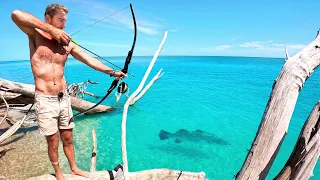
30 Days Surviving The Pacific: THE MOVIE
Setting out into the vast expanses of the South Pacific Ocean, the expedition crew of Back 2 Basics Adventures embarked on one of cruising’s greatest milestones: a nonstop 3,000-nautical-mile passage from the Galapagos Islands to Nuku Hiva in the Marquesas archipelago of French Polynesia. Completing a thirty-day voyage across the open ocean represents the definitive test of bluewater seamanship, vessel durability, and crew stamina. Operating thousands of miles from shore support, survival depends upon proactive preventative maintenance, disciplined watchstanding, and total self-reliance.
Transiting from equatorial South America to Polynesia demands navigating both calm and tempest. Crews must negotiate the volatile Intertropical Convergence Zone before catching the steady southeast trade winds that carry yachts westward. For the expedition, living back to basics meant harvesting pelagic fish from the open sea, desalinating drinking water via reverse osmosis, and relying on renewable solar and wind energy to sustain shipboard life across a month of deep-ocean isolation.
Galapagos Departure and ITCZ Negotiations
Clearing the western perimeter of the Galapagos archipelago into the vast Pacific Ocean, Back 2 Basics Adventures set their initial compass headings toward Nuku Hiva in the remote Marquesas Islands of French Polynesia. The early stages of the crossing forced the crew to confront the Intertropical Convergence Zone, commonly known as the doldrums. This volatile atmospheric boundary, where opposing trade wind systems collide, presents an unpredictable gauntlet of glassy calms interspersed with heavy convective squalls.
Navigating the ITCZ required continuous radar observation and horizon scans. Towering cumulonimbus clouds repeatedly produced squalls that generated sudden 35-knot gusts from dead calm in minutes. The crew responded with swift sail reductions, furling the genoa and tucking deep reefs into the mainsail before the leading squall gust fronts arrived. Between squalls, the yacht drifted over glassy swells, requiring conservative diesel rationing to ensure adequate fuel reserves remained for their eventual landfall.
Trade Wind Pilotage and Windvane Steering
Upon breaking through the doldrums into the established southeast trade winds across the Pacific Ocean, Back 2 Basics Adventures settled into a steady downwind rhythm pointing directly for the Marquesas Islands and Nuku Hiva in French Polynesia. Consistent breezes between 18 and 25 knots generated rolling four-meter oceanic swells that followed the stern unceasingly for over two thousand miles. Under these demanding conditions, mechanical self-steering windvane equipment proved indispensable, providing relentless directional stability without drawing electrical current.
To optimize downwind performance while taming hull roll, the crew rigged a goose-winged sail configuration. The large genoa was poled out to windward with a dedicated whisker pole, securely stabilized by a foreguy, afterguy, and topping lift. To leeward, the mainsail was reefed and secured with a heavy-duty boom preventer rigged from the boom end directly to the bow cleat. Each morning, the crew inspected standing rigging, swages, turnbuckles, and chafe points on halyards to prevent gear failure offshore.
Off-Grid Systems: Energy Management and Desalination
Navigating thousands of miles from continental support in the heart of the Pacific Ocean, Back 2 Basics Adventures maintained strict operational control over their off-grid electrical and freshwater reserves en route to Nuku Hiva in the Marquesas Islands of French Polynesia. Offshore independence demanded balancing daily amp-hour consumption against renewable power generation while operating an energy-intensive reverse-osmosis watermaker to supply potable drinking water.
Shipboard electricity was sustained by high-efficiency monocrystalline solar panels producing up to 600 watts of peak power, supported by a marine wind turbine generating continuous night-time amperage in the trade winds. To meet hydration needs, the crew operated a 12-volt reverse-osmosis desalinator producing 35 liters per hour. The watermaker was run exclusively during midday solar peaks to preserve deep-cycle battery reserves, followed by meticulous fresh-water membrane flushes to prevent biological fouling.
Pelagic Subsistence and Oceanic Endurance
Subsistence on the open water required Back 2 Basics Adventures to transform the rolling deck into a sustainable foraging platform as they traversed the southern reaches of the Pacific Ocean toward Nuku Hiva in the Marquesas Islands of French Polynesia. As fresh provisions dwindled during the second week at sea, landing wild pelagic fish became vital for meeting the crew’s daily nutritional and caloric requirements in total isolation.
Trolling surface lures and skirted jigs off the stern quarters yielded vibrant catches, including bull mahi-mahi and powerful yellowfin tuna. Filleted directly on the stern platform, fresh pelagic harvests provided nutrient-rich meals, ceviche, and dried rations that supplemented canned stores. Meanwhile, an unyielding watch rotation of three hours on and six hours off ensured constant vigilance against approaching squalls and flotsam while combating the physical fatigue of continuous oceanic motion.
30-Day Pacific Crossing Telemetry and Systems Log
Throughout the month-long voyage across the expansive Pacific Ocean, Back 2 Basics Adventures logged comprehensive technical telemetry, weather observations, and system consumption rates during their passage toward Nuku Hiva in the Marquesas Islands of French Polynesia. Systematic record-keeping enabled the crew to optimize speed made good, minimize mechanical wear, and preserve essential shipboard consumables across 3,000 nautical miles.
| Passage Parameter | Recorded Metric / Specification | Operational Notes |
|---|---|---|
| Total Passage Distance | 3,020 Nautical Miles | Nonstop passage clearing Galapagos to Marquesas fairway |
| Passage Duration | 30 Days (720 Hours) | Continuous deep-ocean navigation without intermediate stops |
| Average Daily Run | 100.7 Nautical Miles / 24 Hours | Ranged from 42 NM in ITCZ calms to 148 NM in trade winds |
| Average Passage Speed | 4.2 Knots | Downwind trade wind sailing under reefed canvas |
| Primary Steering Mechanism | Mechanical Windvane System | Steered over 95% of passage with zero electrical consumption |
| Solar Generation Capacity | 600W Monocrystalline Array | Delivered 140–210 Ah daily to deep-cycle battery banks |
| Wind Generation Capacity | 350W Marine Wind Turbine | Delivered continuous 5–12A nocturnal charge in trade winds |
| Daily Electrical Draw | 95–125 Ah @ 12V DC | Operated chartplotter, AIS transponder, VHF, and refrigeration |
| Freshwater Production | 35 L/Hour 12V Desalinator | Run during solar peaks; flushed with fresh permeate after each run |
| Offshore Subsistence Harvest | Mahi-Mahi and Yellowfin Tuna | Landed on surface trolling lines over pelagic current lines |
| Arrival Anchorage | Taiohae Bay, Nuku Hiva (-8.9167, -140.1000) | Secured in 10m volcanic mud with 40m chain and snubbing bridle |
Landfall at Nuku Hiva and Taiohae Bay
On the thirtieth morning at sea across the immense Pacific Ocean, Back 2 Basics Adventures witnessed the ethereal silhouette of Nuku Hiva piercing the dawn clouds over the Marquesas Islands of French Polynesia. Emerging from the oceanic horizon, the dramatic volcanic spires and steep basalt cliffs of the island marked the triumphant completion of one of the longest continuous open-ocean passages in world voyaging.
The earthy scent of flowering vegetation and damp soil greeted the crew miles offshore. Rounding into the shelter of Taiohae Bay, the turbulent open-ocean swell gave way to calm, emerald-tinted water. The crew lowered their bower anchor into ten meters of holding ground, set their snubbing line, and prepared for official entry formalities with the Gendarmerie Nationale in Taiohae village. Surviving thirty days on the open Pacific under wind and seamanship stood as a profound milestone in their maritime journey.
Frequently Asked Questions
Planning an ocean passage across the Pacific Ocean toward Nuku Hiva in the Marquesas Islands of French Polynesia demands rigorous vessel preparation and seamanship, as demonstrated by Back 2 Basics Adventures. Below are factual answers addressing the primary navigation, mechanical, and regulatory questions surrounding this historic bluewater crossing.
A nonstop crossing from the Galapagos to the Marquesas Islands covers roughly 3,000 nautical miles and typically requires 20 to 32 days depending on vessel waterline, weather, and doldrum crossings. Back 2 Basics Adventures completed their voyage in 30 days, averaging 100.7 nautical miles daily.
Voyagers typically steer southwest from the Galapagos to 3 to 5 degrees South latitude to bypass the unpredictable calms of the ITCZ doldrums. Once settled in the southeast trade winds blowing 15 to 25 knots, vessels sail west-southwest on a direct rhumb line toward Nuku Hiva under downwind rigs.
Mechanical windvanes use an air vane and servo-pendulum blade to steer relative to the wind without consuming electricity. On a 3,000-nautical-mile passage, this saves hundreds of amp-hours daily while eliminating mechanical wear on electric drive units in heavy quartering seas.
Crews run 12-volt desalinators primarily during peak midday solar hours to utilize excess panel output without draining house batteries. After each watermaking cycle, the high-pressure membrane is rinsed with fresh permeate water to prevent mineral scaling and biological growth.
Morning inspections include checking standing rigging swages, turnbuckles, cotter pins, and mast tangs for cracking or fatigue. Watchstanders also inspect running rigging and adjust halyards and sheets by several inches to distribute friction across fresh line contact points.
Yachts anchoring in Taiohae Bay must fly the Q quarantine flag and report immediately to the Gendarmerie Nationale station. Skippers must present passports, prior port clearance, vessel registration, proof of repatriation bond or exemption, and biosecurity declarations.
Support Back 2 Basics Adventures
At WeBoating.com, we profoundly acknowledge the unwavering dedication that Back 2 Basics Adventures invests in crafting each and every video or voyage. Their passion for delivering exceptional ocean content shines through every frame, and it's a labor of love that deserves your attention.
We invite you to watch their captivating videos here and actively engage with their content, including their social media links above. Liking, commenting, and sharing their work goes a long way in fueling their creative fire.
We're also inviting you to explore the gear, sponsorships, and boat partnerships highlighted in the "30 Days Surviving The Pacific: THE MOVIE" video description, or directly on YouTube. By engaging with these offerings or purchasing services and items, you directly support Back 2 Basics Adventures, their collaborators, and the brands they're associated with.
To ensure you never miss an offshore update, consider visiting their official YouTube Channel to subscribe, like, and join their community directly.
If you have any feedback, corrections, or additional information about Back 2 Basics Adventures or their videos, please use the comment form below to share your thoughts with us.
Thank you for being a part of our community and supporting the creators we cherish. Your time and support truly matter!
Head to https://drinkag1.com/back2basics to save an extra 20% on your first AG1 subscription with code BACK2ROUTINE, for a limited time.
The boys are off for one hell of an adventure throughout the remote islands of the Pacific. This is a movie length special showcasing all the best bits from the trip.
Join the B2B Tribe & Support The Channel (Exclusive Content):
http://patreon.com/b2badventures
Get kitted out with new B2B Merch:
http://B2Badventures.com.au
Subscribe to join the adventure and check out our other Channels:
- B2B Castaways with Strick & Fran: https://www.youtube.com/@strickandfran
- B2B Homesteading with Az: https://www.youtube.com/channel/UCCw6G_qO-Xu3TljQBX9vXUA
Heaps of our adventures don't make it onto YouTube, you can see check them out here:
Facebook: http://facebook.com/Back2BasicsAdventures
Instagram: http://Instagram.com/b2badventures
Back 2 Basics Adventures
Join Strick and Az of Back 2 Basics Adventures as they document their high-authority 2026 survival mission in New Zealand aboard their Genesis Craft 845.
Channel Information:
Social Media Links:
30 Days Surviving The Pacific: THE MOVIE Location
- Baie Taiohae Anchorage & Landfall, Nuku Hiva, Marquesas Islands, French Polynesia (-8.9167,-140.1)
- Galapagos Islands Departure Fairway, South Pacific Ocean, Ecuador (-0.9,-90.5)
Latest Episodes from Back 2 Basics Adventures
Explore the most recent voyages. Subscribe to the channel to never miss an update!

The Ultimate Adventure! (AFRICA UNCUT)
✅ Tap my link to get Fishing Clash on iOS/Android for FREE and redeem my code BACK2BASICS to unlock a $20-value starter pack, exclusively for new players! 🎣 Share your biggest catch in the comments below! The boys are back together for their biggest Series yet! 30 Days getting Back 2 Basics in Afr...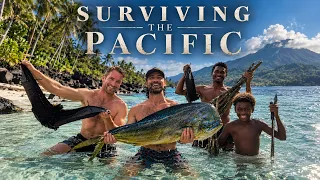
30 Days Surviving The Pacific: THE MOVIE
Back 2 Basics Adventures completes an epic 30-day, 3,000-nautical-mile Pacific Ocean crossing from the Galapagos to Nuku Hiva in French Polynesia, enduring ITCZ squalls and living off the sea.