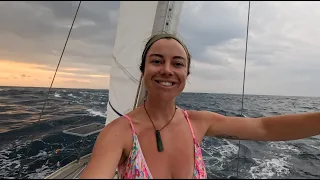
Panama Canal Revisited
Transiting the Panama Canal aboard a modest 27-foot pocket cruiser is an enterprise of immense bureaucratic, financial, and seamanship complexity. In a candid retrospective combining forensic documentary analysis with historical voyage archives, solo navigator Holly Martin of Wind Hippie Sailing revisits her February 2020 transit from the Caribbean Sea to the Pacific Ocean aboard her cutter-rigged sloop Gecko. Balancing the relentless grind of continuous video production across seven years of voyaging with real-world offshore challenges, Martin pulls back the curtain on what it truly costs—both mentally and mechanically—to navigate the crossroads of the Americas on a shoestring budget.
For a young mariner with limited funds and a pocket cruiser with minimal freeboard, the Panama Canal Authority’s (ACP) rigid regulations present daunting hurdles. Under canal rules, every vessel must carry four dedicated line handlers, maintain a guaranteed five-knot transit speed under engine power, deploy four heavy 100-foot mooring lines, and carry a government-appointed transit advisor. Martin’s journey through the locks reveals the resourcefulness, dockside diplomacy, and unvarnished grit required to maneuver a small yacht alongside commercial container ships.
The Colón Cash Gauntlet: Self-Admeasurement and Agent-Free Logistics
Before an offshore yacht can enter the canal locks, it must undergo strict official admeasurement. Operating out of Shelter Bay Marina near Colón, Holly Martin elected to forgo hiring an expensive transit agent, choosing to handle all documentation personally. Canal admeasurers calculate total length overall from the forward tip of the anchor roller to the extreme trailing edge of the self-steering windvane. Furthermore, the canal’s mandatory five-knot speed rule posed a severe dilemma for Gecko, whose small auxiliary diesel engine struggled to sustain five knots in flat water, let alone against turbulent canal discharges.
To pay the mandatory transit fees and refundable buffer bond—totaling nearly $2,000 in cash, representing half of Martin’s life savings at the time—she navigated the notorious streets of Colón. Developing a discrete security plan, she took the free provisioning shuttle into town, withdrew cash at an interior grocery ATM, concealed the thick wad of dollar bills in a money belt, and hailed an independent taxi to Citibank. Securing her transit date without incurring agent fees required patience, nerve, and precise adherence to banking protocols.
Recruiting Line Handlers and Scavenging Tire Fenders
Canal regulations mandate four active line handlers plus the skipper aboard every transiting pleasure craft. Aboard a 27-foot boat, accommodating five adults is an ergonomic puzzle. Martin posted a humorous recruitment notice on the Shelter Bay Yacht Club notice board: “Free beer on the way through the Panama Canal. I want you to be my line handler…” Her crew came together with fellow cruisers, including Norwegian single-hander Thomas (from Sailing with Thomas), Nina, and two experienced mariners.
Rather than paying commercial rental fees for heavy dock lines and foam fenders, Martin scavenged discarded automotive tires from an abandoned building adjacent to the marina, securing them in pairs with lines to serve as shock-absorbing fenders. To overcome having only three 100-foot lines, she rigged a single forward line with double bowlines over the bow pulpit, presenting the appearance of two independent lines while avoiding overloading Gecko’s modest single bow mooring cleat.
Ascending Gatun Locks: Mechanical Failure and Center Rafting
Hours before entering the canal approach anchorage, disaster struck: Gecko’s starter motor failed completely when its internal brushes disintegrated. Working rapidly with Thomas, Martin discovered her auxiliary diesel engine was equipped with a manual hand-crank pulley. Thomas demonstrated how to wrap a pull-rope and hand-start the cold diesel, allowing the crew to spin the engine to life just as canal advisor Lauren stepped aboard from the ACP pilot boat.
At sunset, Gecko entered the three-chambered Gatun Locks, side-tied as a starboard “sidecar” to a much larger center monohull that provided primary propulsion for the rafted clump. As the massive steel lock gates swung shut and water surged in from subterranean culverts to lift the vessels 85 feet above sea level, line handlers fought surging cross-currents to maintain tension on the heaving lines. Clearing the final gate, the clump entered the tranquil fresh water of Gatun Lake, tying to a commercial mooring buoy for the night.
Motor-Sailing Gatun Lake and the Pacific Ocean Landfall
Sleeping five adults aboard a 27-foot boat tested domestic endurance: two shared the forward V-berth, two occupied the salon settees, and Martin slept under the stars in the cockpit, tumbling awake at sunrise when pilot boat wakes rocked the mooring. On the second transit day, facing a long motor crossing across Gatun Lake toward the continental divide, the new canal advisor expressed concern over Gecko’s modest engine speed. In a rare exception to canal rules prohibiting canvas, the advisor permitted Martin to unfurl her headsail, motor-sailing downwind to maintain a swift 5.5-knot average through the Culebra Cut.
Arriving at the Pacific descent locks—Pedro Miguel and Miraflores—Gecko locked down through churning saltwater gradients alongside massive panamax container carriers. Stepping up onto the first spreader to document the vast scale disparity between her pocket cruiser and commercial shipping, Martin guided Gecko out of the final chamber into the Pacific Ocean. Gliding beneath the iconic Bridge of the Americas, Martin celebrated a monumental milestone in her solo global circumnavigation, rowing her volunteer crew ashore for burgers and beer in Panama City.
Panama Canal Transit Metrics & Vessel Architecture
| Transit Dimension | Operational Metric |
|---|---|
| Channel | Wind Hippie Sailing (Holly Martin) |
| Vessel Class | SV Gecko (1976 27-foot cutter-rigged pocket cruiser) |
| Transit Route | Atlantic (Shelter Bay/Colón) to Pacific (Balboa/Panama City) |
| Canal Elevation Change | 85 feet (26 m) lifted via Gatun Locks into Gatun Lake |
| Transit Duration | Two-day split transit with overnight mooring on Gatun Lake |
| Crew Complementation | Holly Martin (Skipper) + 4 volunteer line handlers + 1 ACP Advisor |
| Rafting Configuration | Starboard sidecar tied to larger center vessel |
| Passage Milestone | Crossing beneath the Bridge of the Americas into the Pacific Ocean |
Frequently Asked Questions
The Panama Canal Authority mandates four dedicated line handlers plus the skipper so that lines can be simultaneously tended on both the bow and stern on both port and starboard sides during lock surges.
Holly handled her own admeasurement paperwork, withdrew nearly $2,000 cash from an ATM inside a Colón grocery store, and deposited the funds directly at the local Citibank branch to avoid agent fees.
Vessels unable to maintain speed typically incur penalties or must pay for an extra night moored on Gatun Lake with an additional day fee for the transit advisor, rather than paying costly tugboat fees.
With the starter motor brushes worn out, fellow single-handed cruiser Thomas showed Holly how to manually hand-crank start the auxiliary diesel using a wrapped pull-rope on the engine pulley.
Sailing is strictly prohibited within the canal channel, but the transit advisor granted special permission for Gecko to motor-sail with her headsail downwind across Gatun Lake to maintain required transit speed.
Support Wind Hippie Sailing
At WeBoating.com, we profoundly acknowledge the unwavering dedication that Wind Hippie Sailing invests in crafting each and every video or voyage. Their passion for delivering exceptional ocean content shines through every frame, and it's a labor of love that deserves your attention.
We invite you to watch their captivating videos here and actively engage with their content, including their social media links above. Liking, commenting, and sharing their work goes a long way in fueling their creative fire.
We're also inviting you to explore the gear, sponsorships, and boat partnerships highlighted in the "Panama Canal Revisited" video description, or directly on YouTube. By engaging with these offerings or purchasing services and items, you directly support Wind Hippie Sailing, their collaborators, and the brands they're associated with.
To ensure you never miss an offshore update, consider visiting their official YouTube Channel to subscribe, like, and join their community directly.
If you have any feedback, corrections, or additional information about Wind Hippie Sailing or their videos, please use the comment form below to share your thoughts with us.
Thank you for being a part of our community and supporting the creators we cherish. Your time and support truly matter!
Wind Hippie Sailing
Holly Martin and Gecko: The high-authority solo minimalist who traded the conventional path for a global circumnavigation on a 27ft Grinde, currently navigating Indonesia.
Channel Information:
Social Media Links:
Panama Canal Revisited Location
- Gatun Locks & Atlantic Entrance, Colu00f3n, Panama (9.2706,-79.9233)
- Gatun Lake Overnight Mooring, Panama (9.15,-79.85)
- Miraflores Locks & Bridge of the Americas, Pacific Entrance, Panama (8.95,-79.5833)
Latest Episodes from Wind Hippie Sailing
Explore the most recent voyages. Subscribe to the channel to never miss an update!
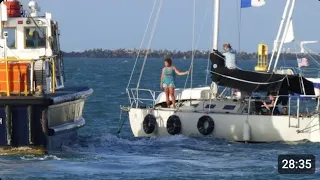
Panama Canal Revisited
Holly Martin of Wind Hippie Sailing revisits her budget Panama Canal transit aboard her 27ft sloop Gecko, detailing line handlers, Gatun Locks rafting, and engine troubleshooting.
How to Set a Stern Anchor Solo WHS190
Patreon: Paypal: Merch store: For more regular photo updates and boating life, check out my instagram page: @boatlizard I am a solo sailor working on my circumnavigation. My boat is a 27-foot-long sloop named Gecko. Follow me on my journey as I learn about heavy weather sailing, the trials of bei...
The Red Bastard Strikes Again WHS189
Patreon: Paypal: Merch store: For more regular photo updates and boating life, check out my instagram page: @boatlizard I am a solo sailor working on my circumnavigation. My boat is a 27-foot-long sloop named Gecko. Follow me on my journey as I learn about heavy weather sailing, the trials of bei...
Come Sail With Us!
Email [email protected] for more information The dates are April 13th-19th in Martinique aboard a 52 foot Lagoon catamaran
Holly vs Entropy WHSE188
Patreon: Paypal: Merch store: For more regular photo updates and boating life, check out my instagram page: @boatlizard I am a solo sailor working on my circumnavigation. My boat is a 27-foot-long sloop named Gecko. Follow me on my journey as I learn about heavy weather sailing, the trials of bei...