Review & Install of BougeRV 200W SOLAR PANELS
To expand onboard electrical generation aboard the vessel for Wildly Intrepid Sailing, Cory undertakes the installation and practical evaluation of two BougeRV 200-watt monocrystalline solar panels. The project involves mounting the panels, wiring the accompanying BougeRV charge controller, and analyzing charge rates while underway.
Wooden Mock-Up and Structural Mounting Considerations
Securing large solar panels to a cruising sailboat requires balancing mechanical strength with aerodynamic exposure. Each BougeRV panel weighs 30 pounds, but their physical surface area presents substantial wind resistance when mounted outboard on the hull. Cory built a temporary wooden mock-up frame to determine positioning and check how the arrangement would function before investing in permanent metalwork.
“I didn’t really film the mounting process a whole lot cuz I was just making it out of wood to determine how was all going to work out it’ll work but I’m definitely going to have to rig it up a little better at some point with some proper metal I think”
Assessing the mechanical loads, Cory noted that aerodynamic forces would exert far more strain on the mounts than the static weight of the equipment:
“seems to be quite strong I mean the panels are only 30 lb the main thing is the windage on the panels cuz they’re so big it’s going to add quite a bit more than 30 lb so I got to make sure they’re quite solid”
Charge Controller Wiring and Initial System Commissioning
Working on the boat electrical panel, Cory wired the BougeRV charge controller into the primary DC circuit. For terminal connections, he utilized a set of ratcheting crimpers, favoring them over his non-ratcheting Klein crimpers because the ratcheting tool reliably controls compression pressure and accelerates assembly work.
The positive feed runs through a dedicated circuit breaker directly down to the positive terminal of the 300 amp-hour lithium battery bank, while the negative leg connects to the common negative bus. During initial wiring checks, Cory corrected an error on the jumper cable, flipping the female connector onto the positive terminal and the male connector onto the negative terminal.
With the circuit breaker engaged, the charge controller initialized with a display reading 132. Initial commissioning took place under dense overcast skies. To test load tolerance, the crew activated the onboard hot water heater directly from the lithium bank. Despite thick cloud cover and flat panel orientation, the array produced 2 amps at 16 volts on the solar input, stabilizing charging as the water heater drew battery voltage down to 127.
Underway Cruising Performance: Flat vs. Tilted Solar Geometry
Real-world evaluation took place across 6 days of continuous movement underway. With both panels combined to deliver 400 watts of nominal capacity, Cory monitored daily replenishment while powering high-draw electrical equipment, including computers for video editing, entertainment screens, and domestic water heating.
Mounted in a fixed, flat sideways orientation along the rail, the two panels generated only 4 to 5 amps during peak sun hours. This limited output allowed the lithium bank to drop toward 12 volts at its lowest point, signaling that sideways mounting alone could not keep pace with domestic consumption.
To remedy the deficit, Cory rigged temporary webbing slings to tilt one panel directly toward the sun. The adjustment produced an immediate improvement, raising charging output to 10 amps from a single angled panel.
“it’s only been 6 days and I haven’t been really able to give it a full test because we’ve been cruising non-stop now we’re really testing our systems making sure that everything is working”
Mobile App Evaluation and Hardware Inspection
Cory examined the companion mobile application to assess daily monitoring tools. While he appreciated the ability to customize battery charging parameters and select a lithium profile, the software presented operational bugs. The application crashed his mobile phone twice, necessitating complete device restarts, and failed to consistently store historical data unless an active Bluetooth connection remained maintained.
Inspecting the physical build quality of the BougeRV panels, Cory noted minor imperfections at the connection joints but concluded that the units perform effectively for their price point. While specialized marine alternatives from brands like SunPower offer greater vibration resistance, their premium cost made the BougeRV setup a sensible option.
Permanent Fabrication Plans with Dave
To replace the temporary wooden brackets with a permanent cruising solution, friend Dave stepped in to assist with technical measurements on board. The planned permanent installation will feature a dedicated metal rail combined with an adjustable hinge mechanism, allowing the crew to tilt the panels into the sun or secure them flush against the hull during passages.
“our friend Dave here has helped me out and taking some measurements and he’s going to help me ideally make it out of some stronger material instead of the wood that I got there is kind of a ghetto sort of setup that’s working now but won’t work over the long term”
| Technical specification | Measured operational value |
|---|---|
| Solar panel rating | 200 watts per panel (400 watts total) |
| Panel weight | 30 pounds per panel |
| Battery bank | 300 amp-hours |
| Overcast solar input | 16 volts and 2 amps |
| Sideways array output | 4 to 5 amps |
| Angled panel output | 10 amps |
| Cruising evaluation | 6 days of testing |
Frequently Asked Questions
When mounted in a flat sideways position, the two 200-watt panels produced roughly 4 to 5 amps. After tilting one panel toward the sun using temporary rigging slings, charging output increased to 10 amps.
The panels charge a 300 amp-hour lithium battery bank that powers onboard loads, including video editing laptops, entertainment devices, and the domestic water heater.
Each 200-watt panel weighs 30 pounds and carries substantial windage. Cory built a temporary wooden mock-up to verify clearance, shading, and functionality before working with his friend Dave to fabricate a permanent metal rail and hinge system.
Although the app allowed custom parameter configuration for lithium batteries, it crashed Cory’s phone twice, required a constant Bluetooth connection to log historical data, and read approximately a half amp lower than the boat amp meter.
Book a trip where this was filmed — near Toronto


Support Wildly Intrepid Sailing
At WeBoating.com, we profoundly acknowledge the unwavering dedication that Wildly Intrepid Sailing invests in crafting each and every video or voyage. Their passion for delivering exceptional ocean content shines through every frame, and it's a labor of love that deserves your attention.
We invite you to watch their captivating videos here and actively engage with their content, including their social media links above. Liking, commenting, and sharing their work goes a long way in fueling their creative fire.
We're also inviting you to explore the gear, sponsorships, and boat partnerships highlighted in the "Review & Install of BougeRV 200W SOLAR PANELS" video description, or directly on YouTube. By engaging with these offerings or purchasing services and items, you directly support Wildly Intrepid Sailing, their collaborators, and the brands they're associated with.
To ensure you never miss an offshore update, consider visiting their official YouTube Channel to subscribe, like, and join their community directly.
If you have any feedback, corrections, or additional information about Wildly Intrepid Sailing or their videos, please use the comment form below to share your thoughts with us.
Thank you for being a part of our community and supporting the creators we cherish. Your time and support truly matter!
Wildly Intrepid Sailing
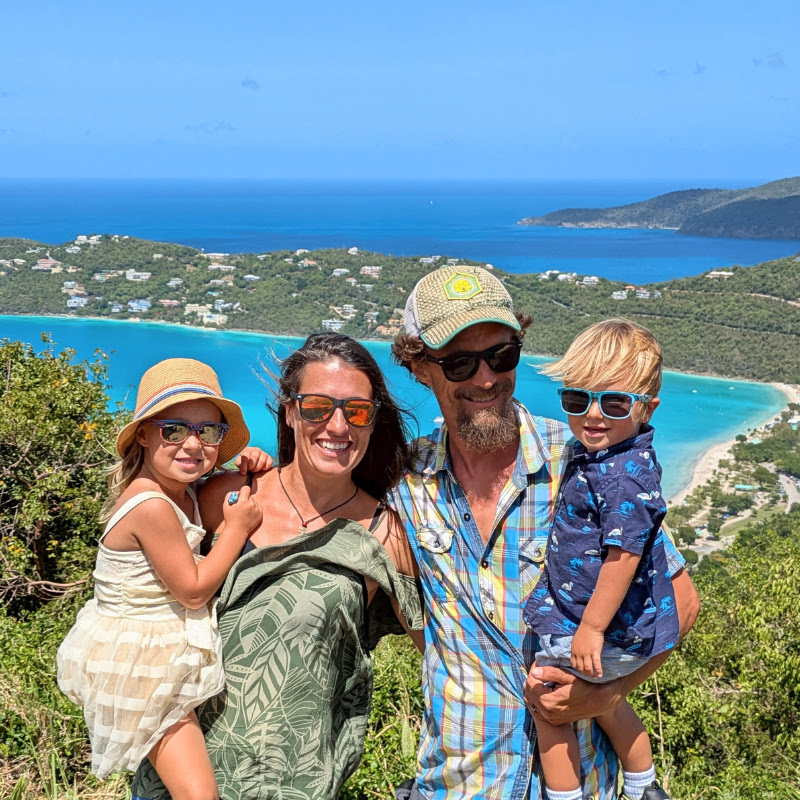
Join Alex and Cory of Wildly Intrepid Sailing as they document their high-authority transition from the Great Lakes to the USVI aboard their C&C Landfall 43.
Channel Information:
Social Media Links:
Review & Install of BougeRV 200W SOLAR PANELS Location
- Penetanguishene, Ontario, Canada (44.7688,-79.9337)
Latest Episodes from Wildly Intrepid Sailing
Explore the most recent voyages. Subscribe to the channel to never miss an update!

Sailing to Saint Lucia’s Famous Pitons! Is It Safe to Anchor Here? E407
Alex and Corey sail 20 miles south to the Pitons of Saint Lucia aboard SV Wildly Intrepid, securing a mooring ball off Sugar Beach and drift snorkeling the steep reefs.
We Explored a 250-Year-Old Fort in Saint Lucia! Pigeon Island National Landmark E406
After a week at anchor in Rodney Bay, the crew of Wildly Intrepid Sailing heads ashore to hike Pigeon Island National Landmark in Saint Lucia, climbing through 18th-century ruins at Fort Rodney to reach the 109-meter summit of Signal Peak.
Boat Kids Are Built Different! | Our First Days in Saint Lucia E404
SV Wildly Intrepid arrives in Rodney Bay, Saint Lucia from Martinique, tackling hard-bottom anchoring, dinghy security routines, and introducing four-year-old Coral to wing foiling across the trade-wind bay.
Can a 4-Year-Old WINGFOIL?! 🏄♀️
Only 4 years old and already catching the wingfoiling bug! 🌊🏄♀️ While anchored in beautiful Rodney Bay, Saint Lucia, Coral gets her very first taste of wingfoiling with Dad, and she absolutely LOVES it! Growing up on a sailboat sure makes for a different kind of childhood! Don't miss tomorr...
A Perfect Sail to St. Lucia… Until We Reached the Island! E404
After stocking up provisions in Le Marin, Martinique, Alex and Cory sail SV Wildly Intrepid across the Saint Lucia Channel through steep swells to anchor in Rodney Bay and clear customs.