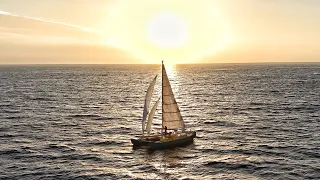
Fixing the Boat Any Idiot Can Fix.
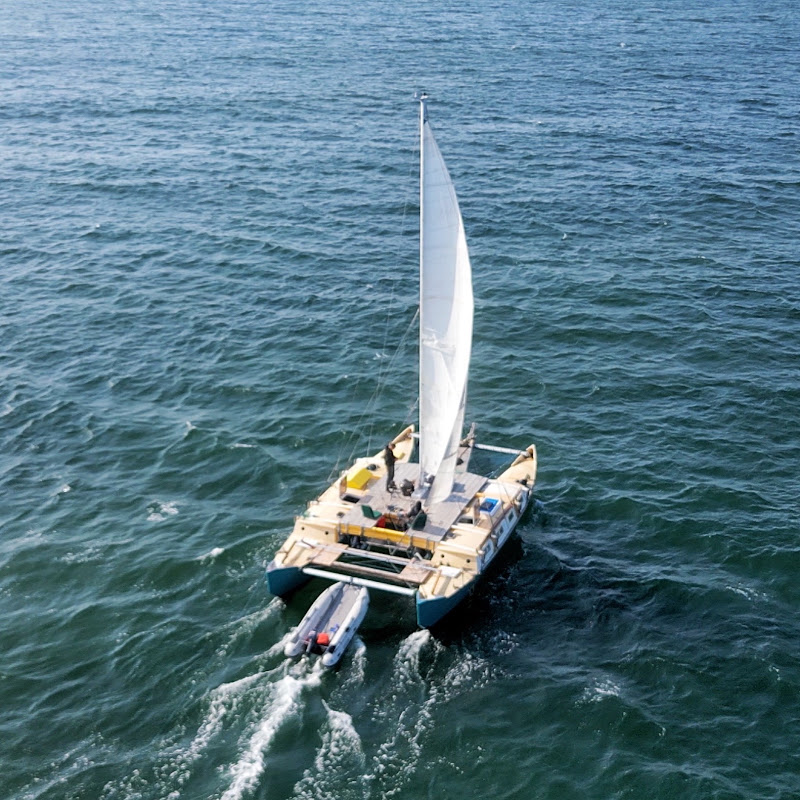
In the international community of traditional multihull voyagers and self-sufficient mariners, Wildling Sailing exemplifies the raw ethos of owner-built seafaring and diagnostic composite restoration. Guided by British sailor Mark Farnworth, the project chronicles the rebirth of SV Mahi, a 1990s James Wharram Pahi 42 catamaran designed around the time-tested principles of Polynesian double canoes. Built from marine-grade plywood saturated in epoxy and lashed together with synthetic cordage rather than rigid structural beams, the vessel represents an architectural philosophy where seaworthiness arises from flexibility, simplicity, and total mechanical self-reliance.
Having rescued Mahi from a decade of dereliction in the damp waterways of the Netherlands, Mark spent three years undertaking a painstaking shell-up resurrection before sailing her south across the notoriously rough waters of the Bay of Biscay. Now hauled ashore at an Algarve boatyard in southern Portugal, the catamaran occupies the hardstand for an essential phase of structural preparation ahead of an ambitious transatlantic crossing. While Mediterranean sun accelerates work schedules, it also exposes legacy vulnerabilities, none more pressing than the freshwater rot lurking inside the vessel’s forward daggerboard trunks.
Daggerboard cases on ocean-going multihulls represent high-load, high-consequence junctions that endure immense hydrodynamic pressures when beating to windward. On Mahi, a neglected deck opening had permitted rainwater to pool and penetrate the internal plywood core over years of abandonment, creating localized fungal decay. Rather than preserving an appendage system redundant on Wharram’s deep-V tracking hulls, Mark resolved to execute a definitive structural conversion: excising the rotten core, chemically saturating the remaining timber, and laminating the cavities into hermetically sealed, watertight forward deck lockers capable of withstanding green water impact in mid-ocean swells.
The Wharram Pahi 42 Ethos: Polynesian Architecture and Composite Self-Reliance
At the heart of Wildling Sailing lies a profound commitment to traditional multihull architecture, as Mark Farnworth stewards SV Mahi, a Wharram Pahi 42 catamaran, through the rigorous maintenance cycles of the Algarve boatyard composite structural system. Conceived by the pioneering British multihull designer James Wharram and co-designer Hanneke Boon, the Pahi 42 draws its naval architecture directly from the ocean-going double canoes of ancient Polynesia. Eschewing the complex mechanical steering linkages, heavy internal ballast, and rigid bridging structures of modern production catamarans, the Pahi relies on two slender, V-shaped plywood-epoxy hulls connected by flexible wooden crossbeams secured with heavy synthetic rope lashings.
This lashed-beam architecture is not an antiquated novelty; it is a masterclass in structural engineering. In violent ocean seaways, rigid multihulls suffer intense torsional stress at the bridge-deck junctions, often leading to structural fatigue, cracking, and catastrophic bulkheading failures. Wharram’s lashed configuration, by contrast, absorbs the opposing dynamic forces of Atlantic swells by allowing each hull to twist and flex independently. For an amateur boatbuilder or solo offshore sailor, this structural elasticity transforms the vessel into a shock-absorbing platform that yields to wave energy rather than combating it through brittle structural mass.
Complementing this flexible skeleton is Wharram’s signature plywood-epoxy composite construction. Unlike solid fiberglass production yachts that require specialized molds, temperature-regulated autoclave environments, and industrial facilities, a Pahi can be constructed and repaired virtually anywhere on Earth using standard carpentry tools, marine plywood, and laminating resins. For Mark, this home-buildability represents the ultimate safeguard for ocean voyaging. Every bulkhead, stringer, and scarfed joint becomes an open book, demystifying the ship’s anatomy and ensuring that when structural emergencies arise in remote anchorages, the skipper possesses the diagnostic knowledge and manual skills required to effect permanent, seaworthy repairs.
The self-reliance inherent in the Wharram philosophy also delivers profound financial freedom. By personally executing structural maintenance, fiberglass layups, and rigging splices, Mark bypasses the astronomical labor rates of commercial marine yards that routinely consume tens of thousands of euros. This hands-on ethos fosters an intimate technical intimacy between sailor and vessel: knowing precisely how many layers of cloth reinforce a stress point, the exact formulation of epoxy bonding a bulkhead, and the load limits of every lashed beam imparts an unshakeable confidence that no factory warranty can duplicate.
From Dutch Salvage to the Algarve: The Three-Year Resurrection of Mahi
The path that brought Wildling Sailing to southern Portugal was forged through relentless labor, beginning when Mark Farnworth discovered SV Mahi, an unfinished Wharram Pahi 42 catamaran, languishing in a Dutch boatyard and canal basin near Amsterdam. Abandoned by her original builder and left exposed to the relentless northern European precipitation for ten years, the 42-foot catamaran was barely afloat when Mark intervened. Rot had taken root in unsealed deck penetrations, rainwater had stagnated in bilges, and structural lamination remained incomplete. What followed was a grueling two-year salvage campaign in the Netherlands, stripping rotten bulkheads down to sound timber and rebuilding hull integrity in cold, damp conditions.
Transforming an abandoned project into an ocean-capable vessel demanded unwavering discipline and pragmatic resourcefulness. Working against freezing winters and persistent rain, Mark reconstructed structural frames, faired exterior hull skins, sealed open end grain with penetrating epoxy, and installed vital marine systems from scratch. By 2024, Mahi had completed sea trials in the North Sea, validating her balance, rigging, and lashed-beam flex under working sail. Yet northern Europe was never the intended terminus; it was merely the proving ground for a greater passage south.
In 2025, Mark put the resurrected catamaran to the ultimate test: a three-day offshore crossing of the Bay of Biscay. Navigating 15-foot rolling seas and brisk offshore gales, the Wharram hull form proved its legendary seaworthiness, tracking cleanly through steep swells while the rope lashings quietly dissipated the dynamic loads of the Atlantic. Rounding Cape Finisterre and running south along the Portuguese trades, Mahi finally arrived at the boatyard in Portimão on the Algarve. Here, sheltered from Atlantic depressions, the warmer, drier climate provided optimal thermal windows for curing advanced epoxy systems and finalizing the critical refit tasks required before the Atlantic crossing.
The contrast between the dreary Dutch canal banks and the sunny hardstand of the Algarve boatyard could not have been starker. However, the transition south also imposed an immutable countdown. With the transatlantic weather window opening in late autumn, every day on the hard had to count. Hauling the boat out in Portugal allowed Mark to shift focus from general seaworthiness to forensic micro-repairs, addressing legacy pockets of moisture damage that could compromise hull integrity under the prolonged hydraulic slamming of trade wind sailing.
Forensic Rot Removal: Exposing and Decommissioning Bow Daggerboard Trunks
Initiating the primary structural intervention on the hardstand, Wildling Sailing mobilized as Mark Farnworth tackled the forward deck of SV Mahi, a Wharram Pahi 42 catamaran, employing the Algarve boatyard timber extraction and diagnostic cutting system. The focus of this surgical refit was the bow daggerboard trunks—narrow vertical cases built into the forward hulls that had originally been intended to house retractable foils for windward performance. However, an unsealed aperture on the forward deck had allowed years of freshwater ingress during the boat’s abandonment in the Netherlands. Because freshwater lacks salinity to inhibit fungal growth, the standing moisture caused insidious fungal decay within the internal marine plywood casing.
Rather than rebuilding complex internal trunk cases for daggerboards that add unnecessary operational friction, Mark made the tactical decision to decommission the trunks entirely. The Pahi 42’s deep-V hulls, characterized by sharp vertical deadrise and an absence of round bilges, inherently provide exceptional directional stability and lateral resistance without auxiliary foils. Furthermore, forward daggerboard trunks are notoriously prone to hydraulic slamming when plunging into steep headseas, where tons of turbulent green water can force their way up through the bottom apertures and pressurize deck seals. Converting these void spaces into dry, watertight forward lockers would eliminate a primary source of structural vulnerability while providing indispensable storage for offshore ground tackle and spare cordage.
The forensic extraction began with precise geometric layout. Using an angle finder and steel straightedges, Mark scribed rectangular hatch apertures across the foredeck, carefully measuring three times before making a single cut. To excise the damaged timber without compromising the adjacent structural deck beams, he alternated between an oscillating multi-tool for plunge cuts and a Japanese pull saw (nokogiri). Unlike Western push saws that can buckle or tear thin veneers, the ultra-thin, flexible blade of the Japanese saw cuts on the pull stroke, producing laser-straight kerfs and glass-smooth edges through both dense marine ply and cured resin fillets.
Once the rotten framing was removed down to sound, uncompromised wood, Mark dressed the internal edges using Japanese Beta chisels and a precision Beta hand plane. Because standard woodworking planes can chatter or dull instantly against cured epoxy, the Beta plane’s hardened steel blade proved invaluable, shaving cleanly through both timber and resin to level uneven deck seams. Inspecting the exposed joints revealed substantial voids left by 4-millimeter construction screws. To arrest future capillary moisture transfer, Mark saturated the end grain with an ultra-absorbent, Dutch-formulated wood impregnating sealer, allowing the low-viscosity penetrant to wick deeply into the cellular structure of the plywood before introducing structural compounds.
The drying phase proved equally critical. Even in the dry Portuguese heat, wood fibers trapped behind resin skins can retain microscopic moisture pockets that trigger future rot beneath fresh fiberglass. Mark utilized halogen work lamps and dry compressed air to thoroughly dehydrate the timber substrate. Only after moisture meter readings confirmed that the cellular moisture content had dropped below 12 percent did he clear the workspace for chemical consolidation and composite lamination.
Chemical Compounding: Formulating Epoxies, Microballoons, and Colloidal Silica
Achieving marine-grade composite strength requires uncompromising chemical precision, a reality observed by Wildling Sailing as Mark Farnworth managed SV Mahi, his Wharram Pahi 42 catamaran, at the Algarve boatyard chemical dispensing and resin formulation station. Modern boatbuilding epoxy is not a single generic adhesive, but a tailored polymeric matrix formed by reacting an epoxide resin (Component A) with an aliphatic amine curing agent (Component B). At the boatyard, Mark worked with two distinct resin chemistries: a thin, low-viscosity injector epoxy designed for rapid fiber wet-out and deep timber penetration, and a high-viscosity laminating epoxy engineered for structural cloth wet-out and gap filling.
Epoxy chemistry allows no room for guesswork; deviations from the manufacturer’s stoichiometric ratios will result in incomplete polymer cross-linking, yielding rubbery or brittle bonds. Utilizing a digital gram scale, Mark carefully weighed out the 100:60 resin-to-hardener ratio (or 50:30 batches for smaller volumes), dispensing the low-viscosity components using 20-milliliter syringes for surgical volume control. To seal the gaping 4-millimeter screw holes left across the deck framing, he formulated a lightweight fairing putty by blending low-viscosity epoxy with hollow glass microballoons. This ultra-light white powder reduces density and enhances sandability, preventing print-through and establishing a perfectly planar foundation across the hatch perimeter without adding superfluous structural weight.
For high-stress structural fillets and bonding blocks, however, microballoons lack the necessary tensile strength. To bond framing cleats and radius the internal 90-degree corners of the daggerboard trunk, Mark introduced colloidal silica (fumed silica)—a microscopic synthetic silicon dioxide powder that acts as a powerful thixotropic thickener. Adding heaped scoops to the mixed epoxy transformed the varnish-like liquid into a non-sagging, tenacious structural adhesive. Stirred vigorously to a smooth peanut butter and Marmite consistency, this thixotropic adhesive bridges wide gaps, exhibits zero slump on vertical surfaces, and cures into an impact-resistant composite stronger than the surrounding timber.
Before any structural bonding or lamination could commence, the surrounding substrate required meticulous physical decontamination. Epoxy forms a mechanical bond with existing composite laminates, meaning it cannot adhere to oxidized gelcoats, marine paint, or amine blush. Because aggressive sanding with traditional orbital sanders proved too slow and clogged abrasive sheets with gummed paint, Mark fitted his angle grinder with a heavy-duty, fibrous Scotch-Brite stripping disc. This aggressive, semi-flexible abrasive efficiently stripped paint layers (décapage de peinture) down to virgin structural fiberglass without gouging the delicate plywood substrate underneath. A final degreasing solvent wipe with pure acetone dissolved remaining surface oils, ensuring maximum chemical cross-linking with the forthcoming laminate.
Composite Lamination: Engineering Watertight Hatches with 200 g/m² Twill Weave
The transformation of the open deck trunks into impenetrable bulkheads reached its critical phase under Wildling Sailing, with Mark Farnworth executing wet layups on SV Mahi, the Wharram Pahi 42 catamaran, via the Algarve boatyard composite lamination and manual wet layup system. The cornerstone of this structural skin was a continuous roll of 200 g/m² twill weave fiberglass cloth. In marine composite engineering, the weave architecture of fiberglass cloth profoundly dictates its structural conformity. While standard plain weave cloth features a simple one-over-one-under fiber pattern that resists flexing and buckles across complex curves, twill weave employs a two-over-two-under diagonal stagger.
This diagonal twill architecture grants the 200 g/m² cloth remarkable drapeability, allowing the woven fibers to slide smoothly past one another and conform tightly to sharp 90-degree corners, stepped hatch combings, and compound radii without puckering or pulling away from the substrate. Before laying down the cloth, Mark pre-treated the internal corner seams with thickened colloidal silica fillets, drawing a rounded spatula along the inside corners to establish a generous radius. In fiberglass construction, glass fibers cannot negotiate sharp right angles without creating internal air pockets; a radiused fillet provides the smooth transitional bed essential for full laminate contact.
With Portuguese weather shifting unpredictably and threatening rain clouds gathering along the Algarve horizon, Mark raced against atmospheric humidity and epoxy pot life. Working systematically, he pre-coated the timber framing with unthickened laminating resin, allowing the wood pores to drink in the matrix before setting the tailored fiberglass patches into place. Squeezing resin through the twill weave using squeegees and brushes, he wetted out the cloth until the opaque white fibers turned completely translucent—the visual benchmark of complete fiber wet-out without resin starvation or excess pooling. Multiple staggered layers were laminated across both internal trunk faces and external deck coamings, creating an uninterrupted composite monocoque that encapsulated the exposed timber in structural armor.
To ensure the new lockers remain impenetrable when buried in foaming white water off the Portuguese coast, Mark engineered elevated hatch combings fitted with robust clamping blocks. Machined from durable hardwood and composite offcuts, these blocks were bedded into heavy beads of silica-thickened epoxy glue directly atop the cured fiberglass deck. Once fully cured and through-bolted, these structural cleats provide the mechanical anchoring points needed to dog down the hatch lids against thick cellular neoprene rubber seals, compressing the gaskets to form a watertight barrier that green seas cannot breach.
After the primary lamination kicked off and reached initial cure, Mark inspected the surface for minor cloth edges and amine blush. Amine blush—a waxy byproduct formed when aliphatic amine curing agents react with atmospheric moisture and carbon dioxide—can prevent secondary coats from bonding. Washing the cured laminate with warm water and Scotch-Brite pads neutralized the blush, followed by light sanding to feather the perimeter edges into the adjacent foredeck skins. The resulting structural layup formed a seamless, continuous deck surface that restored structural rigidity to Mahi’s forward hull sections.
Boatyard Logistics and Family Synergy: The Algarve Refit Squad
Behind the exacting composite craftsmanship of Wildling Sailing stood a coordinated shoreside effort, as Mark Farnworth welcomed his parents, Steve and Mary, to SV Mahi, the Wharram Pahi 42 catamaran, bolstering the Algarve boatyard logistical and shoreside support system. Marine refits, especially extended shell-up restorations on large multihulls, exert severe psychological and physical tolls on solo mariners. The arrival of family brought an immediate infusion of energy, practical trade experience, and disciplined division of labor, transforming what had been an exhausting individual struggle into a high-efficiency team operation.
Steve Farnworth quickly integrated into the shipwright schedule, taking charge of timber fabrication and hatch construction. With decades of hands-on practical craft experience, Steve set to work measuring, squaring, and assembling the heavy wooden hatch covers that would seal the newly laminated bow lockers. Meanwhile, Mary assumed the crucial roles of boatyard morale officer and precision chemical technician. When she wasn’t brewing restorative pots of tea in Mahi’s galley, Mary operated the digital scales, weighing out resin and hardener with clinical precision and whipping colloidal silica into silky, non-sagging adhesive batches—stirring with spirited determination “as if her son’s life depended on it,” an observation that rang truer than humor in blue-water boatbuilding.
A vital pillar of their refit efficiency was solving the chronic problem of boatyard transportation. Sourcing marine-grade plywood, specialized resins, grinding consumables, and groceries in southern Portugal can quickly drain a project budget through rental vehicle fees and delivery surcharges. Anticipating this challenge, Mark and Steve had executed an inspired logistical maneuver before leaving the United Kingdom: co-purchasing a 15-year-old Volkswagen Passat 2.0 TDI BlueMotion estate for a modest £1,300. Despite showing 232,000 miles on the odometer, the meticulously maintained estate car averaged 55 miles per gallon on its 900-mile transit south across France and Spain to the Algarve.
The rugged estate car proved to be the ultimate boatyard utility vehicle. Its expansive rear cargo bed easily swallowed long timber battens, heavy jugs of laminating epoxy, tool chests, and surfboards, while its low annual road tax and economical diesel engine minimized daily operating costs. For Mark, having reliable, private transport eliminated logistical bottlenecks, allowing the crew to make rapid runs to industrial suppliers in Portimão and Faro whenever specialized materials were needed. This seamless fusion of practical transportation, experienced family carpentry, and steady technical support propelled the foredeck refit across its most arduous milestones before adverse weather could halt operations.
Technical Specifications, Materials Ledger, and Refit Timeline
A rigorous diagnostic assessment of Wildling Sailing provides critical insight into the structural engineering executed by Mark Farnworth aboard SV Mahi, his Wharram Pahi 42 catamaran, as documented in the Algarve boatyard material specification and project tracking system. The following technical ledger details the architectural dimensions of the James Wharram Pahi 42, the chemical and composite formulations utilized during the forensic daggerboard trunk conversion, and the historical milestones of the vessel’s multi-year restoration from Dutch canal derelict to ocean-going voyager.
| Category / Phase | Technical Specification / Material Ledger | Diagnostic & Operational Notes |
|---|---|---|
| Vessel Model & Naval Architects | Wharram Pahi 42 (1990s) / James Wharram & Hanneke Boon | Polynesian-inspired double canoe; flexible lashed crossbeams; high offshore tracking |
| Hull Construction Architecture | Marine-Grade Plywood Core + Epoxy/Glass Encapsulation | Stitch-and-glue composite panels; zero internal ballast; home-buildable design |
| Principal Dimensions (LOA / Beam / Draft) | 12.80 m (42.0 ft) / 6.70 m (22.0 ft) / 0.76 m (2.5 ft) | Shallow 0.76 m draft provides beachability; deep-V hull deadrise provides windward grip |
| Beam Linkage & Articulation | Synthetic Rope Lashings across Shaped Timber Crossbeams | Absorbs torsional seaway loads; independent hull flex avoids rigid bridgedeck cracking |
| Refit Intervention Zone | Forward Bow Daggerboard Trunks (Port & Starboard Hulls) | Foredeck apertures historically subject to rainwater pooling and headsea hydraulic loads |
| Primary Defect Diagnosed | Localized Freshwater Plywood Rot & Fastener Hole Voids | Caused by unsealed deck hole during 10-year abandonment in the Netherlands |
| Composite Reinforcement Cloth | 200 g/m² Twill Weave E-Glass Fiberglass Fabric | 2×2 diagonal weave delivers superior drapeability around 90° corners without puckering |
| Laminating Resin Matrix | High-Strength Marine Epoxy (Component A Resin / B Hardener) | 100:60 stoichiometric ratio by weight (50:30 batch); rapid wet-out, high tensile bond |
| Thixotropic Structural Agent | Colloidal Silica (Fumed Synthetic Silicon Dioxide Powder) | Blended to non-sag peanut butter / Marmite consistency for structural fillets & cleats |
| Lightweight Fairing Filler | Low-Density Hollow Glass Microballoon Powder | Mixed with thin injector epoxy to fill 4 mm screw holes and fair surface contours |
| End-Grain Sealing Compound | Super-Absorbent Dutch Wood-Impregnating Sealer | Deeply penetrates dry plywood end grain around fastener holes to prevent moisture wicking |
| Surface Preparation Tooling | Heavy Scotch-Brite Coarse Abrasive Stripping Disc on Angle Grinder | Strips paint (décapage) down to virgin fiberglass without substrate gouging or overheating |
| Carpentry Edge Tooling | Japanese Pull Saw (Nokogiri) & Beta Hand Planes/Chisels | Pull-stroke cutting delivers clean 90° kerfs; hardened plane shaves epoxy and timber flush |
| Hatch Coaming Engineering | Hardwood Clamping Blocks + Cellular Neoprene Rubber Gaskets | Epoxy-glued cleats dog down hatch lids against green water hydraulic slamming upwind |
| Expedition Support Vehicle | 2011 Volkswagen Passat 2.0 TDI BlueMotion Estate (£1,300) | 232k miles, 55 mpg; hauled heavy timber, resins, and tools 900 miles from the UK |
| Salvage Milestone (2023) | Acquisition of Abandoned Pahi 42 Hull in the Netherlands | Found partially sunken, left to rot for 10 years; 2-year shell-up Dutch yard rebuild |
| Offshore Proving Transit (2025) | 3-Day Solo Crossing of the Treacherous Bay of Biscay | Navigated 15-foot Atlantic swells; validated lashed-beam structural flex and seaworthiness |
| Current Station (2026) | Algarve Boatyard, Portimão, Southern Portugal | Hardstand refit finalizing bow lockers and underwater closures ahead of Atlantic crossing |
Preparing for the Atlantic: Offshore Seaworthiness and Forward Locker Utility
With the composite resin cured and the deck structure permanently sealed, Wildling Sailing shifted its operational horizon as Mark Farnworth surveyed SV Mahi, the Wharram Pahi 42 catamaran, within the Algarve boatyard offshore commissioning and ocean-voyaging preparations. Decommissioning the bow daggerboard trunks marked far more than a routine carpentry fix; it eliminated a fundamental point of structural failure that had jeopardized the platform for over a decade. By transforming vulnerable, water-damaged foil cases into two fully isolated, 100% watertight forward lockers, the catamaran gained crucial buoyant volume in the forward bows while securing dry storage for anchor warps, drogue lines, and storm sails.
The final step in the daggerboard conversion will take place beneath the hulls before Mahi splashes into Portuguese waters. Working from scaffolding under the catamaran’s deep-V underbody, Mark will clean, bevel, and fiberglass the bottom trunk slots from the outside on the hard. Capping the external hull openings with multiple layers of biaxial glass cloth and epoxy will create a smooth, fair underwater profile, reducing parasitic hydrodynamic drag and preventing turbulent water from entering the sealed trunk cavities from below.
As the departure date for the transatlantic passage approaches, the psychological dividends of the refit are palpable. Crossing the Atlantic Ocean on a lightweight, home-built catamaran demands total faith in the structural integrity of every hull skin, bulkhead, and lamination. By stripping away ten years of neglect with his own hands, formulating high-strength chemical composites, and executing professional-grade fiberglass layups, Mark Farnworth has forged an unbreakable bond of trust with SV Mahi. When the trade winds fill her sails and green water cascades over the forward decks on the run to the Caribbean, the sealed bow lockers will stand as a quiet testament to the enduring power of traditional multihull design and uncompromising maritime craftsmanship.
Frequently Asked Questions
The following frequently asked questions address the technical, chemical, and architectural considerations encountered by Wildling Sailing as British sailor Mark Farnworth executed forensic composite refits aboard SV Mahi, his Wharram Pahi 42 catamaran, at an Algarve boatyard in southern Portugal.
The Wharram Pahi 42 is a 42-foot (12.8 m) ocean-cruising catamaran designed by James Wharram and Hanneke Boon, inspired by Polynesian double canoes. It is constructed from marine plywood saturated and sealed with epoxy resin, featuring slender deep-V hulls connected by flexible wooden crossbeams secured with heavy synthetic rope lashings rather than rigid composite bridgedecks.
Over a decade of abandonment in the Netherlands, freshwater penetrated an unsealed deck opening, causing severe fungal rot in the daggerboard trunk plywood. Because the Pahi 42’s deep-V hulls track exceptionally well without auxiliary foils, and because forward trunks are prone to severe hydraulic slamming and leakage when sailing upwind in heavy seas, Mark excised the rotten timber and converted the trunks into 100% watertight forward storage lockers.
Twill weave fiberglass features a 2×2 diagonal weave pattern that delivers superior drapeability and flexibility compared to standard plain weave. This allows the cloth to conform tightly to sharp right angles, stepped hatch combings, and compound curves without wrinkling, bubbling, or lifting, ensuring void-free structural lamination across complex deck transitions.
Colloidal silica (fumed silica) is a thixotropic thickening agent added to epoxy to create a high-strength, non-sagging structural glue and radiused fillet bed with a peanut-butter consistency. Microballoons are microscopic hollow glass spheres mixed with epoxy to produce an ultra-lightweight, easy-to-sand fairing compound ideal for filling fastener holes and leveling surface irregularities without adding excess weight.
Rope lashings provide controlled structural elasticity, allowing each hull to flex and articulate independently over ocean swells. This shock-absorbing design dissipates violent torsional wave forces that would otherwise stress rigid bridgedecks, eliminating structural fatigue and making Wharram catamarans exceptionally seaworthy and easy to maintain without specialized boatyard machinery.
To achieve maximum secondary chemical bonding, Mark used heavy-duty abrasive Scotch-Brite stripping discs mounted on an angle grinder to remove old paint and oxidization down to virgin structural fiberglass without gouging the wood substrate. He then performed thorough degreasing wipes using pure acetone to eliminate amine blush, dust, and contaminants.
Mark purchased Mahi in an abandoned, partially sunken condition in the Netherlands after she had sat neglected for ten years. He spent two years conducting shell-up structural salvage in Dutch boatyards, rebuilt frames and bulkheads, and completed a grueling 3-day offshore shakedown crossing of the Bay of Biscay in 2025 before hauling out in the Algarve to prepare for his transatlantic voyage.
To avoid exorbitant European rental car fees while sourcing heavy materials in Portugal, Mark and his father Steve co-purchased a high-mileage 15-year-old Volkswagen Passat 2.0 TDI BlueMotion estate in the UK for £1,300. Delivering 55 mpg across a 900-mile road trip south, the estate provided ample cargo capacity for hauling plywood sheets, resin drums, tools, and supplies throughout the Algarve refit.
Support Wildling Sailing
At WeBoating.com, we profoundly acknowledge the unwavering dedication that Wildling Sailing invests in crafting each and every video or voyage. Their passion for delivering exceptional ocean content shines through every frame, and it's a labor of love that deserves your attention.
We invite you to watch their captivating videos here and actively engage with their content, including their social media links above. Liking, commenting, and sharing their work goes a long way in fueling their creative fire.
We're also inviting you to explore the gear, sponsorships, and boat partnerships highlighted in the "Fixing the Boat Any Idiot Can Fix." video description, or directly on YouTube. By engaging with these offerings or purchasing services and items, you directly support Wildling Sailing, their collaborators, and the brands they're associated with.
To ensure you never miss an offshore update, consider visiting their official YouTube Channel to subscribe, like, and join their community directly.
If you have any feedback, corrections, or additional information about Wildling Sailing or their videos, please use the comment form below to share your thoughts with us.
Thank you for being a part of our community and supporting the creators we cherish. Your time and support truly matter!
Check out The Book https://mdsh.io/cizoo7dz25 use code WILDLING10 for 10% off.
My Instagram: @boat.fella
Facebook: https://www.facebook.com/wildlingssai...
Business Enquiries: [email protected]
Thank you SO much to the incredibly generous people who use the links below
PayPal: https://www.paypal.me/wildlingssailing
Ko-fi: https://www.ko-fi.com/wildlingssailing
Patreon: https://www.patreon.com/wildlingsailing
My Personal Spotify Playlist: https://open.spotify.com/playlist/22sIFakj1oGqZlpmXv3kgC?si=557a07debd3b4f64
Wildling Sailing
Join Mark Farnworth of Wildling Sailing as he documents his high-authority transition from shell-up Wharram restoration to solo-managing his Pahi 42 in the Atlantic.
Channel Information:
Social Media Links:
Fixing the Boat Any Idiot Can Fix. Location
- Algarve Boatyard (SV Mahi Refit Hardstand), Portimu00e3o, Algarve, Portugal (37.1333,-8.5333)
- Original Salvage Site (10-Year Abandonment & Shell-Up Rebuild), Netherlands (52.3676,4.9041)
Latest Episodes from Wildling Sailing
Explore the most recent voyages. Subscribe to the channel to never miss an update!
Fixing the Boat Any Idiot Can Fix.
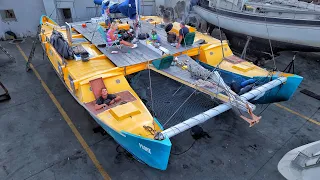
Mark Farnworth executes forensic rot repairs and composite fiberglass lamination on SV Mahi, transforming rotten daggerboard trunks into watertight forward lockers at an Algarve boatyard before sailing across the Atlantic.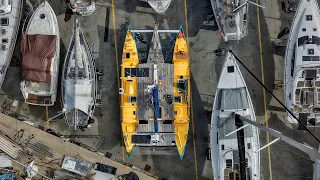
One Step Back, One Step Sideways & One Step Forward | My Budget Catamaran Refit
Ahh the joys of a catamaran restoration. I've finally been hitting my stride despite some setbacks towards my goal of crossing the Atlantic in my rescued catamaran My Instagram: @boat.fella Facebook: Business Enquiries: [email protected] Thank you SO much to the incredibly gener...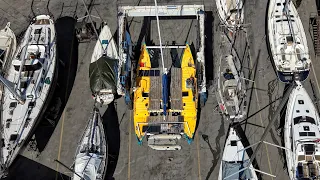
I Lifted Her Out For a Very Important Rebuild.
I lifted her out and got straight to work! My Instagram: @boat.fella Facebook: Business Enquiries: [email protected] Thank you SO much to the incredibly generous people who use the links below PayPal: Ko-fi: Patreon: My Personal Spotify Playlist: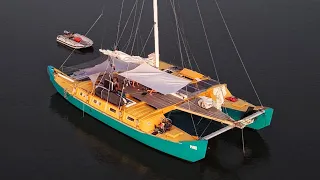
One Final Refit Before Crossing The Atlantic.
This stage will be crucial in the success of my Atlantic crossing. Mums Candles: My Instagram: @boat.fella Facebook: Business Enquiries: [email protected] Thank you SO much to the incredibly generous people who use the links below PayPal: Ko-fi: Patreon: My Personal Spotify Pl...
2 Days Alone at Sea On my Primitive Double-Canoe.
My longest solo sail yet. 50 hours of complete solitude (apart from fishing boats, dolphins and fish) this is a battle of exhaustion but it’s what I live for… Porto to Lisbon on my rescued Wharram Pahi 42 My Instagram: @boat.fella Facebook: Business Enquiries: [email protected] Thank...