A Big Job Done from the Pre-Atlantic Checklist.
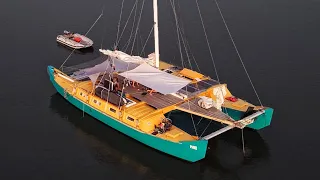
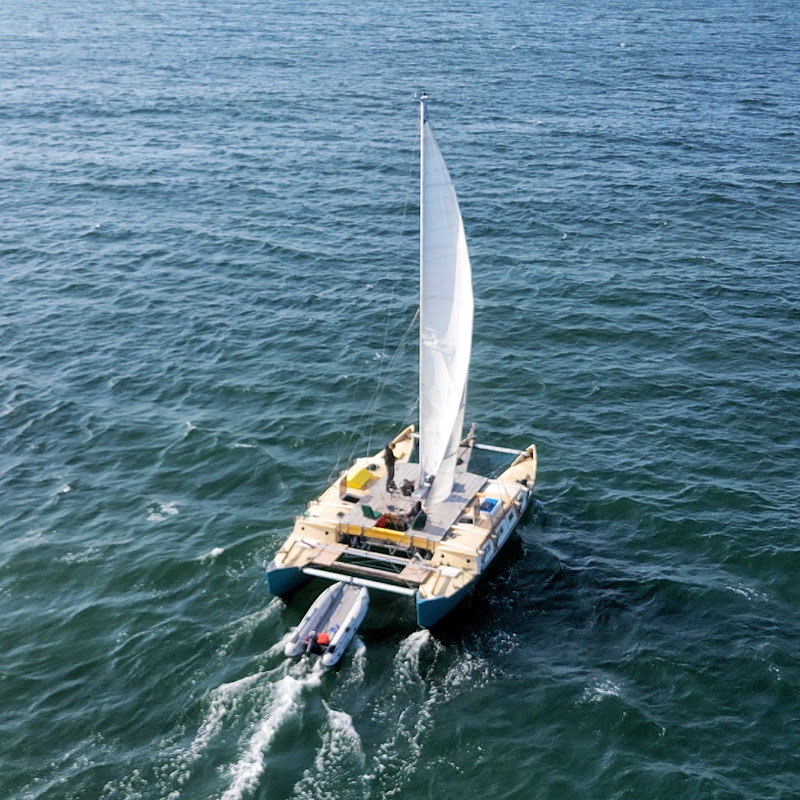
In Portugal as pre-Atlantic refit tasks get underway, Mark Farnworth tackles custom hatch fabrication aboard his Wharram Pahi 42 catamaran, Mahi, documented on Wildling Sailing. Having sailed down from the Netherlands after three years of work on the salvaged multihull, Mark and his visiting parents focus on converting redundant daggerboard slots into sealed deck hatches to gain dry storage and reserve buoyancy.
Fabricating and Fiberglassing the Deck Hatches
Mark’s dad screws and glues wooden hatch covers together while Mark’s mother mixes epoxy resin and hardener using a digital scale. Mark notes the family division of labor: “Mom’s been trained on epoxy now. So, this is going to be a new job.” They monitor the scale carefully, bringing the tare from 54 up to the target weight of 88 to ensure proper curing.
Once the wood structure is fastened, Mark cuts fiberglass cloth to fit over the hatch lids. Working with low-foam rollers that avoid soaking up excess resin, he wets out the laminate evenly. He chooses to leave the natural weave texture visible rather than applying fairing compound across the entire surface, anticipating that the non-slip deck paint will adhere directly to the textured cloth.
Washing Amine Blush and Fairing the Daggerboard Decks
As the epoxy cures exposed to ambient air, it leaves behind an amine blush—a waxy surface film produced by the hardener. Without peel ply on hand, Mark relies on workshop advice discovered online to dissolve the waxy layer using warm water and dishwashing liquid. His dad scrubs the cured surfaces with soapy water, successfully stripping the glossy sheen down to a dull matte finish ready for priming.
While his dad sands the hatch edges and coats the undersides, Mark prepares the surrounding deck area where the old daggerboard slots were laminated. After wiping the ground fiberglass with acetone, he blends regular epoxy resin with colloidal silica into a thick fairing compound. Using a plaster spatula, he smooths the compound across the transitions to prepare the deck for sanding. He also empties excess epoxy into a small silicone cube mold to monitor workshop waste.
Replacing the Aft Port Cover and Applying Epoxy Primer
The refit expands to include the aft compartment on the port side, where the existing wooden cover had deteriorated into a severe hazard held together only with old nails. Mark’s dad builds a sturdy replacement hatch, repeating the gluing, screwing, and fiberglassing process so that crew can walk securely across the aft deck without risk of falling through into the hull.
With all hatch surfaces sanded and wiped with acetone, Mark mixes two-part epoxy primer. Because the base and hardener possess different specific gravities, measuring by weight is impractical: “Unfortunately, you can’t weigh this epoxy primer. It has to be done by volume because the they have different gravity as they say.” He rolls on the initial protective coat, noting that although the first application appears uneven, two or three coats will establish a durable foundation before topcoating.
Restock Run and an October Surf Break
Having brought the hatch project to 99 percent completion, the family takes a break in the middle of October. They head into town to replenish supplies at an epoxy specialty shop, purchasing new rollers, brushes, acetone, fairing filler, and a 1-kilogram container of epoxy resin for €23, alongside epoxy primer that costs 38 quid.
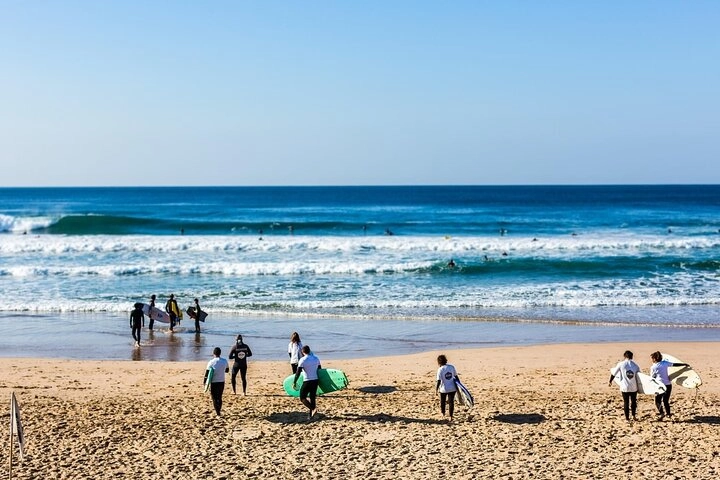
With the supplies secured, they spend the afternoon at the beach: “Dad’s a decent bodyboarder, actually. So, he’ll use one of my surfboards as a body board, and I’ll go surfing.” The break provides a brief rest before the next sequence of boat projects.
Tribute to Andy from Sailing Melody
The episode includes a heartfelt tribute following the sudden death of Andy, creator of the channel Sailing Melody. Mark shares his disbelief over losing a close friend who launched his sailing channel around the same time. He recalls early days before buying Mahi, when Andy invited him over to collaborate, spend hours discussing boat systems, and fly drones indoors with Andy’s partner Melissa and son Jack.
Mark emphasizes Andy’s technical generosity, noting that Andy was always ready to offer mechanical guidance. He directs viewers to support the family through an active GoFundMe campaign created to assist with memorial costs and music education for Andy’s children.
Cockpit Doghouse Design and Upcoming Refit Stages
With the main boom unbolted and set aside, Mark inspects the open bridge deck to plan a rigid cockpit shelter. His design features wooden support posts and an overhead hardtop positioned just above standing head height, preserving a panoramic 360-degree view around the vessel. For heavy weather, fabric side panels equipped with clear windows will snap onto perimeter studs, though Mark anticipates they will remain stowed most of the time: “It’ll be rolled up 99% of the time.” The covered layout will provide comfortable, dry watch berths for up to three crew members underway.
Before building the shelter, Mark outlines a tight schedule of tasks leading up to Christmas. He plans to paint the cabin tops yellow with heavy anti-slip compound before replacing the deck planks with straight Douglas fir treated with penetrating UV oil, preventing paint spills from spoiling the new timber. Once the deck is complete, he will build the doghouse, adjust the boom position, and rig a replacement mainsail for the Atlantic passage.
| Refit Parameter | Recorded Detail |
|---|---|
| Epoxy Resin Cost | €23 for 1 kg |
| Epoxy Primer Cost | 38 quid |
| Mixing Scale Target | 54 tare to 88 target |
| Panoramic Roof Angle | 360 degrees |
Frequently Asked Questions
Because Mark does not have peel ply on board, he scrubs the cured epoxy with dish soap and warm water to strip off the waxy amine blush layer before applying primer.
The two-part epoxy primer must be measured by volume rather than weight because the resin base and hardener components have different specific gravities.
Mark purchased 1 kilogram of epoxy resin at a specialty shop for €23, while replenishing refit supplies in Portugal.
The planned shelter features a wooden overhead hardtop just above standing head height providing a 360-degree panoramic view, with roll-down fabric side panels that snap onto wooden posts during foul weather.
Mark plans to paint the cabin tops yellow with anti-slip compound first so that paint drips and runs do not ruin the new Douglas fir deck planks.
Book a trip where this was filmed — near Lisbon
Support Wildling Sailing
At WeBoating.com, we profoundly acknowledge the unwavering dedication that Wildling Sailing invests in crafting each and every video or voyage. Their passion for delivering exceptional ocean content shines through every frame, and it's a labor of love that deserves your attention.
We invite you to watch their captivating videos here and actively engage with their content, including their social media links above. Liking, commenting, and sharing their work goes a long way in fueling their creative fire.
We're also inviting you to explore the gear, sponsorships, and boat partnerships highlighted in the "A Big Job Done from the Pre-Atlantic Checklist." video description, or directly on YouTube. By engaging with these offerings or purchasing services and items, you directly support Wildling Sailing, their collaborators, and the brands they're associated with.
To ensure you never miss an offshore update, consider visiting their official YouTube Channel to subscribe, like, and join their community directly.
If you have any feedback, corrections, or additional information about Wildling Sailing or their videos, please use the comment form below to share your thoughts with us.
Thank you for being a part of our community and supporting the creators we cherish. Your time and support truly matter!
It took me a month but we finally got a huge job done
Go and subscribe to Sailing Melody: https://youtube.com/@SailingMelody?si=TAGVyt3BqOLv2Uv_
Please donate if you can: https://gofund.me/6ecfdf93d
My Instagram: @boat.fella
Facebook: https://www.facebook.com/wildlingssai...
Business Enquiries: [email protected]
Thank you SO much to the incredibly generous people who use the links below
PayPal: https://www.paypal.me/wildlingssailing
Ko-fi: https://www.ko-fi.com/wildlingssailing
Patreon: https://www.patreon.com/wildlingsailing
My Personal Spotify Playlist: https://open.spotify.com/playlist/22sIFakj1oGqZlpmXv3kgC?si=557a07debd3b4f64
Wildling Sailing
Join Mark Farnworth of Wildling Sailing as he documents his high-authority transition from shell-up Wharram restoration to solo-managing his Pahi 42 in the Atlantic.
Channel Information:
Social Media Links:
A Big Job Done from the Pre-Atlantic Checklist. Location
- Cascais, Portugal (38.697,-9.4223)
Latest Episodes from Wildling Sailing
Explore the most recent voyages. Subscribe to the channel to never miss an update!
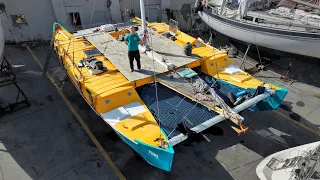
Everything I Need To Do Before Crossing the Atlantic
Hauled out in Portugal, Mark Farnworth tackles a demanding queue of structural repairs on SV Mahi, remediating hull dry rot and rusted fasteners ahead of the Atlantic.
A Big Job Done from the Pre-Atlantic Checklist.
In Portugal preparing for an Atlantic crossing, Mark Farnworth and his parents fabricate and fiberglass custom hatch covers for SV Mahi before planning a cockpit doghouse.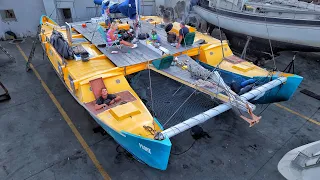
Fixing the Boat Any Idiot Can Fix.
Mark Farnworth executes forensic rot repairs and composite fiberglass lamination on SV Mahi, transforming rotten daggerboard trunks into watertight forward lockers at an Algarve boatyard before sailing across the Atlantic.
One Step Back, One Step Sideways & One Step Forward | My Budget Catamaran Refit
Ahh the joys of a catamaran restoration. I've finally been hitting my stride despite some setbacks towards my goal of crossing the Atlantic in my rescued catamaran My Instagram: @boat.fella Facebook: Business Enquiries: [email protected] Thank you SO much to the incredibly gener...
I Lifted Her Out For a Very Important Rebuild.
I lifted her out and got straight to work! My Instagram: @boat.fella Facebook: Business Enquiries: [email protected] Thank you SO much to the incredibly generous people who use the links below PayPal: Ko-fi: Patreon: My Personal Spotify Playlist: