Sailing Vlog 30 Victron 100/30 Solar Charger Upgrade
At anchor in northern waters during the approach of summer, Matt Foster aboard the sailboat Cadence on The Foster Journey tackles an electrical overhaul to harvest the full potential of the vessel’s bimini solar installation. After cruising into higher latitudes with daylight stretching from early morning past 8:30 in the evening, the crew addresses persistent power clipping from an undersized charge controller installed during the previous fall.
Rather than accepting midday energy loss during long summer days, the project focuses on replacing an overloaded charge controller with a properly dimensioned unit to protect boat electrical systems and safely capture incoming wattage.
Correcting an Underrated Solar Charge Controller
The electrical revision responds directly to community feedback following the installation of 400 watts of solar on the bimini. Several viewers warned, “you’re going to burn your boat down what are you doing” when observing the high-wattage array wired to a small 15-amp controller. While internal safeguards and an external circuit breaker prevented overheating or damage, Matt acknowledged the technical imbalance: “I listened to those comments and yes that charge controller was underrated”.
The original controller was a Victron 75/15 unit. While its 75-volt ceiling easily handled the panel array’s operating voltage of approximately 36 volts, the 15-amp output cap severely throttled power delivery whenever the sun climbed high.
The Bimini Solar Array and Midday Power Loss
The physical solar array consists of 400 watts of panels mounted directly atop the canvas bimini. In earlier configurations, the vessel used quick-release fasteners, but this installation bolts straight through the bimini fabric. Spacing bushings elevate the panels to match the canvas curvature, while heavy vinyl reinforcement patches prevent tearing and eliminate leaks.
During summer cruising in northern latitudes, daylight begins around 4:00 a.m. and persists well past 8:30 in the evening. Under these conditions, the 75/15 controller reached its maximum output limit by midday, clipping charging power for 3 to 4 hours every sunny afternoon. Recognizing that the system was “wasting solar wattage middle of the day”, Matt prioritized upgrading the electronics to reclaim the lost energy.
Installing and Testing the Victron 100/30 MPPT
The upgrade replaces the small controller with a Victron 100/30 unit rated for 100 volts and 30 amps. Addressing the rationale behind selecting a 30-amp model for a 400-watt system, Matt noted: “originally I thought I want to overpower my charger so I can maximize its output”. However, operating a 400-watt array with a 30-amp controller keeps the unit slightly underpowered relative to its upper limit, ensuring it operates coolly without taxing boat components.
| System component or metric | Specification | Operational note |
|---|---|---|
| Solar panel array | 400 W | Bolted through bimini canvas with vinyl reinforcement |
| Array working voltage | 36 V | Configured below controller input voltage caps |
| Previous charge controller | Victron 75/15 (75 V / 15 A) | Clipped charging current for 3 to 4 midday hours |
| Upgraded charge controller | Victron 100/30 (100 V / 30 A) | Sized to prevent thermal strain and accept peak output |
| Morning test readings | 208 W / 15.2 A | Measured with low morning sun before peak midday solar |
| Interior LED lighting bars | $15 for a pair | Rechargeable motion-sensor units in dark cabinets |
The new unit is substantially larger than the previous controller and mounts inside the cockpit locker. During initial morning testing when the sun remained low on the horizon, the screen registered 208 watts and 15.1 to 15.2 amps, proving that “so it’s already putting out more than the previous charge controller” hours ahead of peak midday exposure.
Mounting Considerations and Interior LED Lighting
The new controller was installed in an inverted position inside the locker to accommodate existing wiring runs. Although mounting upside down deviates from official installation instructions due to manufacturer concerns regarding water ingress and wire condensation, the sealed construction of Catalina’s cockpit lockers prevents water exposure. The orientation remains a temporary convenience that can be flipped during a future marina visit.
Alongside the solar project, the crew addressed interior visibility in dim storage compartments by adding motion-activated LED light bars. Purchased for $15 for a pair, the rechargeable fixtures eliminate frustration in deep cabinets and the head. Trickle-charged via USB from the boat’s inverter, the magnetic lights provide automatic illumination when opening cabinet doors.
Frequently Asked Questions
The previous 15-amp charge controller was undersized for the boat’s 400-watt solar array, causing it to clip power and waste solar wattage for 3 to 4 hours during the middle of the day.
During morning testing with the sun low on the horizon, the Victron 100/30 controller recorded an output of 208 watts and 15.1 to 15.2 amps, immediately surpassing the 15-amp maximum capacity of the previous unit.
The 400-watt solar array is bolted directly through the bimini canvas, utilizing bushings along the curvature to elevate the panels and extra vinyl patches underneath to reinforce the fabric against tears.
The controller was mounted upside down to simplify wire routing inside the locker. Matt noted that the watertight construction of the Catalina locker minimizes water ingress risks, though he plans to adjust the orientation at a marina if necessary.
The crew installed motion-sensor rechargeable LED light strips purchased for $15 a pair, which are trickle-charged from the boat’s inverter and provide illumination inside the makeup cabinet and restroom.
Book a trip where this was filmed — near New York City








Support The Foster Journey
At WeBoating.com, we profoundly acknowledge the unwavering dedication that The Foster Journey invests in crafting each and every video or voyage. Their passion for delivering exceptional ocean content shines through every frame, and it's a labor of love that deserves your attention.
We invite you to watch their captivating videos here and actively engage with their content, including their social media links above. Liking, commenting, and sharing their work goes a long way in fueling their creative fire.
We're also inviting you to explore the gear, sponsorships, and boat partnerships highlighted in the "Sailing Vlog 30 Victron 100/30 Solar Charger Upgrade" video description, or directly on YouTube. By engaging with these offerings or purchasing services and items, you directly support The Foster Journey, their collaborators, and the brands they're associated with.
To ensure you never miss an offshore update, consider visiting their official YouTube Channel to subscribe, like, and join their community directly.
If you have any feedback, corrections, or additional information about The Foster Journey or their videos, please use the comment form below to share your thoughts with us.
Thank you for being a part of our community and supporting the creators we cherish. Your time and support truly matter!
I was wrong. You were right. Now let's fix this with a new 100v 30amp solar charger. Victron 100/30 solar charger with 400 watts of solar.
Thanks for Watching!
Matt Foster
SV Cadence
00:00 New Victron Charge Controller
00:50 Victron 75/15 with 400w Solar
02:40 Why Victron 100/30
06:48 The Installation
07:45 LED Light Tip
____
#sailing #victron #sailboats #thefosterjourney #solarsystem #Catalina387 #thefosters

The Foster Journey
In 2026, Matt, Nancy, and Olivia Foster continue their full-time family voyaging aboard Cadence, their 2004 Catalina 387 sloop. Balancing professional remote careers and child homeschooling with coastal seamanship, the family has explored from Texas and the Bahamas to New York Harbor and Long Island Sound. Their channel offers a realistic blueprint for working families seeking sustainable maritime nomadism.
Channel Information:
Social Media Links:
Latest Episodes from The Foster Journey
Explore the most recent voyages. Subscribe to the channel to never miss an update!

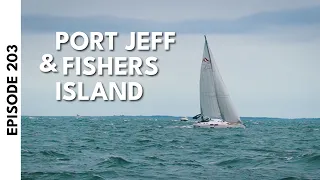
End of Long Island Sound Sailing: Fishers Island from Port Jeff (Ep.203) | ⛵ The Foster Journey
Sailing the Length of Long Island Sound: Port Jeff to Fishers Island (Ep.203) Join us on SV Cadence, our Catalina 387, as we tackle a 55nm trek across the Long Island Sound! We’re wrapping up our time in Port Jefferson and heading East toward the beautiful Fishers Island. In this episode: Anchoring...

Why We Slowed Down, Patience is Pleasure. Sailing Vlog 36
Sailing Long Island to Port Jefferson, we decided to have a little chat about our new view on sailboat travel. *Sorry it's been a while since we posted - life happens, responsibilities and all, but we're glad to share this one with you!! Thanks for watching.