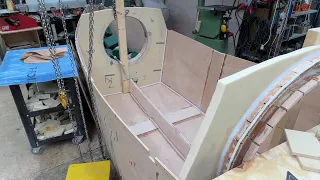
NM Epoxy and Mold Base.
Unpacking materials across his workshop floor, Sven Yrvind prepares the building jig and structural supplies for his next solo ocean cruiser. Looking over the delivered rolls and building stock, he sets out the components ready for construction: “Now we’ve got the Divinycell, we’ve got the molds, we’ve got the base. Well, just have to do the work.”
Unpacking NM Epoxy and Heavy Glass Fiber
Among the delivered composite supplies is laminating epoxy from Nils Malmgren (NM Epoxy), accompanied by fumed silica thickener and a large roll of woven reinforcement. Yrvind reflects on his decades-long familiarity with the chemical system: “This is Ness mongrel and then laminating. And I’m I’ve been using this product for a long, long, long time. 1986 I started with it.”
Moving the reinforcement roll into the shop proves to be a demanding task due to its substantial bulk. Examining the heavy roll, Yrvind notes, “So, here’s the big glass fiber. It’s very heavy. 64 kilos. So, and it’s 100 m.” Because the heavy roll cannot easily be maneuvered alone without straining, he enlists help to position it properly near the cutting table.
| Metric | Workshop Specifications | | :— | :— | | Glass Fiber Roll | 64 kg (100 m length) | | Mold Base Spacing | 90 cm (3 ft) | | Middle Frame Spacing | 88 cm (increased by 28 cm from 60 cm) | | Hull Base Length | 560 cm (5 cm trimmed at bow) |
Workshop Layout and Hull Centerline Stretch
With the materials organized, Yrvind focuses on laying out the ladder base and spacing the building molds. Setting up the base frames at 90 cm (3 ft) intervals, he ensures sufficient clearance on both sides of the ladder jig while reserving dedicated space for a laminating table to construct flat composite panels.
To increase the boat’s carrying capacity and performance in offshore conditions, Yrvind modifies the station spacing along the midsection: “To give it a bit more stability and displacement, I’m stretching her a bit. Normally, she’s 560, but I stretch more in the middle.” Instead of keeping the standard 60 cm spacing between frames 15, 21, and 27, he expands the bay to 88 cm, adding 28 cm of beam and longitudinal volume through the center, while trimming 5 cm from the bow.
Aligning the molds requires precision. Using a traditional water level to guarantee parallel stations across the base, Yrvind marks the center frame 21 with double reference dots, verifying alignment before securing each plywood section into place.
Frequently Asked Questions
Yrvind uses NM Epoxy laminating resin, fumed silica thickener, a 64-kilogram roll of glass fiber measuring 100 meters, and Divinycell foam core.
Yrvind widened the frame spacing from 60 cm to 88 cm (an extra 28 cm) between stations 15, 21, and 27 to increase the hull’s stability and displacement.
He marks frame 21 at the center, uses a water level to keep stations parallel, and spaces the base supports at 90 cm intervals.
Support Sven Yrvind
At WeBoating.com, we profoundly acknowledge the unwavering dedication that Sven Yrvind invests in crafting each and every video or voyage. Their passion for delivering exceptional ocean content shines through every frame, and it's a labor of love that deserves your attention.
We invite you to watch their captivating videos here and actively engage with their content, including their social media links above. Liking, commenting, and sharing their work goes a long way in fueling their creative fire.
We're also inviting you to explore the gear, sponsorships, and boat partnerships highlighted in the "NM Epoxy and Mold Base." video description, or directly on YouTube. By engaging with these offerings or purchasing services and items, you directly support Sven Yrvind, their collaborators, and the brands they're associated with.
To ensure you never miss an offshore update, consider visiting their official YouTube Channel to subscribe, like, and join their community directly.
If you have any feedback, corrections, or additional information about Sven Yrvind or their videos, please use the comment form below to share your thoughts with us.
Thank you for being a part of our community and supporting the creators we cherish. Your time and support truly matter!
This Youtube channel is about me Sven Yrvind. I am87 year and 5 months old dyslectic solo sailor.
I am building a Divinycell and NM-epoxy high-latitude cruiser.
She is 5.6 meter 18 feet 4 inches long. Her beam is 1.45 meter. She is a three masted lugger with a total sail area of 9 square meter. She has a bow centerboard. I am planning a cruise in the Southern Ocean to Dunedin NZ.
Subject to change.
Often the 22th every month I do a resume of the project.
I have an illustrated book with good reviews on Amazon. https://www.amazon.se/s?k=yrvind&crid=1549D6PR18BUJ&sprefix=%2Caps%2C112&ref=nb_sb_ss_recent_1_0_recent
If you’re interested in contributing to my experiments links are below.
https://www.paypal.com/donate/?hosted_button_id=53X8NVEA22MBL
Swish 0706200550
Also please subscribe - even if you are not interested in sailing.
For more see Yrvind.com
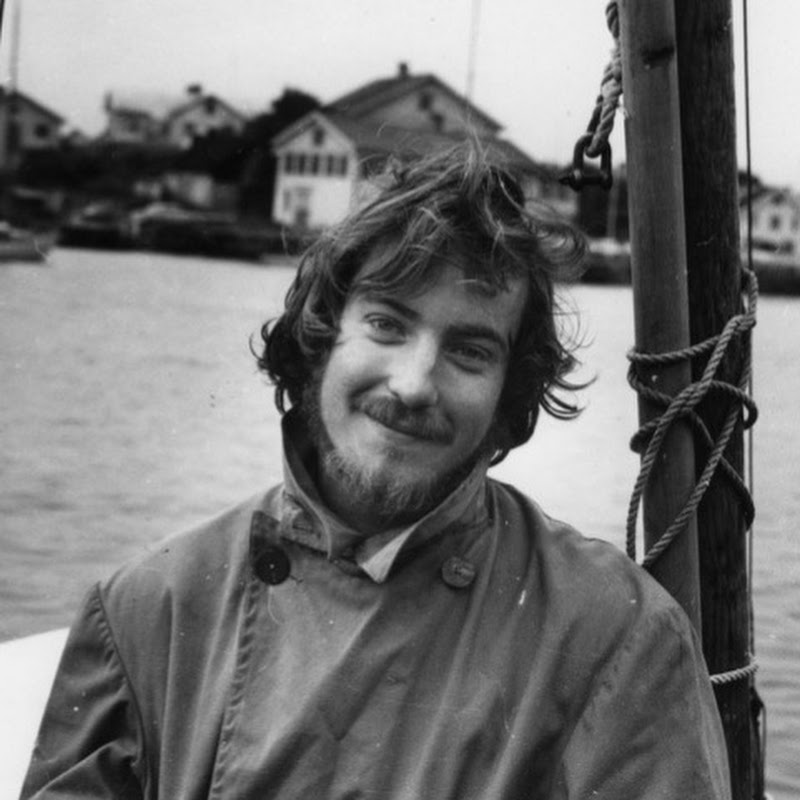
Sven Yrvind
At 86, Sven Yrvind is still pushing the limits of small-boat design. Discover the philosophy and technical grit behind his 'Exlex' series.
Channel Information:
Social Media Links:
NM Epoxy and Mold Base. Location
- Västervik, Sweden (57.7578,16.6372)
Latest Episodes from Sven Yrvind
Explore the most recent voyages. Subscribe to the channel to never miss an update!
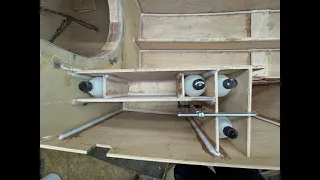
More small compartments on the development boat.
Sven Yrvind works in his workshop to optimize the interior of his development boat, focusing on water bottle capacity and redesigning the dining and sleeping areas.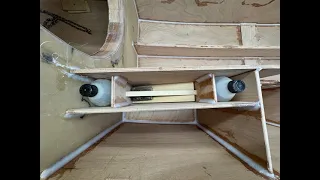
Another Wall for the Water Bottle Storage.
Sven Yrvind works on the Oceanic XLX prototype, crafting a specialized storage area for water bottles and provisions using plywood and fumed silica epoxy.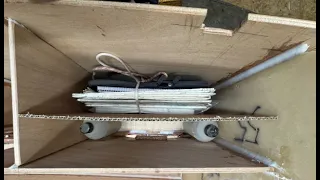
A Divider Between the Charts and Water Bottles.
Sven Yrvind returns to his workshop in the snow to install a custom wooden divider on the Exlex, ensuring a clean separation between paper charts and water bottles.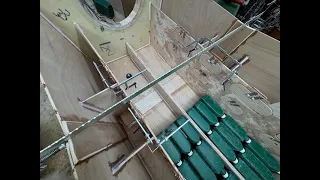
Vertical Dividers.
Sven Yrvind fits vertical subdivisions inside his 4.4-meter plywood test boat in Västervik, stiffening the hull structure and establishing interior storage layout for his high-latitude cruiser.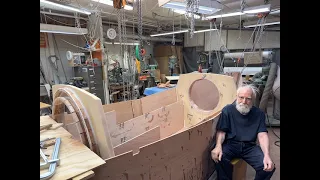
Monthly Update and Overview Nov 2026.
In his workshop on New Year's Eve, Sven Yrvind shortens his plywood test boat to 4.4 meters, loads 18 water jugs for ballast, and details his route to Dunedin and rudderless steering fins.