Moment of Inertia, Center of Gravity, and Some Confusion.
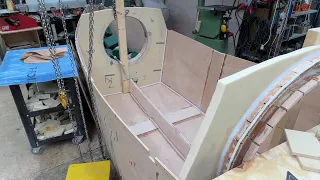
Sven Yrvind begins joining the bottom hull panels of his plywood test boat inside his workshop in Västervik. Working with separate forward and aft plywood sheets, he aligns the sections over a wooden backing piece to prepare the structural butt joint.
To fasten the panels securely, Yrvind applies glue across the joint, drives in long screws through the plywood into the wooden backing below, and places heavy lead weights along the seam. Leaving the epoxy and weights overnight ensures the bottom sets as a rigid single piece before further shaping.
Fastening the Plywood Butt Joint
As the epoxy cures, Yrvind examines the bonded seam across the bottom panels. Reflecting on the initial setup, he explains: “Now the tricky part is to joint these two things but I prepared it below here is wood.” A small gap along the edge requires slight closing, but the butt joint seats firmly over the supporting strip.
Once the bond sets, Yrvind backs out each screw from the wood, noting that screws can occasionally seize in curing epoxy. He then shifts the heavy weights to free the panel: “Well, first remove the lead. That’s a heavy work.” Clamping the sheet downward, he scribes reference lines along the perimeter and cuts the plywood to outline the hull bottom.
Daggerboard Trunk and Mass Distribution
Yrvind presents a scale model to demonstrate the internal layout and daggerboard trunk geometry. The bottom section of the trunk stands 30 cm (1 foot) high, designed to house a retractable fin extending 60 cm (2 feet) downward with an internal 30 cm section providing structural support up toward the deck.
Addressing hull physics, Yrvind explains the relationship between center of gravity, water displacement, and rotational inertia. He notes that the boat carries only about 50 kg of movable lead ballast against an estimated 800 kg boat weight. Comparing hull motion to a figure skater doing a spin, he observes: “First she holds her arm outstretch, but the moment of inertia is constant.” Keeping equipment and cargo centrally located reduces angular inertia, whereas distributing mass toward the ends slows rotational response.
Revised Hull Dimensions and Storage
Reviewing the trimmed hull form, Yrvind provides an update on the revised proportions of the test vessel: “It’s been shrinking a little bit. Is now down to 4.6 m by 1.3. That is 15 ft.” While the hull is compact at 4.6 meters long and 1.3 meters in beam, the interior maintains substantial storage space divided across several compartments.
| Compartment or Dimension | Specification |
|---|---|
| Hull length and beam | 4.6 m by 1.3 m (15 ft) |
| Design displacement | 800 kg |
| Daggerboard extension depth | 60 cm (2 ft) |
| Trunk lower section height | 30 cm (1 ft) |
| Movable lead ballast | 50 kg |
| Under-bunk storage volume | 250 L |
| Side storage capacity | 400 L and 240 L |
| Under-seat living area storage | 50 L |
The interior spaces incorporate 250 liters of stowage beneath the bunk, paired side compartments providing 400 liters and 240 liters, and an under-seat compartment offering 50 liters in the living area. The combined volume provides extensive stowage for long passages while keeping the base displacement at 800 kg.
Frequently Asked Questions
The test boat measures 4.6 meters in length by 1.3 meters in beam (15 feet), down slightly from an earlier 4.8-meter layout.
Stowage includes 250 liters under the bunk, 400 liters and 240 liters in paired side compartments, and 50 liters under the living area seat.
The fin extends 60 cm (2 feet) downward below the hull, supported by an internal 30 cm trunk section.
He uses the ice princess spinning analogy to show that keeping mass close to the center reduces rotational inertia, influencing how quickly the hull reacts to motion.
Support Sven Yrvind
At WeBoating.com, we profoundly acknowledge the unwavering dedication that Sven Yrvind invests in crafting each and every video or voyage. Their passion for delivering exceptional ocean content shines through every frame, and it's a labor of love that deserves your attention.
We invite you to watch their captivating videos here and actively engage with their content, including their social media links above. Liking, commenting, and sharing their work goes a long way in fueling their creative fire.
We're also inviting you to explore the gear, sponsorships, and boat partnerships highlighted in the "Moment of Inertia, Center of Gravity, and Some Confusion." video description, or directly on YouTube. By engaging with these offerings or purchasing services and items, you directly support Sven Yrvind, their collaborators, and the brands they're associated with.
To ensure you never miss an offshore update, consider visiting their official YouTube Channel to subscribe, like, and join their community directly.
If you have any feedback, corrections, or additional information about Sven Yrvind or their videos, please use the comment form below to share your thoughts with us.
Thank you for being a part of our community and supporting the creators we cherish. Your time and support truly matter!
This Youtube channel is about me Sven Yrvind. I am 87 and a half years old dyslectic solo sailor.
I am building a plywood test boat for a Divinycell and NM-epoxy high-latitude cruiser.
She will be about 4.8 meter 15 and a half feet long. Her beam will be 1.3 meter. She is a two masted lugger with a total sail area of 6 square meter. She will have no rudder but will be steered by adjustable fins. I am planning a cruise in the Southern Ocean to Dunedin NZ.
Subject to change.
Often the 22th every month I do a resume of the project.
I have an illustrated book with good reviews on Amazon. https://www.amazon.se/s?k=yrvind&crid=1549D6PR18BUJ&sprefix=%2Caps%2C112&ref=nb_sb_ss_recent_1_0_recent
If you’re interested in contributing to my experiments links are below.
https://www.paypal.com/donate/?hosted_button_id=53X8NVEA22MBL
Swish 0706200550
Also please subscribe - even if you are not interested in sailing.
For more see Yrvind.com

Sven Yrvind
At 86, Sven Yrvind is still pushing the limits of small-boat design. Discover the philosophy and technical grit behind his 'Exlex' series.
Channel Information:
Social Media Links:
Moment of Inertia, Center of Gravity, and Some Confusion. Location
- Västervik, Sweden (57.7594,16.6385)
Latest Episodes from Sven Yrvind
Explore the most recent voyages. Subscribe to the channel to never miss an update!
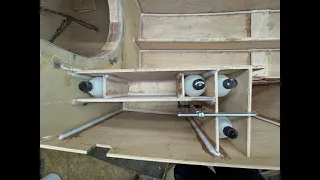
More small compartments on the development boat.
Sven Yrvind works in his workshop to optimize the interior of his development boat, focusing on water bottle capacity and redesigning the dining and sleeping areas.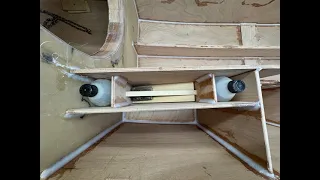
Another Wall for the Water Bottle Storage.
Sven Yrvind works on the Oceanic XLX prototype, crafting a specialized storage area for water bottles and provisions using plywood and fumed silica epoxy.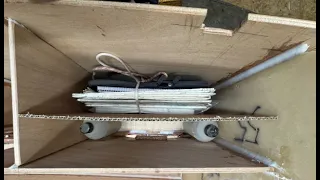
A Divider Between the Charts and Water Bottles.
Sven Yrvind returns to his workshop in the snow to install a custom wooden divider on the Exlex, ensuring a clean separation between paper charts and water bottles.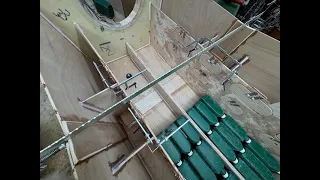
Vertical Dividers.
Sven Yrvind fits vertical subdivisions inside his 4.4-meter plywood test boat in Västervik, stiffening the hull structure and establishing interior storage layout for his high-latitude cruiser.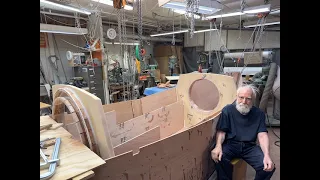
Monthly Update and Overview Nov 2026.
In his workshop on New Year's Eve, Sven Yrvind shortens his plywood test boat to 4.4 meters, loads 18 water jugs for ballast, and details his route to Dunedin and rudderless steering fins.