NOT Sailing Northern Ireland - Rudder - Lip seal - Boat lift - Ep. 399
In the boatyard, Gaynor and Beverley Leigh focused on completing critical steering gear repairs aboard their Bavaria 36, Salty Lass. Documented on Sailing Yacht Salty Lass, the day’s refit agenda called for servicing and installing replacement roller bearings, resolving a bonded lip seal, and hoisting the heavy rudder stock back into the hull before the yard schedule allowed a potential splash.
With the rudder dropped and resting beneath the transom, the installation required working through several interconnected components: the upper and lower roller bearings, the flexible rudder tube with its integrated water seal, and the mechanical steering quadrant in the aft locker.
Bearing Inspection and Housing Preparation
The replacement hardware package contained a pair of spherical roller units: a larger lower bearing designated as mama bear and a smaller upper unit referred to as baby bear. Before setting the lower unit into place, Gaynor examined the bearing cup to clear out accumulated grit, salt, and corrosion. While preparing to scrub the housing, Gaynor initially considered common workshop solvents but quickly halted after recognizing the material composition of the housing and bearing cage:
“I’m not going to put acetone on this cuz I know what happens when acetone meets plastic.”
Because the component featured a nylon construction, harsh solvent contact risked compromising the synthetic structure. Gaynor turned to a Scotch-Brite pad instead, mechanically scrubbing out the bearing cup without chemical degradation. The manufacturer supplied a dedicated packet of synthetic grease intended strictly for the outside contact surfaces of the cup and the outer housing. Gaynor followed the installation instructions precisely, keeping lubricant completely clear of the rolling elements: the rollers themselves remained dry, while grease lined only the external contact perimeter. Pressing the lower bearing into its housing demanded significant physical force, fitting tightly into the hull aperture before seating flush.
Modifying the Flexible Rudder Tube and Lip Seal
Attention then turned to the flexible rudder tube and its internal lip seal. The flexible tube sleeves over a lower aluminum tube bonded into the hull structure, bridging the gap to the rudder stock while providing slight compliance. This flexibility permits the assembly to twist a fraction of a millimeter under load without binding the shaft. However, extracting the old lip seal from the head of the tube proved impossible through standard prying, as adhesive held the rubber ring firmly anchored to the tube wall:
“Right, this is the flexible rudder tube, and this is the lip seal in the top of it. And this has clearly been glued in because no matter what I do, that will not shift.”
Inspecting the interior of the assembly revealed dried salt deposits, indicating where seawater regularly reached inside the aluminum sleeve. By measuring the overlap against the internal aluminum tube, Gaynor confirmed sufficient clearance to trim the top of the flexible casing without sacrificing structural engagement. Gaynor used a hacksaw to slice one centimeter off the top edge of the flexible tube, releasing the glued seal. Although the flexible tube distorted slightly while sawing through the tough material, Gaynor smoothed the cut face to receive the new seal. The replacement U-shaped seal went into place oriented with its open sealing lip pointing downward toward the water to hold back incoming seawater, secured with fresh adhesive.
Hoisting the Rudder and Securing the Top Bearing
With the bearings greased externally and the lip seal bonded in place, the crew faced the task of lifting the rudder stock back up through the hull. Rather than utilizing boatyard crane machinery or overhead tackle, Gaynor constructed a cat’s cradle framework beneath the blade, using a succession of wooden wedges to elevate the assembly inch by inch. By progressively driving wedges underneath, the stock steadily ascended through the lower bearing, the flexible tube, the downward-facing lip seal, and finally the upper bearing assembly in the cockpit locker.
At the top of the column, Gaynor engaged the threaded top screw to draw the shaft into its final operating depth and secured the assembly with the locking screw. Rotating the quadrant by hand confirmed smooth, binding-free travel:
“Well, the rudder is back in now and I’m glad to say that it is as solid as a rock. Well, you get to eat a bit of vibration, but there’s no movement up here at the bearing.”
Testing the helm from the cockpit revealed an immediate transformation in steering friction. Because the wheel upstairs turns at about 3 times the rate of the rudder quadrant below, eliminating previous bearing resistance produced an almost frictionless response at the wheel:
“the actual wheel itself now feels incredibly light, almost dangerously light to be honest. It would be very, very easy to abuse.”
Quadrant Reassembly and Pre-Splash Preparations
Reconnecting the steering system required reattaching the aluminum quadrant and steering cables. During initial assembly, a minor complication arose when mounting the cable block to the back of the quadrant casting. Because the block possesses symmetrical bolt holes, it fits into place whether positioned right-side up or inverted:
“the block that is on the back of the quadrant works whether you have it that way around or upside down. I of course installed it upside down.”
After noticing the irregular cable alignment, Gaynor unbolted the bracket and flipped it into its correct upright position. The steering cables were then crossed over correctly, leading the right-hand cable across to the left-hand side of the quadrant to ensure that turning the wheel to port rotated the rudder blade in the expected direction.
With the rudder and steering linkage fully operational, Gaynor turned to the bow to remount the primary anchor onto the bow roller. Gaynor temporarily secured the anchor to the vessel using the existing standing line. Final termination with an eight braid splice or a three braid splice was deferred until tackling a scheduled anchor locker renovation. With yard operations active all around, the crew stood ready for the boat hoist to splash Salty Lass back into northern waters.
Frequently Asked Questions
Gaynor avoided using acetone because the replacement bearing is made of nylon plastic, which can degrade or melt when exposed to harsh solvents like acetone. The bearing cup was scrubbed with a Scotch-Brite pad instead.
According to the manufacturer instructions, synthetic grease must only be applied to the outside of the bearing and the bearing cup, keeping the needle rollers completely free of grease.
The existing lip seal was glued firmly into the top of the flexible rudder tube and could not be removed. Because the internal aluminum tube ended lower down, Gaynor used a hacksaw to safely trim one centimeter off the top to install the new seal.
Rather than using yard machinery, Gaynor built a cat’s cradle structure underneath the rudder blade and progressively inserted wooden wedges to raise the stock up through the rudder tube and top bearing.
Gaynor accidentally bolted the steering cable block onto the quadrant upside down. After realizing the improper fit, Gaynor flipped the block upright and crossed the steering cables so the helm operated correctly.
Support Sailing Yacht Salty Lass
At WeBoating.com, we profoundly acknowledge the unwavering dedication that Sailing Yacht Salty Lass invests in crafting each and every video or voyage. Their passion for delivering exceptional ocean content shines through every frame, and it's a labor of love that deserves your attention.
We invite you to watch their captivating videos here and actively engage with their content, including their social media links above. Liking, commenting, and sharing their work goes a long way in fueling their creative fire.
We're also inviting you to explore the gear, sponsorships, and boat partnerships highlighted in the "NOT Sailing Northern Ireland - Rudder - Lip seal - Boat lift - Ep. 399" video description, or directly on YouTube. By engaging with these offerings or purchasing services and items, you directly support Sailing Yacht Salty Lass, their collaborators, and the brands they're associated with.
To ensure you never miss an offshore update, consider visiting their official YouTube Channel to subscribe, like, and join their community directly.
If you have any feedback, corrections, or additional information about Sailing Yacht Salty Lass or their videos, please use the comment form below to share your thoughts with us.
Thank you for being a part of our community and supporting the creators we cherish. Your time and support truly matter!
If you like our videos, you can always drop a tip in our coffee jar
https://ko-fi.com/sailingyachtsaltylass
ABOUT US
We have begun a liveaboard adventure on our Bavaria 36, Salty Lass. It is our ongoing mission to explore strange new ports, to seek out new to us cuisines and cultures, to boldly go where the wind takes us and like it
FOLLOW US
http://www.saltylass.co.uk
https://facebook.com/salty.lass.1
https://instagram.com/sy.saltylass
MUSIC
Sailing Yacht Salty Lass
Join Beverley and Gaynor of Sailing Yacht Salty Lass as they navigate the 'Slow Path' of Irish Sea cruising and DIY boat refits aboard their Bavaria 36.
Channel Information:
Social Media Links:
NOT Sailing Northern Ireland - Rudder - Lip seal - Boat lift - Ep. 399 Location
- Bangor Marina Boatyard, Bangor, Northern Ireland (54.6644,-5.6698)
Latest Episodes from Sailing Yacht Salty Lass
Explore the most recent voyages. Subscribe to the channel to never miss an update!

NOT Sailing Northern Ireland – Bad weather – Gale warning – Side panels – Ep. 400
Gaynor and Beverley Leigh return Salty Lass to their Bangor marina berth after boatyard refit work, securing lines against Storm Babet and installing custom taut cockpit side panels.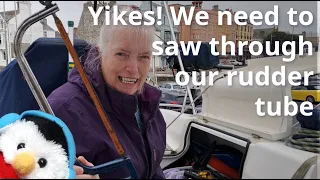
NOT Sailing Northern Ireland – Rudder – Lip seal – Boat lift – Ep. 399
In the boatyard, the crew of Salty Lass installs new nylon roller bearings, modifies a bonded flexible rudder tube, and reinstalls the rudder assembly on their Bavaria 36.
NOT Sailing Northern Ireland – Anchor locker – Martial Art Inspired Waxing – Ep. 398
Ashore in Northern Ireland, Beverley and Gaynor prep Bavaria 36 Salty Lass with binary chain markers and martial-arts hull waxing while awaiting rudder bearings.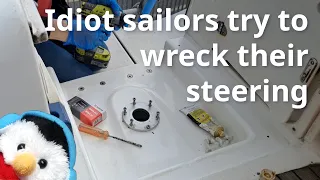
NOT Sailing Northern Ireland – Rudder repair – anchor chain – keel – Ep. 397
Ashore in a Northern Ireland boatyard, Beverley and Gaynor overhaul SV Salty Lass, tackling rudder bearing removal, anchor chain refurbishment, and boot stripe painting.
NOT Sailing Northern Ireland – In the yard – Rudder – Saildrive – Keel – Ep. 396
If you like our videos, you can always drop a tip in our coffee jar ABOUT US We have begun a liveaboard adventure on our Bavaria 36, Salty Lass. It is our ongoing mission to explore strange new ports, to seek out new to us cuisines and cultures, to boldly go where the wind takes us and like i...